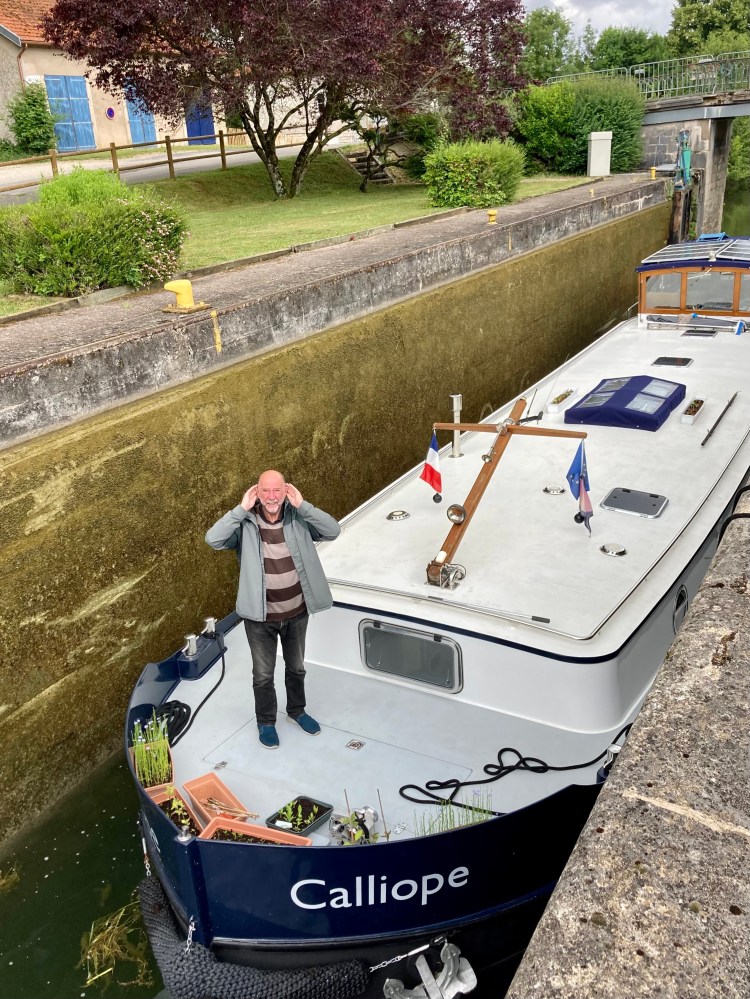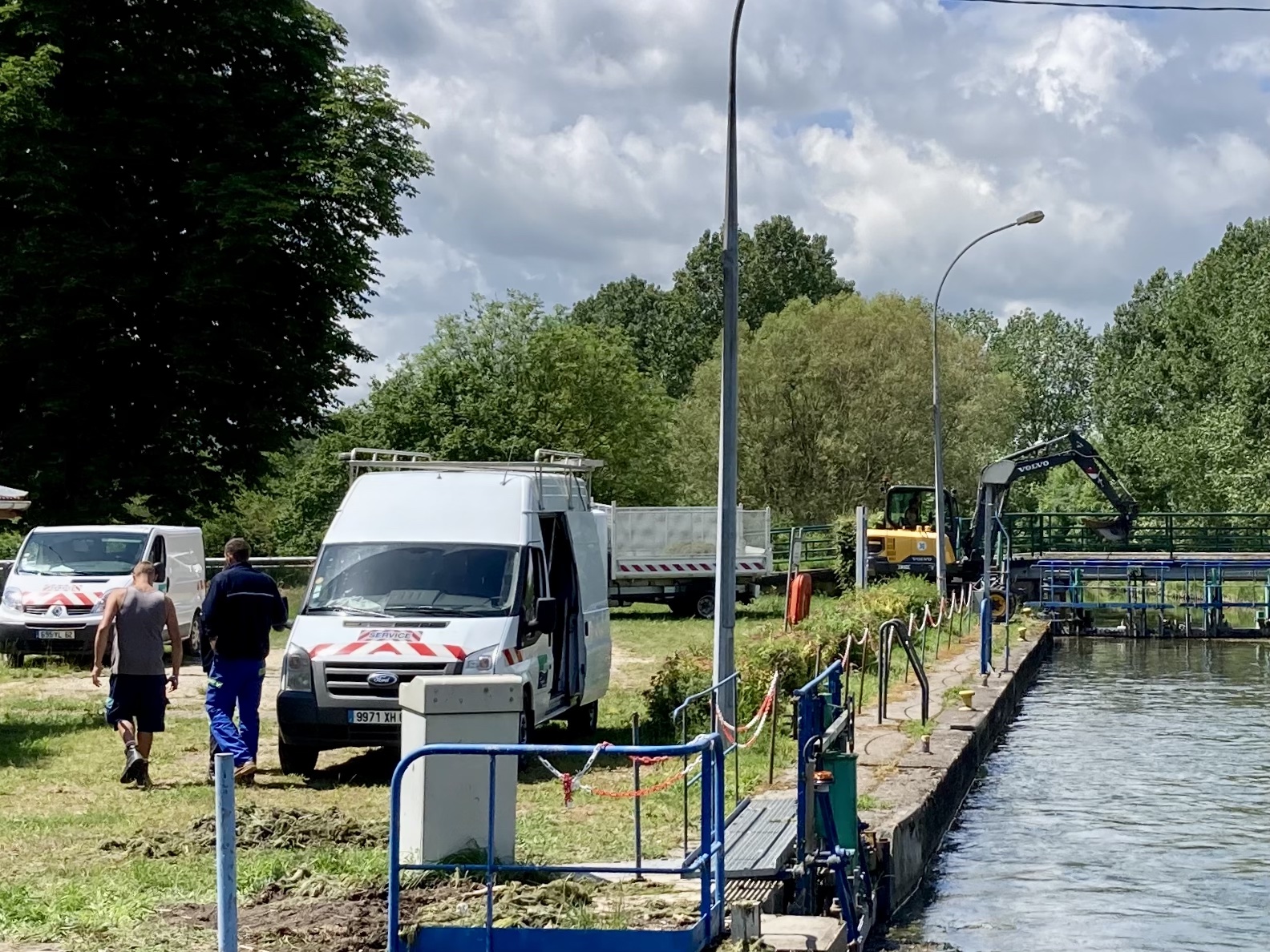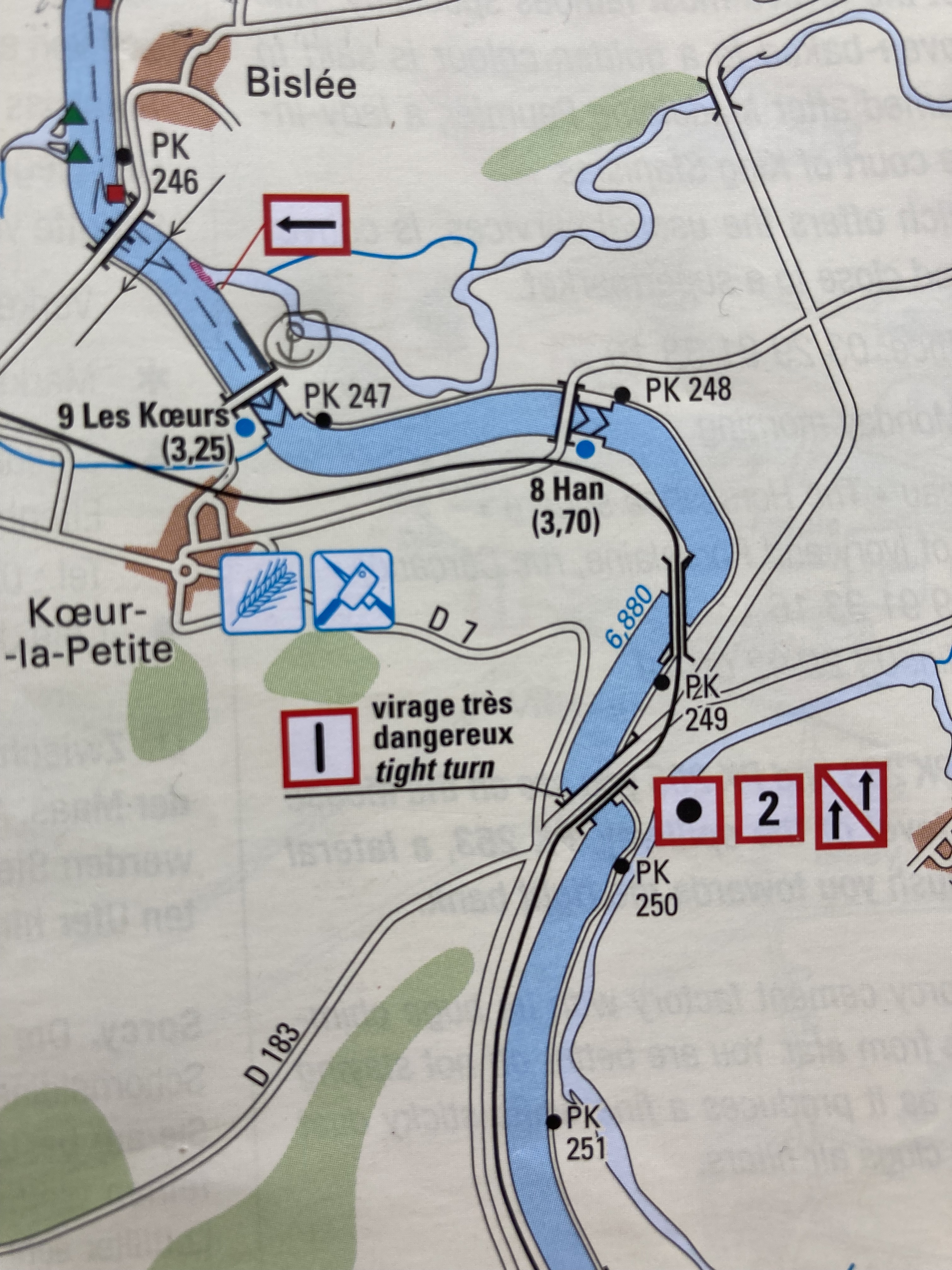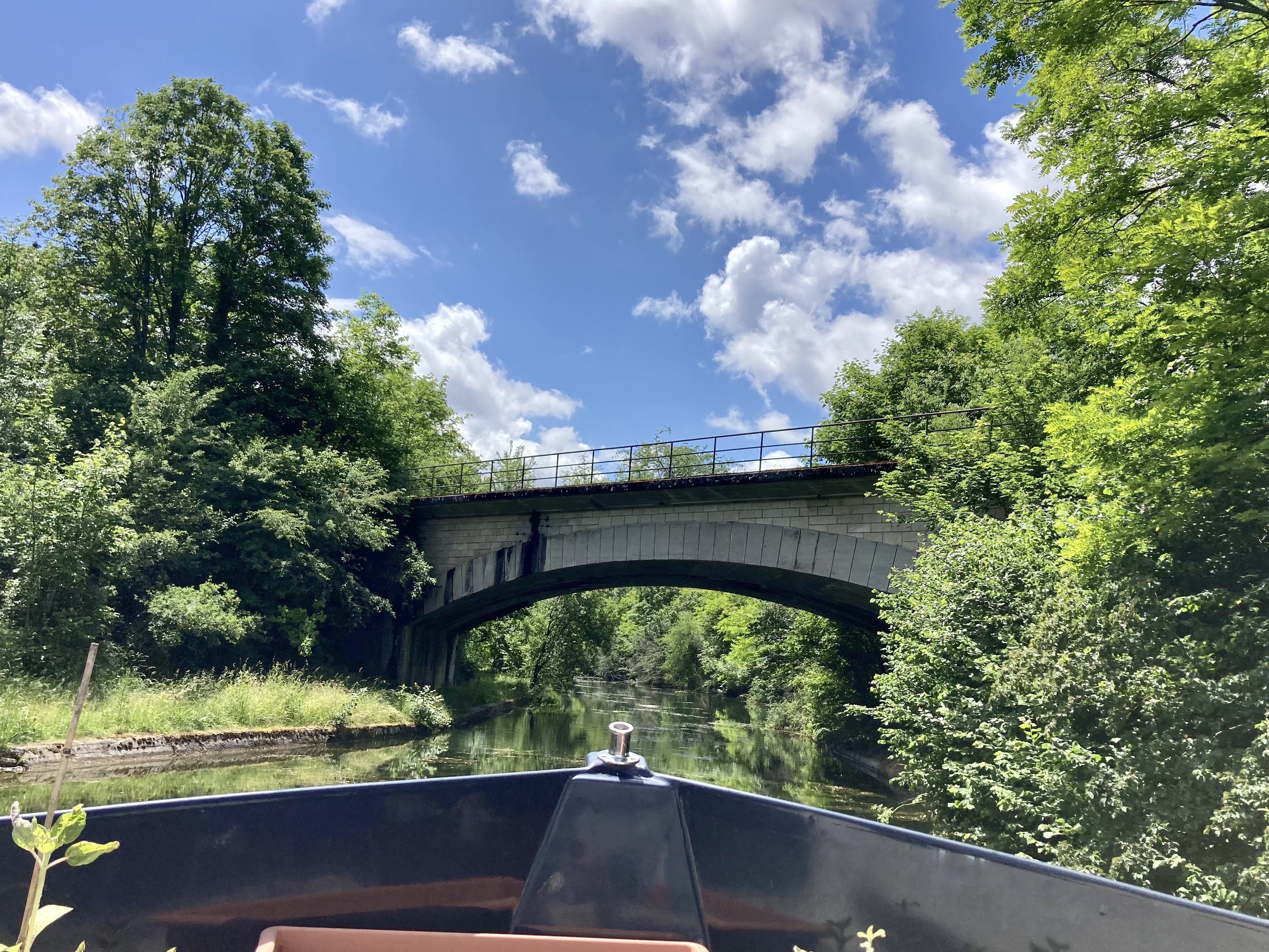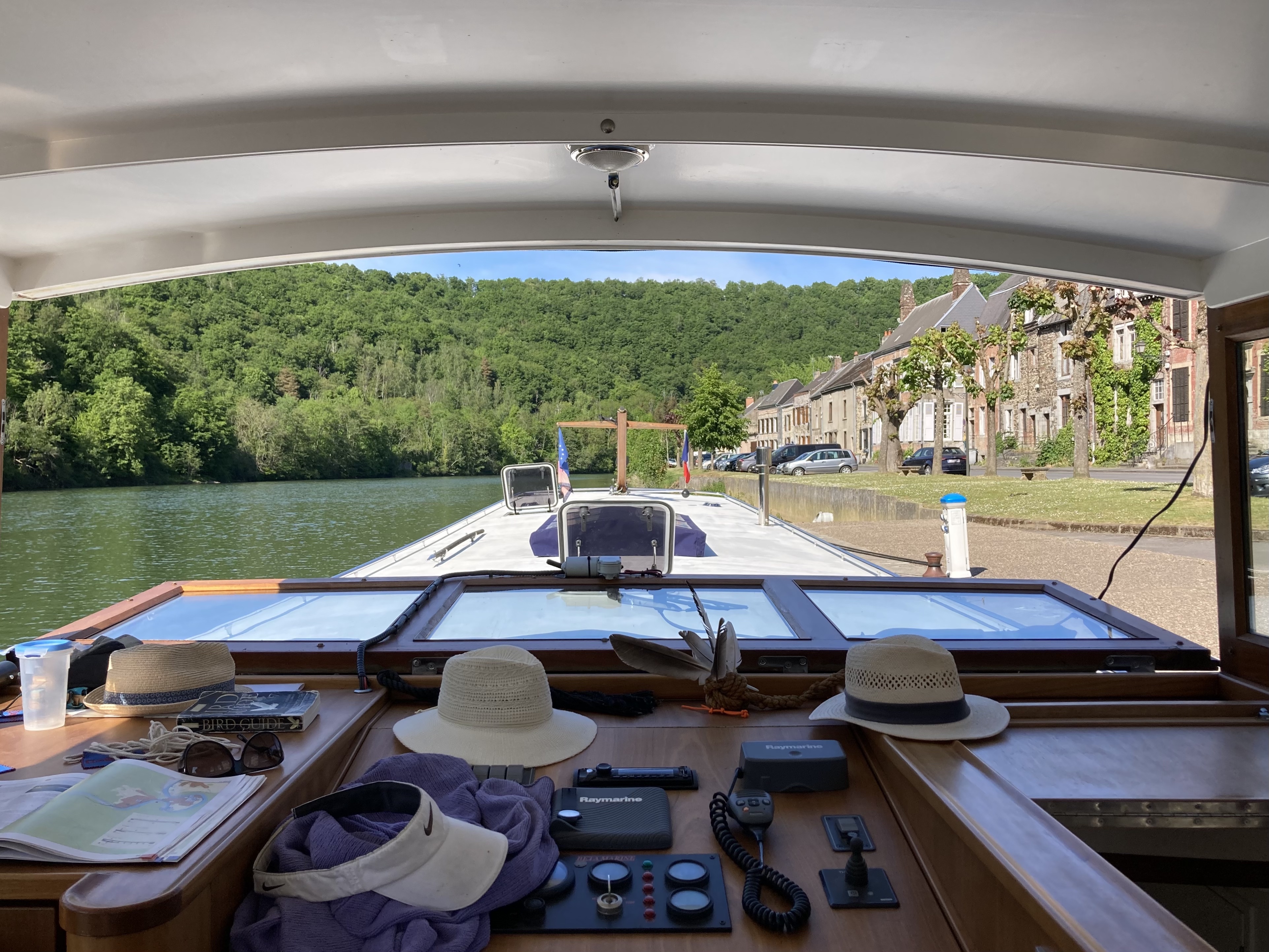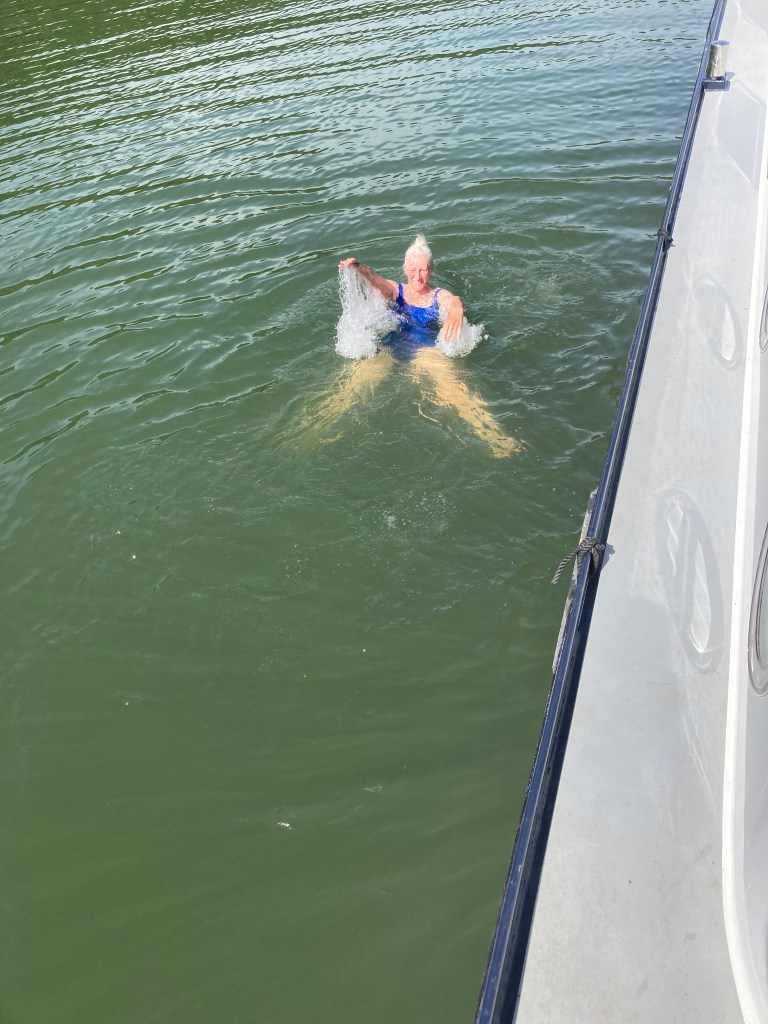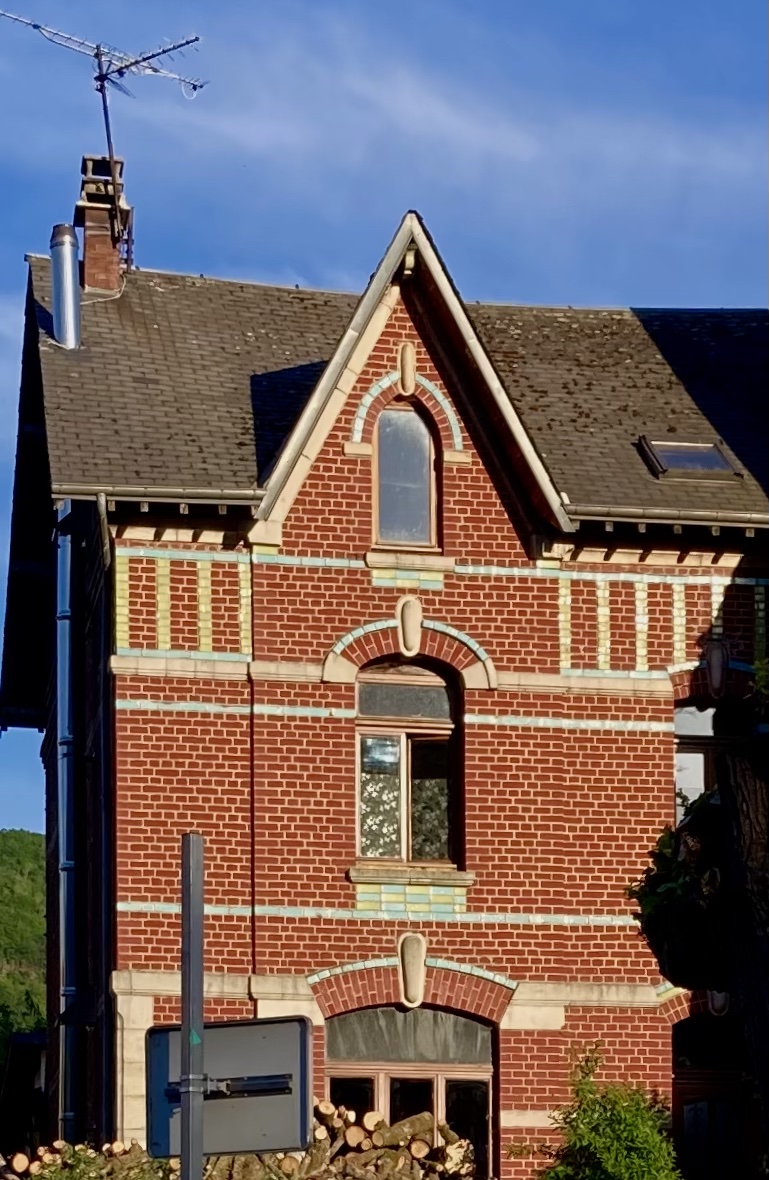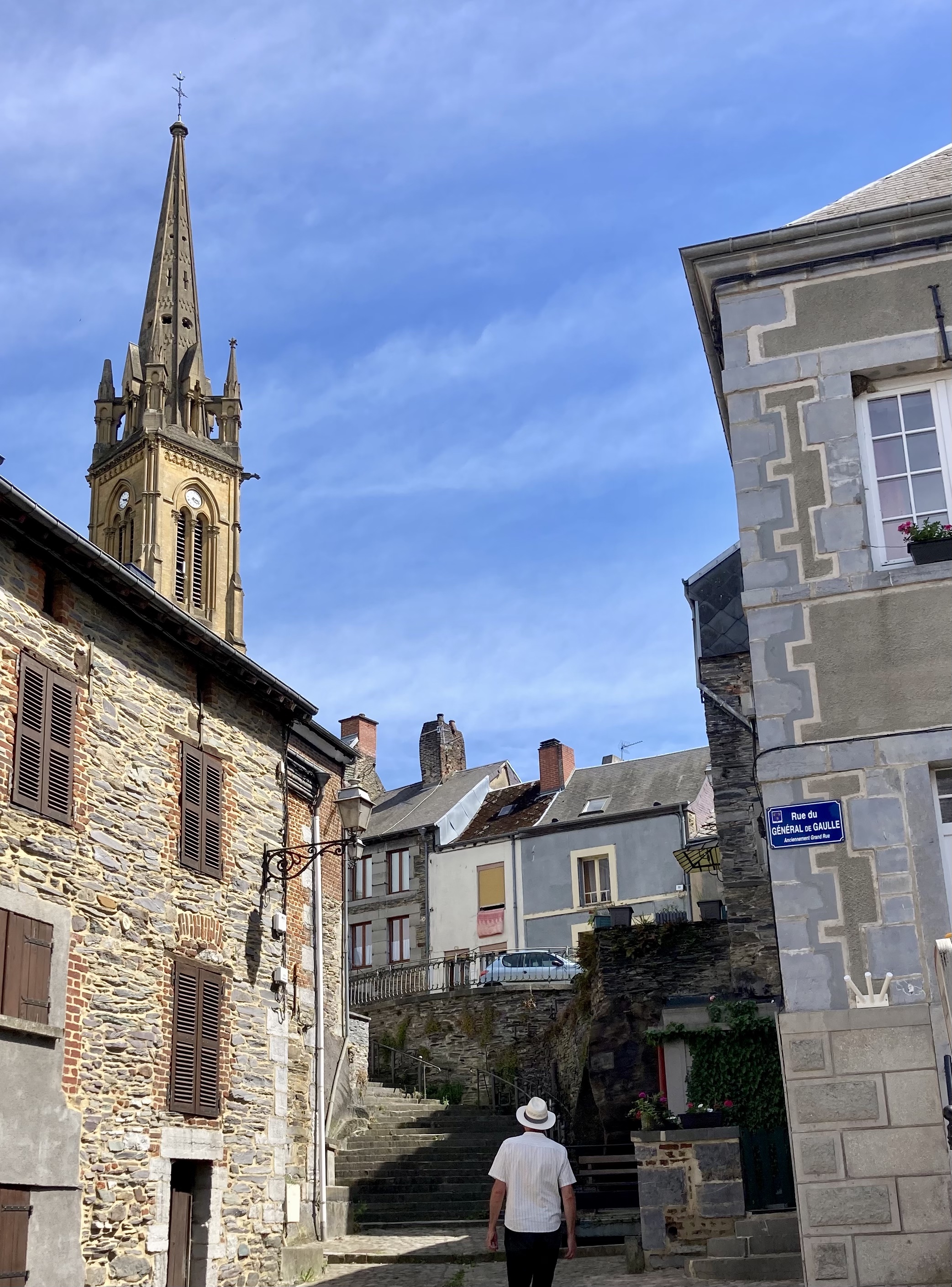
SW on the Rhone au Rhin

part 2 – Mulhouse to Saint-Jean-de-Losne including a tiny bit of La Saône

10th to 22nd September 2022

Saturday was rather another rather long, and initially wet, day, travelling from Mulhouse to Dannemarie. For this section of the canal we had to have an éclusier with us, although the stretch is being automated and within a year or two I expect it will all be operated by remote control in the hand of the boater.

This is both good and bad – good for the independence of the boater, but bad and sad for the éclusiers who lose their livelihoods.

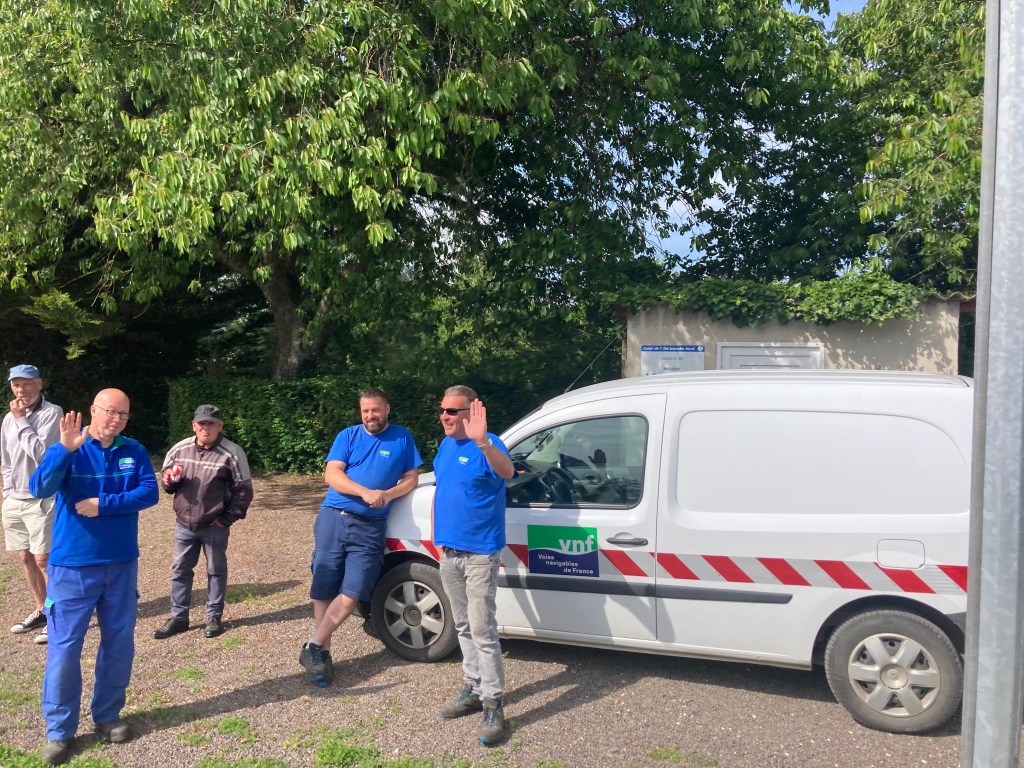
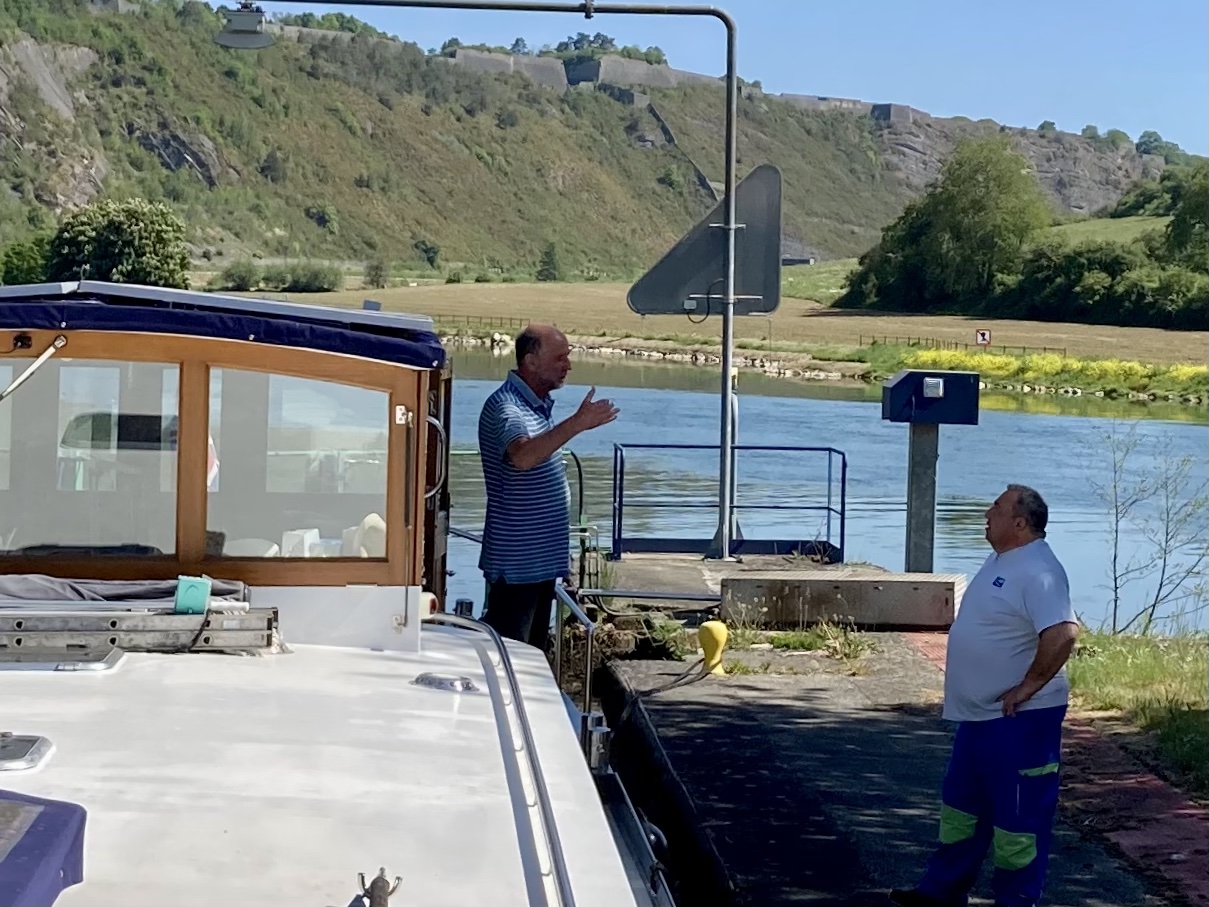
Initially we were accompanied by one éclusier on a VNF motor scooter; he was a friendly and helpful guy, chatting away to me; I replied in my brokn French, and we mostly seemed to understand once an other.

He remained cheerful in his wet weather gear even though travelling on his motor scooter between the locks.

We were to travel 23 kilometres, and with as many locks – uphill. We set off, as mentioned, in the pouring rain and for the first couple of hours it continued to pour.

So rope crew was determined to be as cheerful as the éclusier, bundled into her wet weather gear too. (To be honest I rather like the rain – very refreshing after the hot summer).
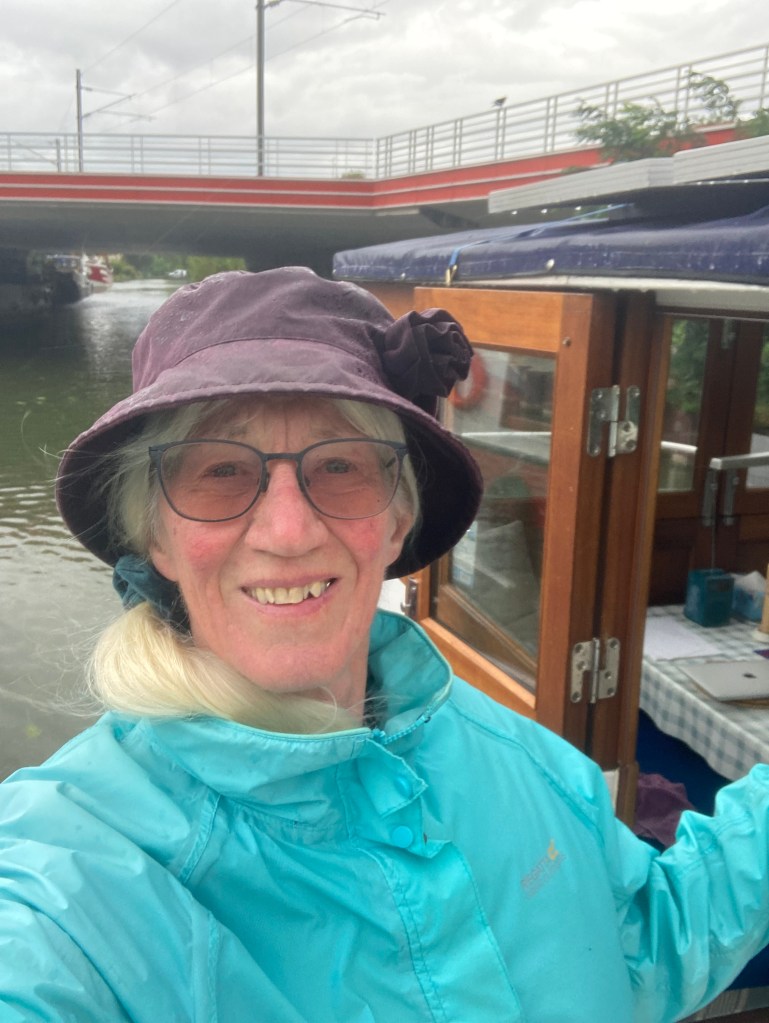
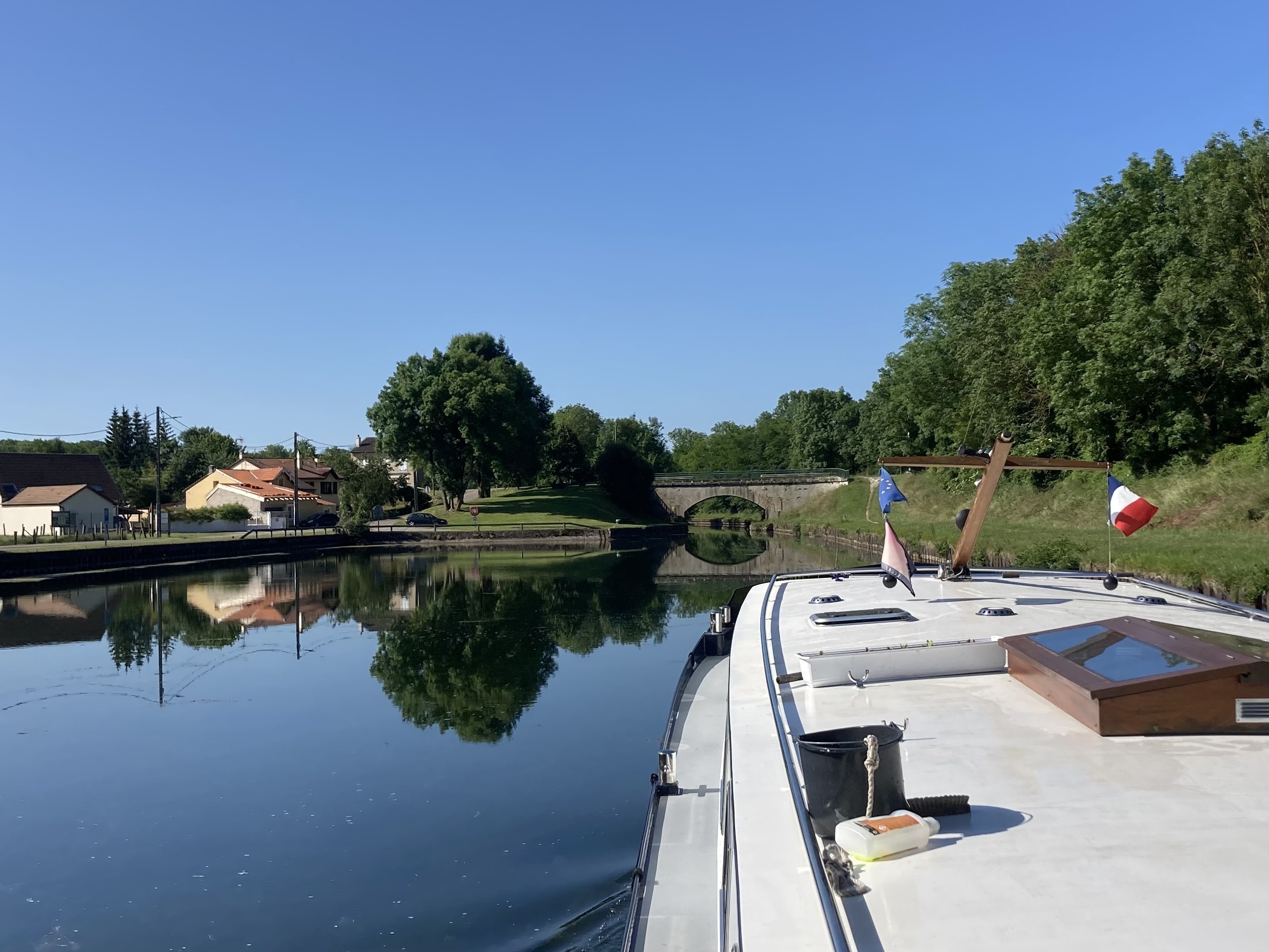
We quickly left the town behind us and enjoyed the open views – and duckweed topped waters! The green set off my few paltry sunflowers rather well.
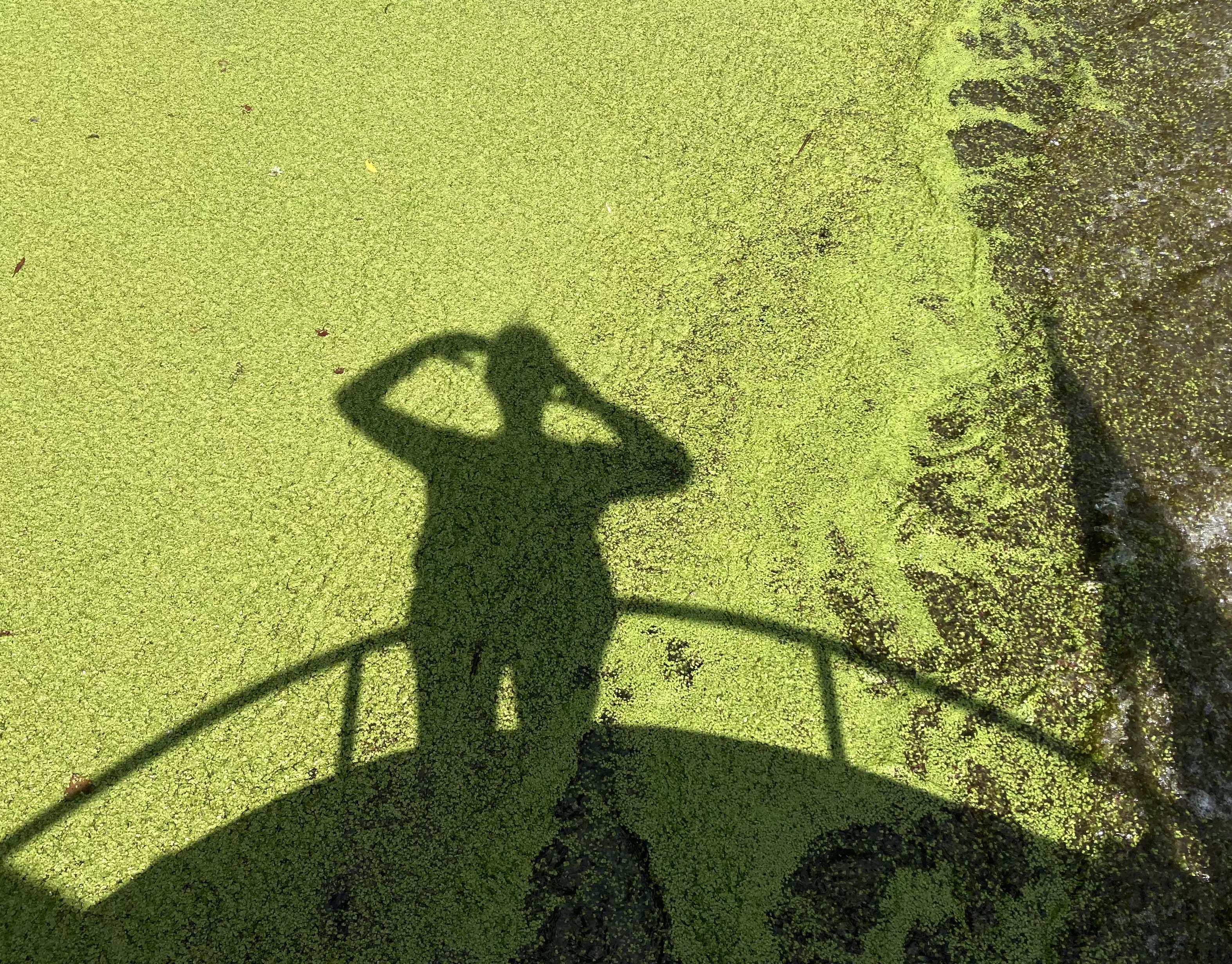
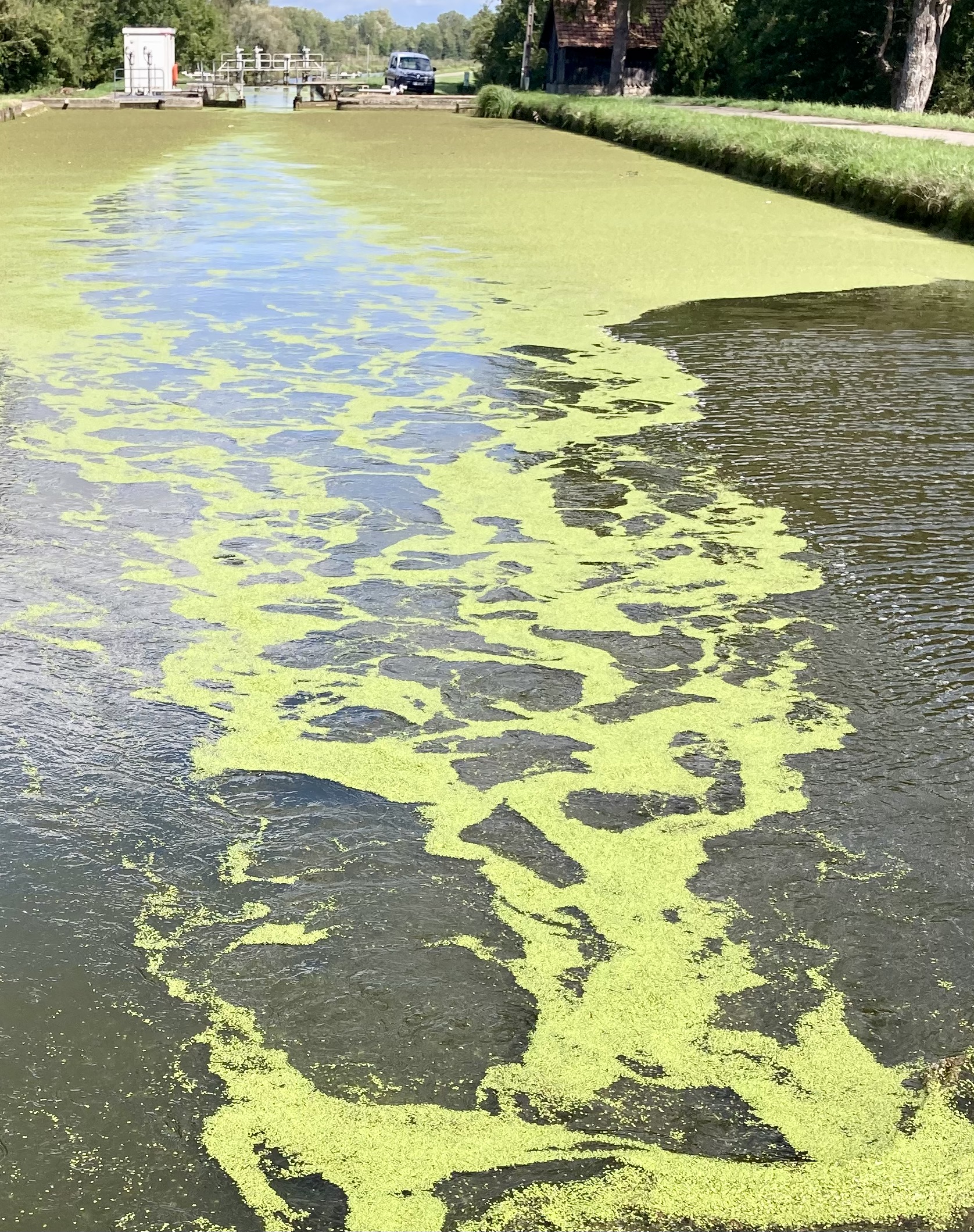
The duckweed also gave me a chance to muck about with shadows (yes, the sun made an appearance), and to enjoy the green lace patterns we left in our wake.

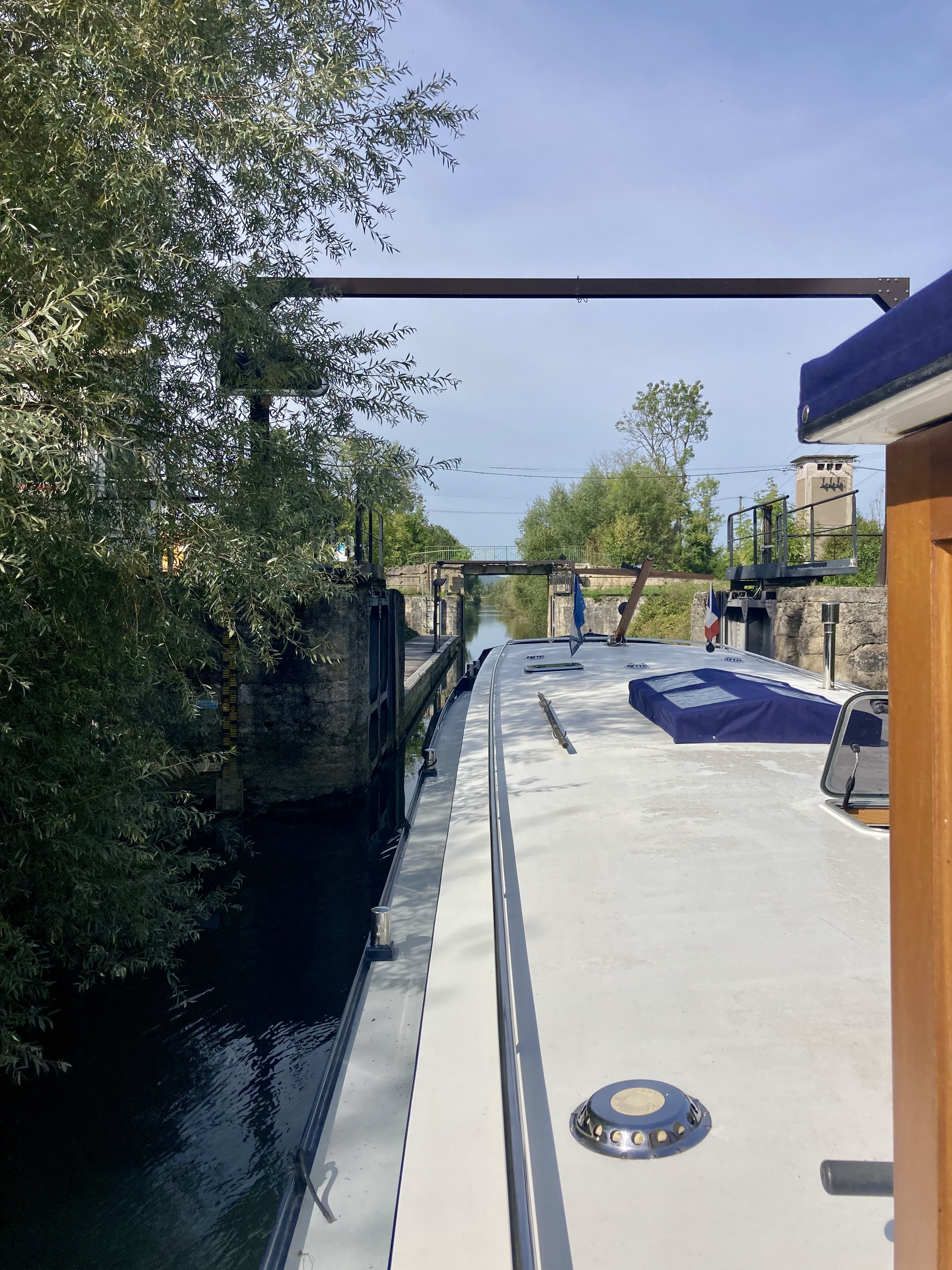
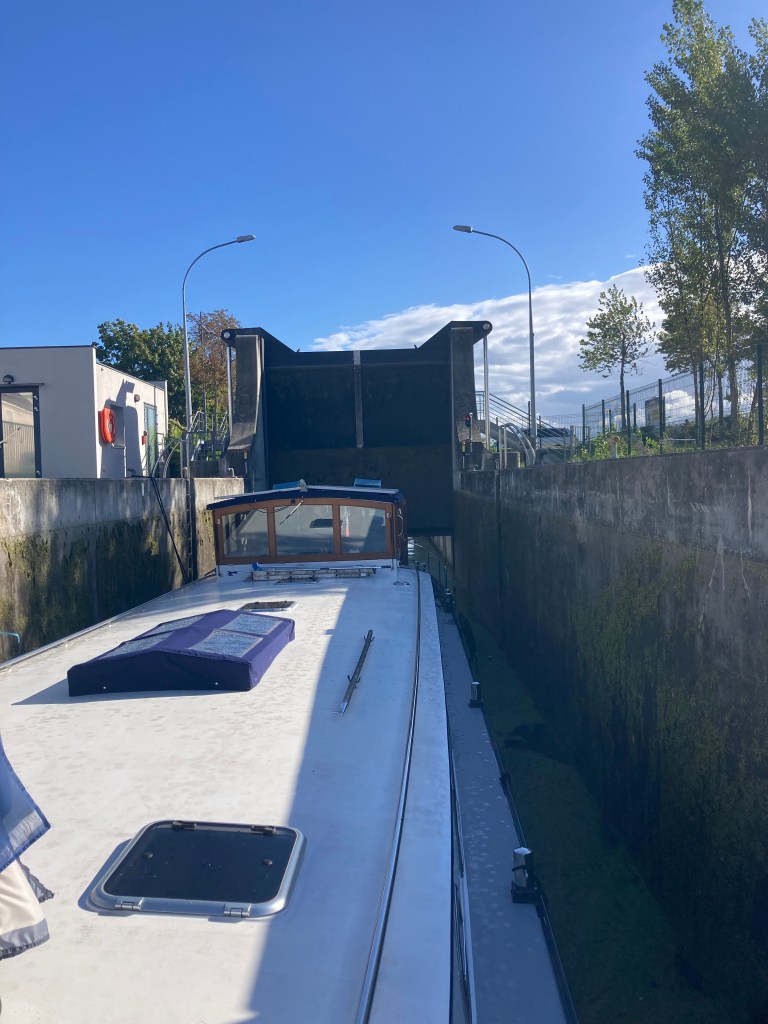
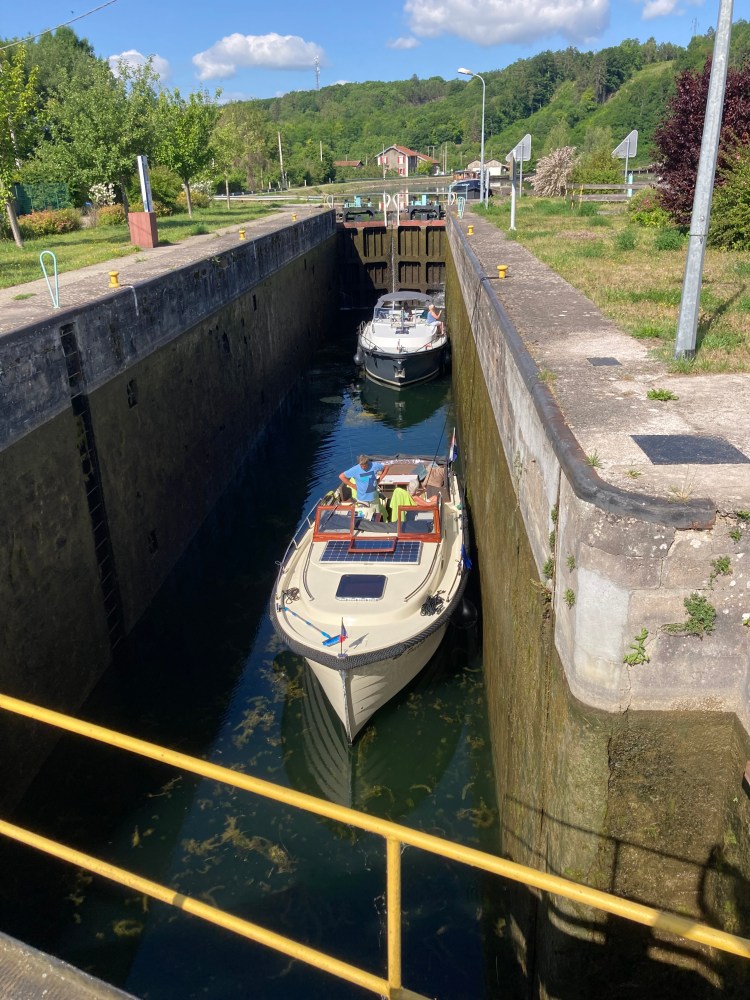
The locks felt quite narrow on they stretch. Officially they are 5.2m wide, and Calliope is 4.2m wide – so theoretically there is half a metre spare each side. It sometimes doesn’t feel like that, especially with an audience. But slowly does it, and we ease in smoothly.

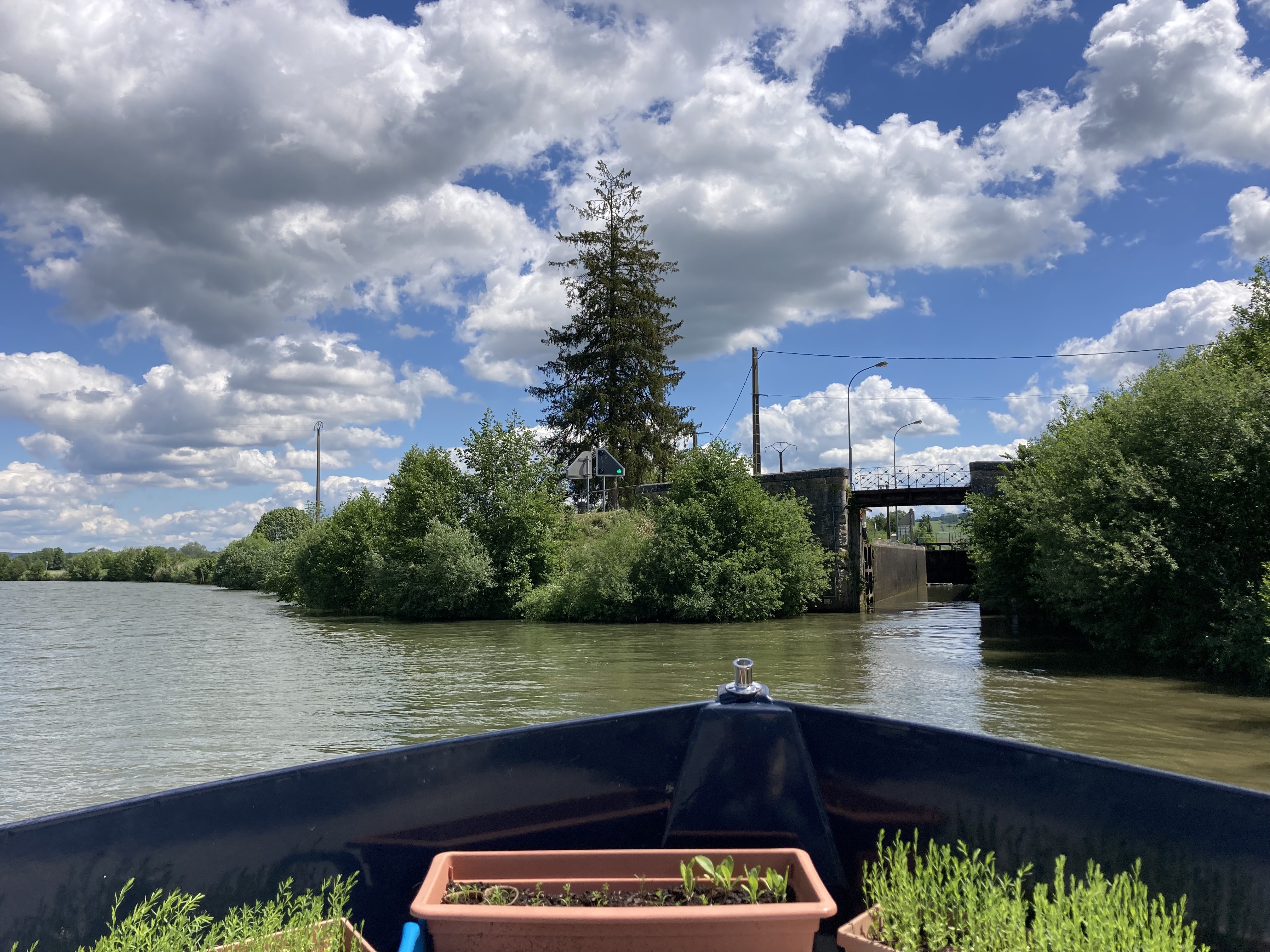
This one is at Heidviller.

The skies continued grey, though not wet, as we passed by Eglingen and the 15th lock of the day. Only another 8 to go!

But after that the weather gradually improved, with the sun coming out between the clouds. It became noticeably windier as we climbed upwards into the hills, and the terrain changed too.

After 7 hours continuous travel, with lunch taken on the move, we arrived at Dannemarie with its wide basin, small port and a mooring under the pine trees for Calliope. Phew!

It is a nice place to be – calm and interesting. I had a quick recce up the hill into the town, finding a small Super U supermarket for beer replenishment (we had given all we had to the éclusiers who had worked hard all day alongside us) and found a boulangerie for next morning.

I didn’t have time to properly explore the town, but did notice that there was a stork nest on the chimney of the town hall.
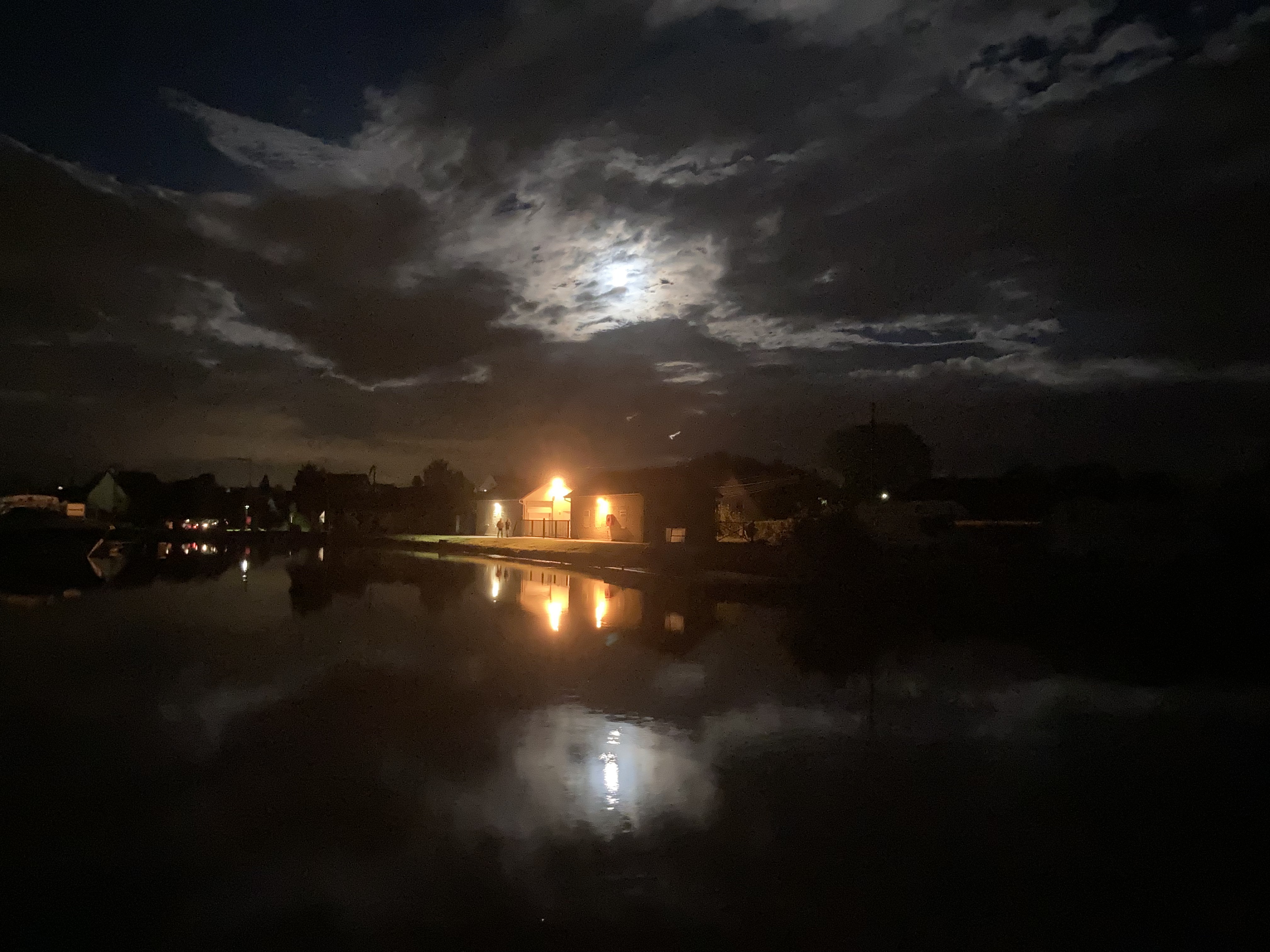
Other than that we settled for a quiet night to rest our weary bones.

The next day, Sunday, was to be our last ascending the hills and locks.

It was just the most lovely autumn day to go – blue skies, light winds and a few scudding clouds. (Does anything scud other than a cloud?) So much better than the drenching we had the day before.
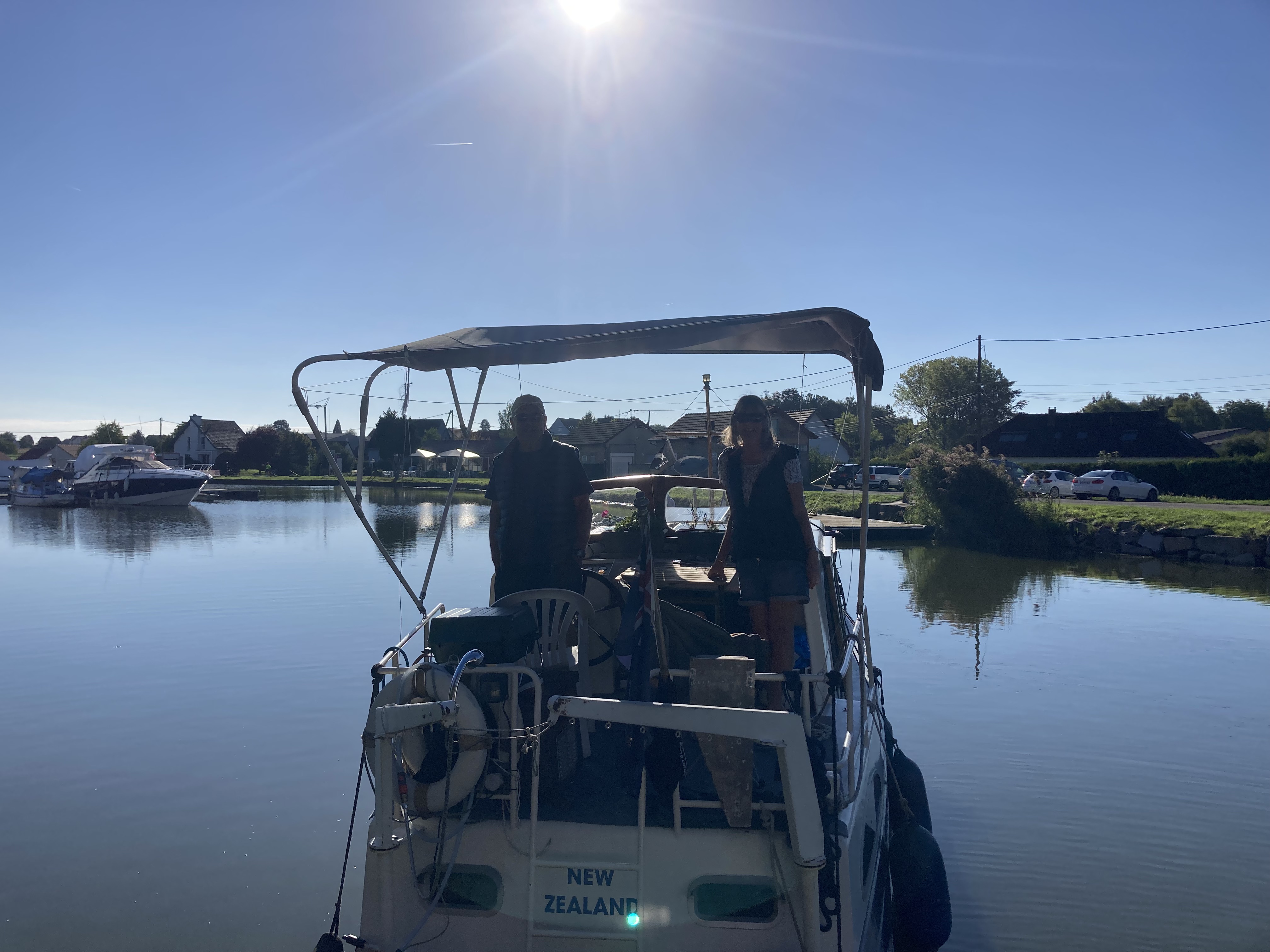
As were moored just in front of the lock and as we prepared to leave a boat came down through the lock, and slowed down next to a Calliope. It turned out to be Paul and Desirée who have been following this blog for awhile. (Thank you. I really am surprised and flattered when I meet anyone who reads my outpourings). Here they are, almost in silhouette against the morning sun. Happy cruising to them both, on Anna Sophia.
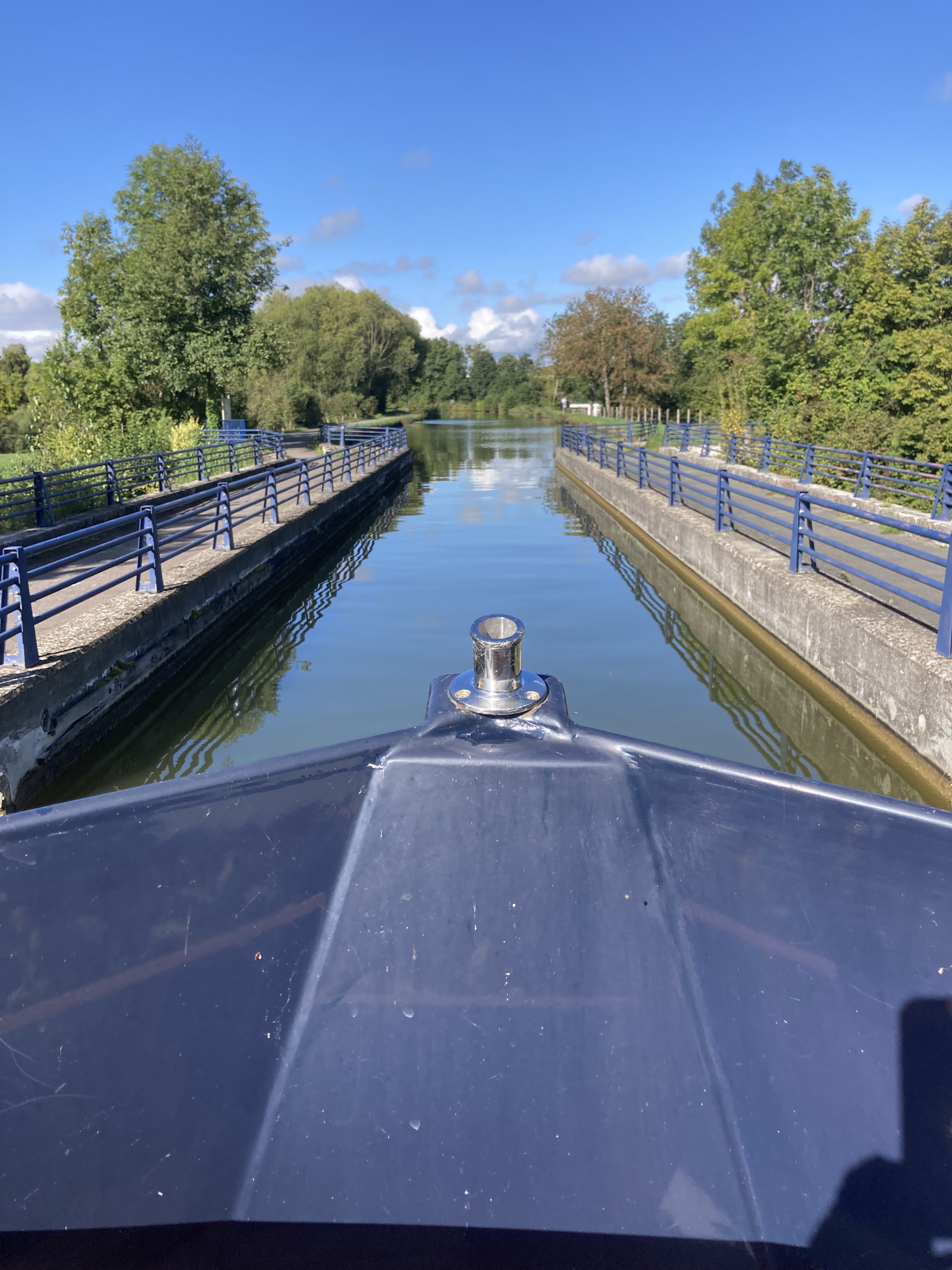
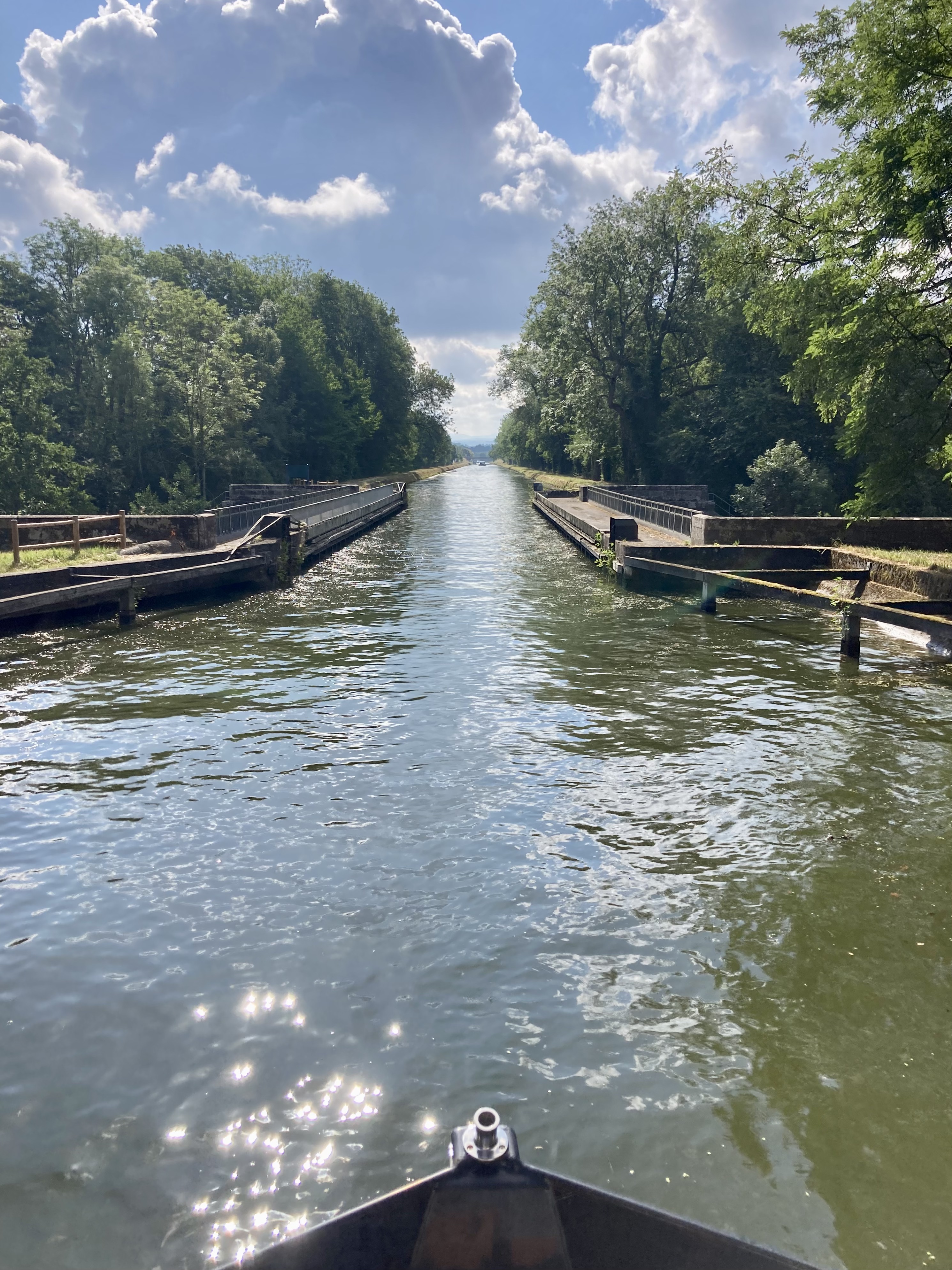
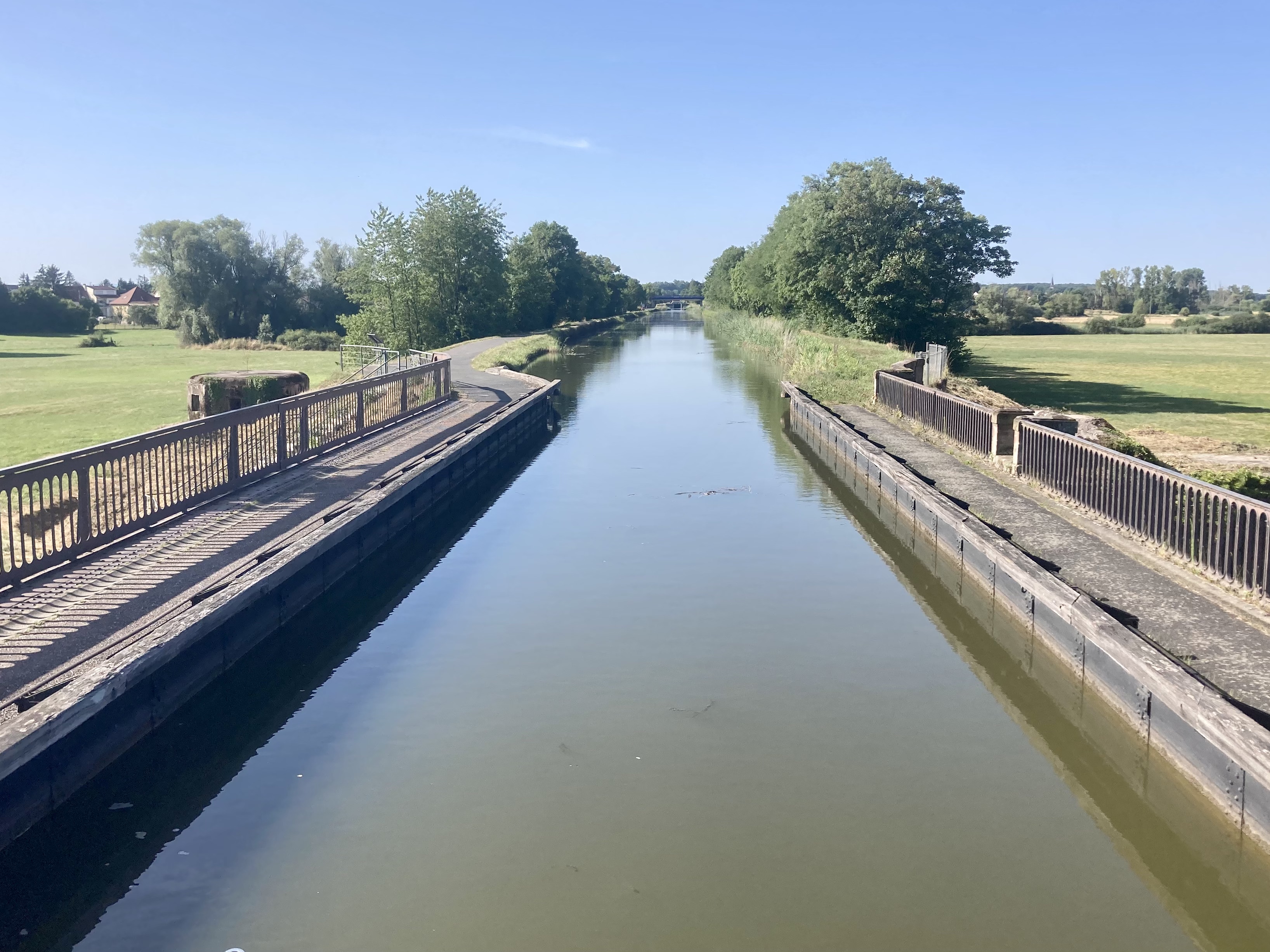
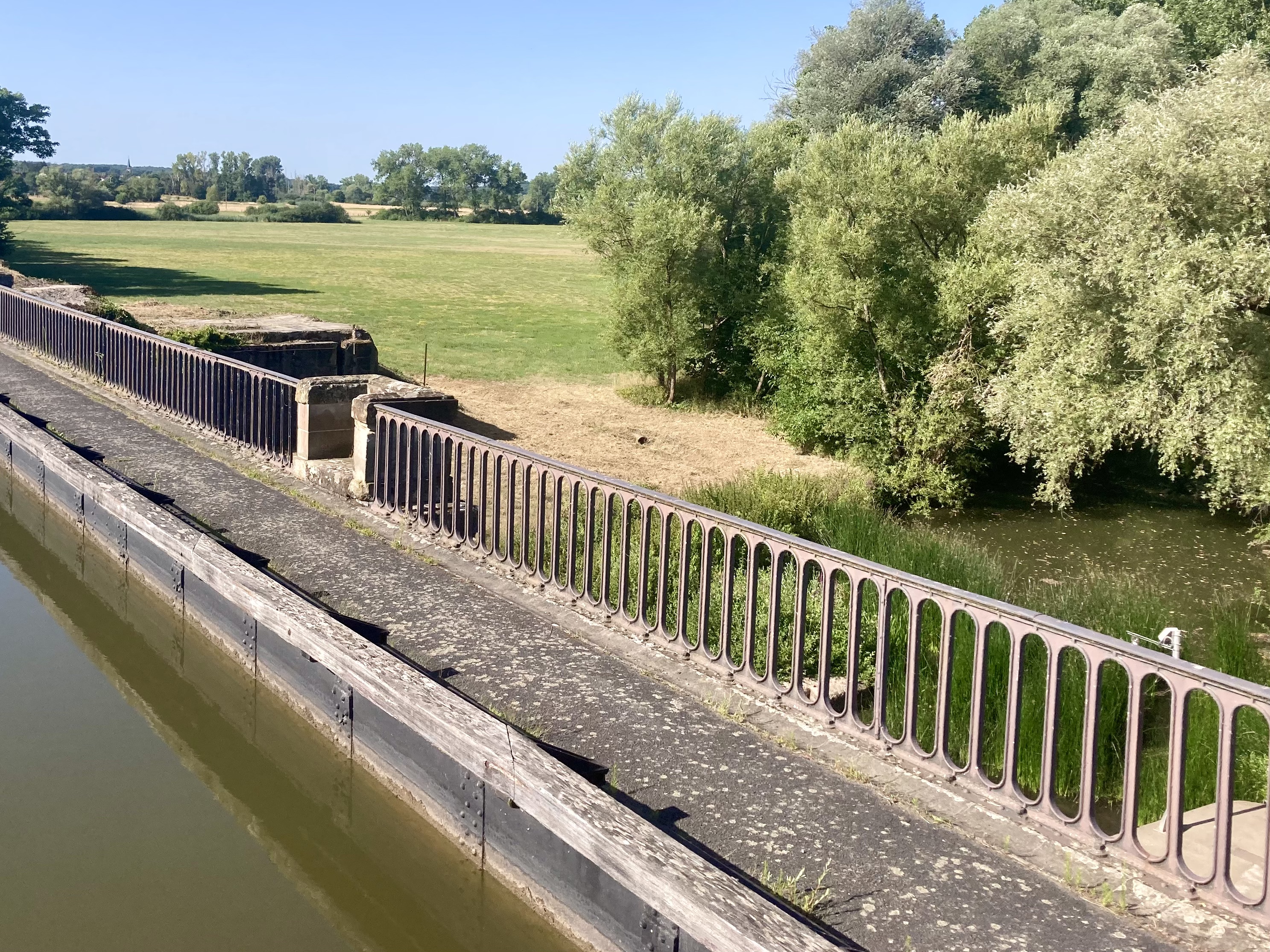
We were soon onto our second major day upwards, this time including a final rise of 9 locks in 1.5kms, and in total 15 over 4.5kms. But we began, as we left Dannemarie, going over a small ‘pont canal’, or aqueduct, over the river La Largue.

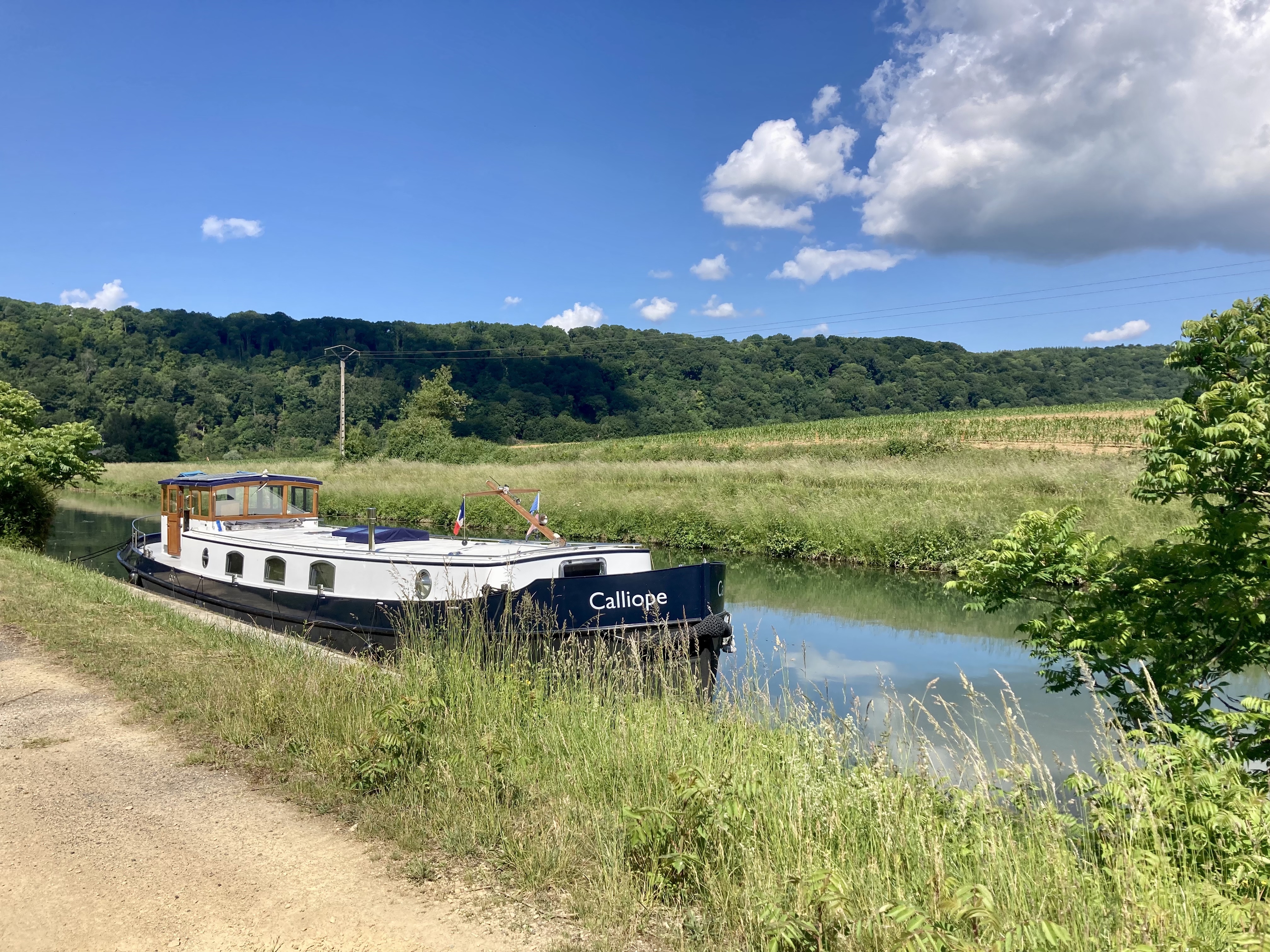
I can see it was time I cleaned the paintwork, but when you have lots of locks, and therefore lots of rope throwing, on a wet day things do get a bit mud-stained, including me.
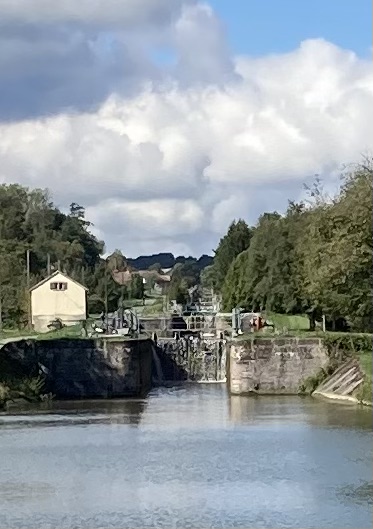
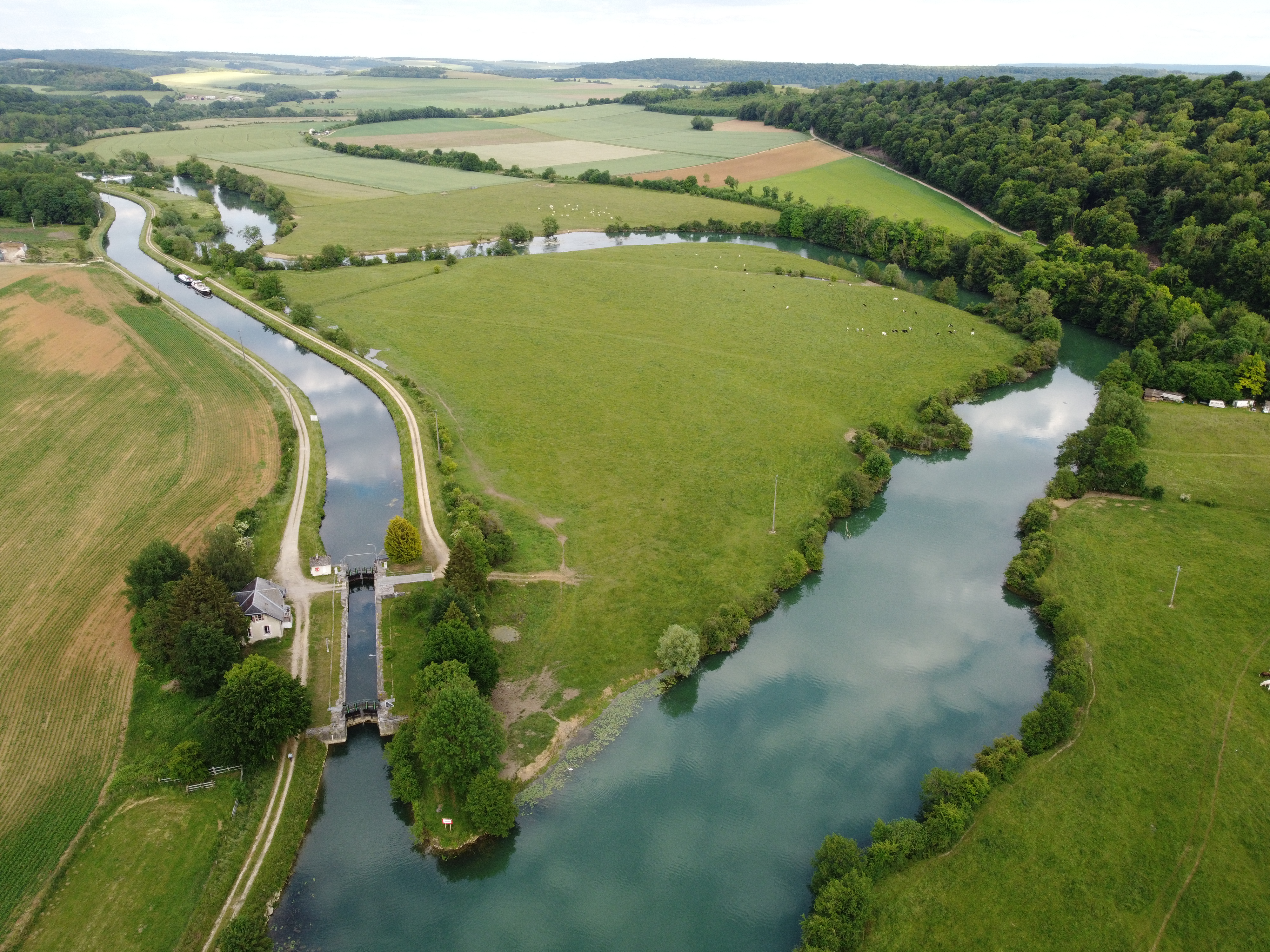
Let’s look at the locks first. Here is the flight of 9. Basically it is out of one, across a short pond, and into the next. They were all between 2m and 3m deep, so not difficult, and through great countryside.

It was also made easy for us by the éclusiers.

We had a good team with us. Our main (young) man for the day was Gabriel, but his colleagues came and went during the ascent to help, chat, or simply enjoy the view.

We handed out tea, coffee and b biscuits to keep everyone going.

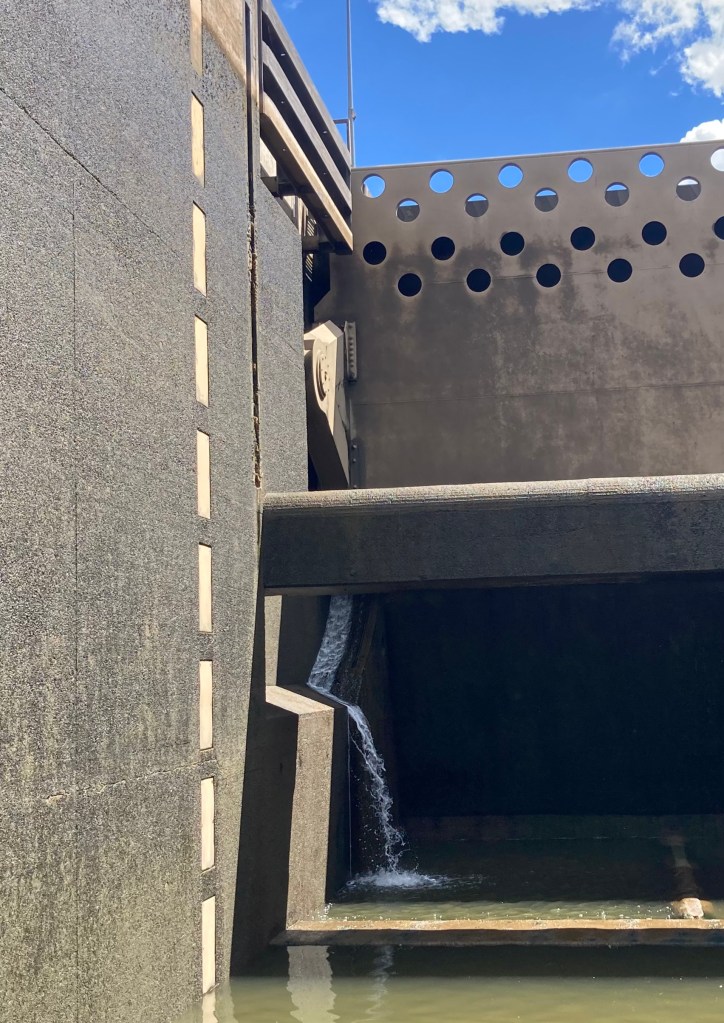
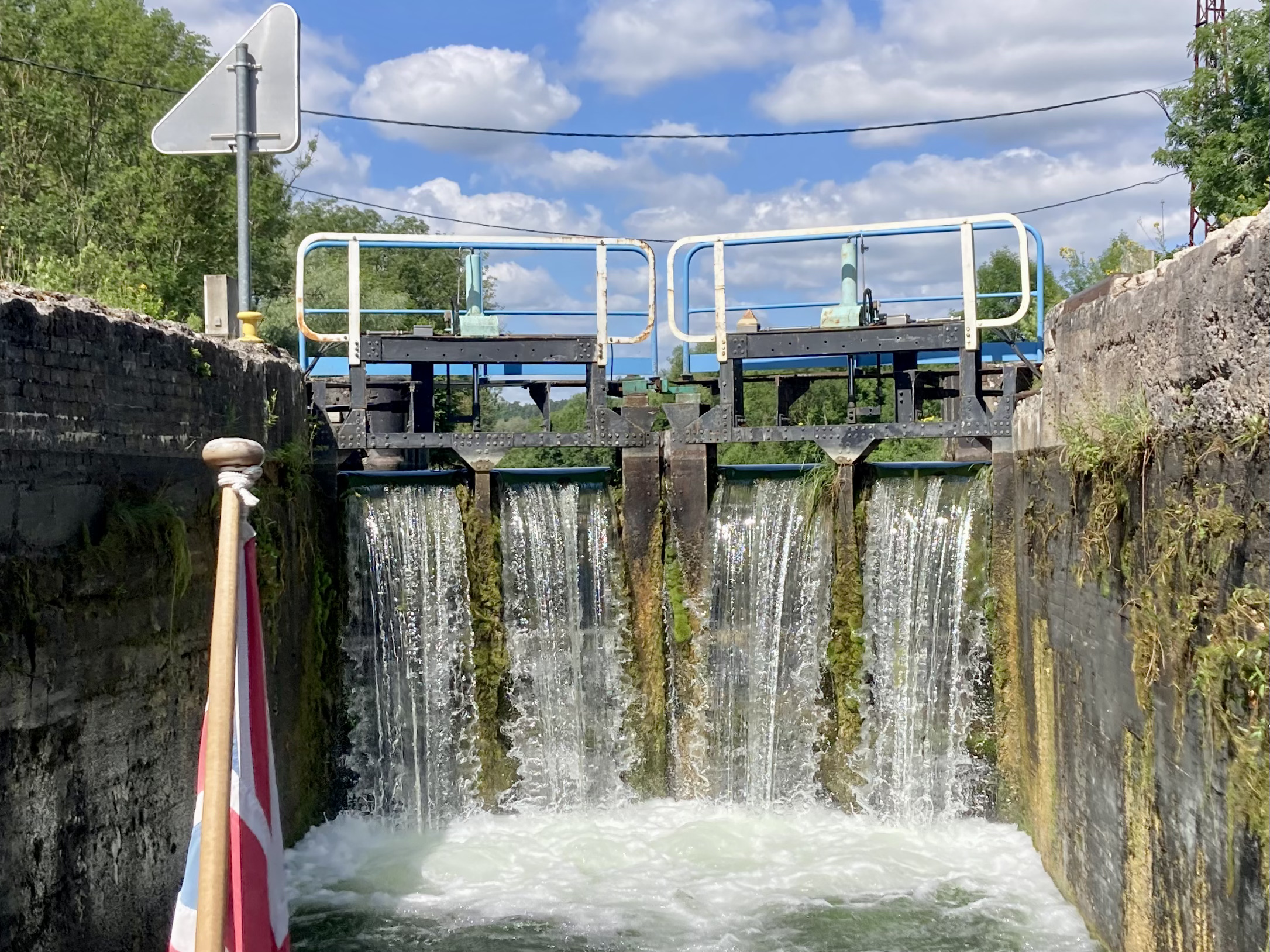
The locks along this part are set with a water level that means the water runs over the top gate to meet you like a waterfall as you enter.

With the sun out much of the time it gave an extra sparkle to the day.

It was a three hour trip to cover the 4.5kms – makes me smile to write that; snail’s pace!. Looking down we could see what we had jointly achieved. We were about 40m further up into the hills.

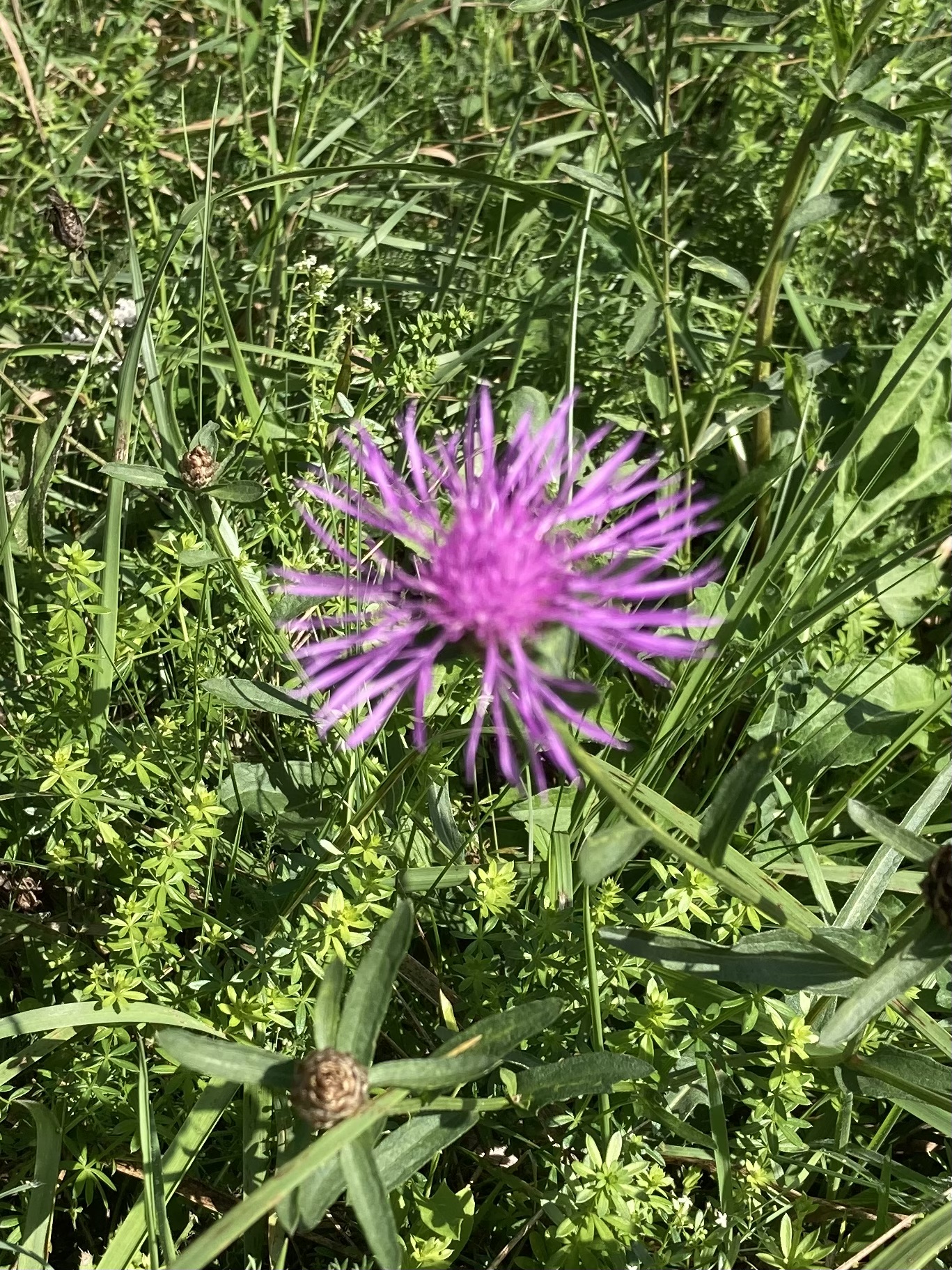
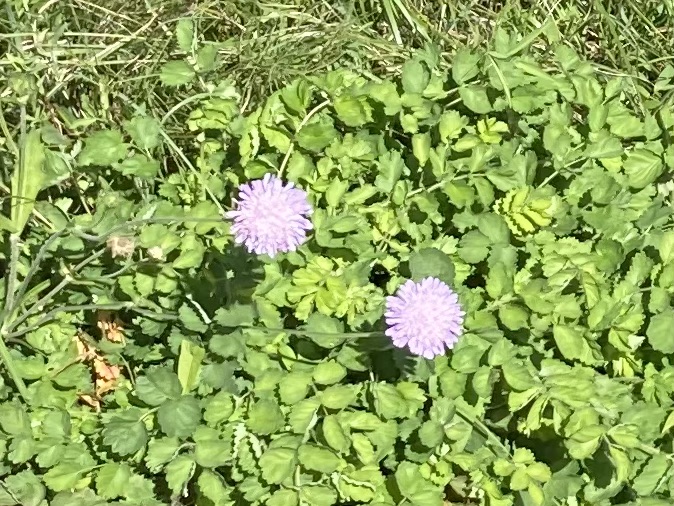
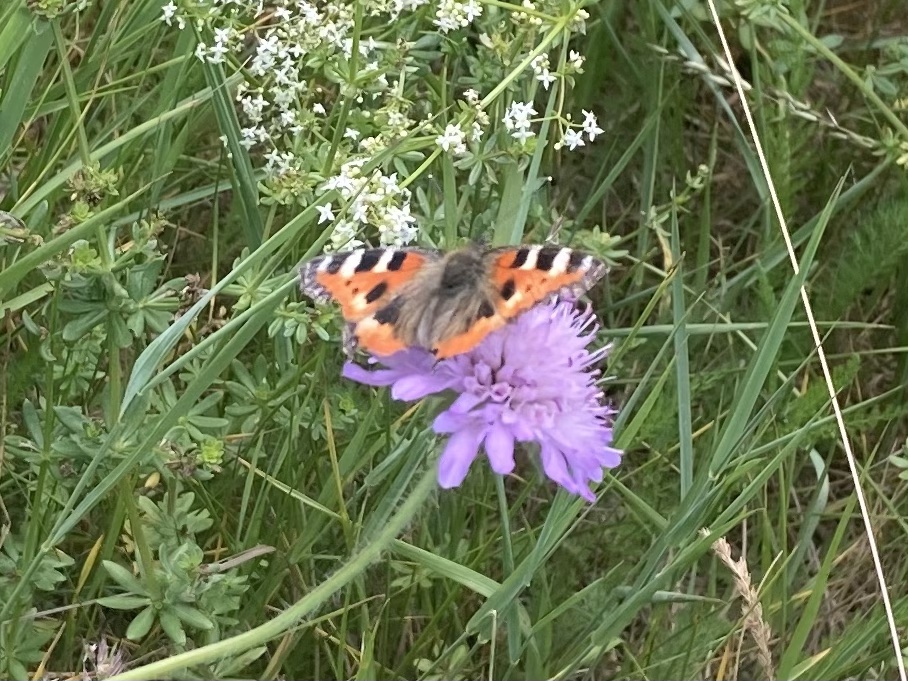
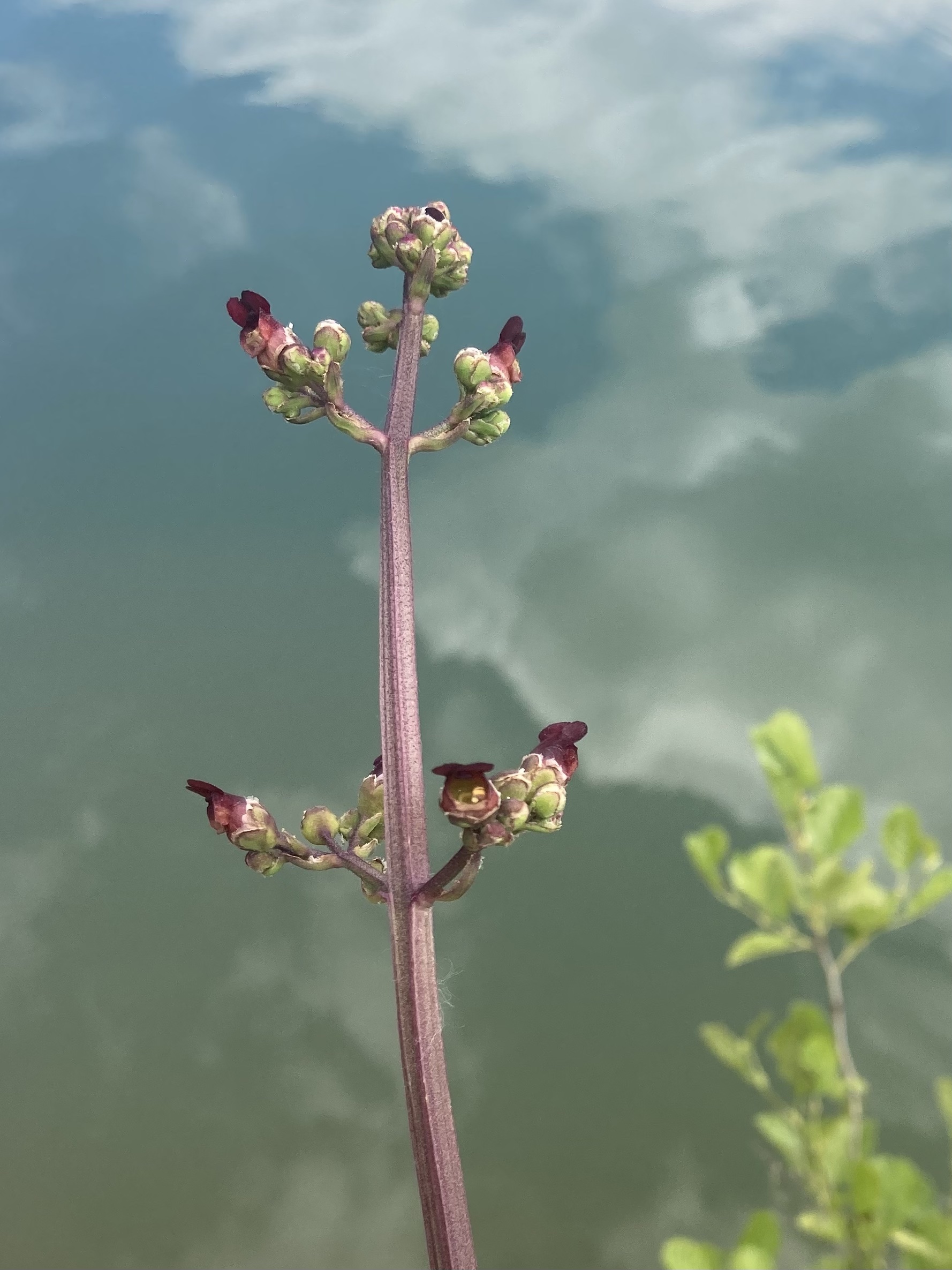
Let’s have a quick focus on nature because along the way I collected photos of a lock-side flowers and a heron taking off. Here they all are.

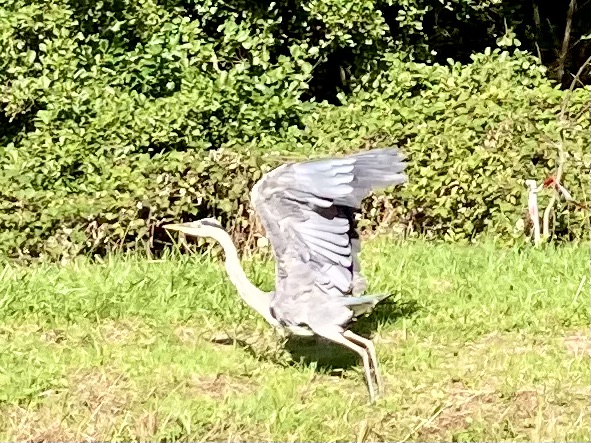
It was a very pink day, apart from the heron.

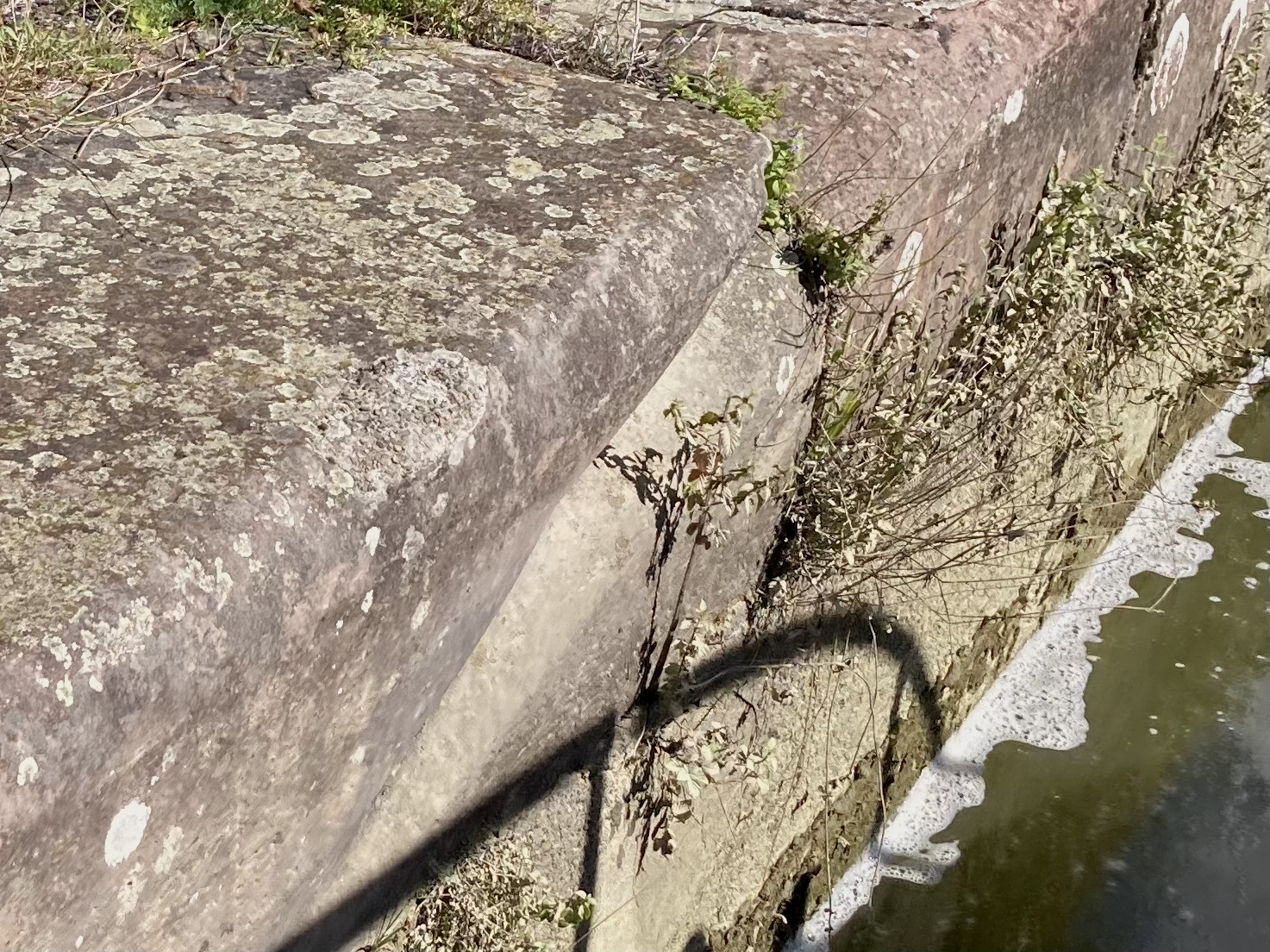
And I took photos of something else that always fascinates me – the grooves in the tops of the lock walls caused by countless ropes over a couple of centuries.

It makes you think back over the centuries – this canal has been open since 1834, so almost two hundred years.

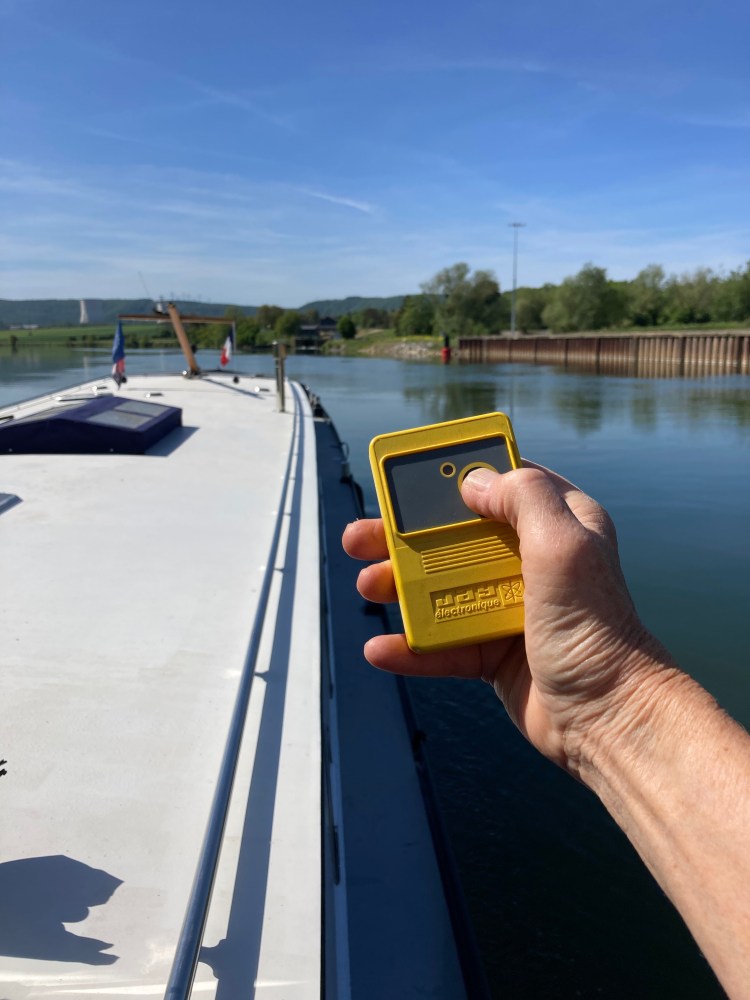
At the top of the last lock up our éclusier Gabriel handed over our new box of tricks.

We have had many telecommands (remote controls) for locks over the years …..
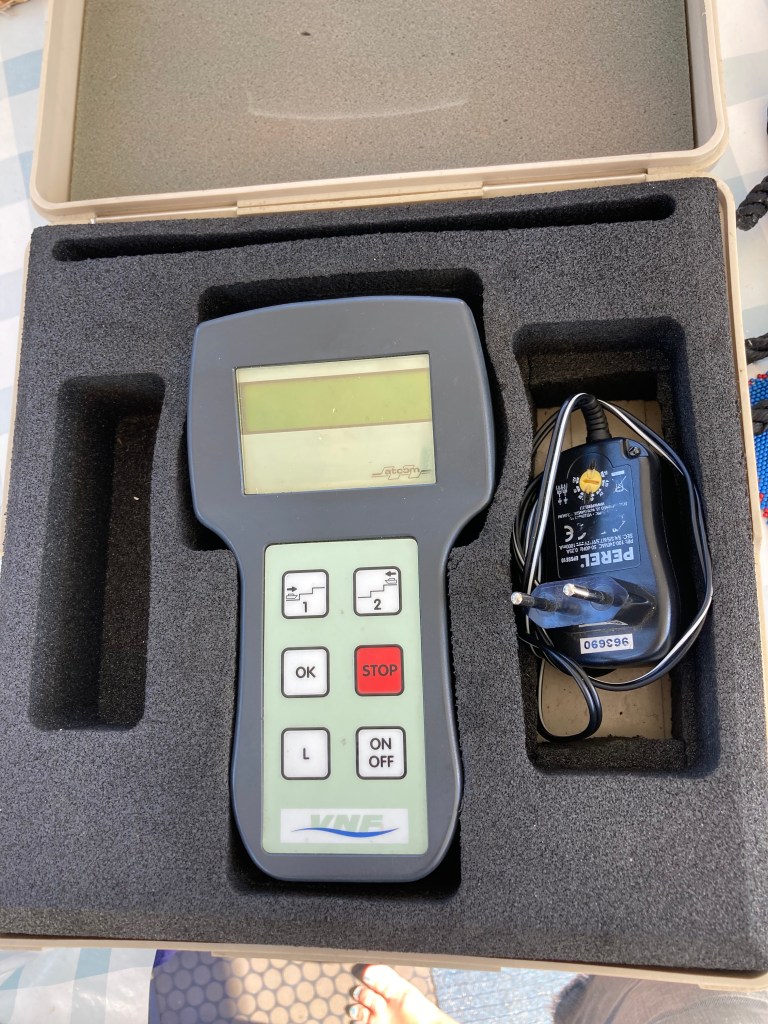
…. but this was a new version – larger, in a box and with a charger.

Interesting; and nice to be back in charge of our own lock operation – and going downhill!

Let’s see how we get on with that for the rest of our journey on this canal.

(I probably should have trimmed the bottom off this photo. Apologies for my toes, complete with the chipped remains off bright blue nail varnish for my niece’s wedding – or perhaps, if I’m lucky, you haven’t noticed.)

So we continued on alone, waving goodbye to Gabriel and his manager, who now both had the rest of the day off. We cruised, without locks, for 5 kilometres – essentially along the top of a range of hills.
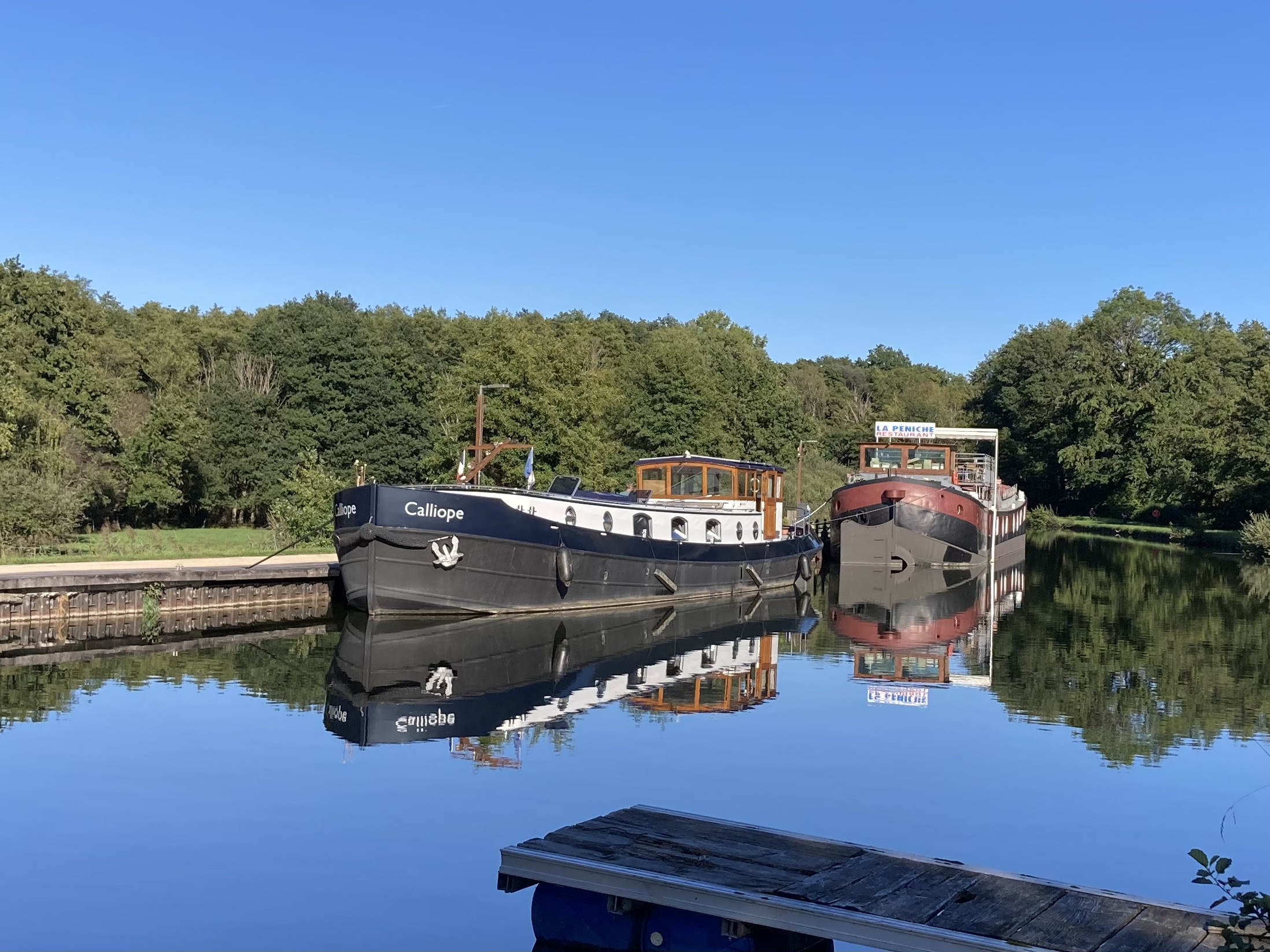
By mid afternoon we were approaching the mooring for the night – Montreux-Chateau. At first we thought there was no space for us, but as we passed the big restaurant barge a big long empty quay opened up to our view and we tied up with glee.

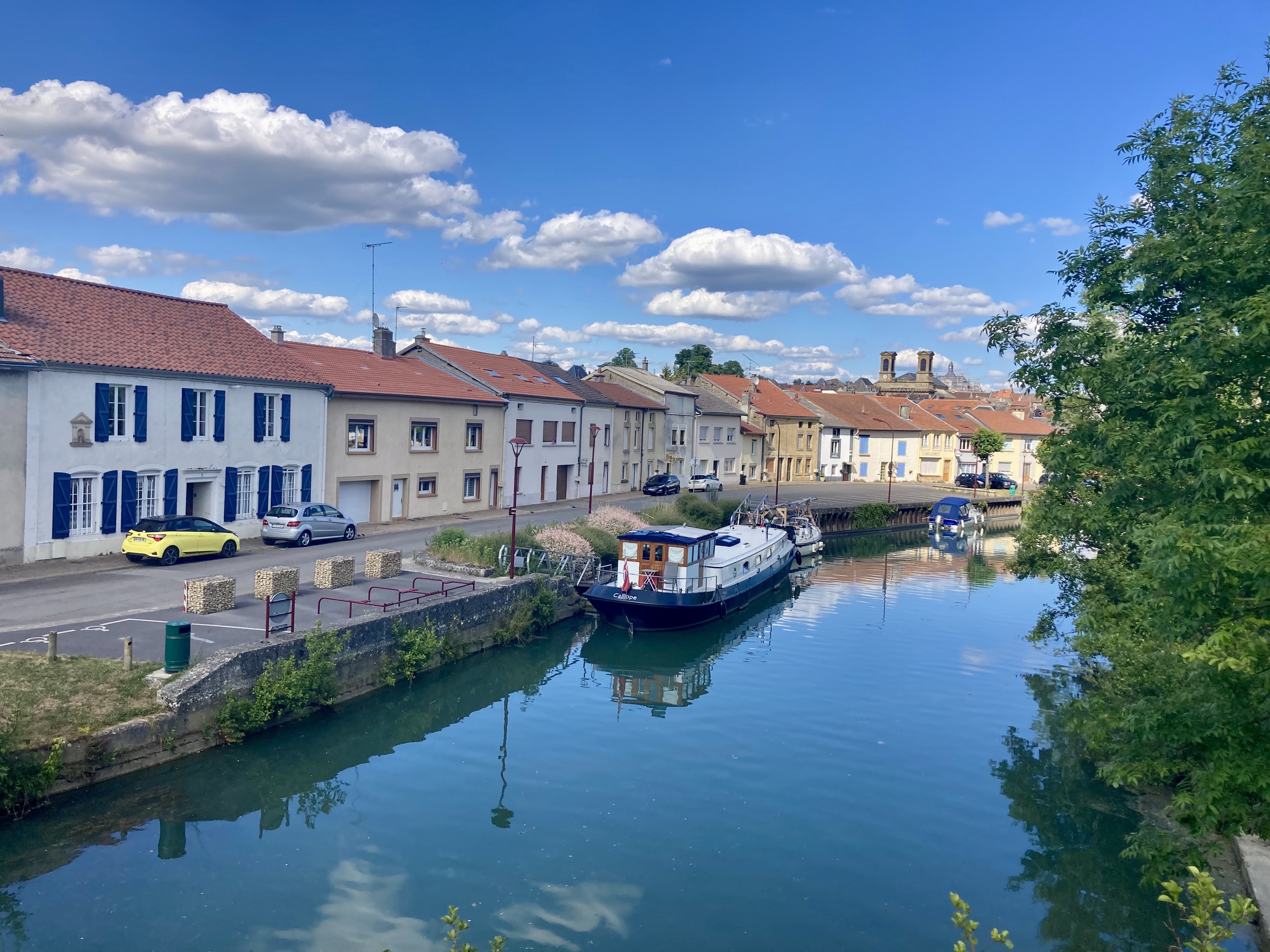
Blue skies and reflections to be enjoyed for the rest of the day.

After a quick wash down of the decks and bollards (they get somewhat muddy after 37 locks as mentioned before) we both had a well earned rest.
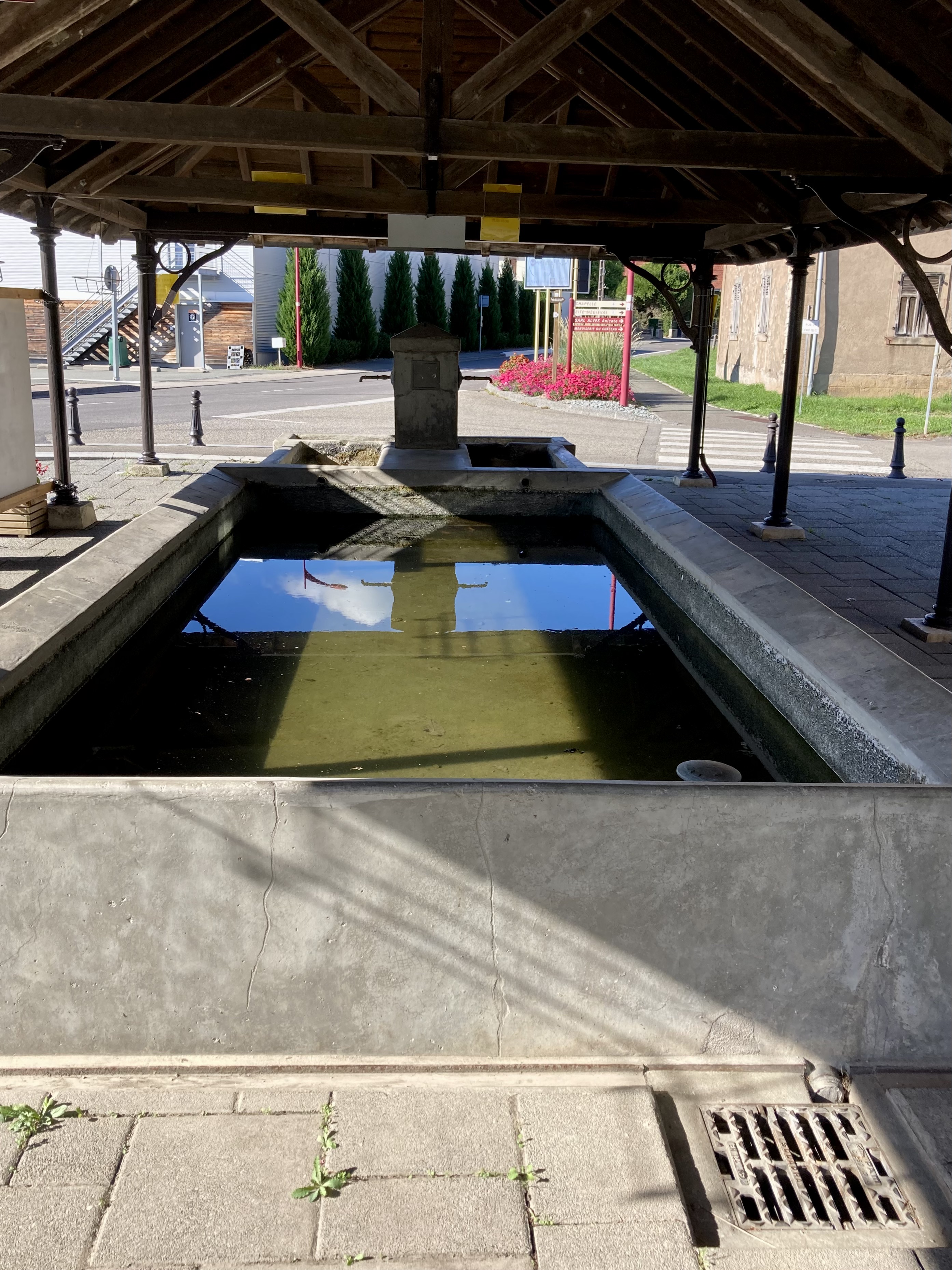
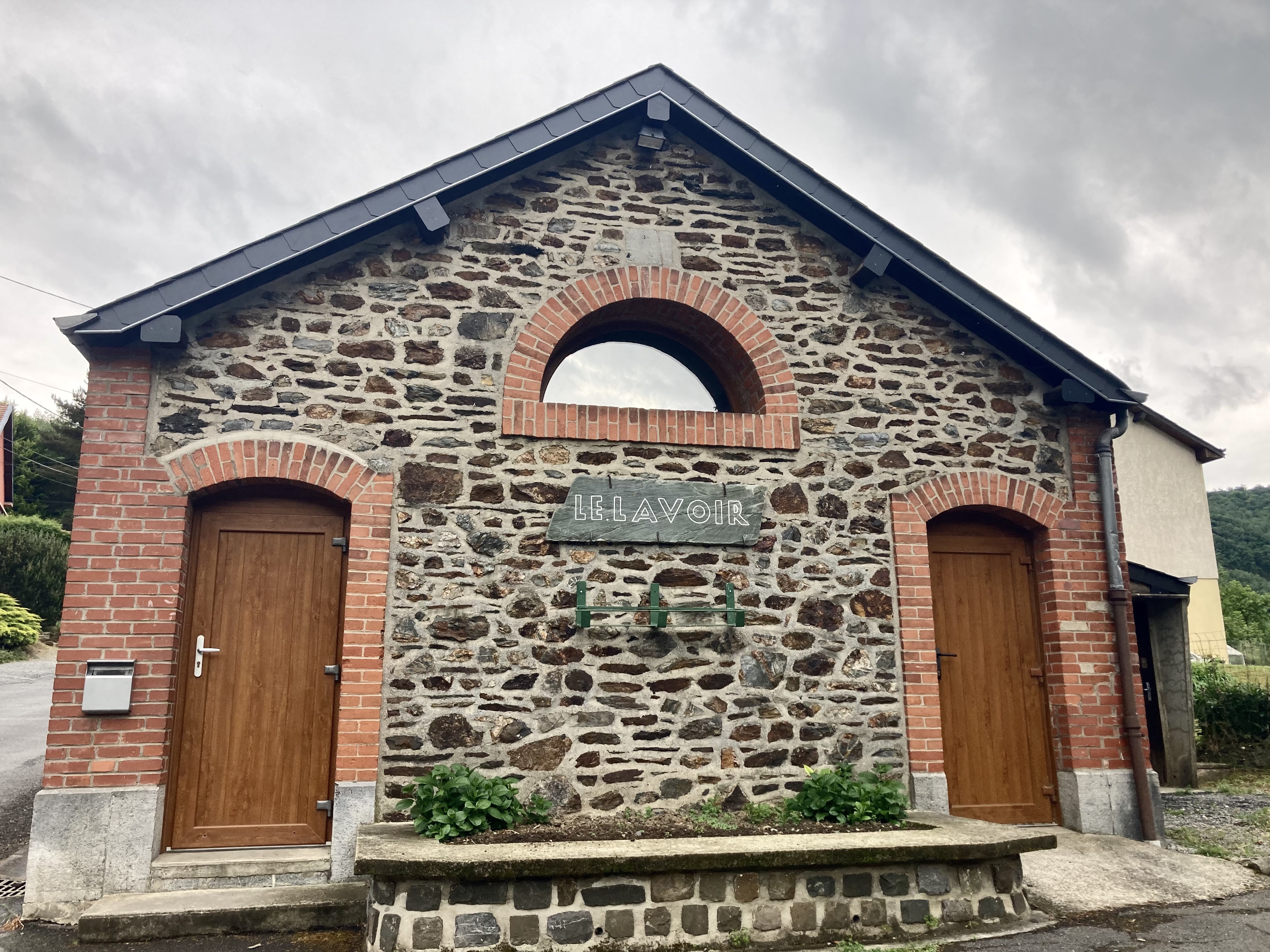
A short walk in the afternoon disclosed that there is no longer a chateau here. All that is left is a small grassy knoll and the lavoir that was part of the chateau’s out buildings.

But we did find a small supermarket that was open next morning for a quick trip to get bread and a few things we had run out of.
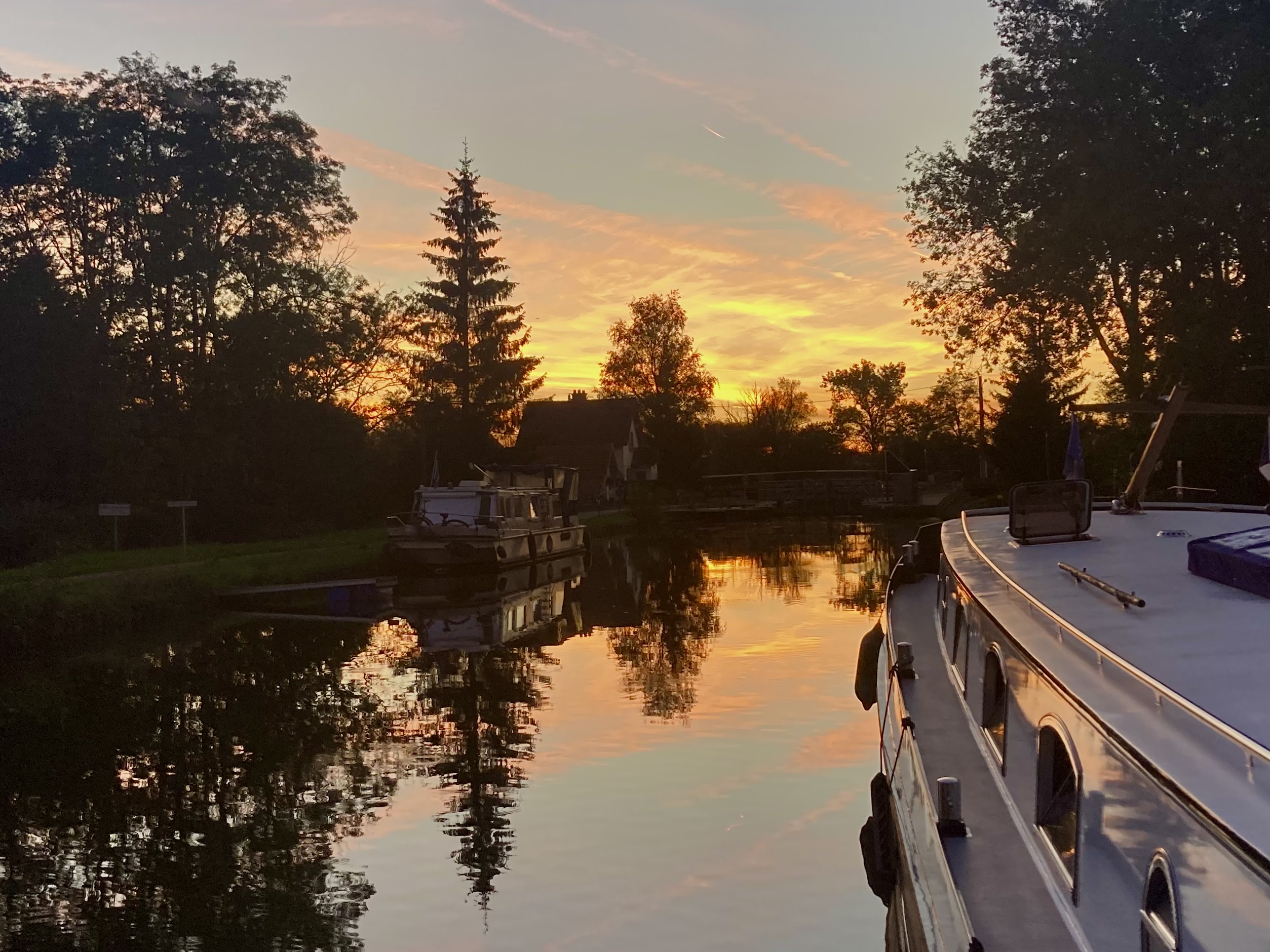
The evening there was perfect – quiet and with wonderful skies. The sun set to the West and later a big moon rose in the East.
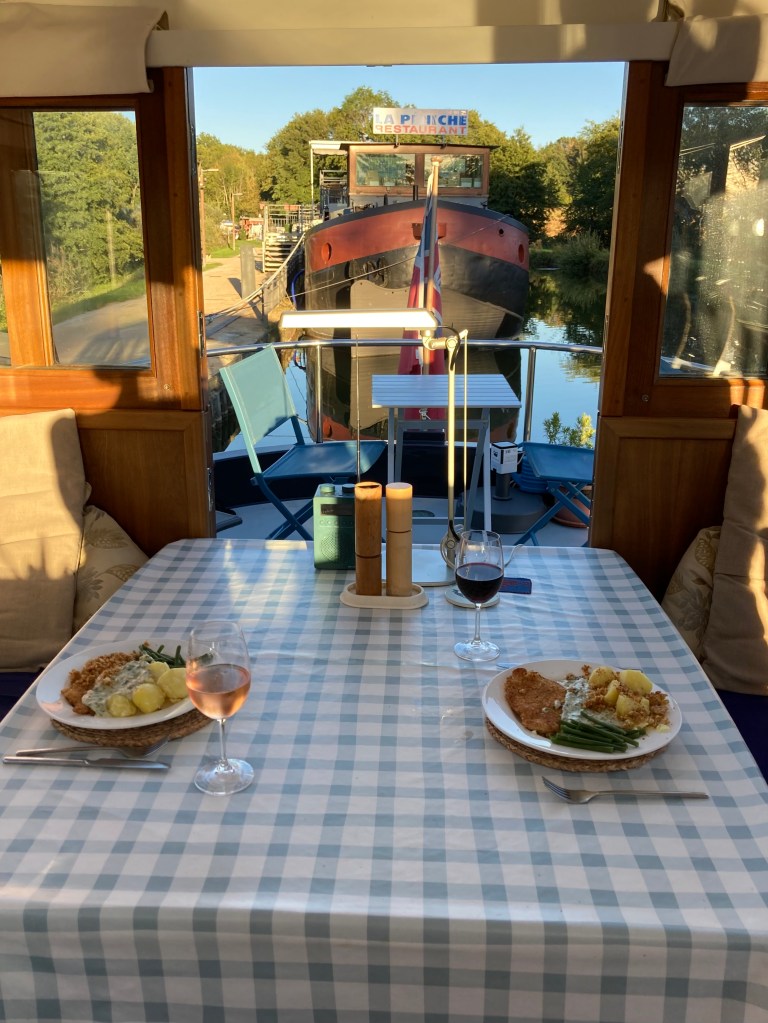
A drop of wine before supper and a meal of turkey escalopes, new potatoes, green beans, and a rather special parsley sauce (my secret recipe) set us up to enjoy the tranquility.

It certainly suited a Captain who had driven Calliope into 38 locks over the past two cruising days, each one only 1 metre wider than our ship!

Time to relax.

On Monday we were set for a different direction; downwards!

Everything started off beautifully this morning. We were all prepared with our new telecommand, but then an eclusier appeared to let us know he would be accompanying us for the first few locks as they sometimes had problems with the lock doors opening.

So he prepared and operated lock one, and the next few as well.

At the second lock I saw him eating a nice apple and he pointed across at the fruit tree laden on the other side of the water. Seeing my envious eyes he picked me a juicy apple for me too.

I have mentioned before how fruit and nut trees were planted at many of the locks, allowing Bargees and their families access to fresh produce as they worked. here wass another example.

I had heard that this was a lovely canal to cruise and we had lovely scenery all day. We began to see cattle – always a treat for me.

I think these are the famous, and delicious (sorry vegetarians) Charolais.

There were also some interesting obstacles, including a swing bridge, operated by our happy lock keeper and the ‘pont tournant de Froidefontaine. We did not get to see the ‘cold fountain’, if indeed it even still exists.
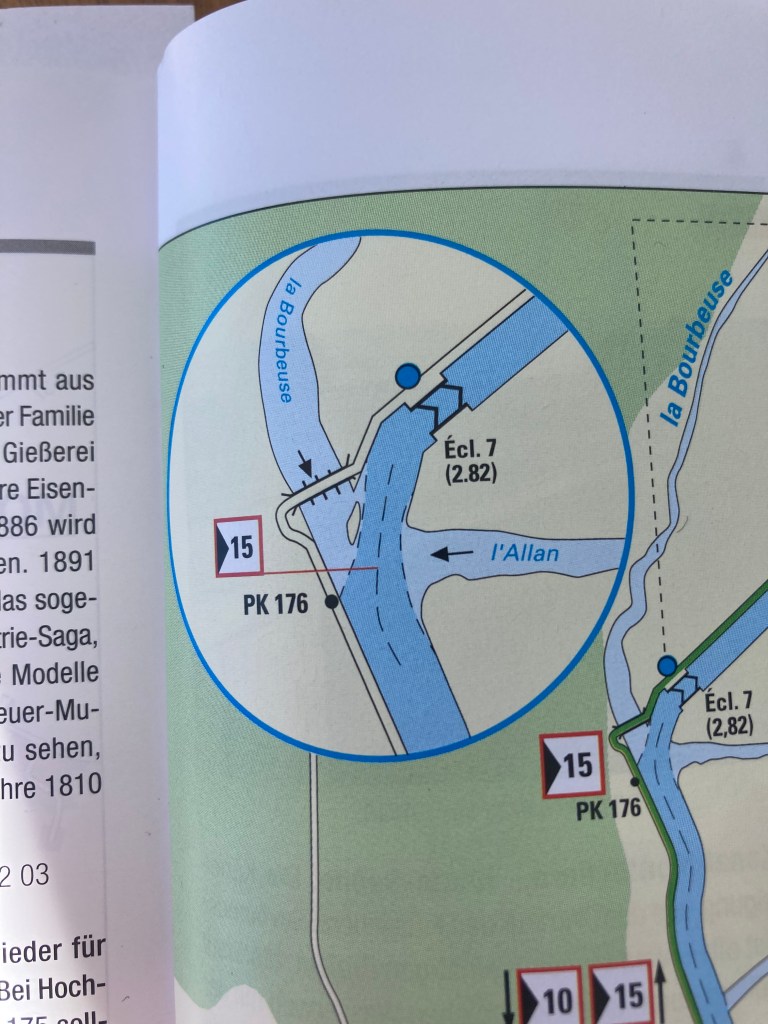
We had been cruising along close to both Le Bourbeuse and l’Allan rivers.

Now, just after écluse 7, it was time for them both to enter the canal and for a while the three waterways were as one, although it would not be long before the canal took over again.

4 kilometres further on Captain Stu had to take a sharp turn to port into a narrow aqueduct over river l’Allan, followed immediately by a lock. By now we were alone, operating the locks with our super-large telecommand. So we were glad to get the green and red lights, meaning that the lock was preparing for us, before Calliope set forth across the aqueduct!

As you can see the aqueduct was definitely narrow!

In fact not much spacer to spare either side!

But lovely views down onto l’Allan either side. As crew I get time to look at the view, and to take photos!

That lock gave me a bit of a surprise; at each lock you push up the blue lever to set it in motion; an alarm bell rings to indicate the lock gates are closing.

On this occasion the bell alarmed a nest of wasps in a hole at the top of the mechanism and they flew out towards me.

I think I then became the more alarmed of everything in the area! But no stings so all was well. You can just see two of the wasps in this photo.

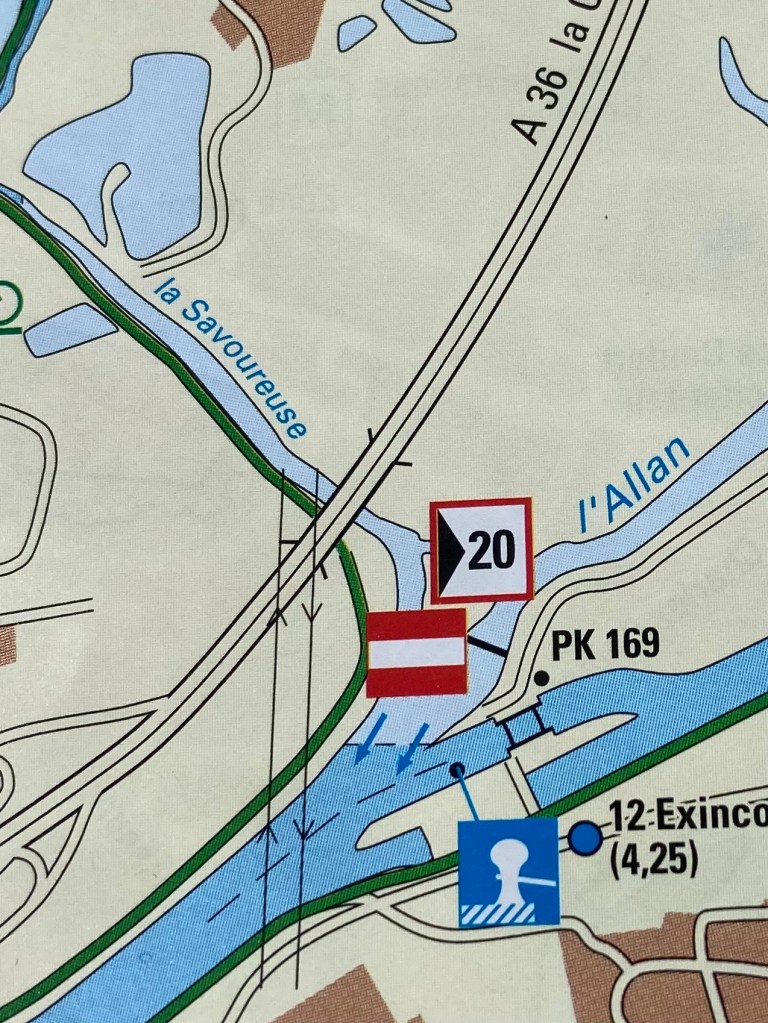
The meanderings of l’Allan continued, this time joining us just after lock 12 at the point where another river, la Savoureuse, entered the downstream flow.

These junctions always add interest, and sometimes add a degree of difficulty, depending on how strong the current is that comes in from the side.
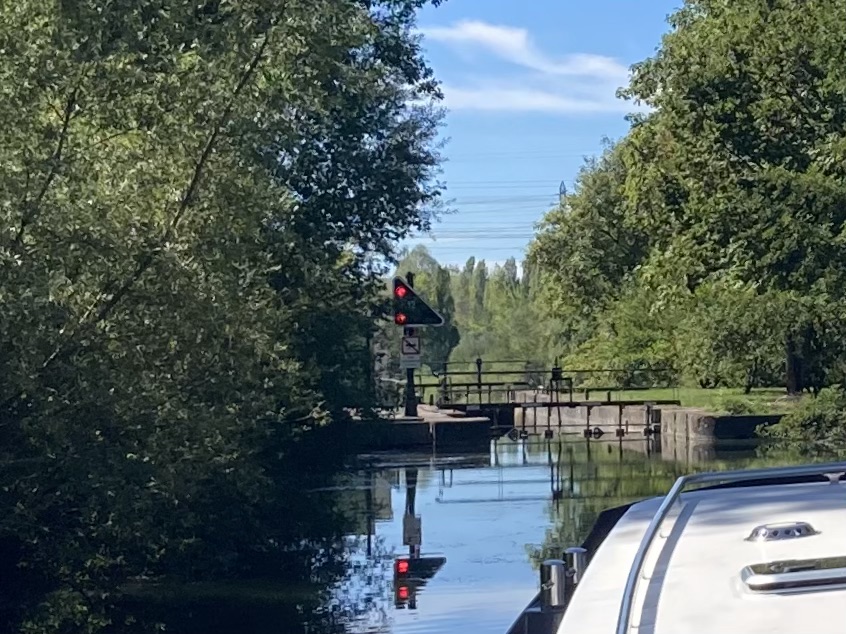
On this occasion we were met by a double red light, meaning  ‘en pann’, or ‘lock not operating’. So we sat back, had lunch, and waited for assistance!

It wasn’t long before a helpful VNF man arrived and had us in the lock, looking out over the drop to the river below. Once we had descended we only had 5kms, I lock, and a few bridges to go under before we reached Montbéliard and our stop for the night.
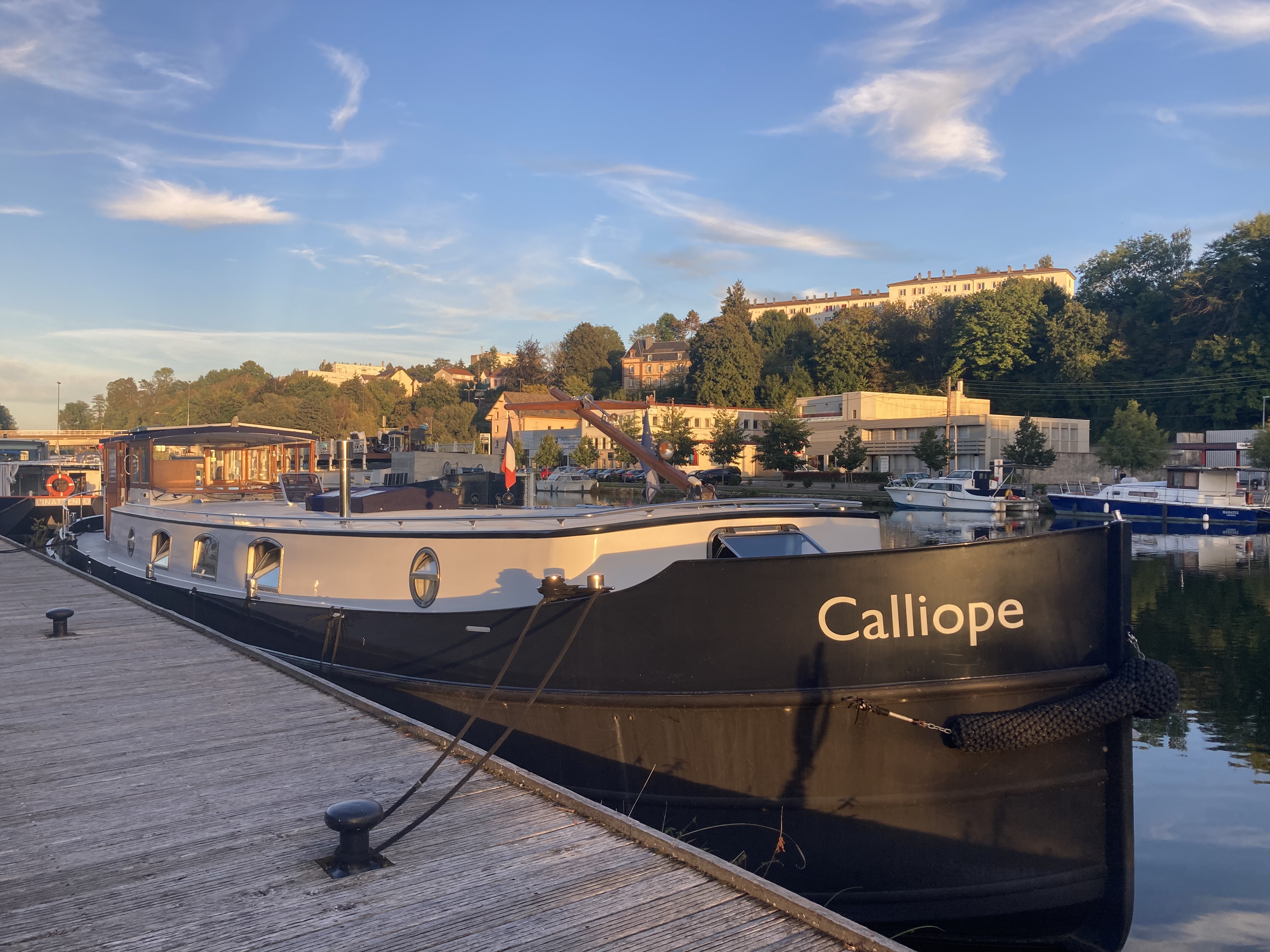
We had been told that the section of quay outside the VNF offices at Montbéliard was both a nice place to moor, and free. It is just beyond the main port de plaisance and we could not see if it was empty until we turned the corner of the port pontoons. Hooray, it was empty!
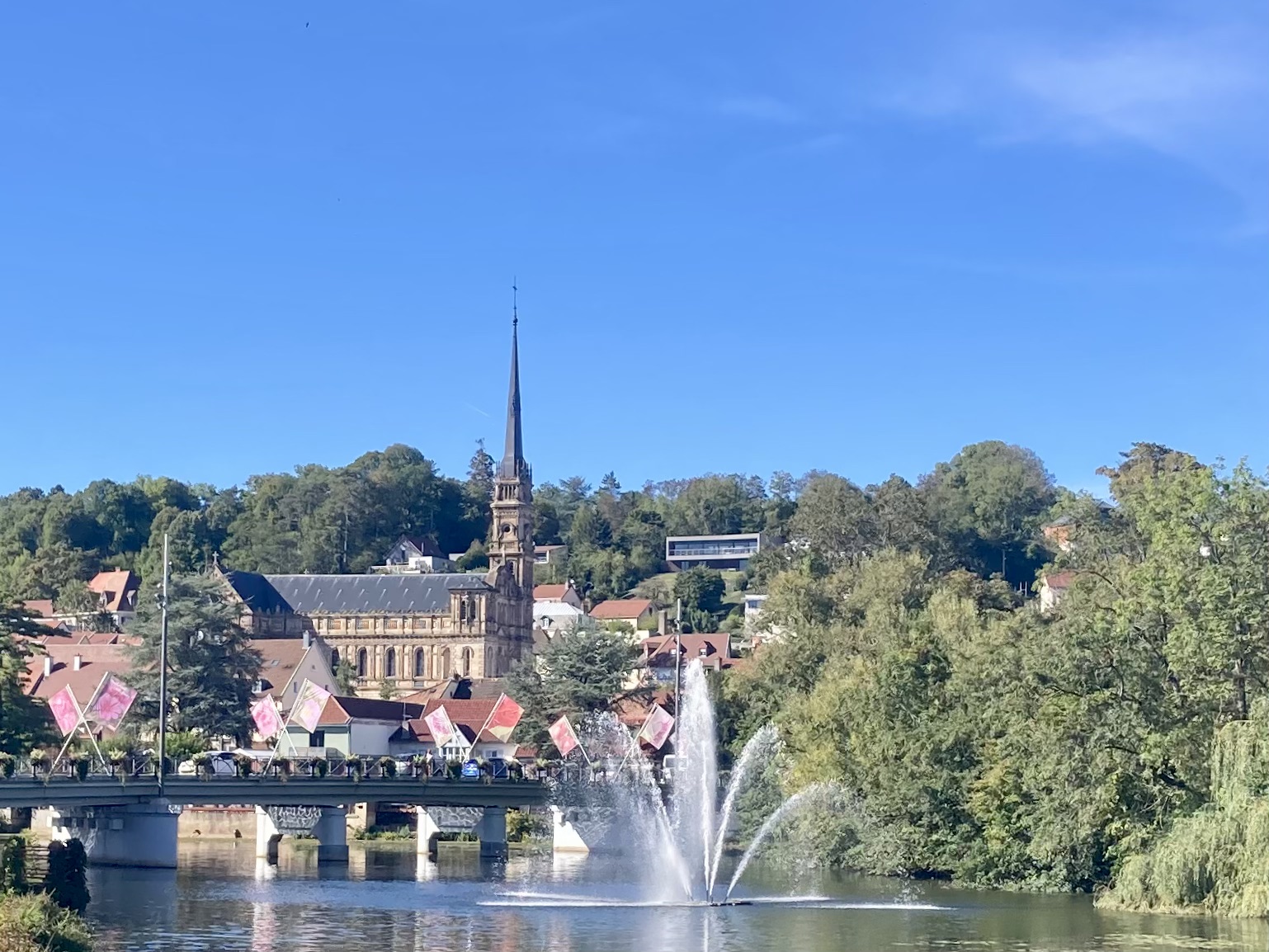
We took a walk up into the famous old town, ‘sight-seeing’ for a while before finding a good local bar that was open on a Monday. (Just in case shopping and eating out in France is a new experience to you, the majority of shops, bars and restaurants are closed on a Monday).

Returning to Calliope for the rest of the evening we were rewarded with one of the most beautiful sunset skies we have had this summer.
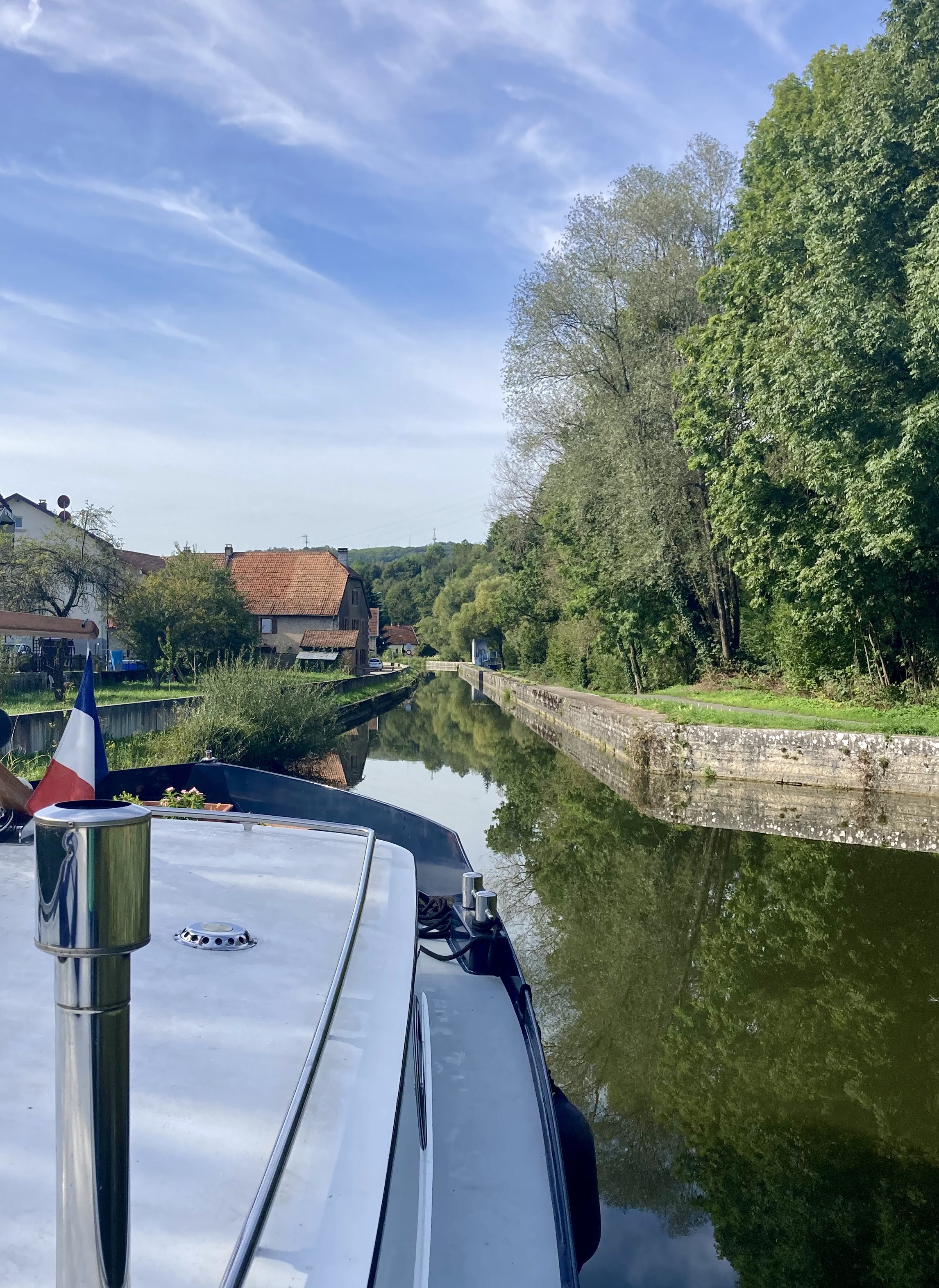
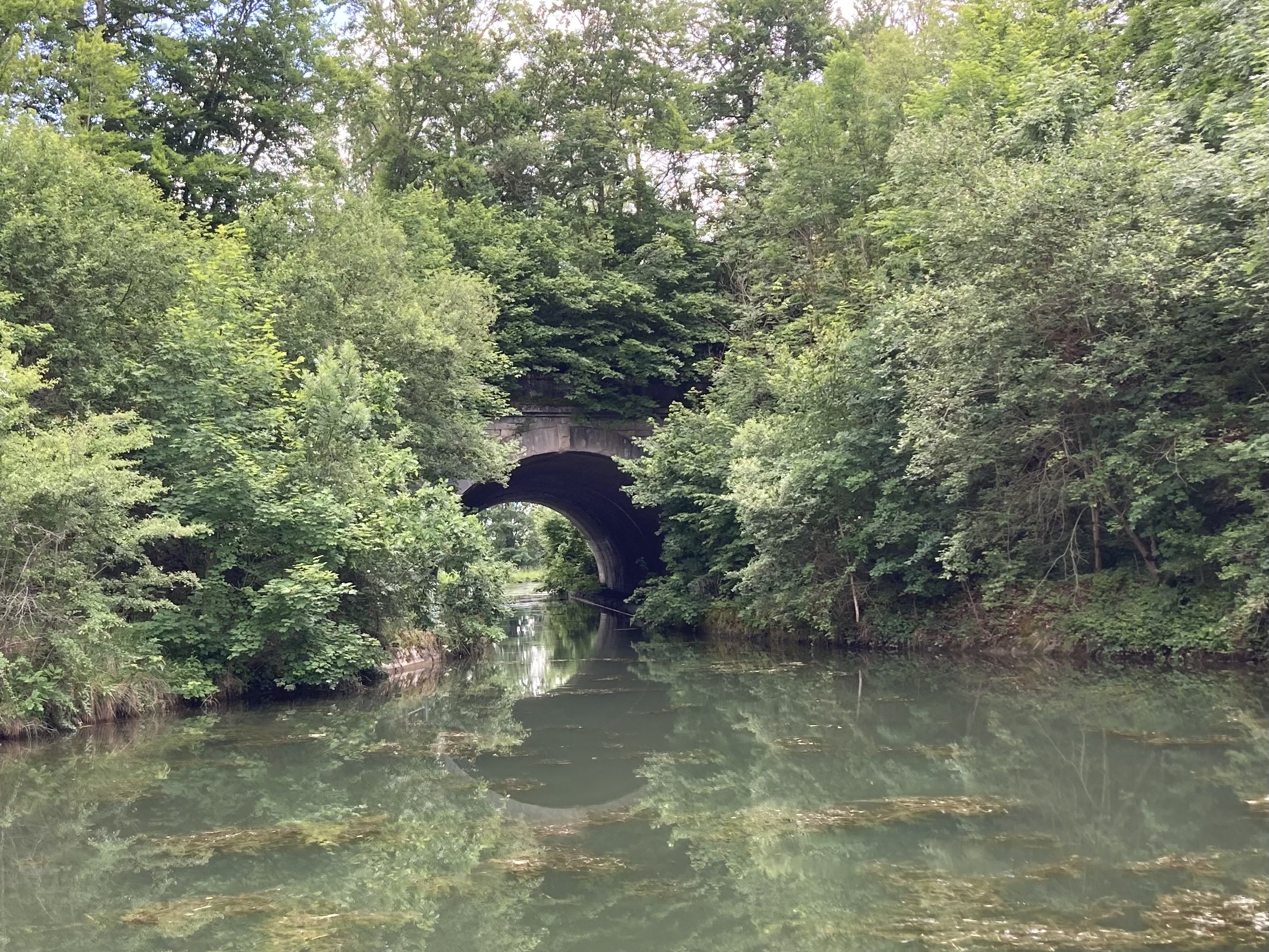
 The following day we left Montbéliard, and we started off with a series of ‘narrows’. We were slightly caught unaware at first but a closer look at the map showed where each one was coming. They were due to the canal being squeezed between a road on one side and the river on the other. Some lead to locks, some lead to bridges, and some simply narrowed and then broadened out again.

We were again surprised to be joined by an éclusier even though we had our remote control. This whole section is fairly recently automated and there seem to be occasional problems and so it is easier to send an éclusier along to accompany a boat and deal with issues as they arise, rather than have to send someone out when a phone call is made by a stranded boater.
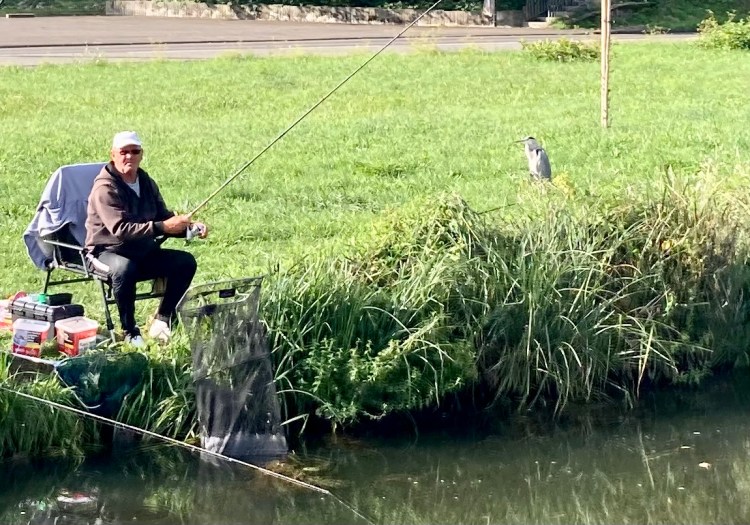
Along the way we saw a hopeful heron, patiently waiting for the fisherman to decide to throw away some small fry – just right for breakfast!

As always there was wonderful view after stunning scene – so difficult knowing which photos to include.

This one is not exactly stunning, but shows a village rather than fields – Dampierre-sur-le-Doubs.

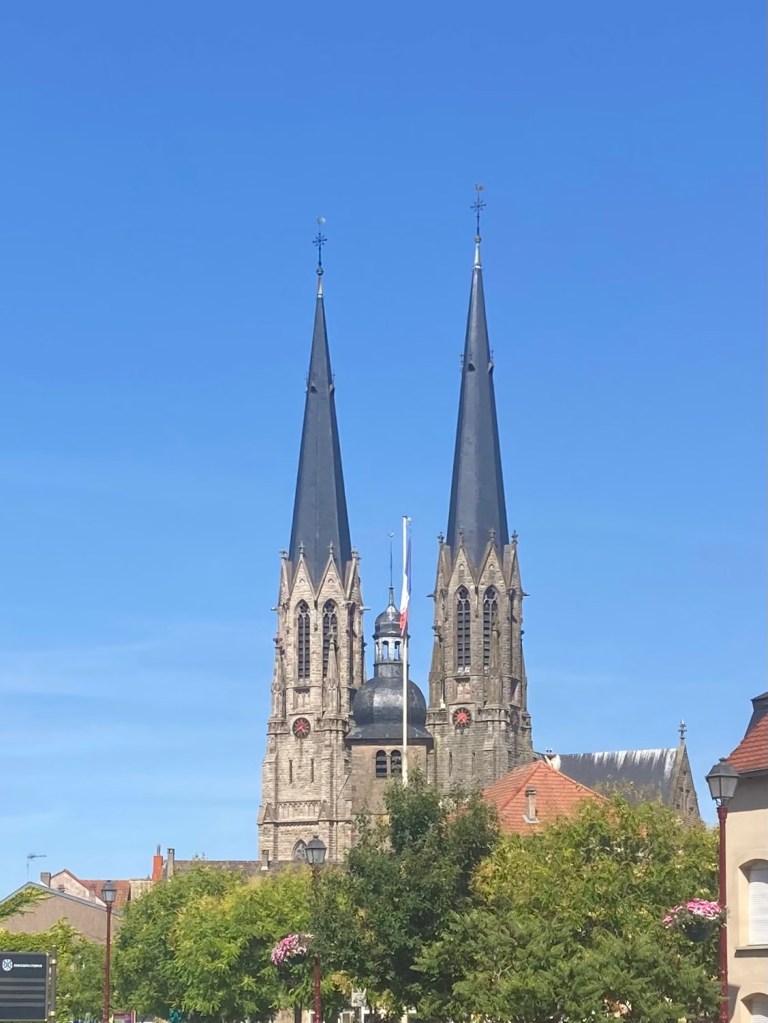
Churches dominate the landscape time and again.
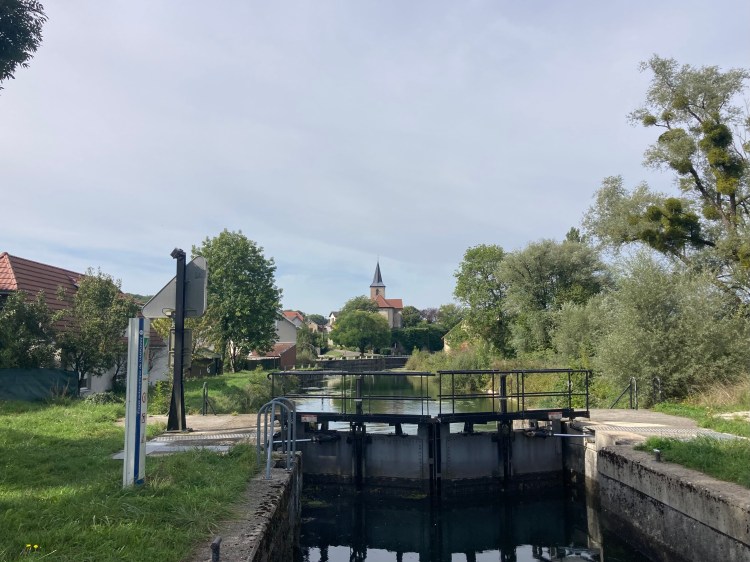
Just over a kilometre after Dampierre we had a short stop. Today’s cheerful Eclusiers did want to take his one and a half hour lunch break -something that didn’t happen with our accompanying lock keepers over the past few days.

That was okay; we were happy to more up for a while for our lunch and then carry on to the lift Bridge where we had agreed to meet at 1:30.
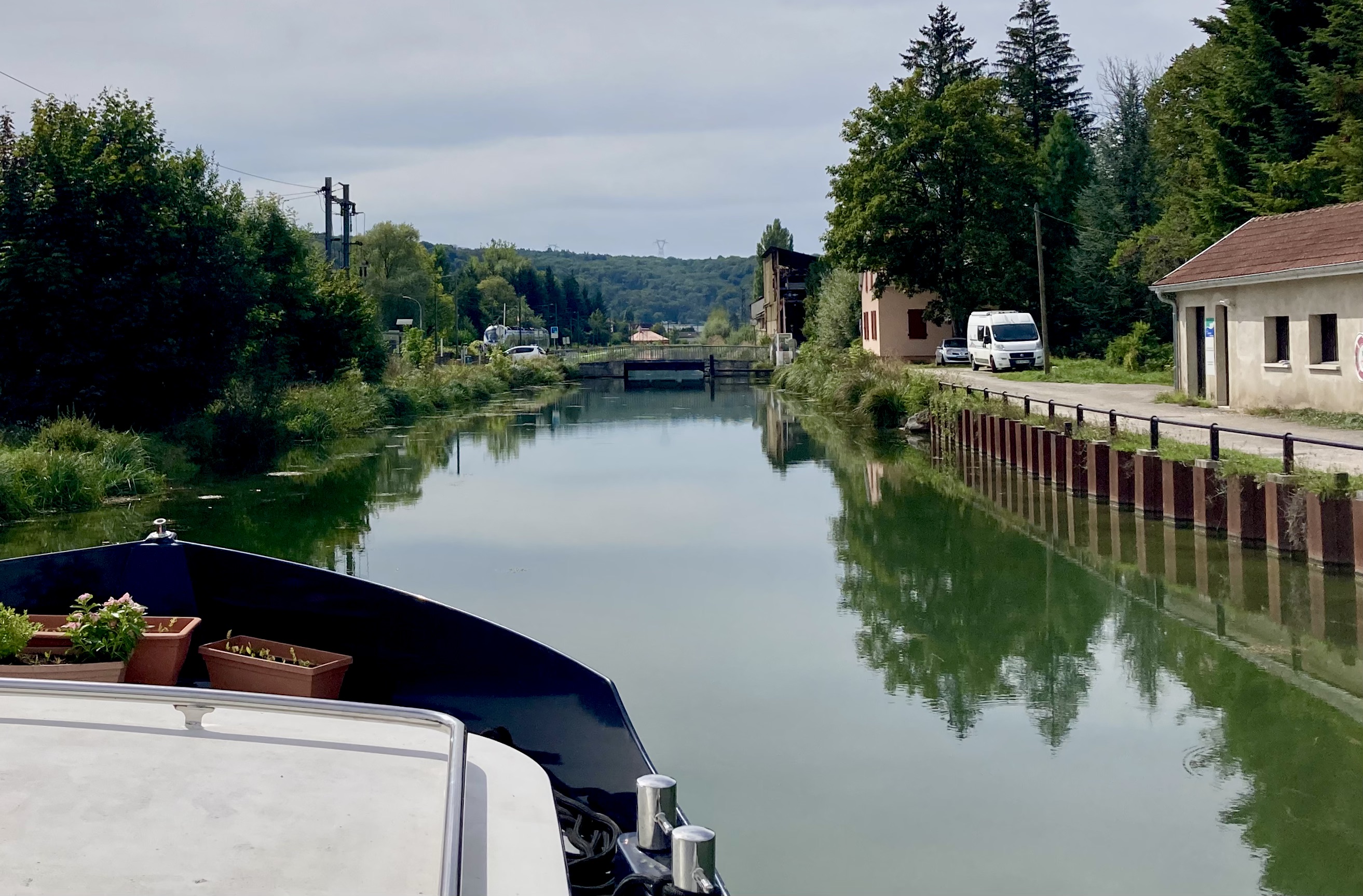
In fact he got sent off to deal with something else and we were left waiting for an extra half hour until he could rejoin us. Once we realised that he was not at the bridge the Captain went astern and onto a VNF quay nearby; it provided a convenient place to tie up to while we waited!

It was around here somewhere that we were joined in our downward journey by a little frog, jauntily clinging to some weed that had got wrapped round the blue operating lever of the lock.

At one point the canal crossed the river Doubs – a crossing that must be quite exciting when the river is in flood.

We were going right to left on the map.

Luckily for us it was a calm day and we could enjoy the view. The bridge ‘above’ Calliope’s wheelhouse is the bridge across the Doubs seen on the map; the red buoys are visible too.

We had been heading for a mooring at l’Isle-sun-le Doubs, but decided on an earlier stop after our delay. Both the eclusiers and the DBA recommended a wooden pontoon out in the country, very peaceful and quiet. We moored up there and it was just as promised.
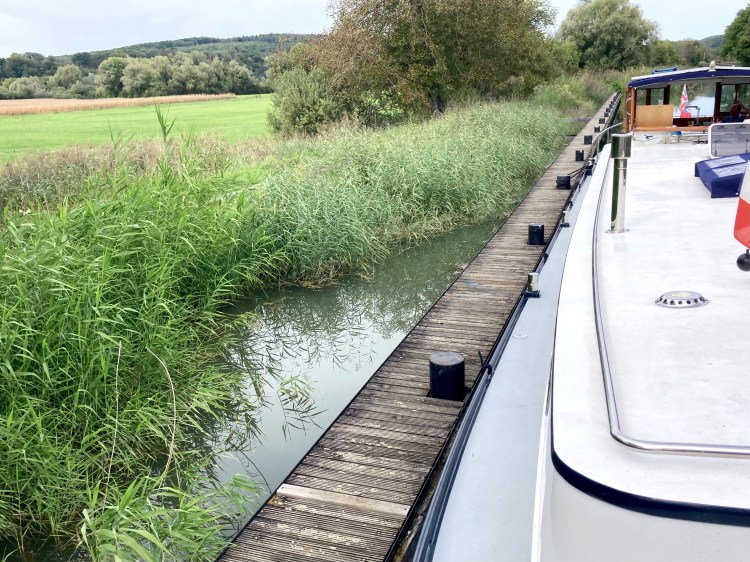
It’s an unusual mooring. There are not many pontoons this long next to locks on this canal.

The DBA Waterways Guide describes it as “19 steel piles at 5m intervals 3m from bank with a wooden walkway the whole length” – and that is just what it is!

Wonderful.
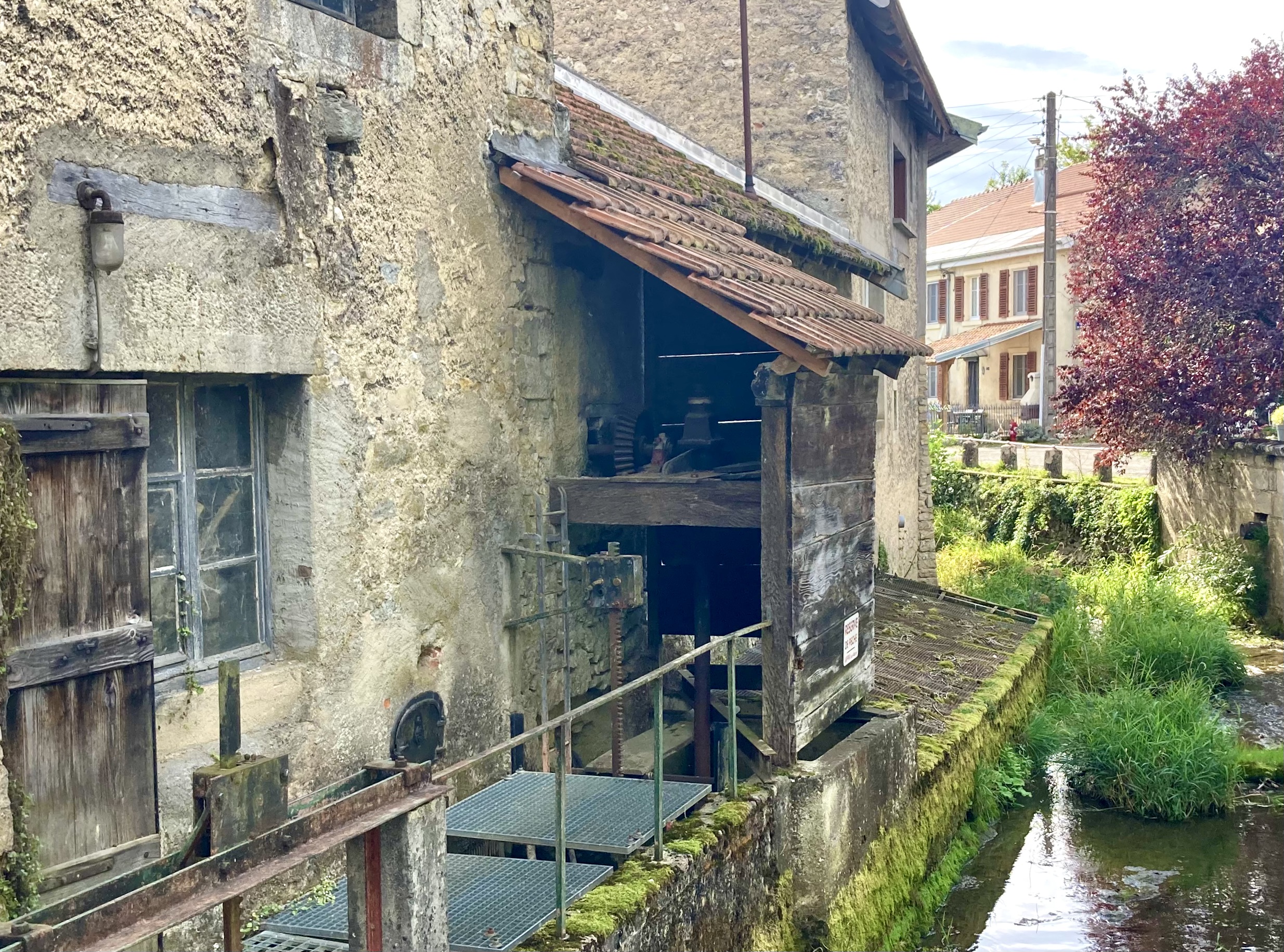
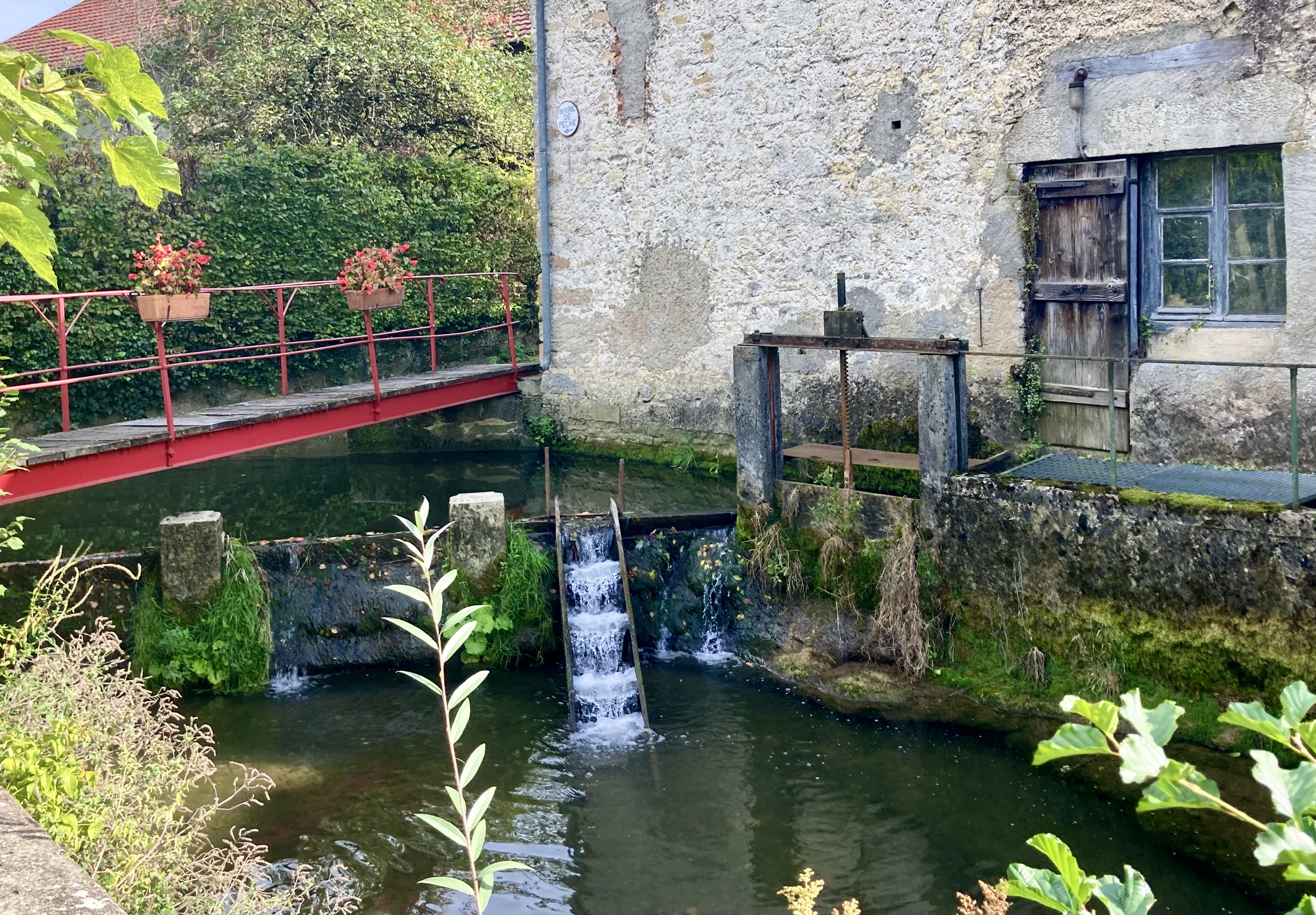
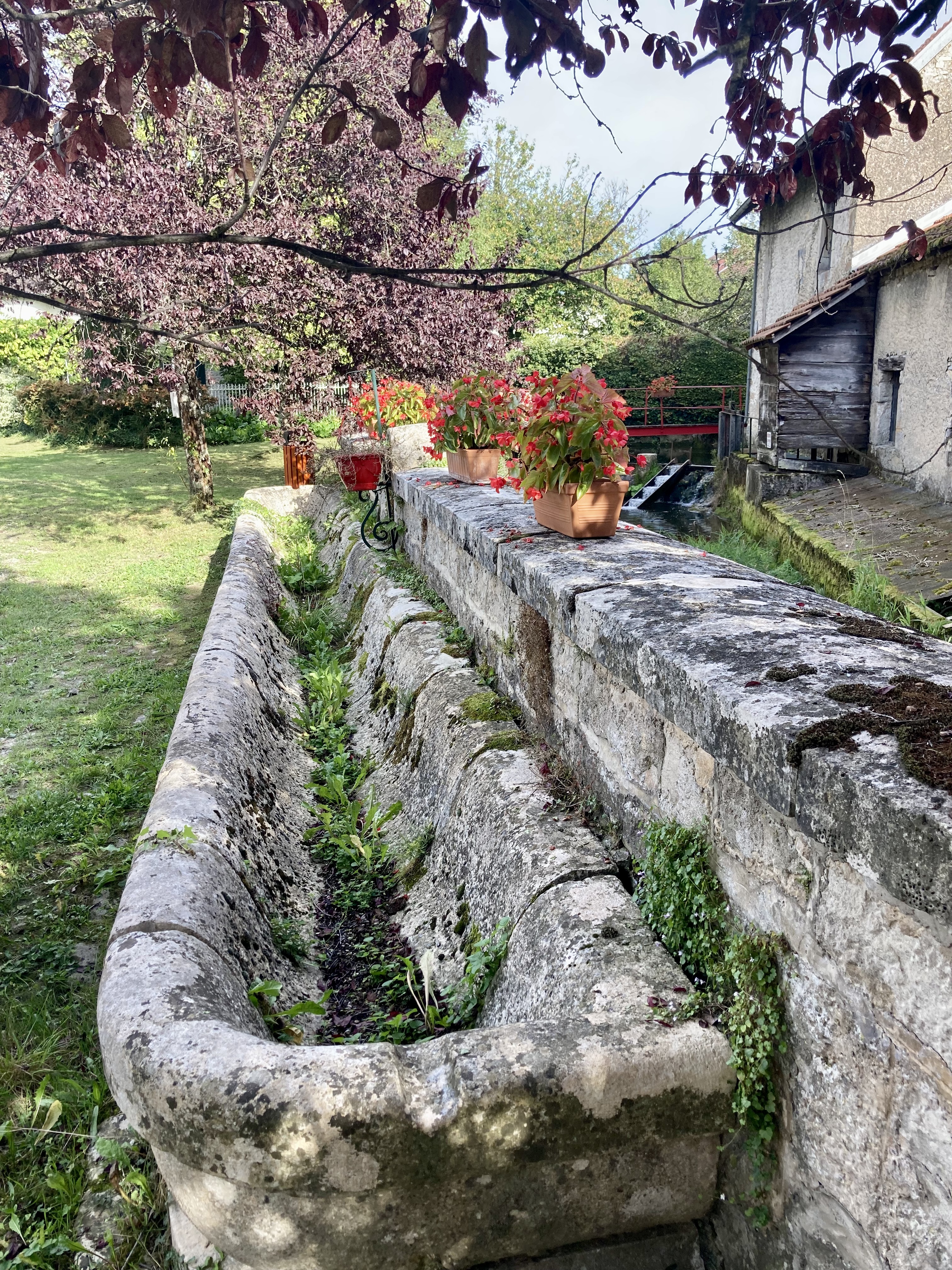
We took a walk round the little local village (Colombier-Châtelot), scarcely more than a hamlet, where a large stream flows through and has obviously powered a mill in the past. It also must have supplied water for this lovely stone structure – simple lavoir or cattle trough?? I think the former because of the groove to allow water to flow out at the lower end.

Later, after our supper, we were joined by another boat on the pontoon. It was a bit of a surprise as they arrived just after 7pm, which is when the ,locks close for the night and you imagine no more boats will be moving around!

Stu went to help them moor up – loads of room for us both – and we then enjoyed getting to know the crew of Ziggy B on our back deck.

Kimberly is a member of Women on Barges, as am I, so we were both pleased to meet.

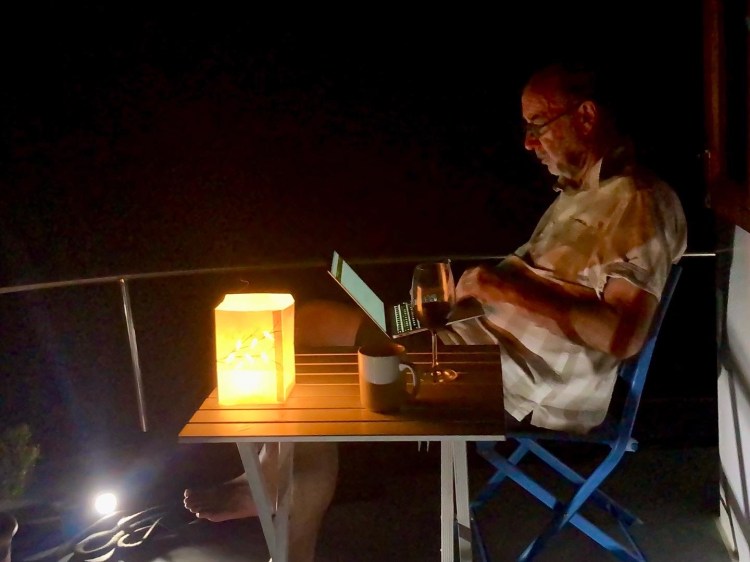
The rest of the evening was one of those magical completely quiet, completely dark times that we treasure.

And still warm enough to sit out on the back deck too.
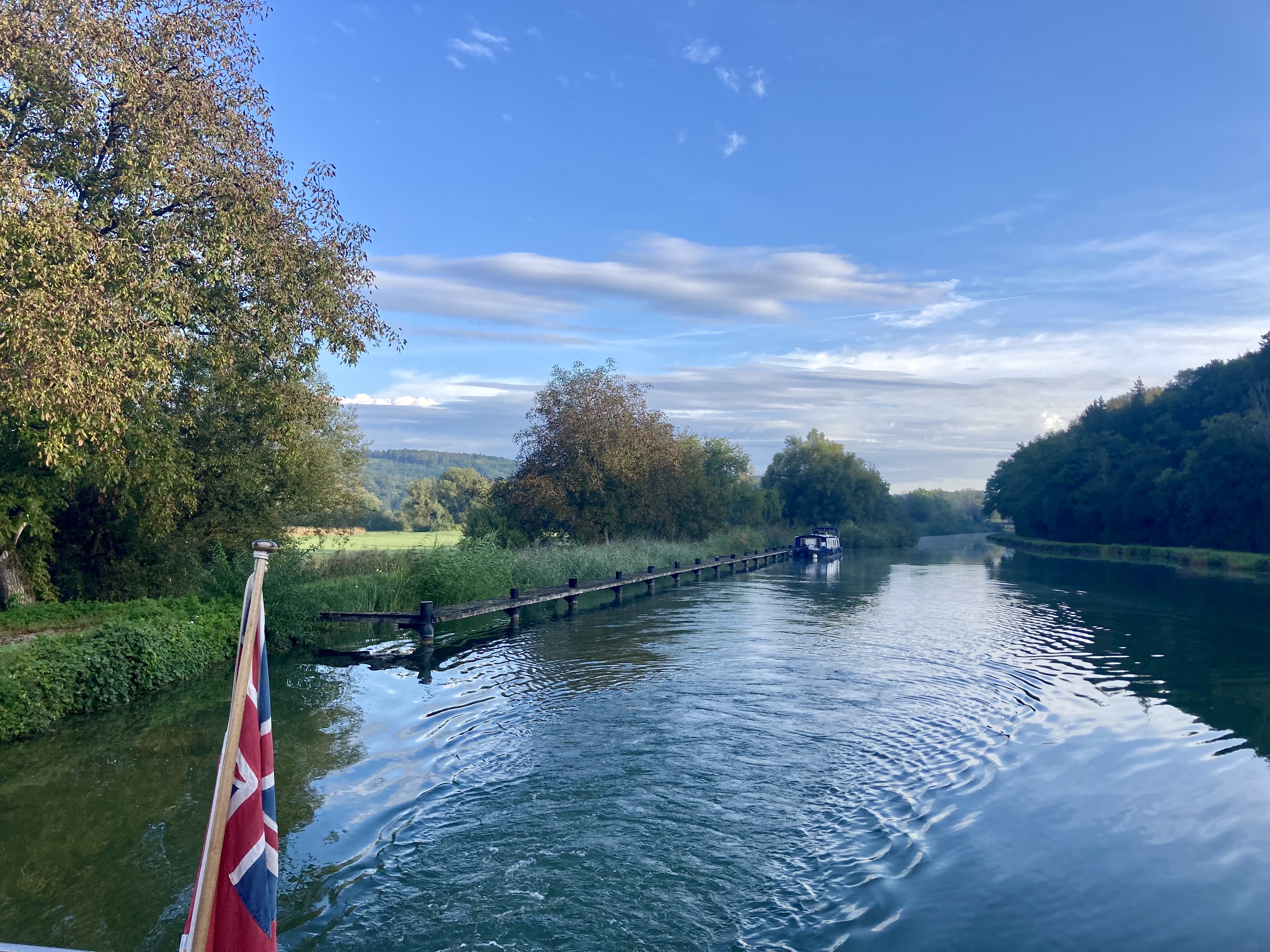
On a bright blue morning we carried on downstream, leaving our new friends behind.
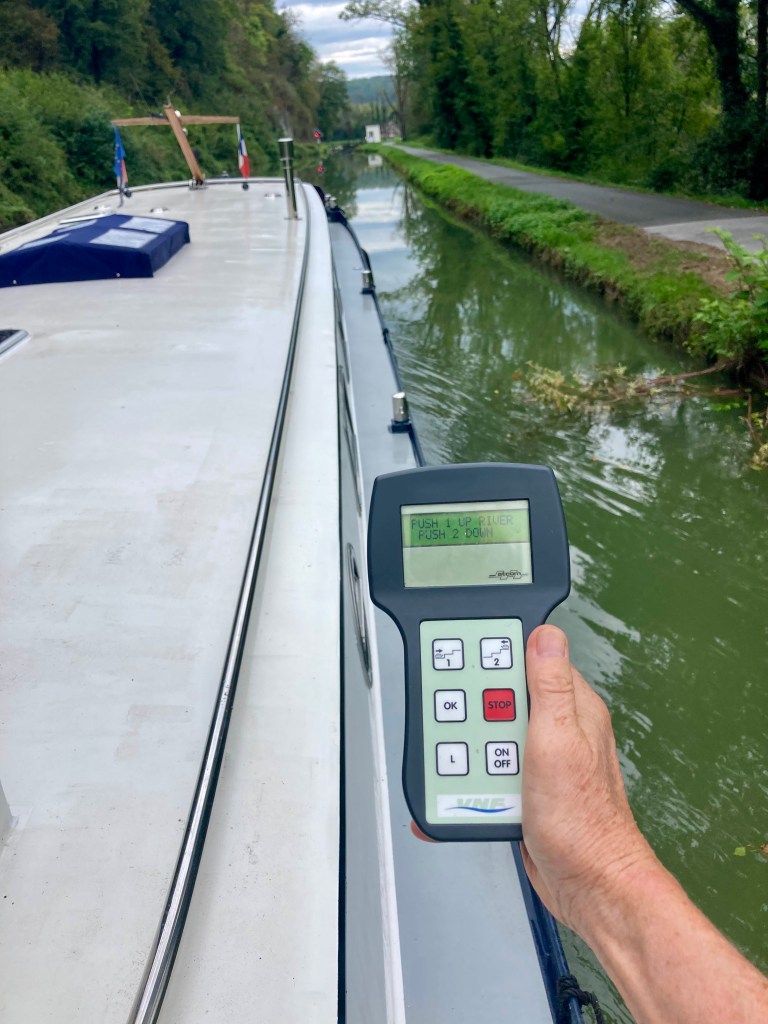
Now we really did seem to be in control of our destiny.

Telecommand in hand we were set for the 13 locks of the day.
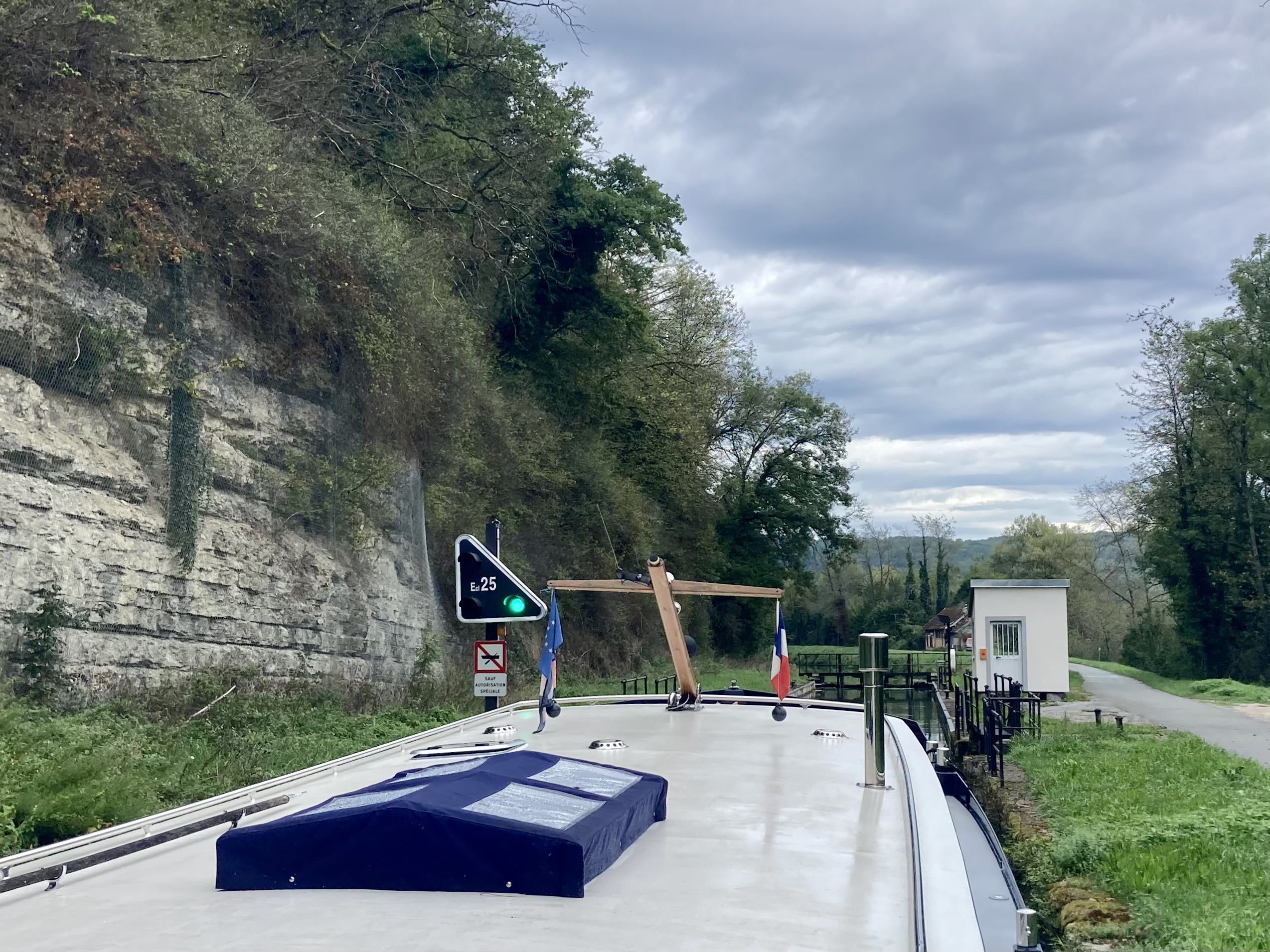
We were clearly right alongside the river Doubs now – in fact we were squeezed between the rocky cliff of the valley and the river itself, as you can see at this lock.

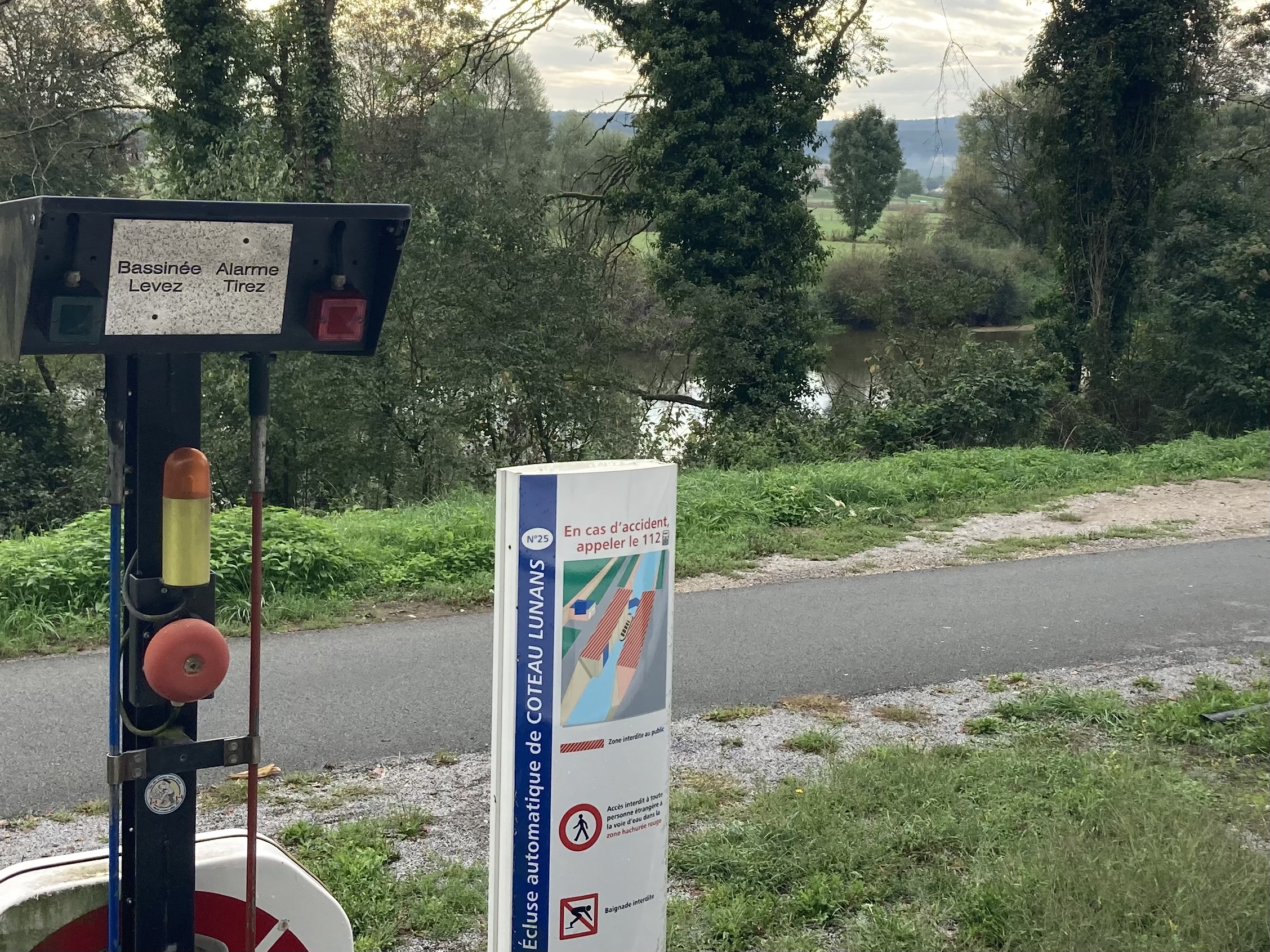
We were now seeing an interesting, and useful, addition to the lock signage here. The lock number is shown on the ‘traffic light’ – here you can just see Ec.25 next to the green light. This is all part of the modernisation of the locks on this side of the canal, and links in with the remote control system we were using.

We soon reached l’Isle-sur-le-Doubs where we had been thinking of staying for the previous night.

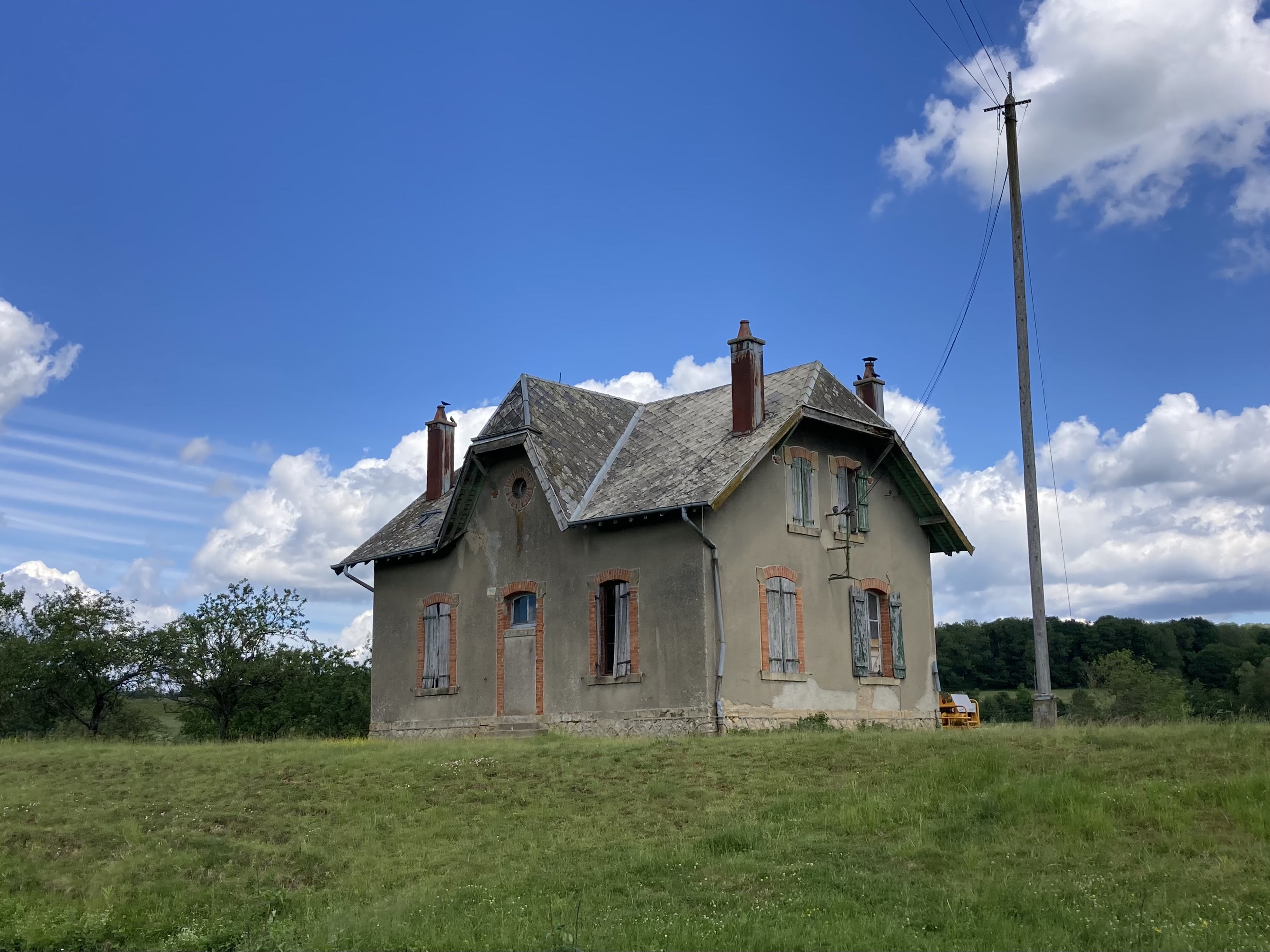
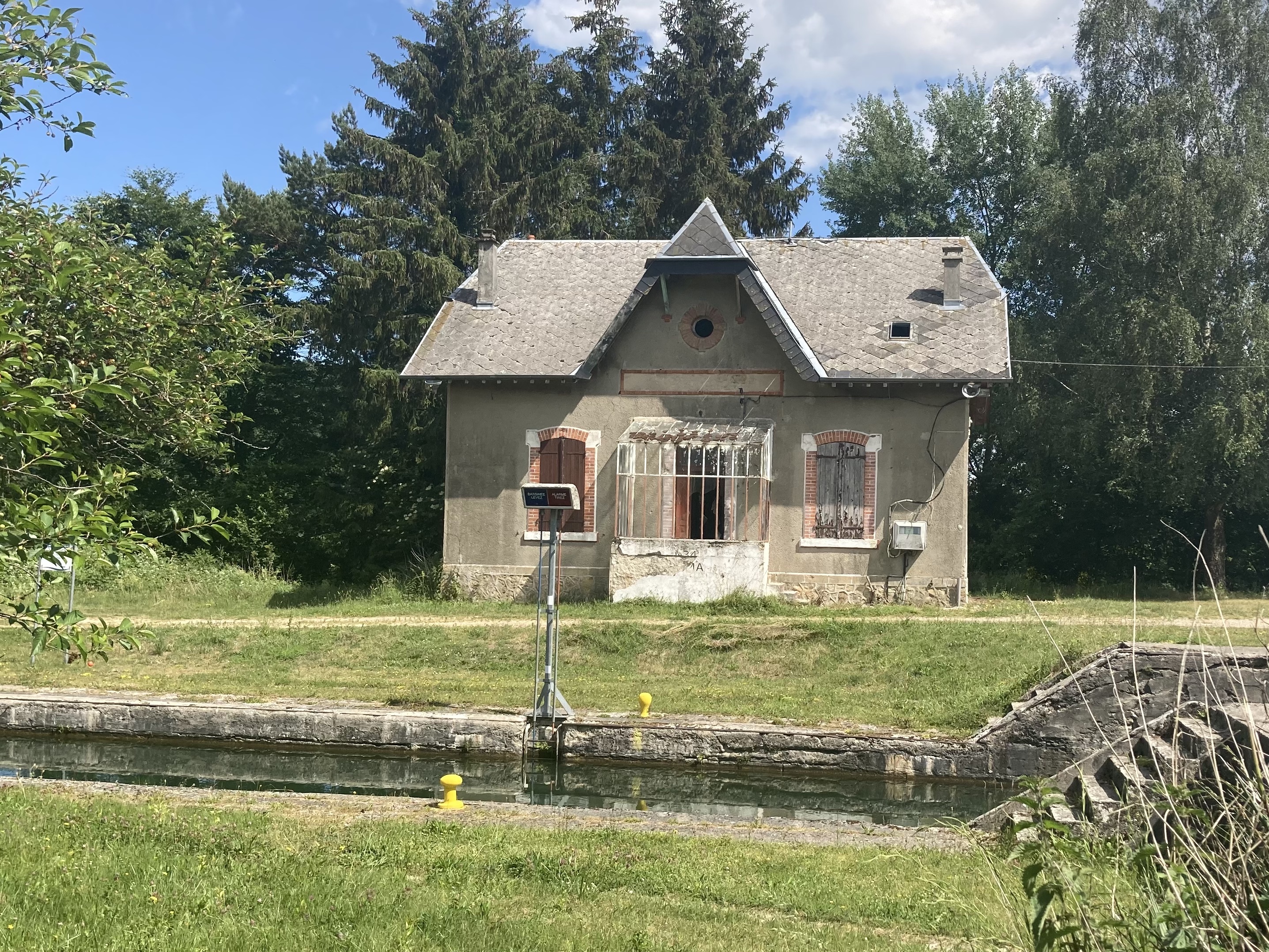
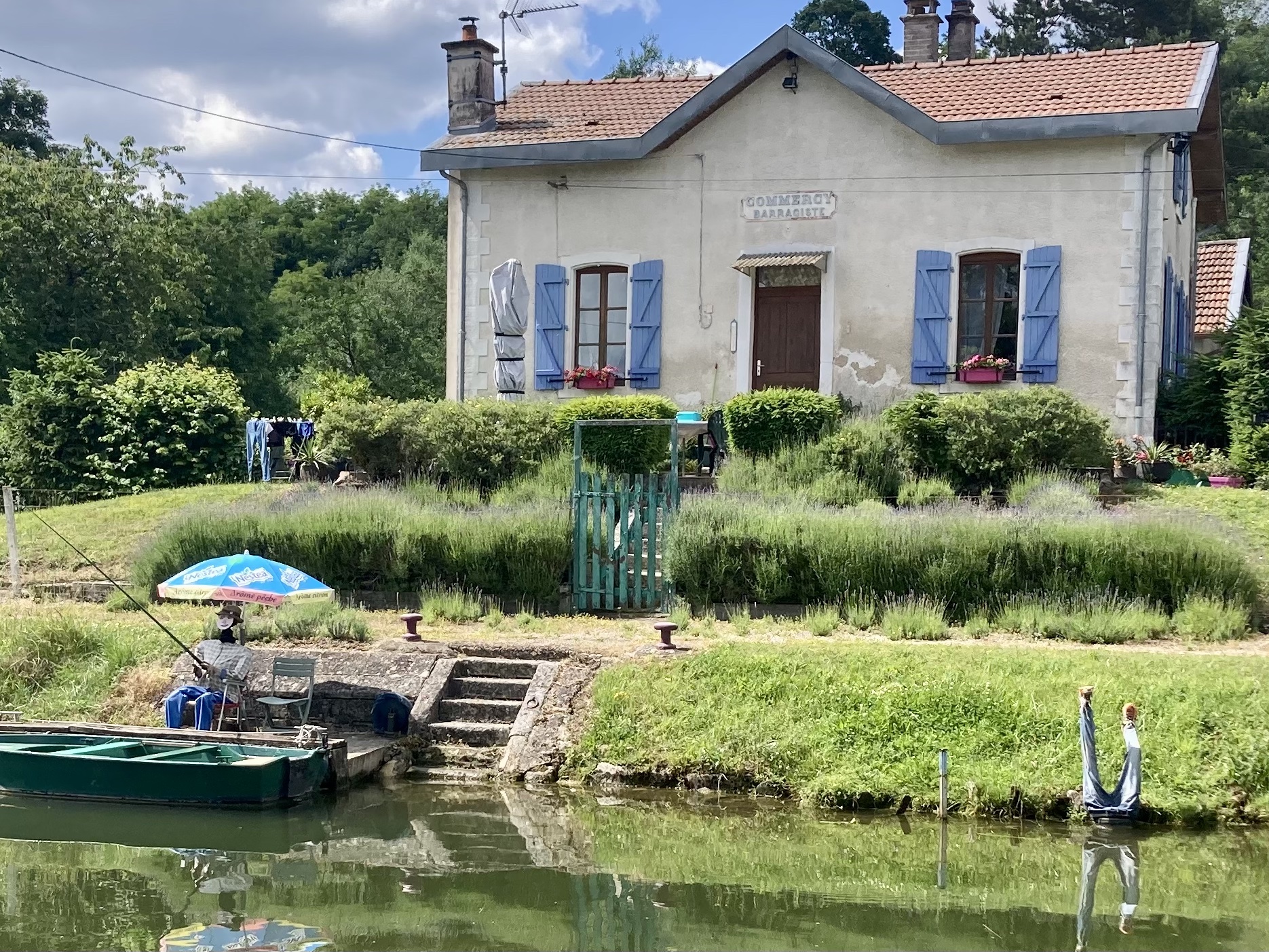
There is a short by-pass canal here, including a lock at each end and a lock in the centre of the town, with a tiny ex-lock keepers cottage next to it.

Before we left town we moored up right next to an Intermarche supermarket; very handy if you are getting low on milk, bread and fresh veg.

The lock at the other end of the ‘by-pass’ took us back onto the river again. We love being on rivers – so wide, so scenic, so full of interest.
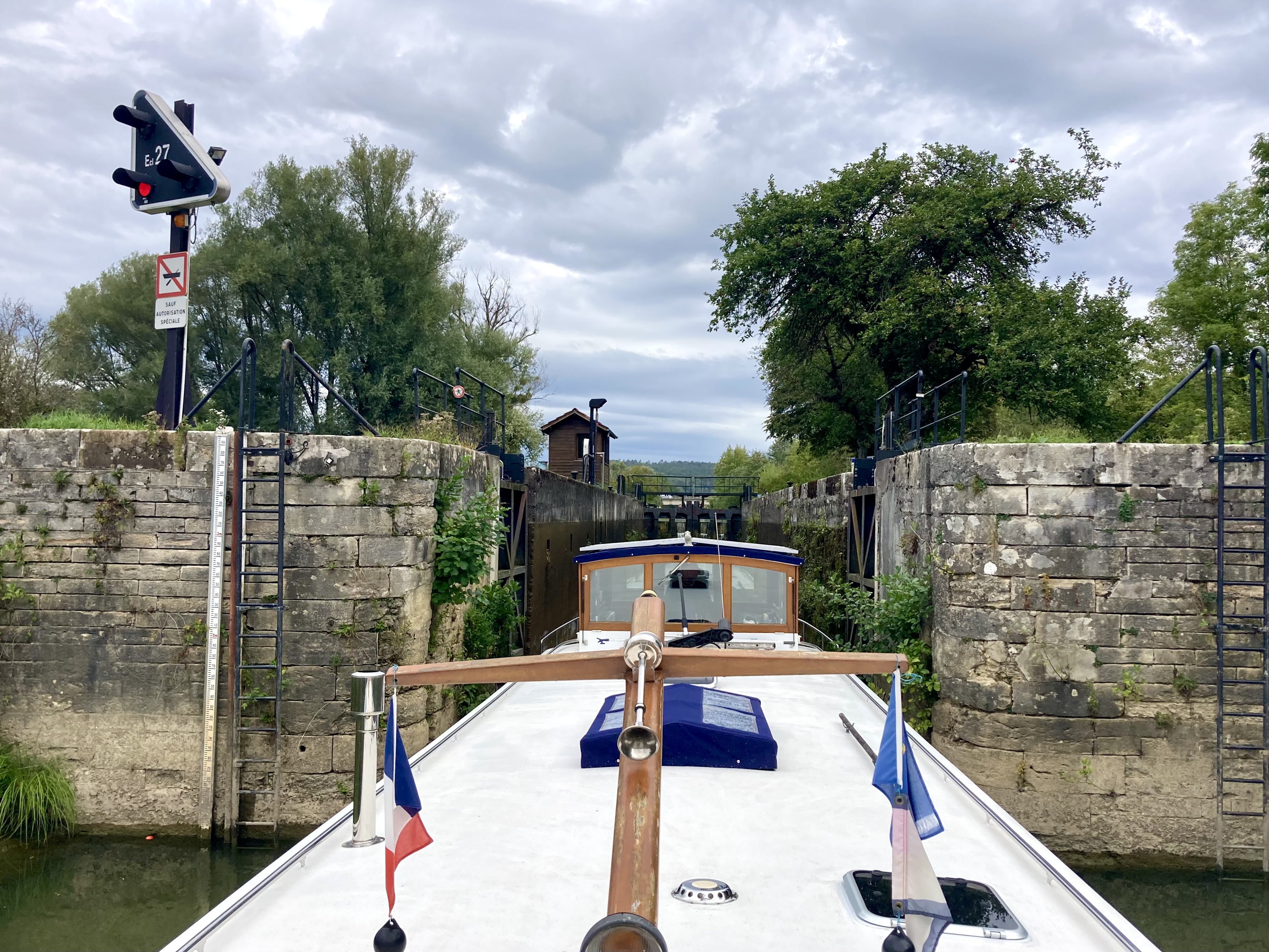
Here is Calliope leaving the lock – number 27, as shown on the sign.
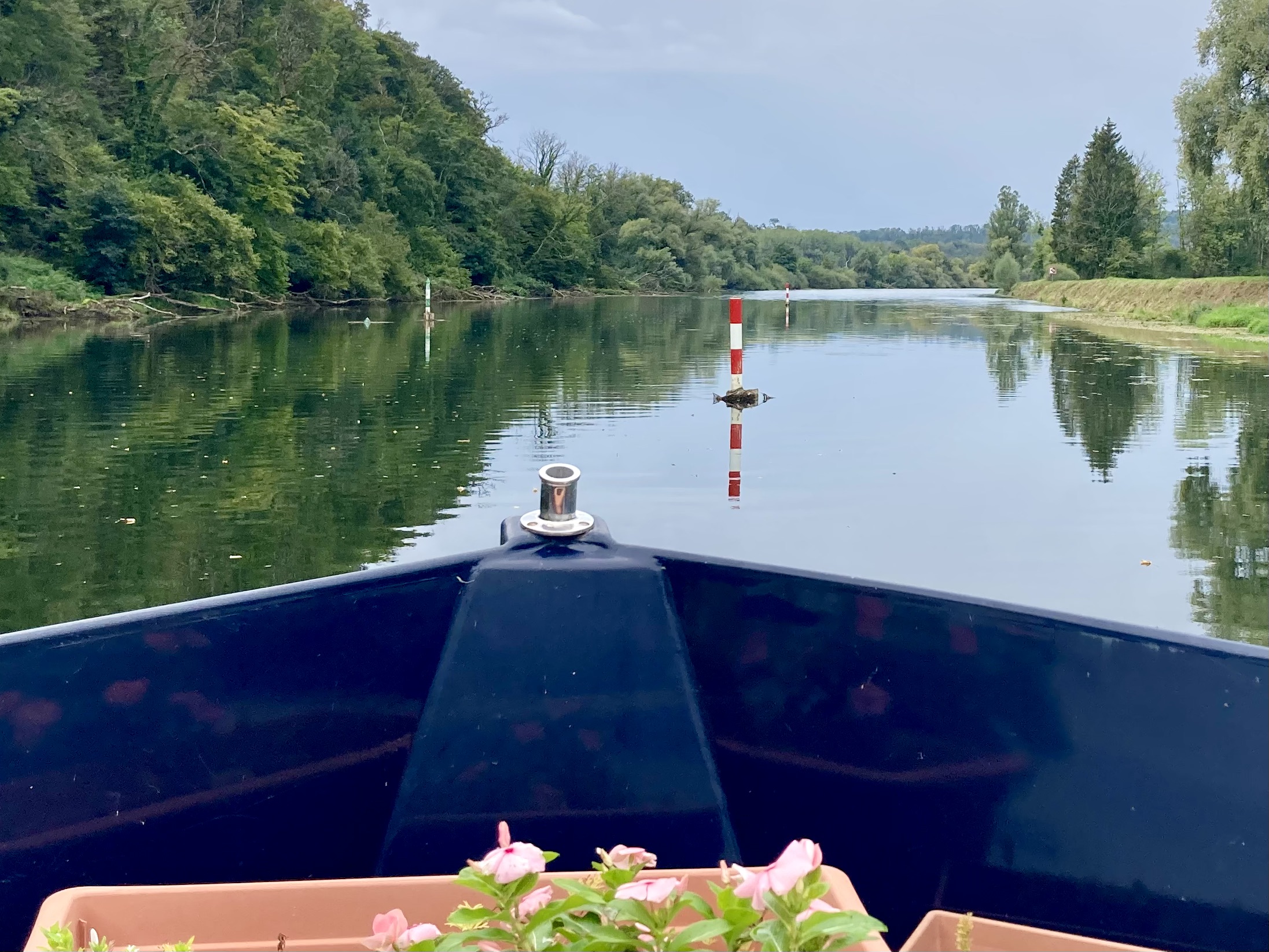
And here is Calliope two moinuites later, heading downstream between the navigational buoys, there to keep us away from sandbanks and other obstacles.
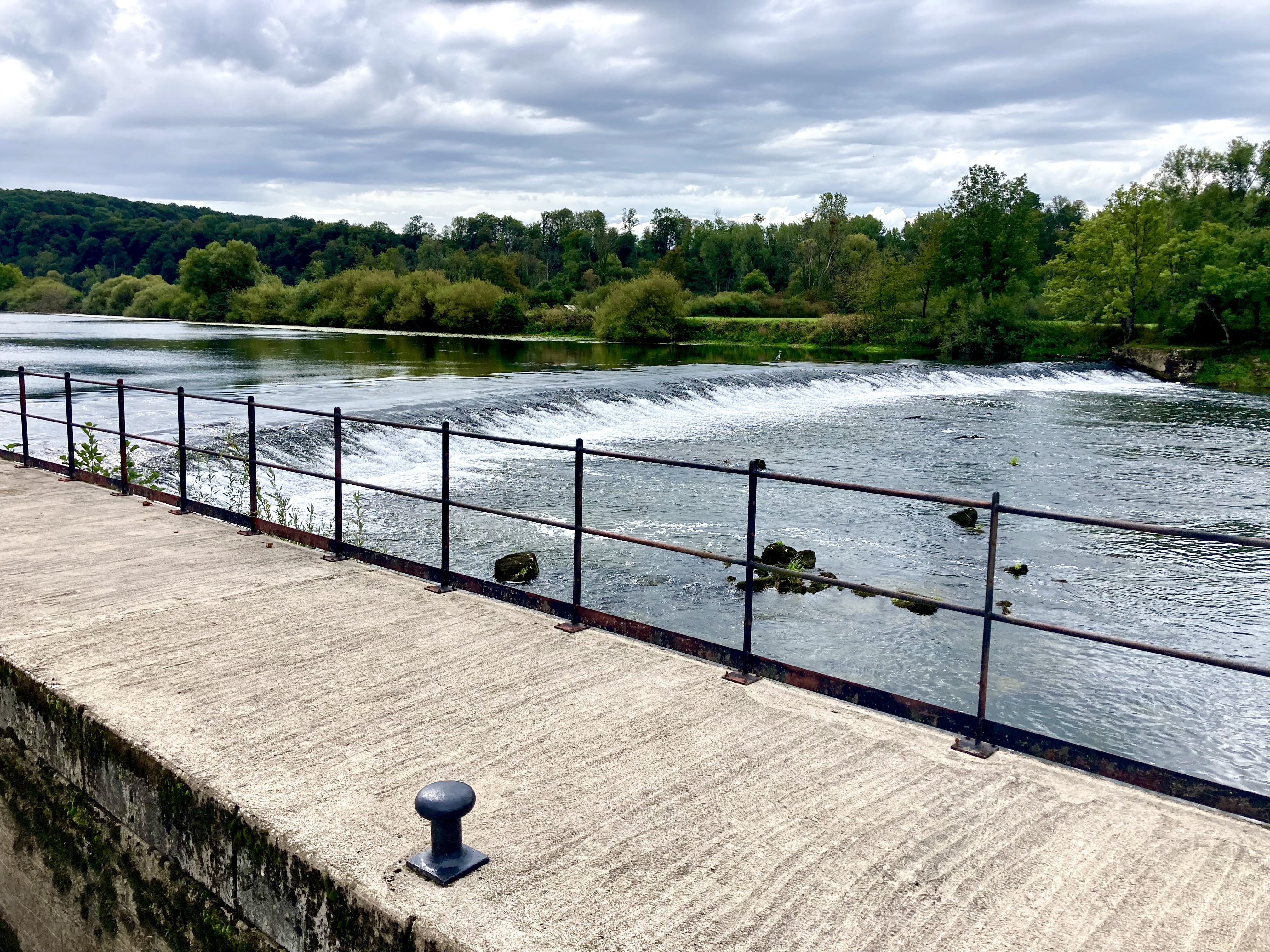
We started going through some lovely little locks at the side of big wide weirs and I began to understand why so many people have said that we had to go on the river Doubs.

At this one the lock keepers house is now a VNF office. I took the photo of the doorway because it made me smile that we were now in a region that included the Mediterranean! Google maps tells me that it is over 600kms to get there.

Many of these locks had a short ‘lead in’ canal at the side of the river. Most of these had a ‘gard’ at the end – a door that can be shit to guard against floods. These are not always set at the easiest angle, and are frequently narrow – and picturesque!

This one is at Rang, and a bit different. It is just over 3lkms long and contains two locks, dropping Calliope calmly down over 5m while the Doubs rushed along to port, dropping the same amount in a more chaotic fashion.
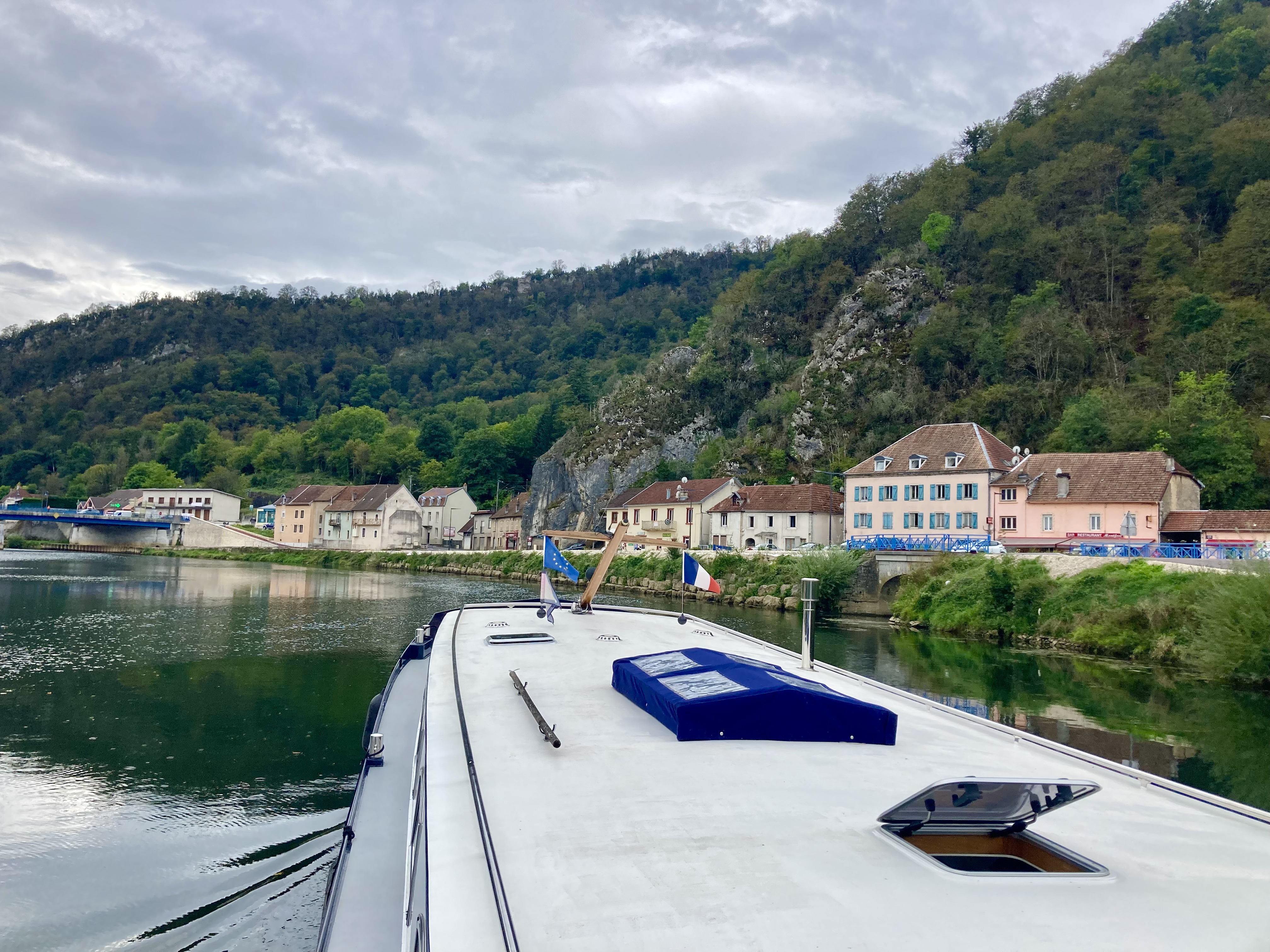
The day was rather grey. The scenery was not shown off to its best effect. We were travelling along a steep sided tree-clad valley with sudden splashed of colour as we passed through villages such as this one – Clerval.

It’s not often that I get a chance to see a lock from this perspective. This was our last lock of the day and I was able to walk back to a bridge that overlooked it. It is one of the locks without a ‘lead in canal’. There is a 100m wall above the lock separating it from the weir – not easy to see in this photo.

I had chosen a mooring by another of these locks, out in the middle of the countryside, but when we got to it it was clear that we could not stay there for the night. So we carried on a few kilometres and a couple more locks until we reached this one.
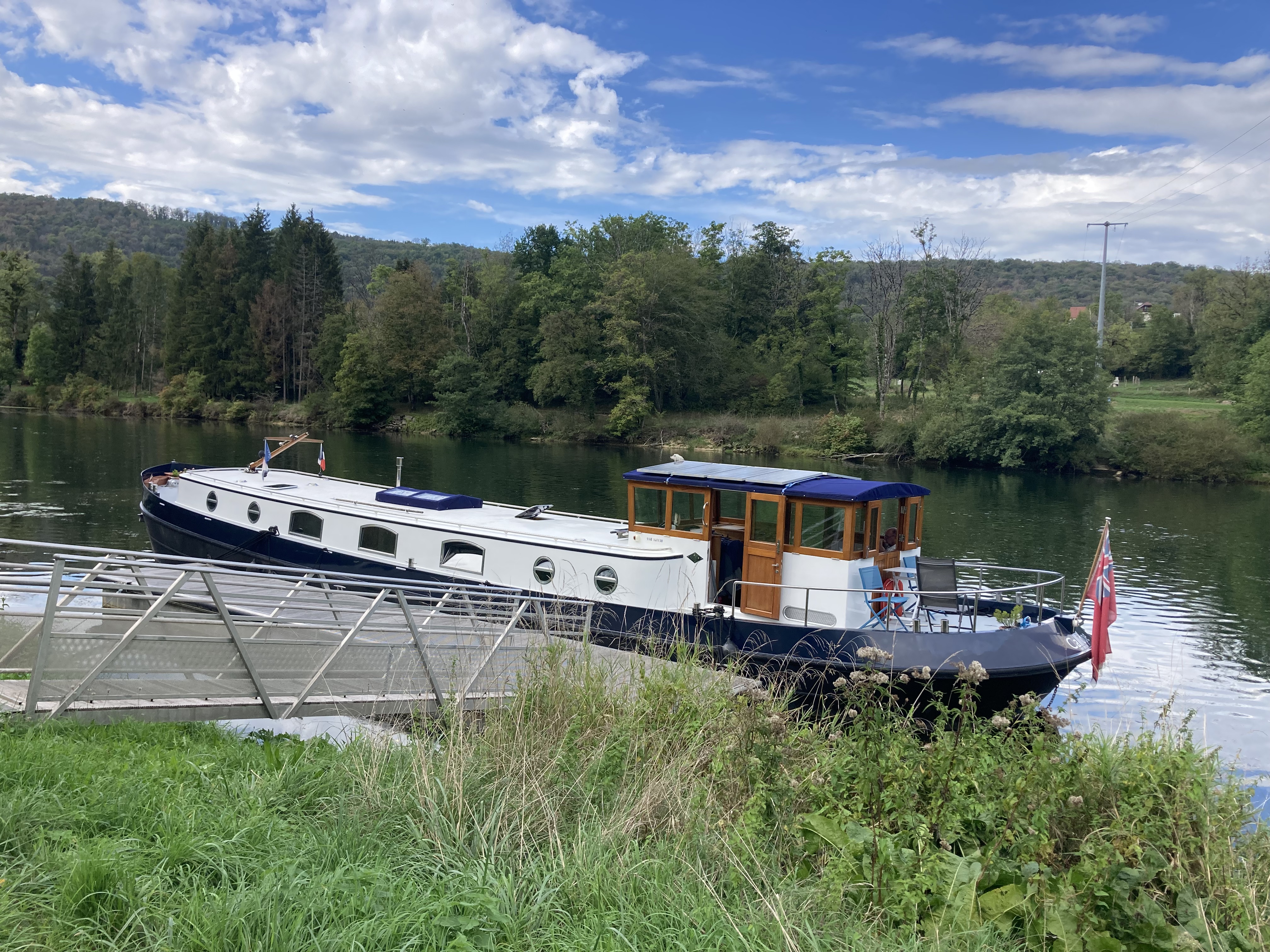
And here we found a pontoon below the lock, at Hyèvre-Magny, that we could tie up to. Quite a relief after a longish day.

Officially it is awaiting pontoon for the lock but by that time of day and this time of year it was unlikely that any other boats would be coming past. If they did, and they needed the pontoon, obviously we would move but luckily that didn’t happen.

It was tempting just to stay on board and enjoy the surroundings but I made the effort to go for a short walk using a narrow bridge to cross the river and take a look at the nearby village.

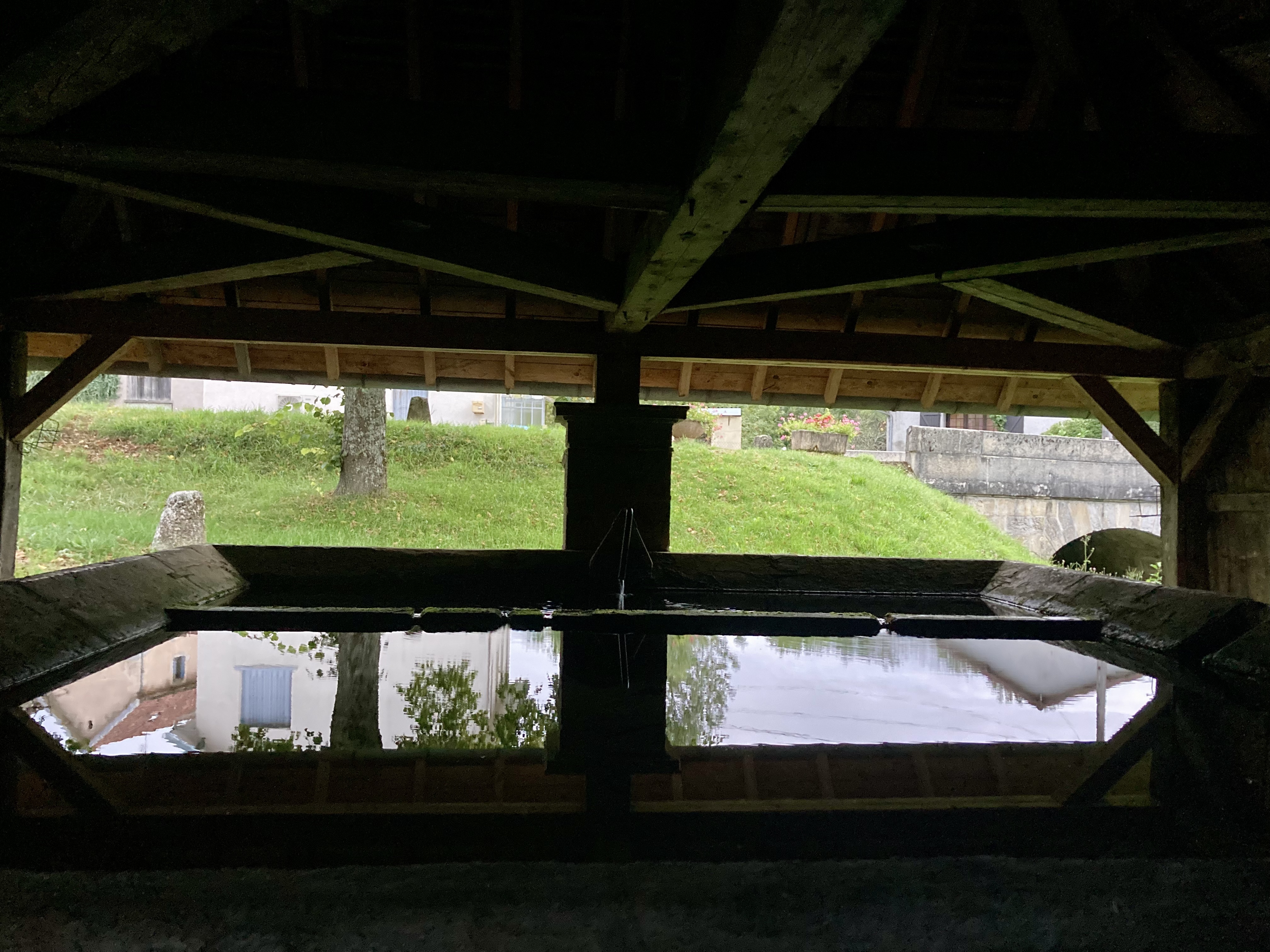
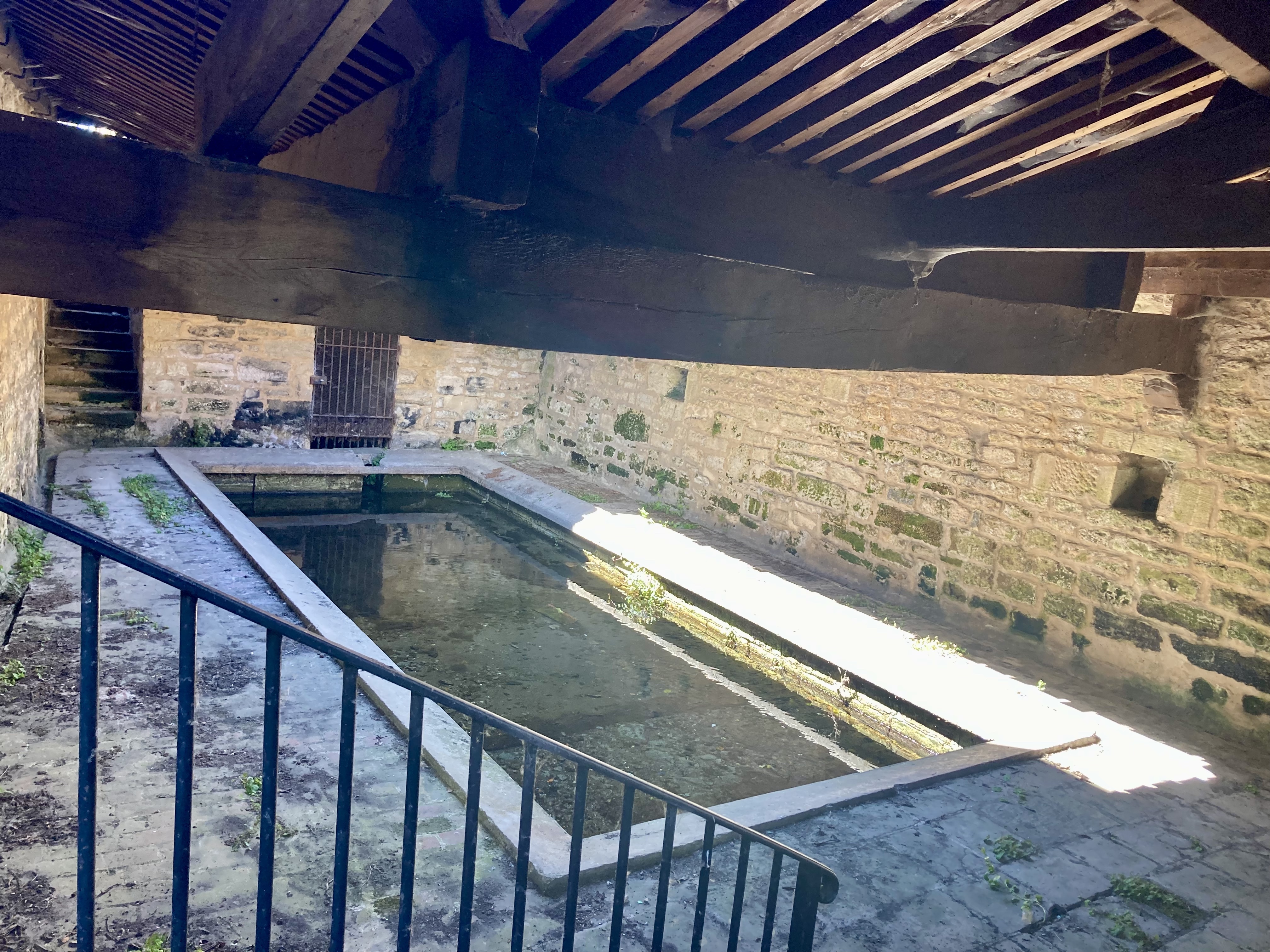
It was worth making the effort because I found a lavoir!

Maybe I should quickly explain my love of lavoirs.

I think it is the idea of the community that must’ve gathered around these laundry washing places, the sharing of joys and troubles that went on there for decades.
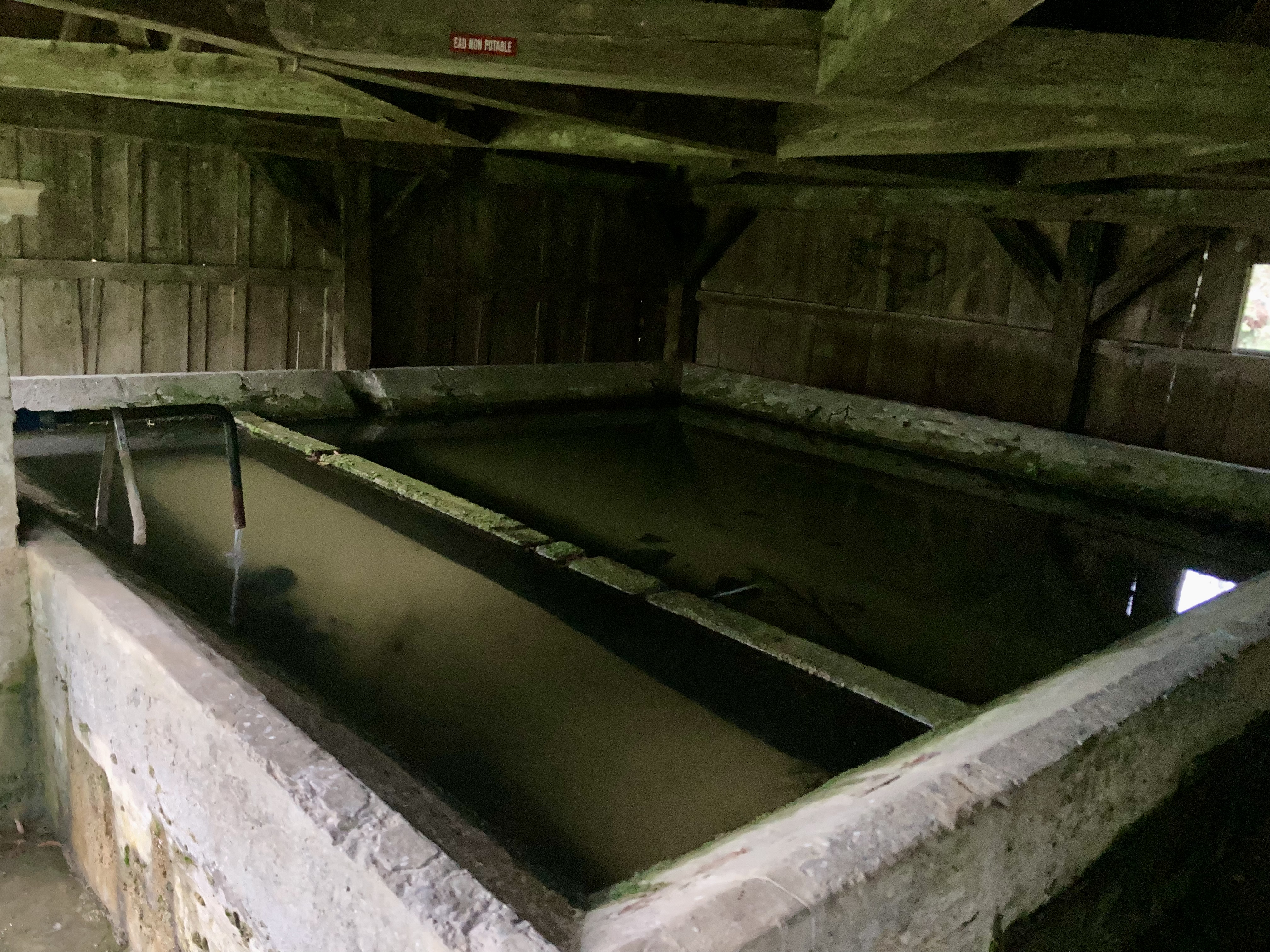
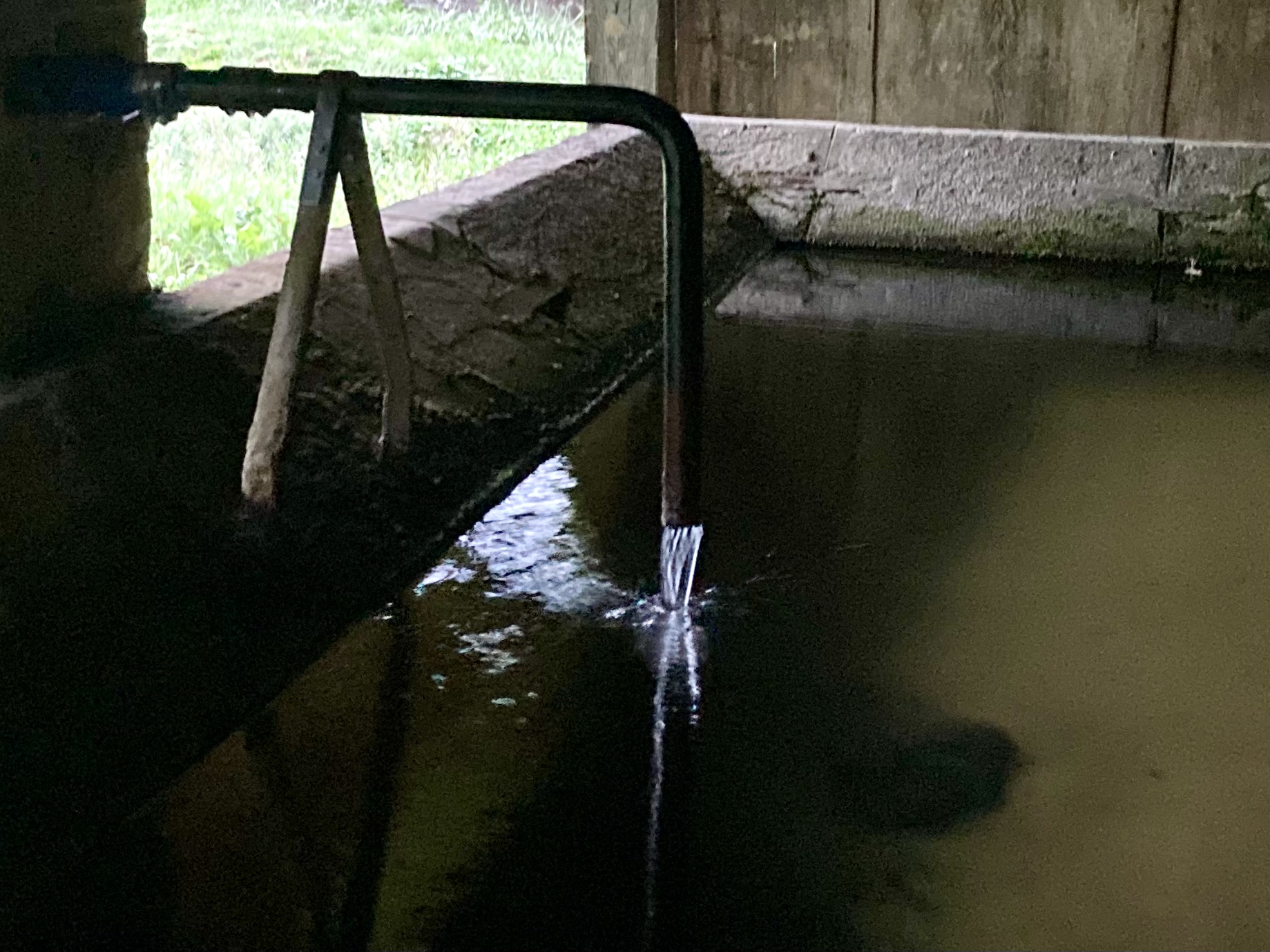
It was quite gloomy by time I got to this lavoir, so not so easy to se the features under the old beamed roof. But you can se the separate stone tanks of water, the fresh water constantly pouring in at one end, and the wooden pegs to hang things up.

It flowing water is one of the aspects of the lavoir that appeals to me – constantly renewed rinsing water. albeit also constantly cold!

Back on board we had a peaceful night with the only sounds being the water falling over the local weir and an owl.

We woke up to heavy rain and that continued almost the entire day. There were just one or two short breaks that got one’s hopes up, only to be followed by the next downpour.

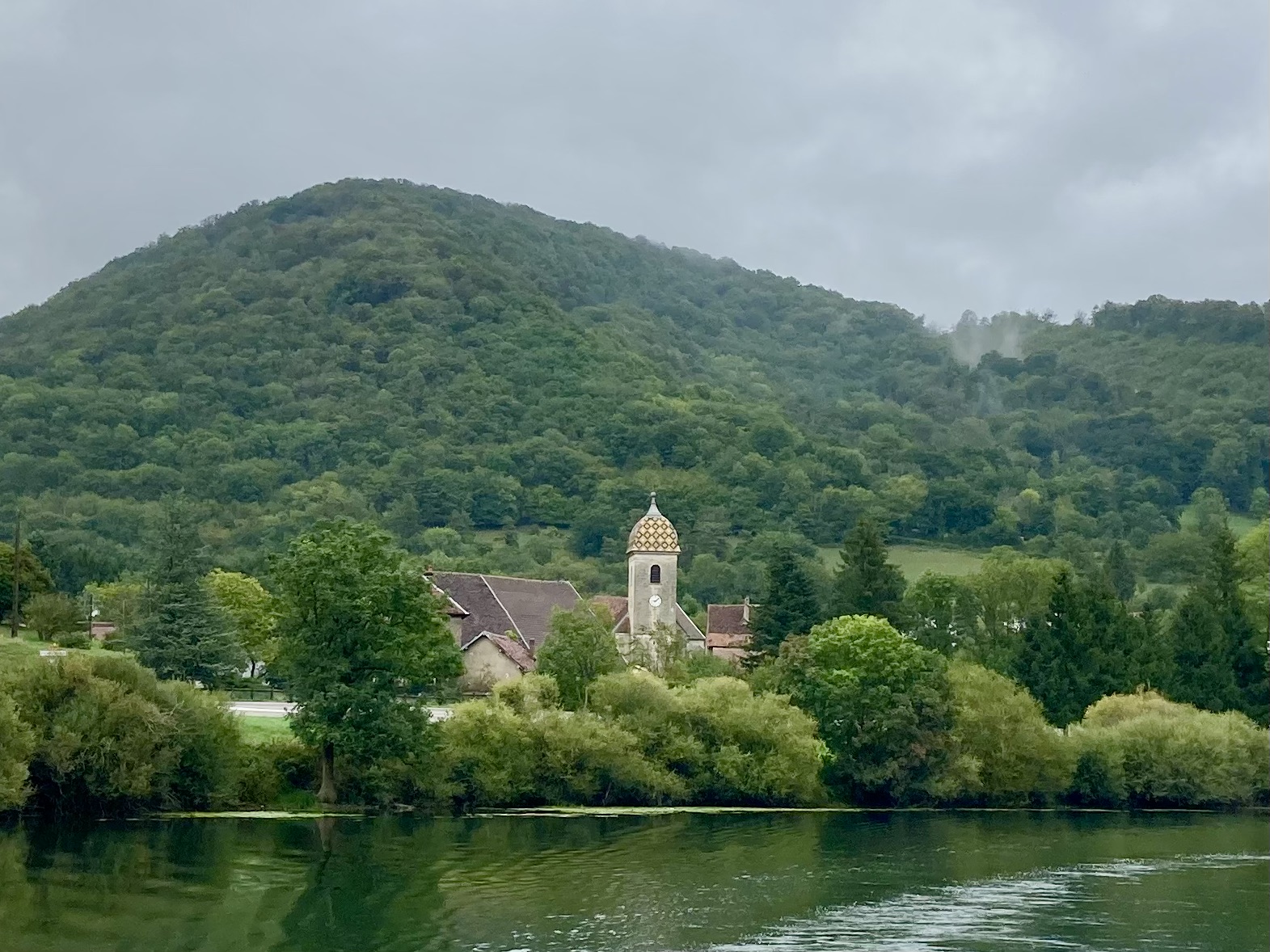
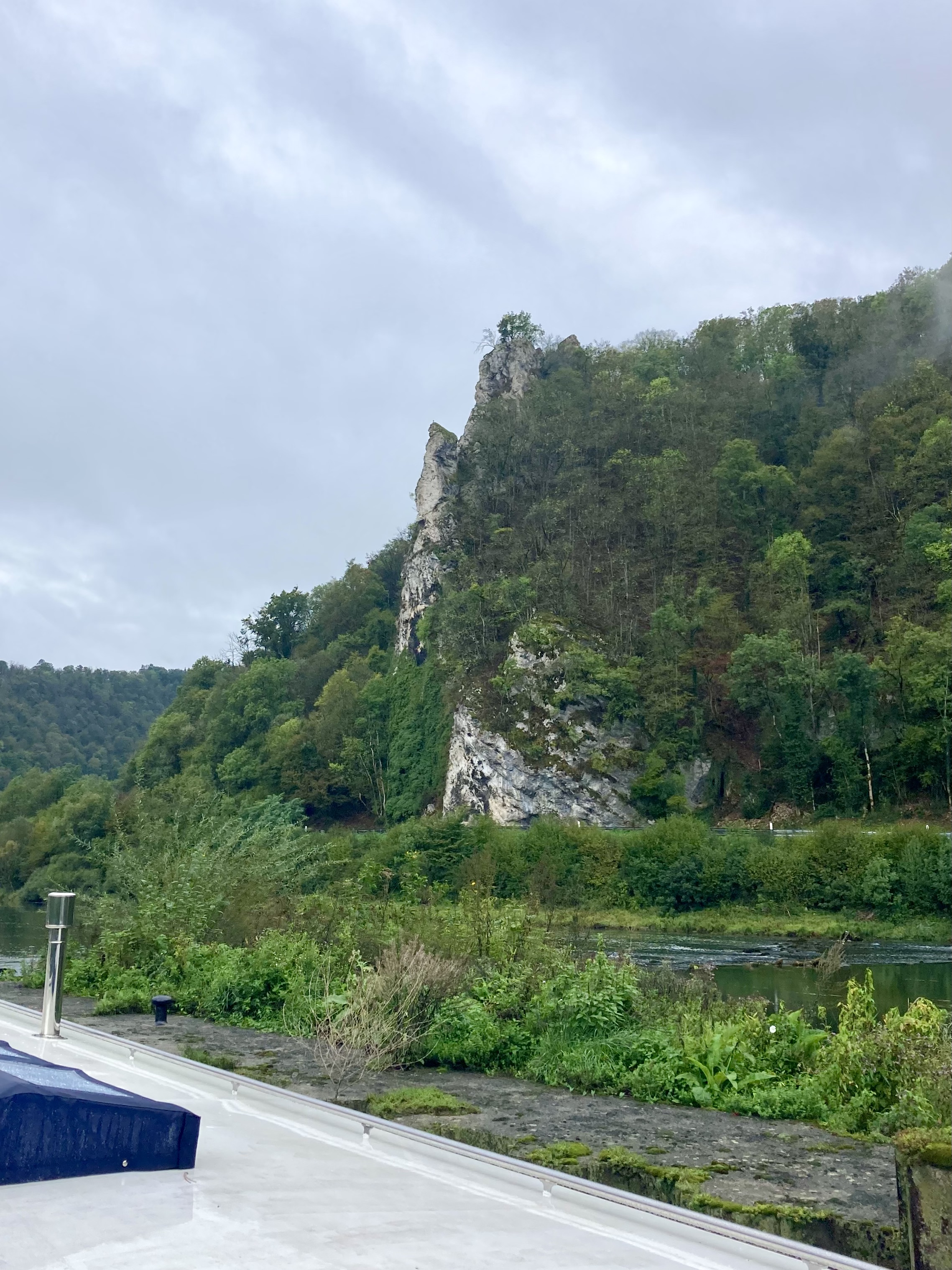
Nonetheless we were able to enjoy our trip down the river because of the stunning scenery, rock faces, kingfishers, and general movement of the water. 

Some of the locks were more exciting than others. Many of them were simple falls of around 1m and easy to negotiate.

Several had very narrow channels leading from the main stream to the lock – and rather shallow at the edges too after this hot summer, so not so easy. Of course the day’s rain was exceptionally welcome to replenish these waterways!

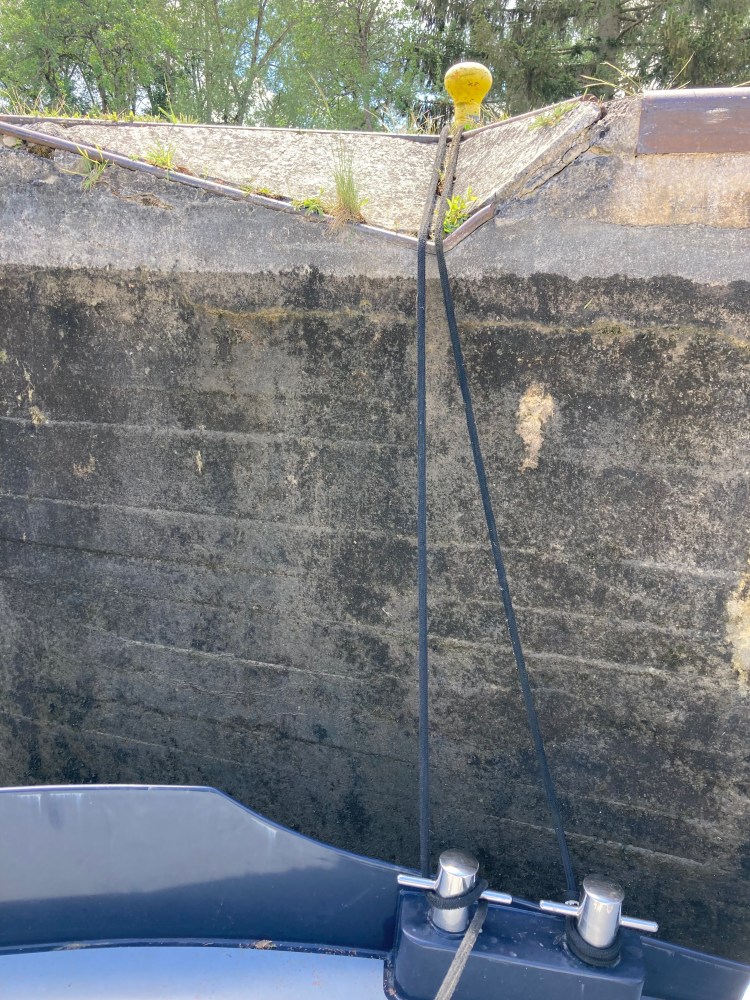
Another lock completely fooled me. It had very high sides as we came in, with the bollards we should secure too way up above us on the quay. I felt that it was a lock in which I would be going up, so put a rope around a sliding pole above the median horizontal bar. And of course we started to go down! We are going downstream after all! What an idiot. Luckily I realised in time and got my rope where it needed to be before it got stuck.
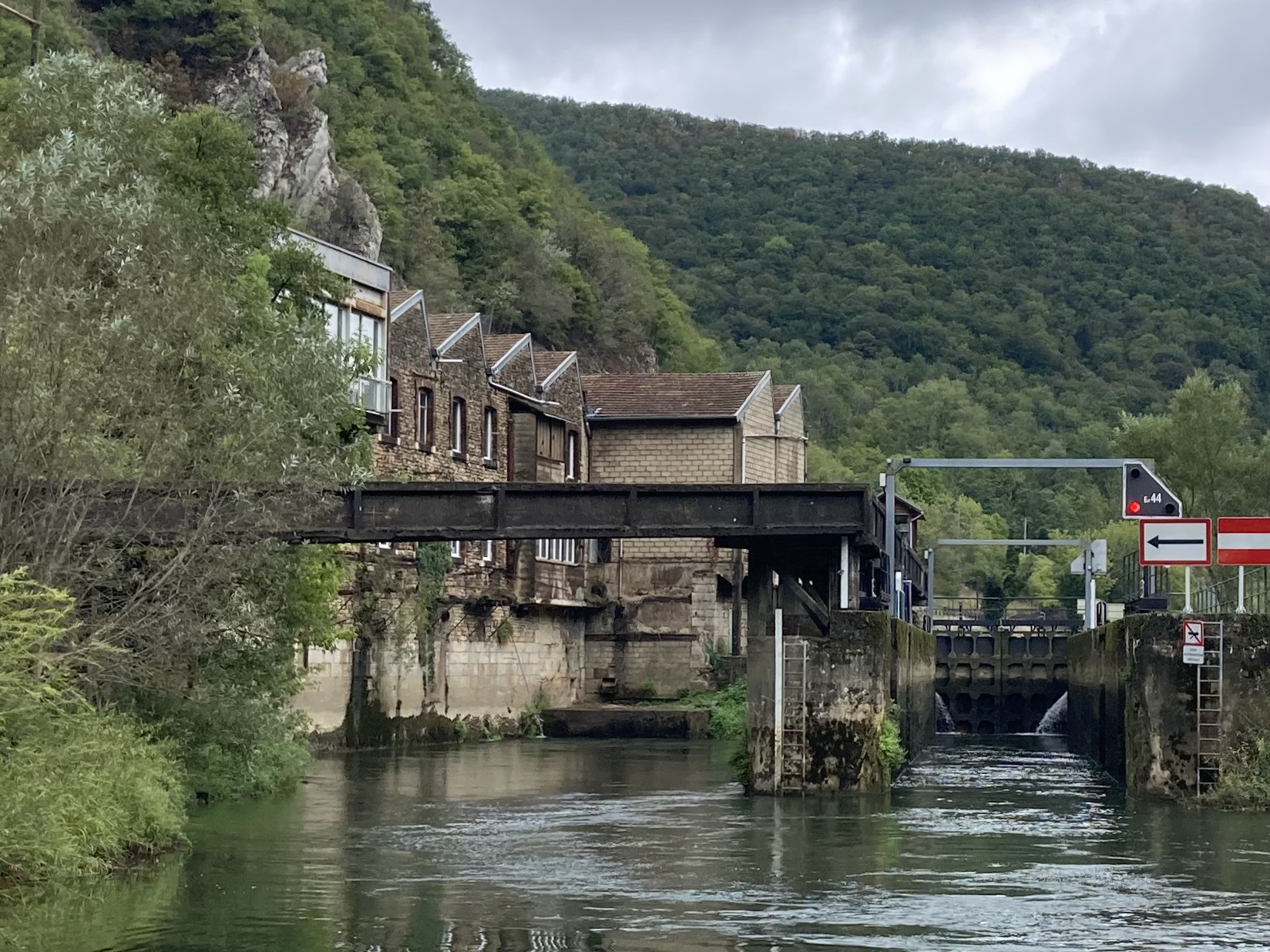
Then there was a lock was adjacent to an old industrial mill. The mill race took water from the lock channel and whooshed it to one side, causing unexpected side currents- but Captain Stu was his usual capable self and kept Calliope on course. The photo is of us leaving the lock.
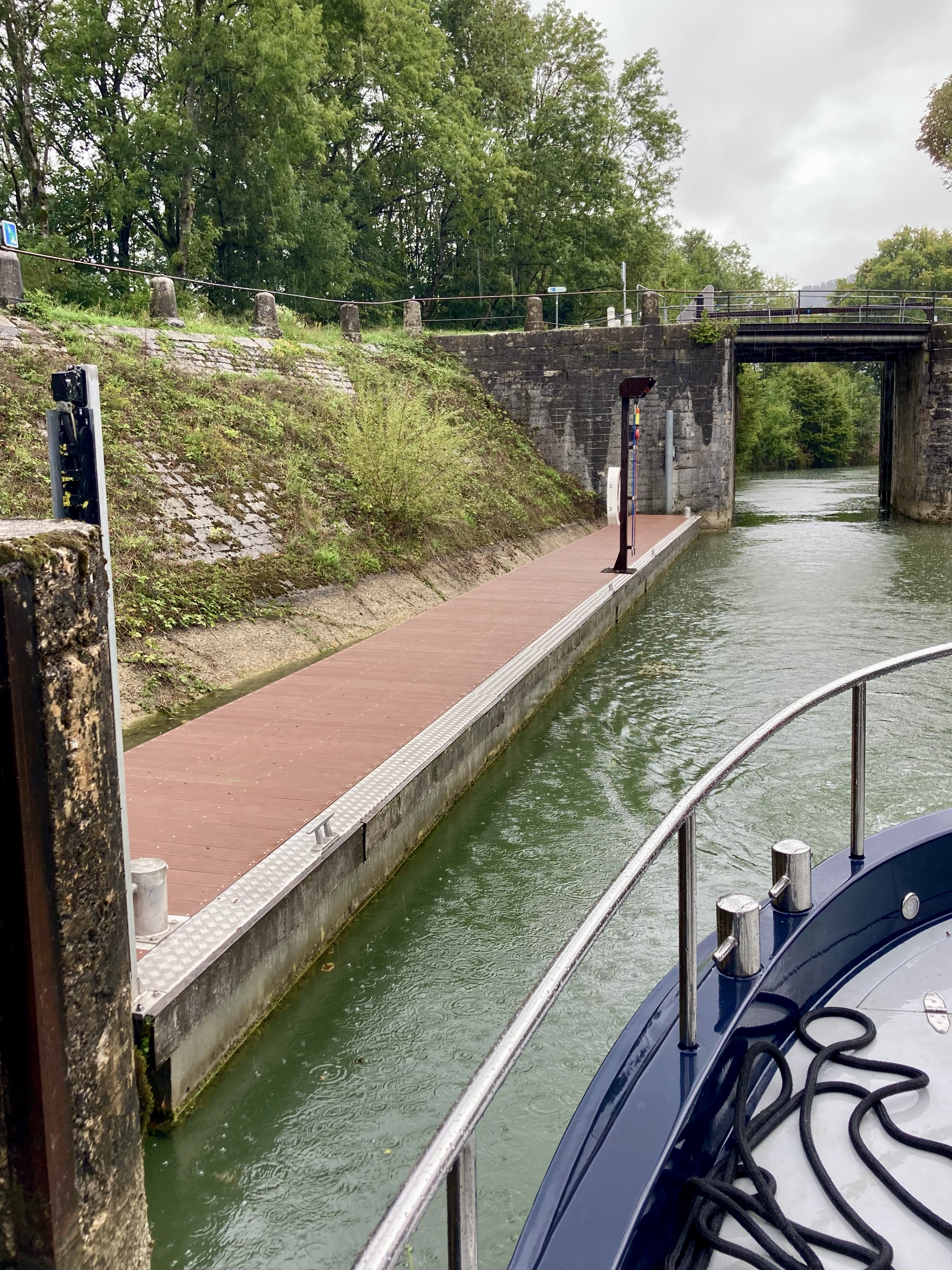
The ‘lock’ in the photo above is a temporary lock. On the day that we went through the flow on the river was low enough for us to drive straight through, but when the waters rise a lock can be brought into service here. The ‘quay’ is a floating pontoon that allows for whatever level of water there is at a particular time; ingenious.

We thought we would moor up above the last ‘different’ lock of the day – a double lock. When we tied up we realised it was right by a busy rural road. Looking over the ‘cliff edge’ of the double lock we could see a much quieter pontoon below, much like the one from the night before.

So we untied, went into the double lock, and descended to the river.
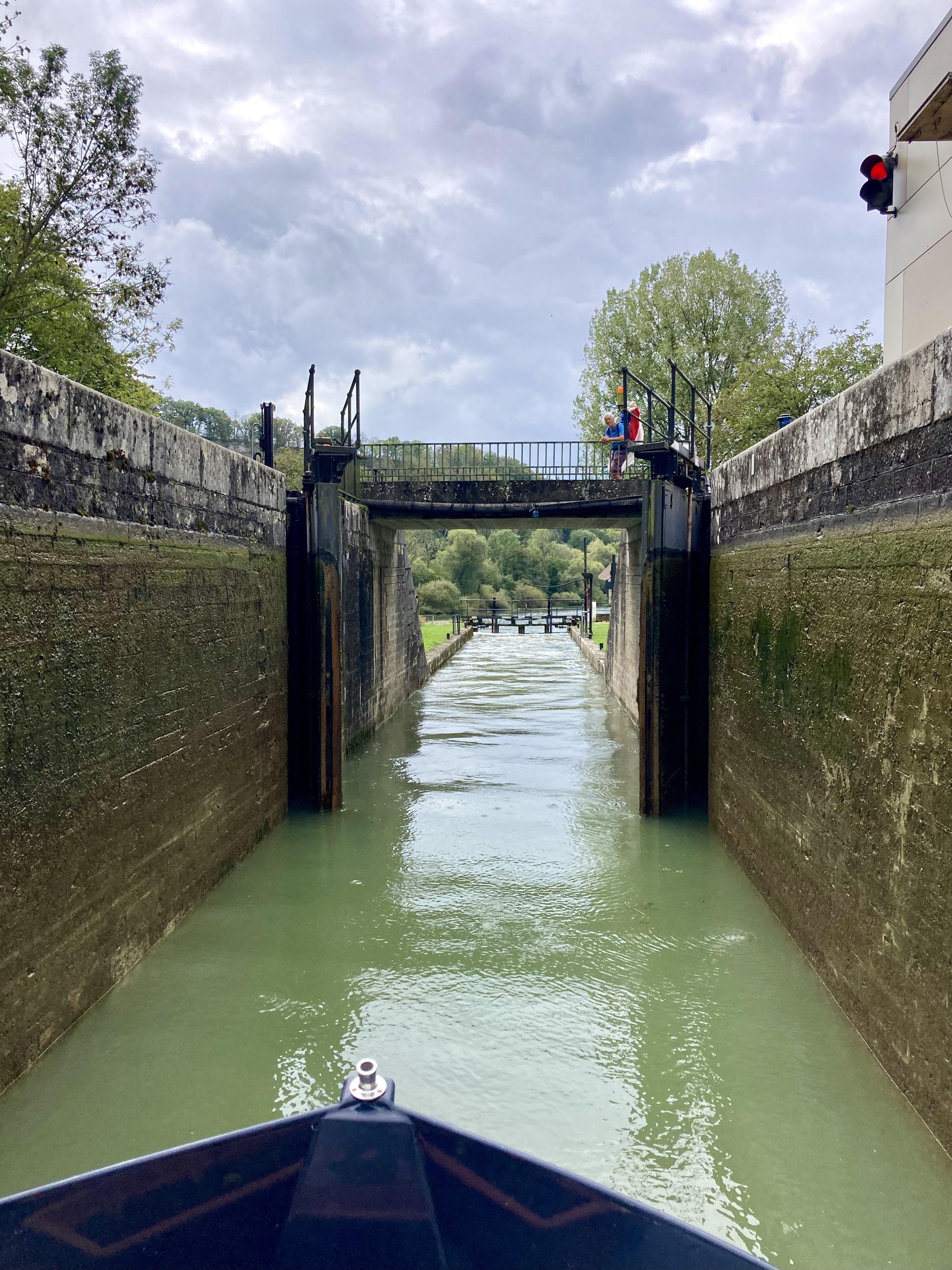
A double lock is where you exit one lock chamber straight into another, thereby stepping down twice. It dropped down over 6m in total; here we are moving form lock 1 to lock 2 – half way down.
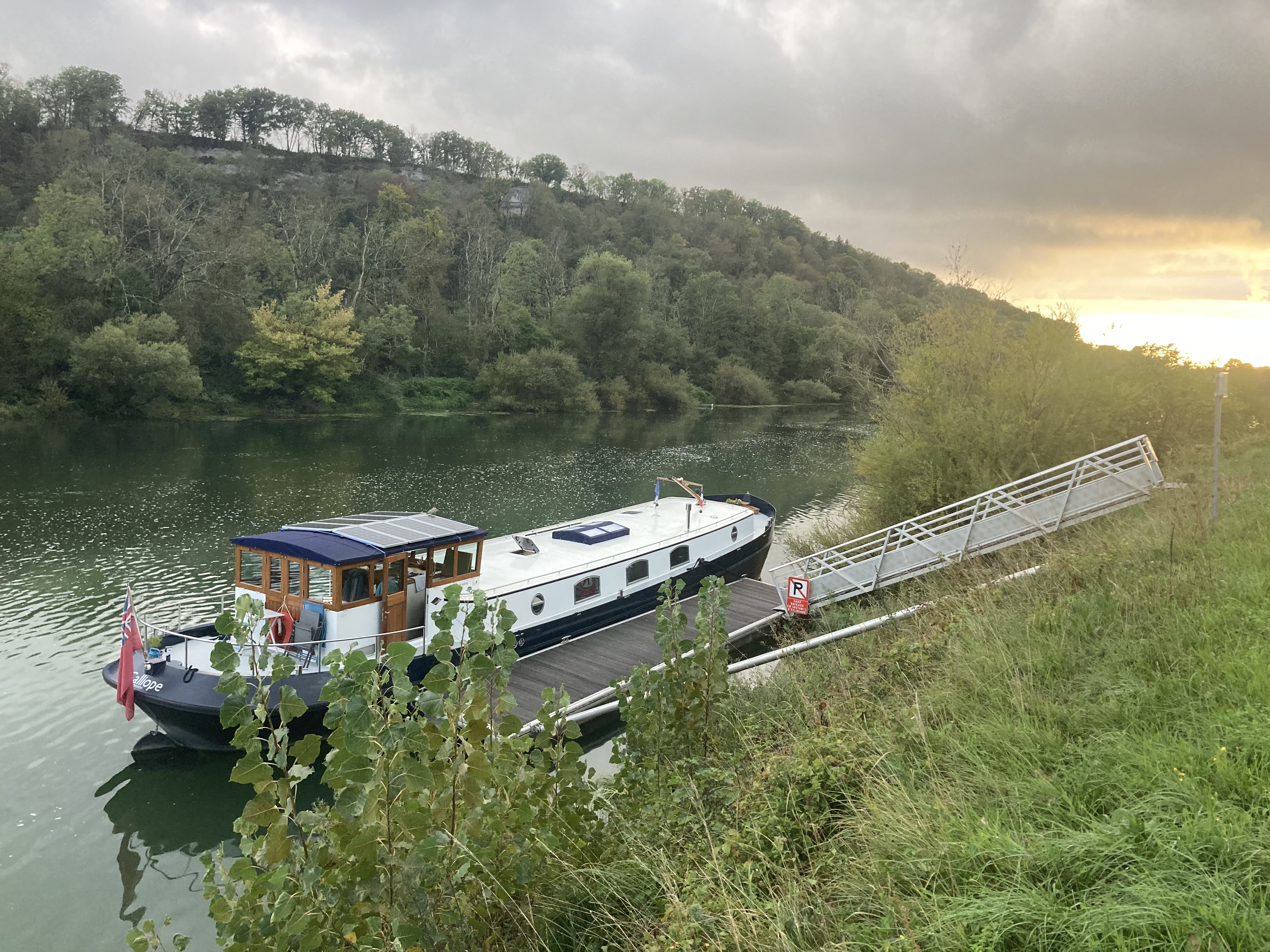
And here we are, just below Deluz, waiting to enjoy a marvellous sunset as the clouds gradually, finally disperse.

And when the skies did turn red/orange/pink I was on hand to take a photo – and Stu was on hand to take a photo of me!

The next day was Friday – 4 days until we were due in Saint-Jean-de-Losne. We needed to keep moving.

It was still grey as we continued our journey on towards the Saone.

There were not many locks on this day, but as usual they were next to weirs on the river.

The weirs were beginning to look a little more exciting, what with all the rain and us being further downstream with other rivers joining in all the time,

Two hours and only two locks on we are on the outskirts of Besançon, looking up at the massive Vauban citadel on the hill above the city.

We arrived in Besançon with a plan – cut the loop off by going through the tunnel (souterrain) and moor up just the other end.

But that mooring – two 15m pontoons – was full!

So a quick re-plan was required and I booked us into the port – back the other end of the tunnel. This meant that instead of another tunnel trip we could go round the Besançon river loop and see the city. With that positive news in mind we put lunch out of our minds for a while and enjoyed the view of city walls.

The port said we must go through the manual lock – yeah, like there is a manual lock still on this river/canal! Must be a translation issue!

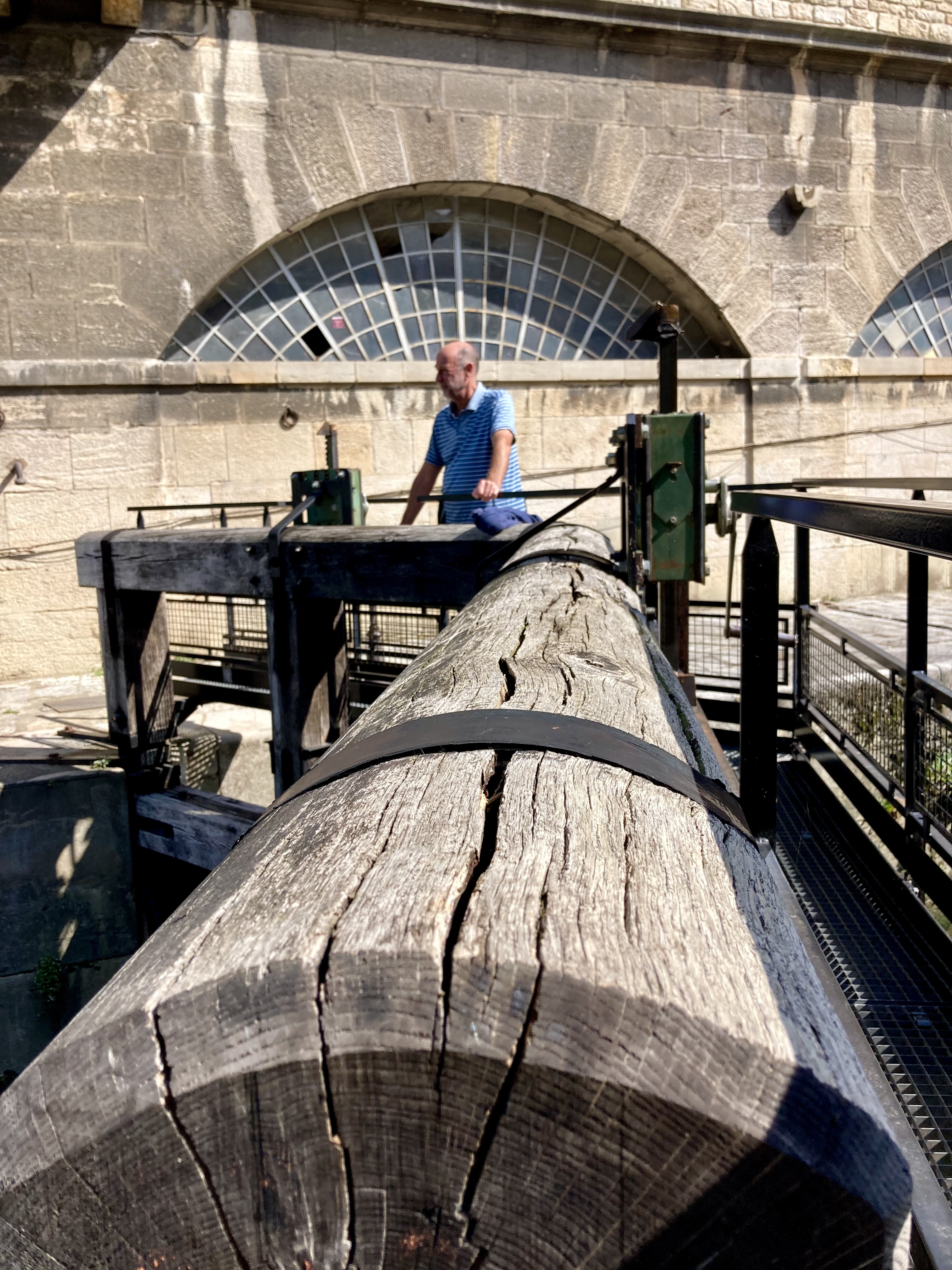
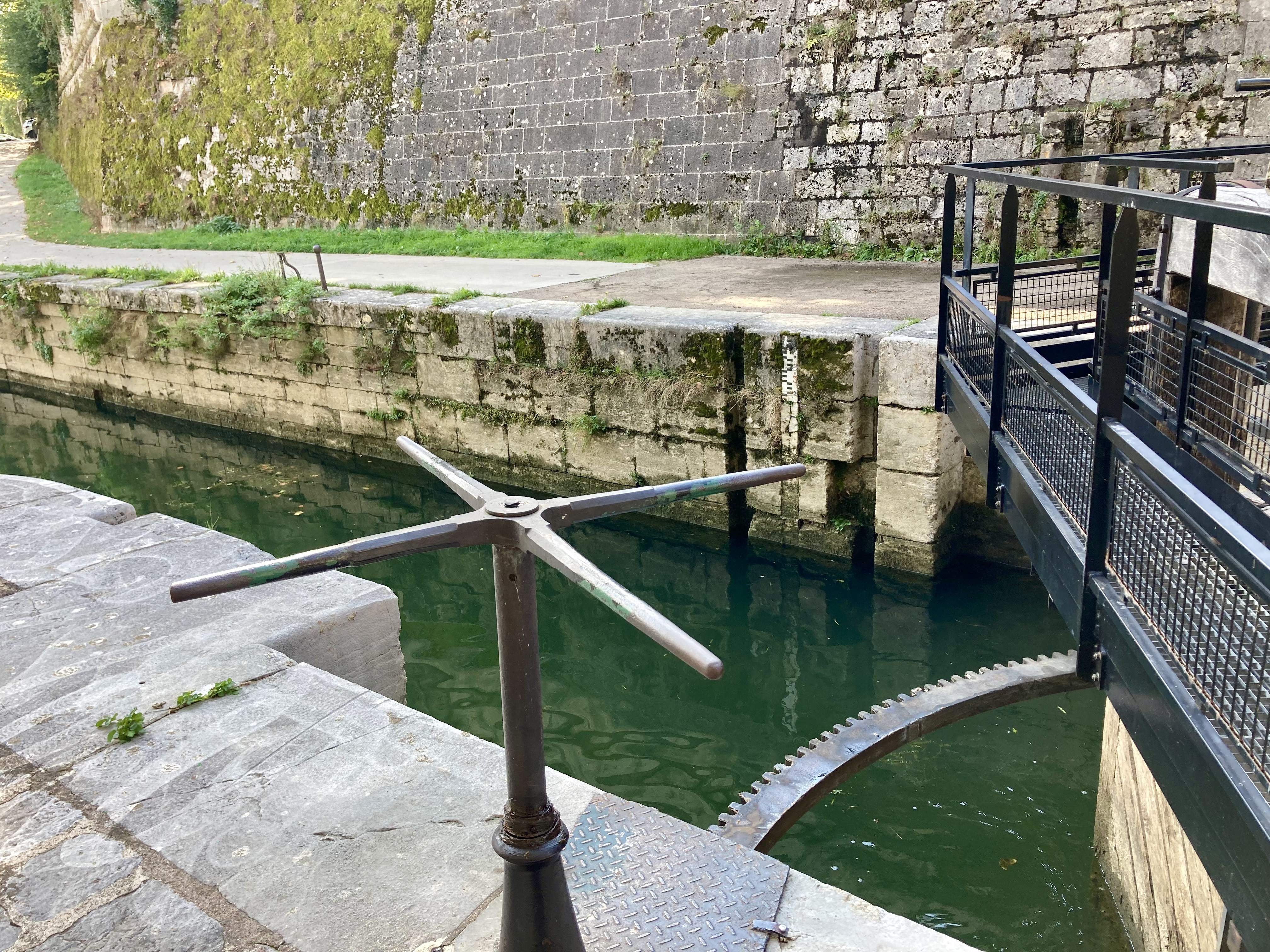
Until we got to the lock! Very pretty and next to an old mill. So we had fun working out who would do what off the two of us, tying up, emptying the lock, driving in and securing, filling the ,lock, and out.

Needless to say Stu did all the difficult stuff while I pushed and pulled and turned handles and wheels – and took photos!

But once moored up we were in a good position on Quai Des Artes to both visit the city and later to join our new friends on board Ziggy for cocktails – a very sophisticated experience!

Of course we could not stop to enjoy Besançon for an other day because of our rush to St Jean de Losne – but I suspect we will be back.

So next morning, cold and grey though it was, we were off at 9.30, after my mad dash to a boulangerie for a very good baguette. We had to go back through the tunnel under the citadelle again, but this time at the end we turned left instead of right and into the next lock down.
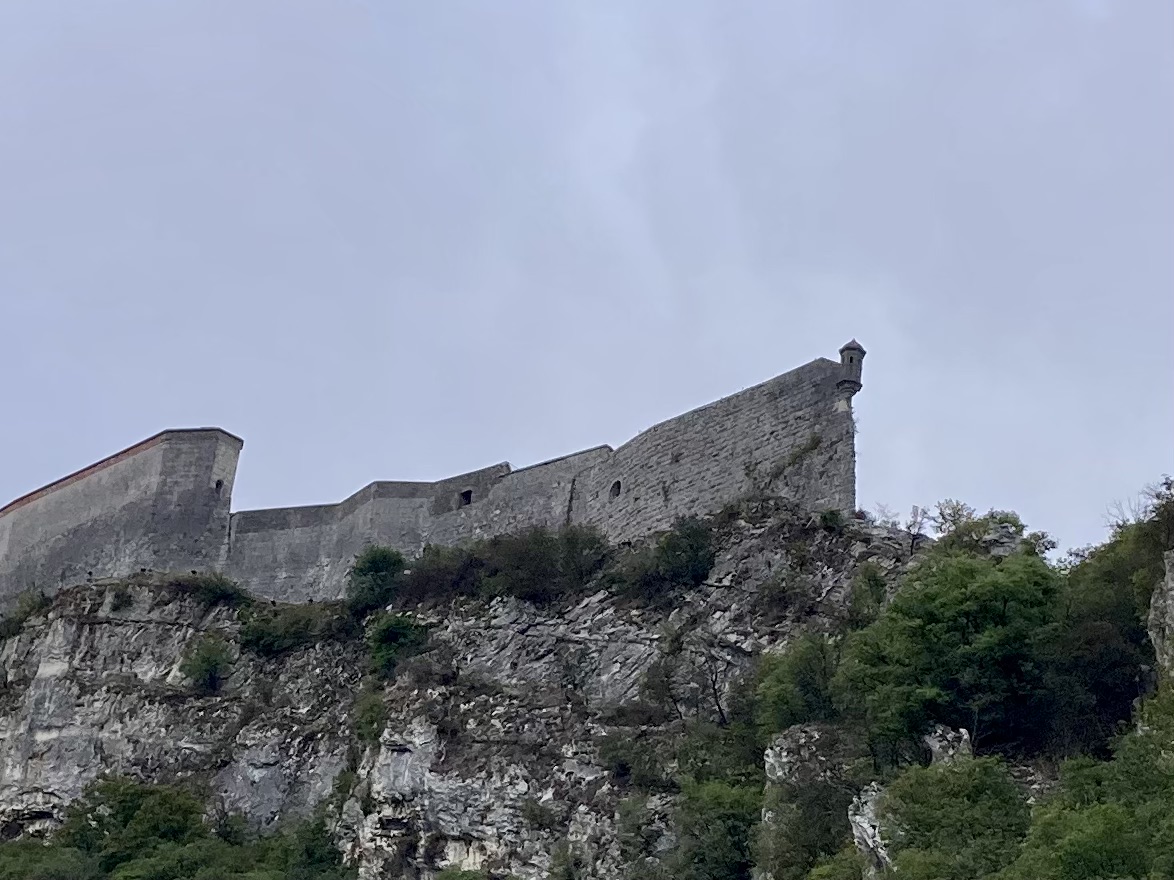
I completely lost my sense off direction and was momentarily alarmed when the Captain went to port out of the lock, but of course he was right! We joined quite a strong downstream current, following the heavy rain of a few days ago, and looking back to bid farewell to the citadel.

This made entering the next lock more than difficult. It is beside a big weir which was sufficiently angry to try to pull Calliope sideways as we entered the lock. The captain did very well!

Once in the lock Stu thought it advisable to put his rope around the sliding pole instead of a bollard. In attempting this, from above, his shoulder nudged the alarm cord which was so sensitive that it set off the alarm! Funny really, but one does not like to alarm the éclusiers so I called up to explain that there was not a problem. Nonetheless in order to allow the lock to continue its operation someone had to come and reset the lock. He was verge good about it.

We did not have to wait long and were on our way again, having apologised to the VNF.

To be honest this was not the easiest of days. But as always we rose to each challenge that came our way. Stewart had got steer through many narrow bridges and ‘gardes’ (like a lock but with no change of level and there to stop any flood waters going down the canalised parts).

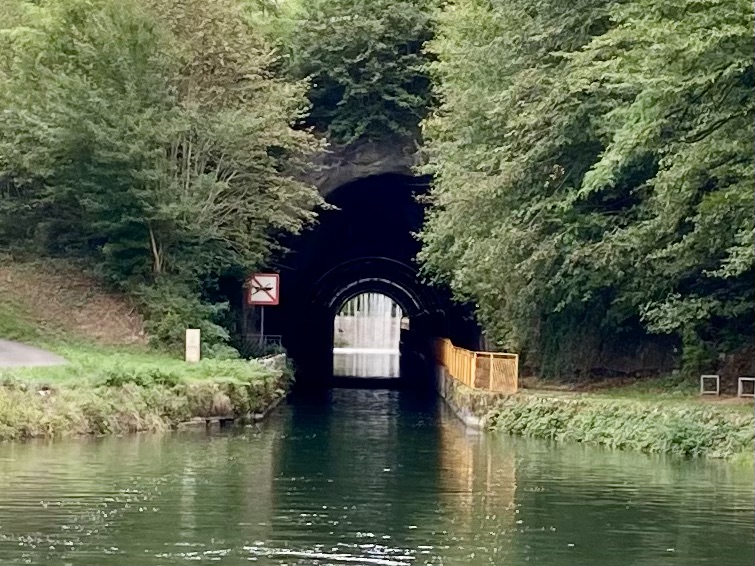
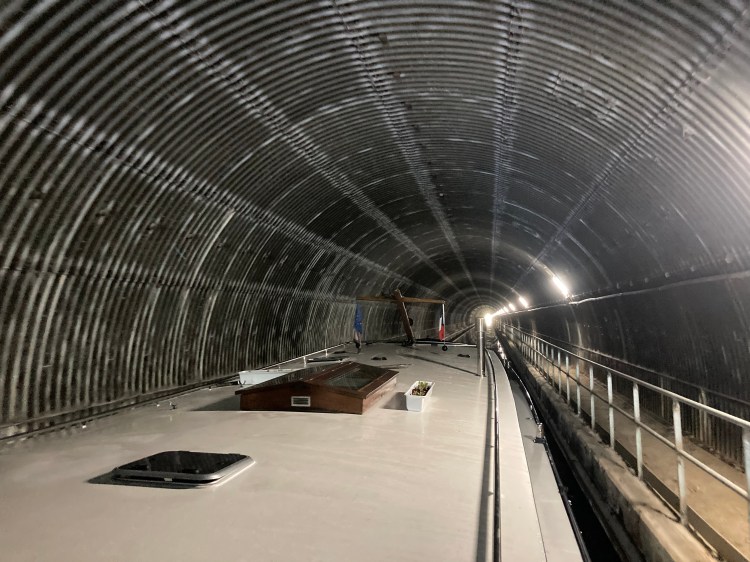
One little diversion was going through a second tunnel – this time the Souterrain de Thoraise. It has been made interesting by a Danish artist who has had some LED light strings installed through the tunnel roof, and a watershed at the Eastern entrance that stops before you enter, then re-starts behind you. There are some chrome tube sculptures at the western end.
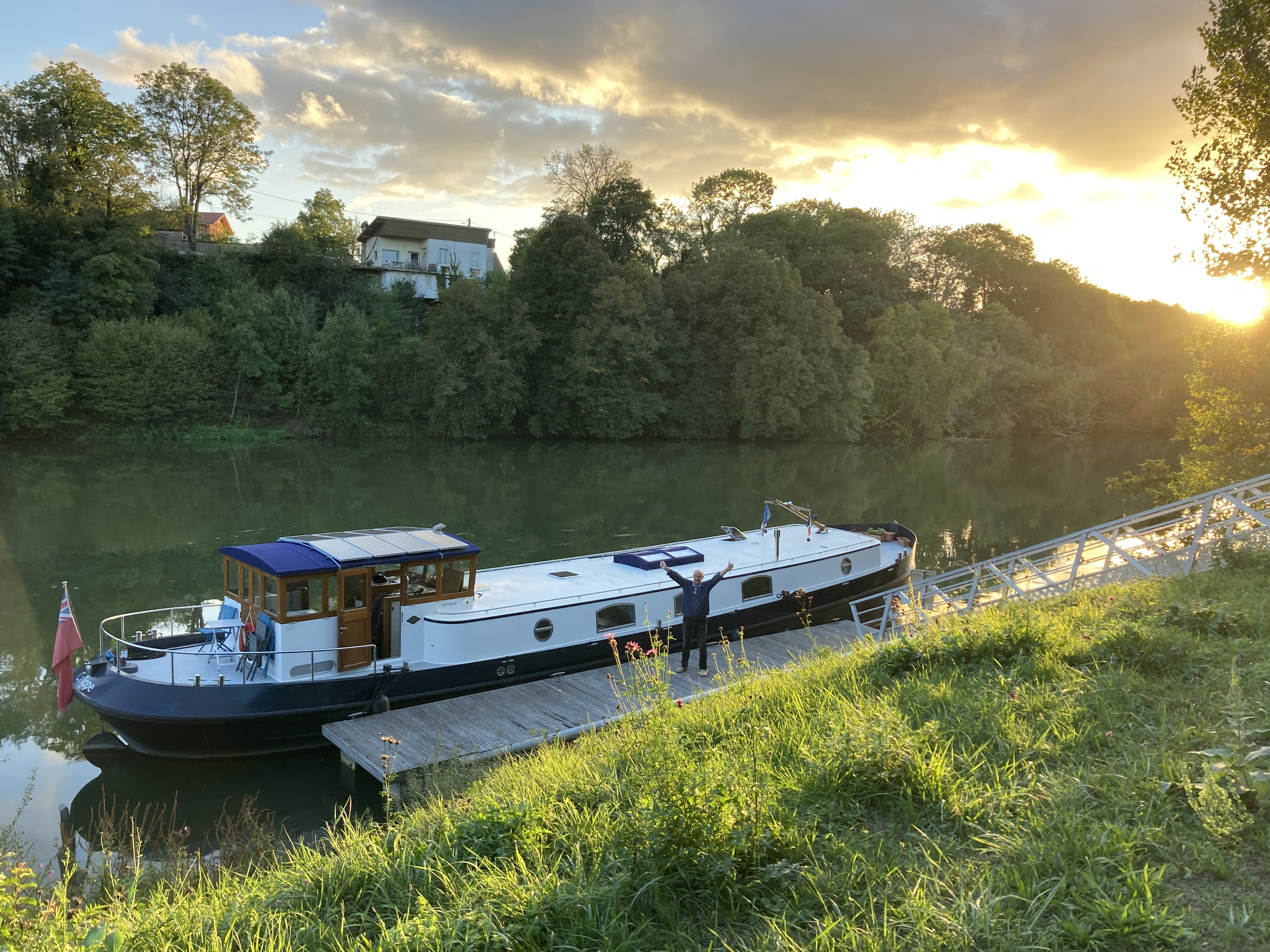
11 kilometres further on we went through lock 58A and just below found another perfect pontoon for the night. The Captain is showing his delight at this beautiful setting. Once more it is officially a waiting pontoon for the lock, but arriving not long before the lock ‘closed’ for the night we decided all would be well.

In fact all was very well! The evening sky was one of the most beautiful we had enjoyed and there was scarcely a sound other than the splash of jumping fish and birds singing their way to bed.

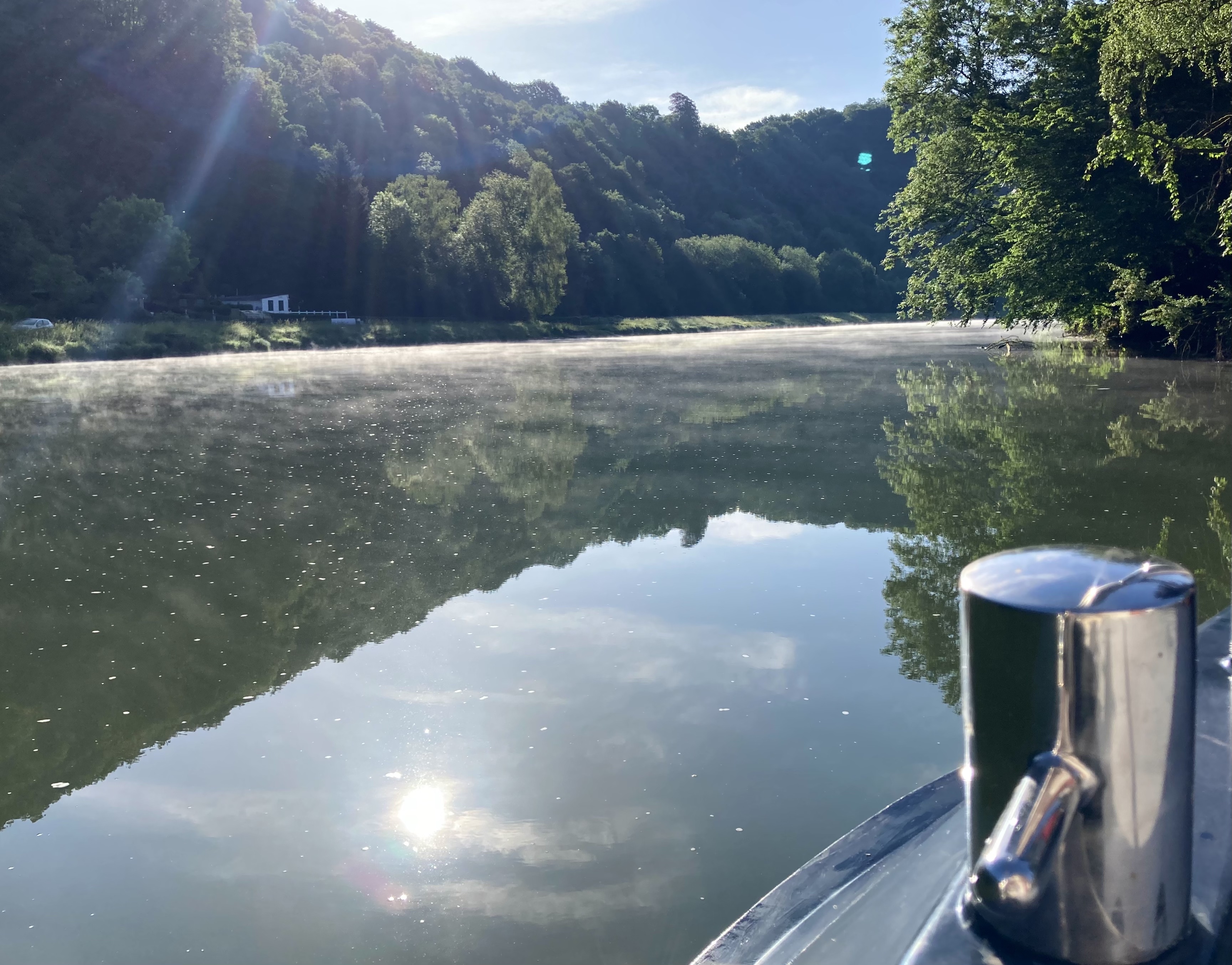
We watched with delight as the sun burnt the mist off the water tin the morning, waiting just long enough for the river to be clear and bright before we left.

Here I am, wonky glasses, enjoying that early morning sun on my face and the gently switch of Calliope moving downstream.

It is moments like this that constantly remind me how overwhelmingly lucky I am to be living this life on the water.

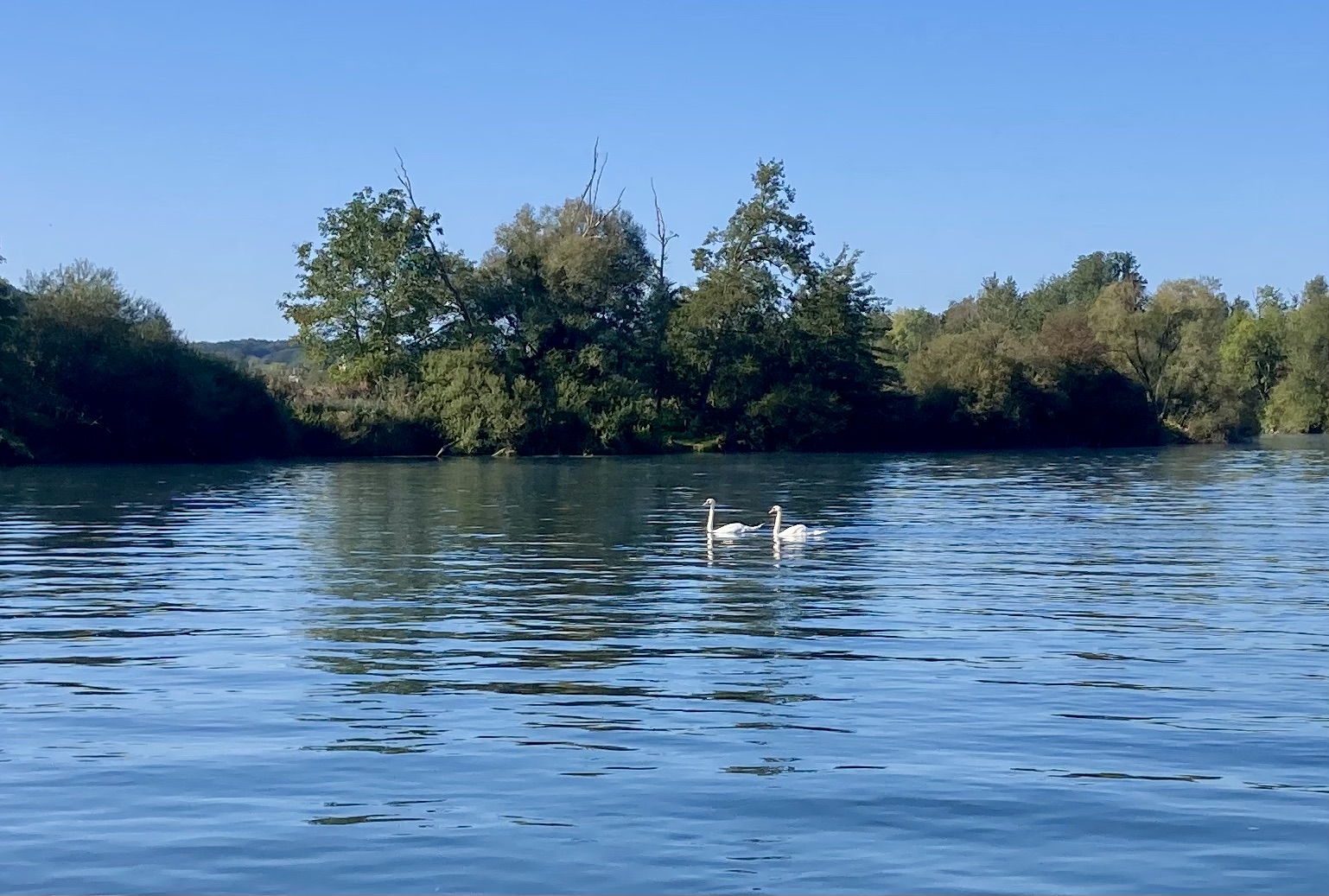
We had set ourselves a 28km target cruise for the day. It was easy to achieve in such lovely weather and along an extraordinarily beautiful stretch of the Doubs. It was no wonder fishermen and swans were out there sharing it with us!

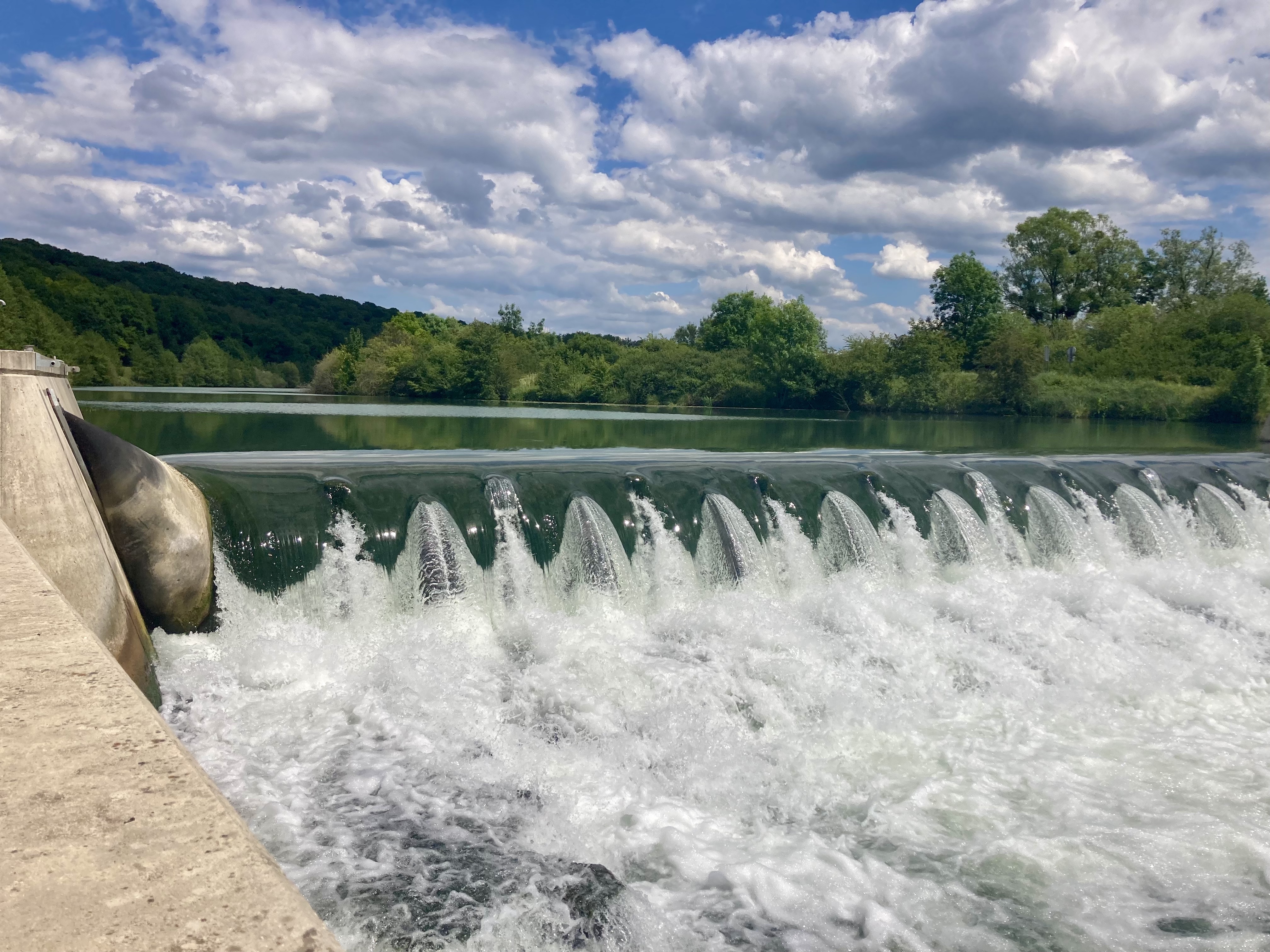
We passed by the village of Ranchot with its marvellous angled weir.

The short canal that by-passes the weir ends up with a lock (as usual) and then a long curved wall separating it from the main river; yet another magnificent view.
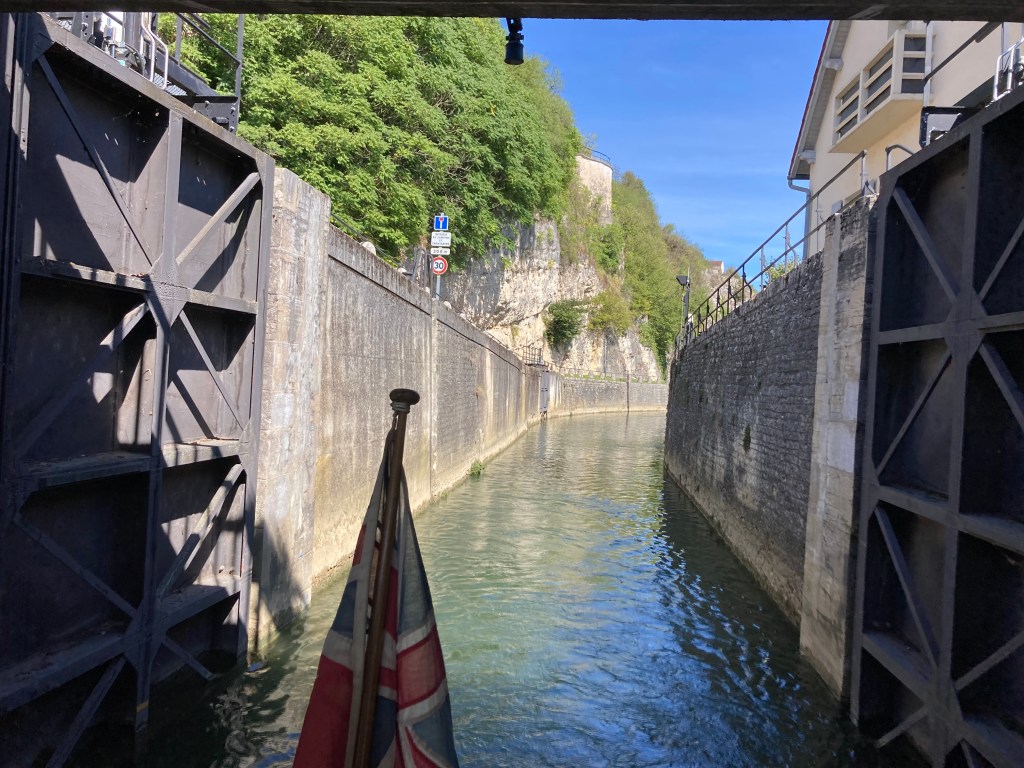
There were narrow sections again, to complement the wide open scenes. This is the start of a canalised section that runs alongside the river from Orchamps to Dole.

It includes, at its upstream end, this high walled section and écluse de garden.

By 2pm we were entering the avenue of plane trees that lead into Dole. We were aware of the possibility of no space for us on the quay at Dole; it is a very popular place to stop, so we were on the look out for an alternative.

And here it is – our alternative. We moored above Dole, just above the Charles Quint lock. On this occasion there was no sign about it being a waiting pontoon, so we felt good tying up here.

I went for a quick walk round Dole, main ly so that I knew where the boulangerie was for the next morning.
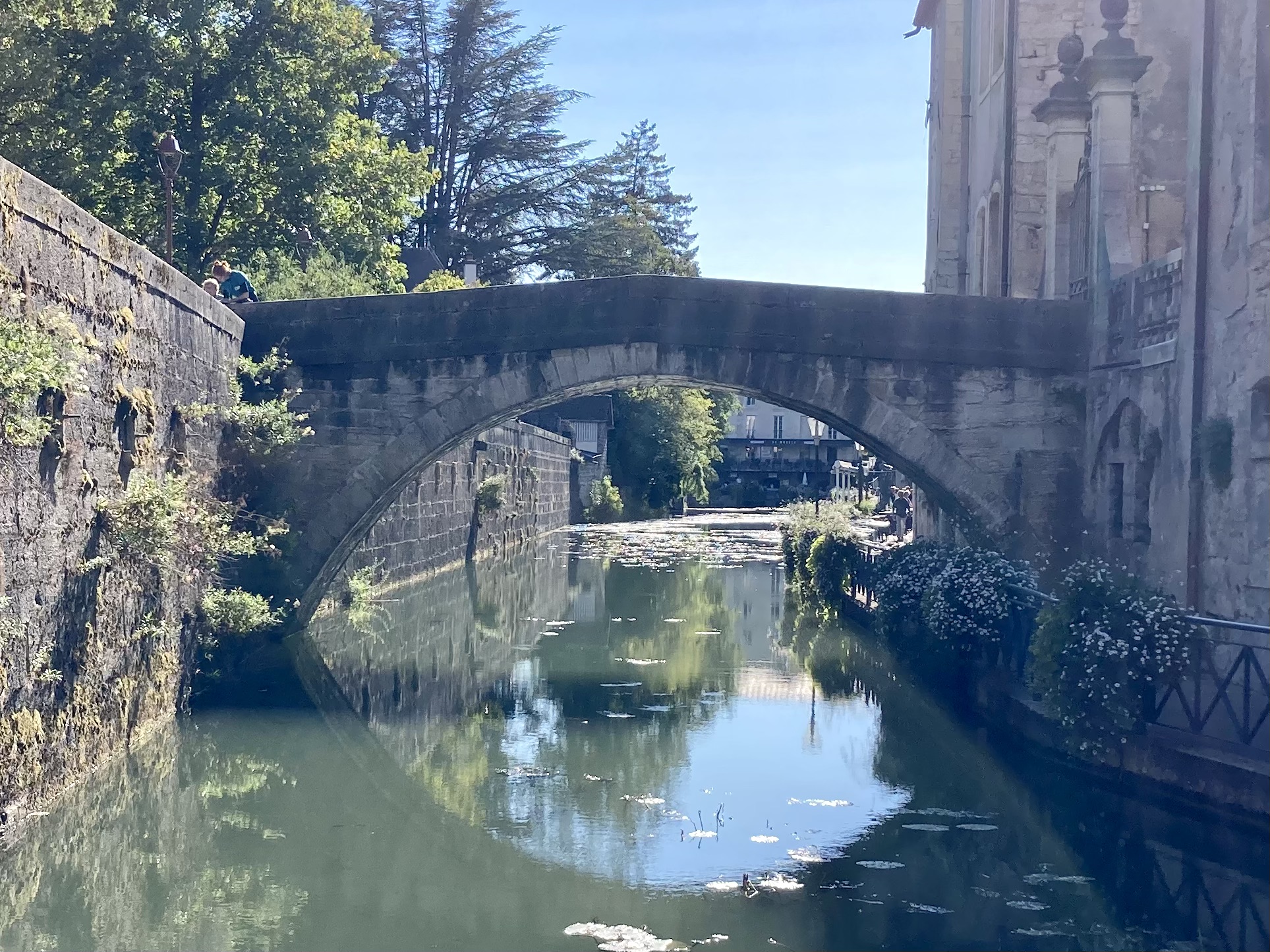
These few photos do not do justice to an amazing small town – where Louis Pasteur was born . It is absolutely lovely. There is a characterful inner moat with old houses and restaurants lining the quay and plenty of narrow lanes and allies to explore.

Yet again we had landed somewhere for just one night that definitely requires a return visit.

Monday was our last day to reach Saint-Jean-De-Losne and the town quay where we hoped to meet up with Simon Piper of Piper Boats.

It was also the day of Queen Elizabeth II state funeral; a sad, ceremonial, reflective day.

I made my dash to the closest open boulangerie for a nice fresh baguette. That meant we could cruise through lunch with a crusty sandwich in hand.
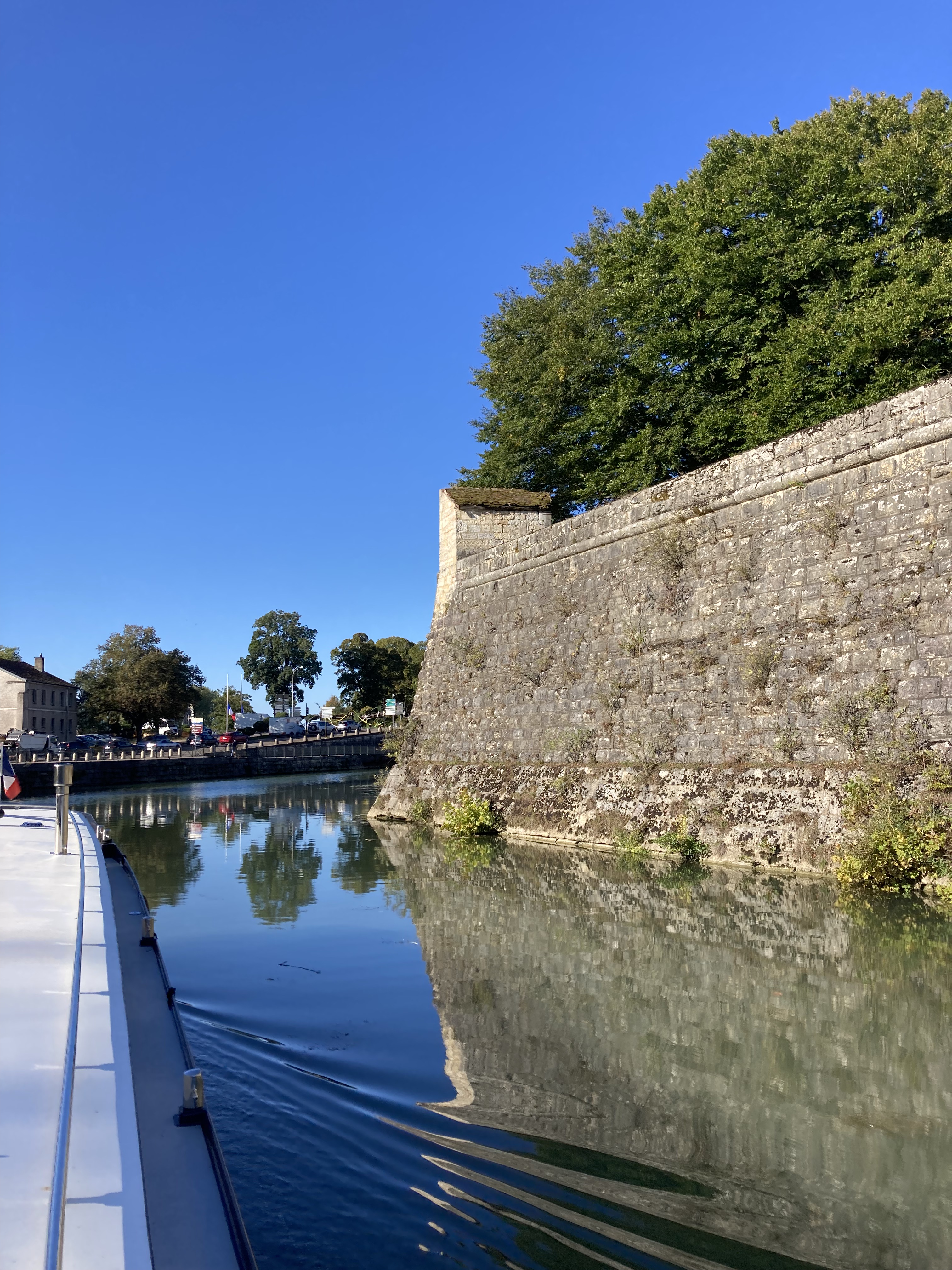
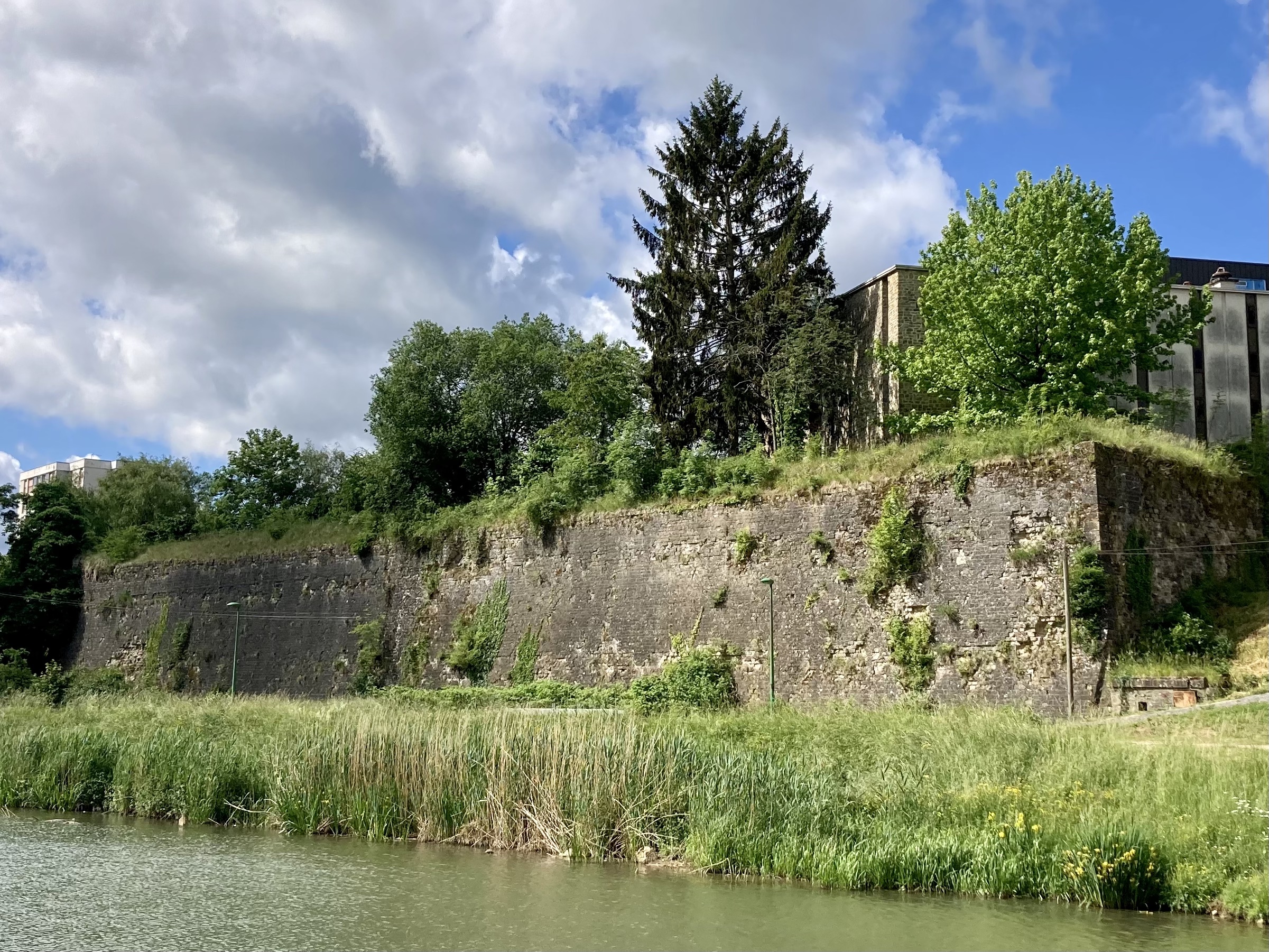
And then we were off, passing through the Dole marina area and round the city wall.

On leaving Dole we joined a lovely open river and headed across it towards the next lock, in sight and just a kilometre and a half away. We approached and saw a red light, partly open gates, but no boat emerging. It didn’t make sense. Using our remote control made no difference and we pulled into the waiting pontoon.

Up jumps crew to go and report the ‘en pan’ lock. I used the automatic connection to the VNF office that is on the side of most lock huts, and was told someone would be sent to help us.

After about 20 minutes a van pulled up on the other side of the lock and a man started to work on the weed clearing machine at the side of the lock – was that perhaps the problem? After a further 10 minutes, and no sign that the man recognised our plight, I went back to the lock and explained.
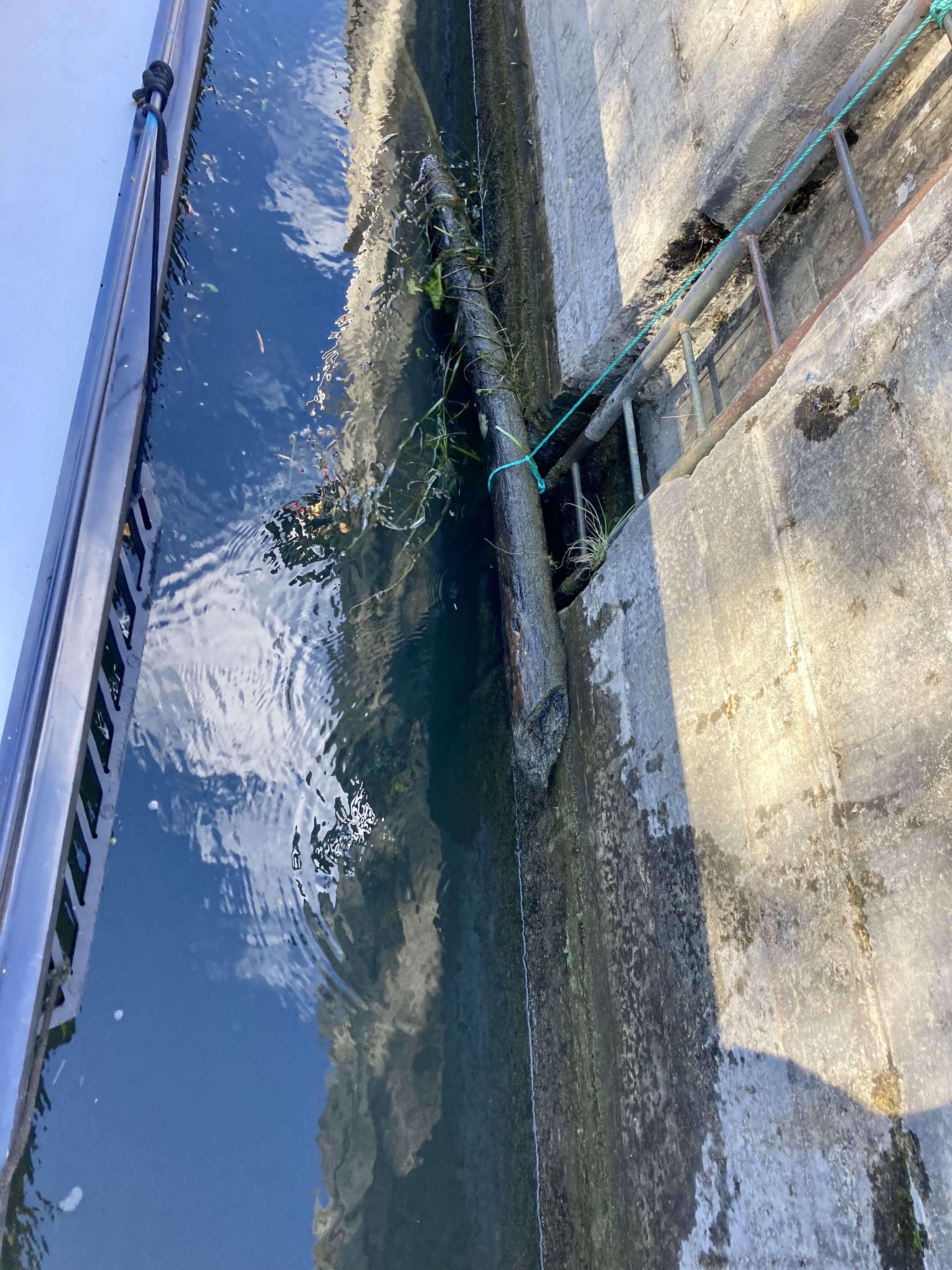
Ah! Now he understood why we were on the waiting pontoon – and two other boats were wallowing about on the river behind us, both also waiting for the lock. His job was weed clearance, but he would help us. He went to the lock controls and soon the gates fully opened – to reveal a large tree trunk that presumably had been trapping the doors.

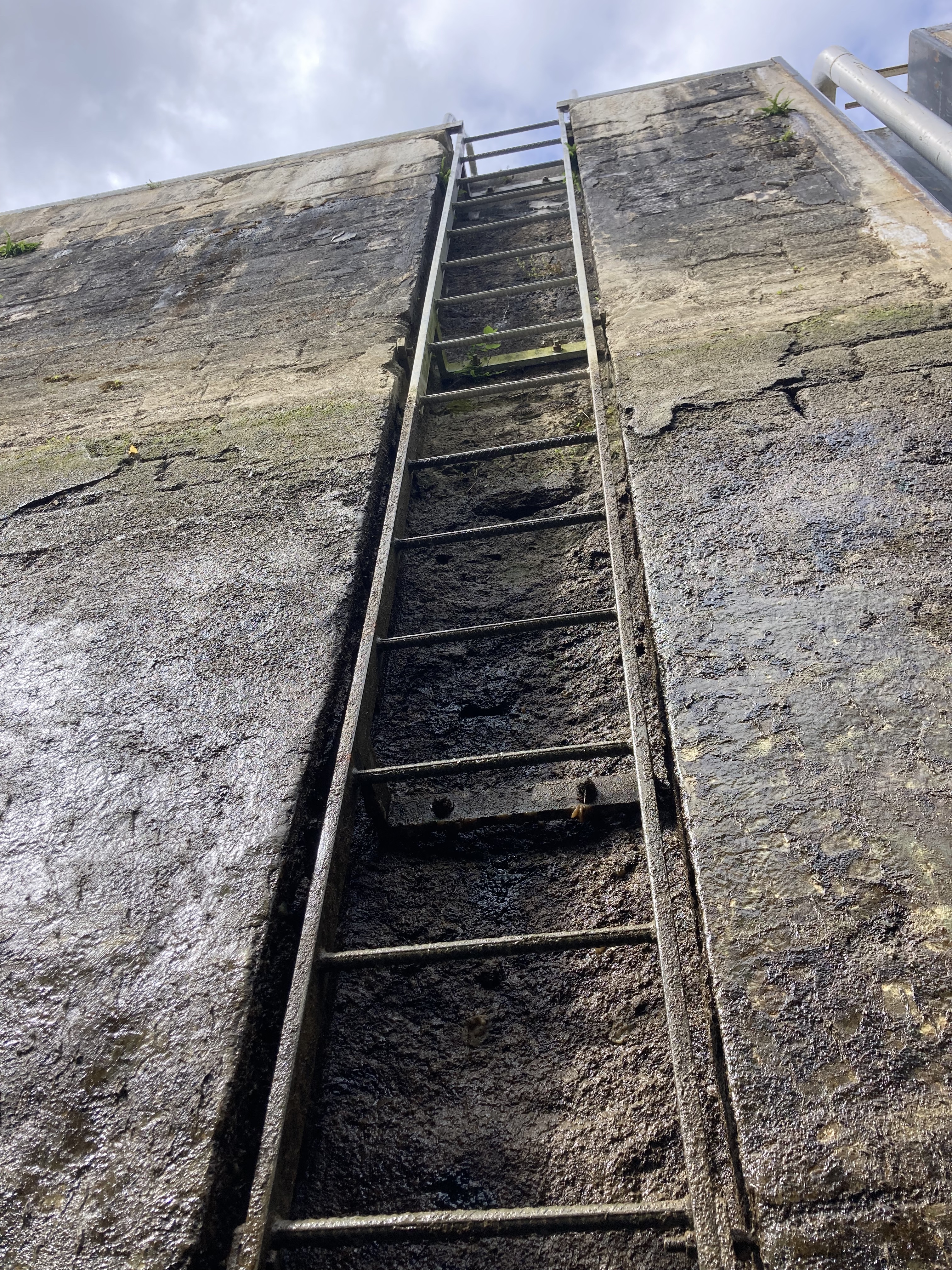
Together, with a variety of boat hooks, rakes and rope, we managed to bring the log to one side of the lock and secure it to the ladder. Hooray. At last the lock could operate, and we could all proceed.

We went on through a mix of fields and huge chemical works,  but few photos were taken as I was using my iPhone to watch as much of the state funeral as I could, and have the two minutes silence together with the rest of the British nation.

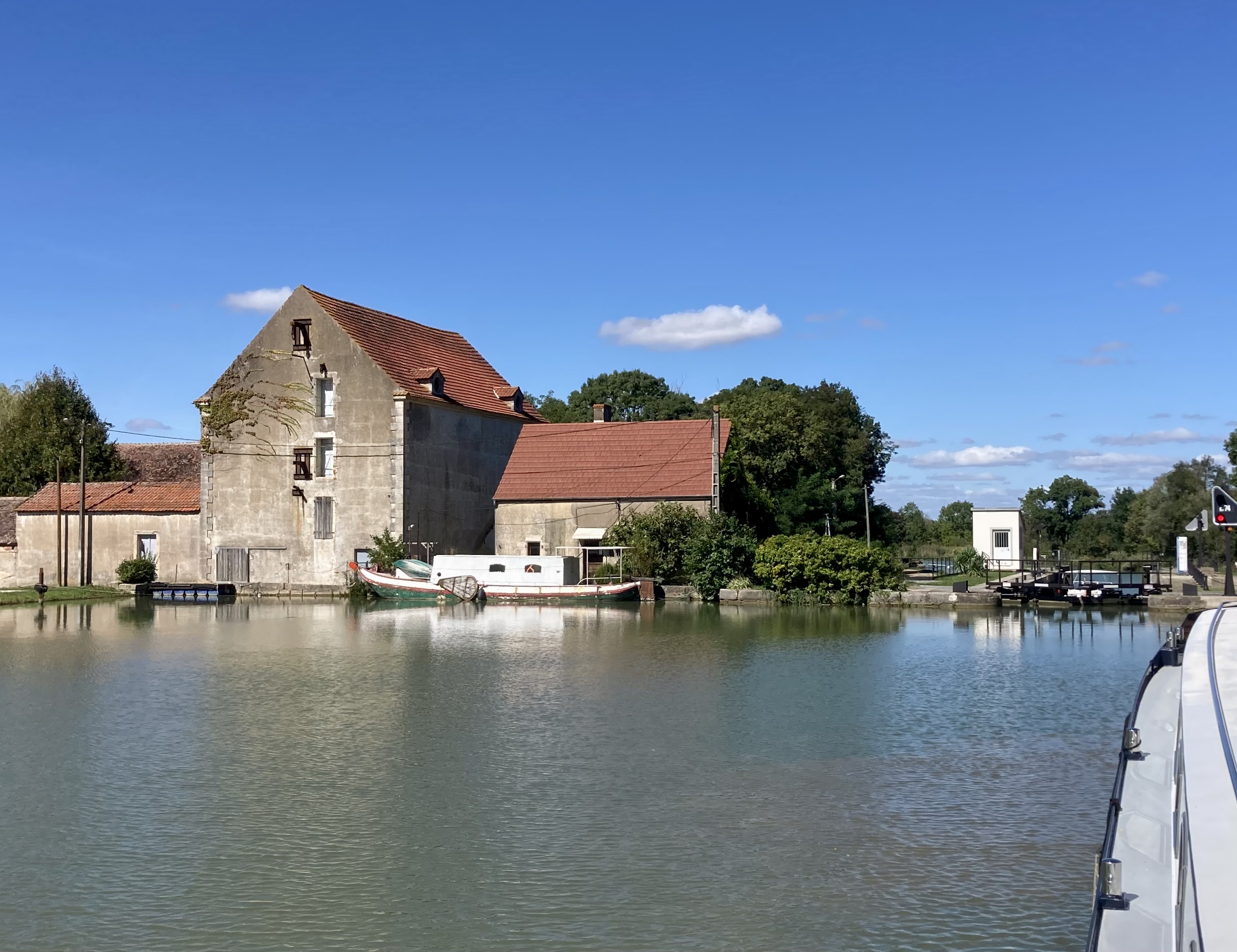
It was not too long before we were at last kilometre of the canal, and its final three locks. The first two are each alongside beautiful old mills as shown above; a very peaceful setting near a village called St-Symphorien-sur-Saône.

Then into the final lock, number 75, where we handed back our telecommand and soon found ourselves out onto La Saône

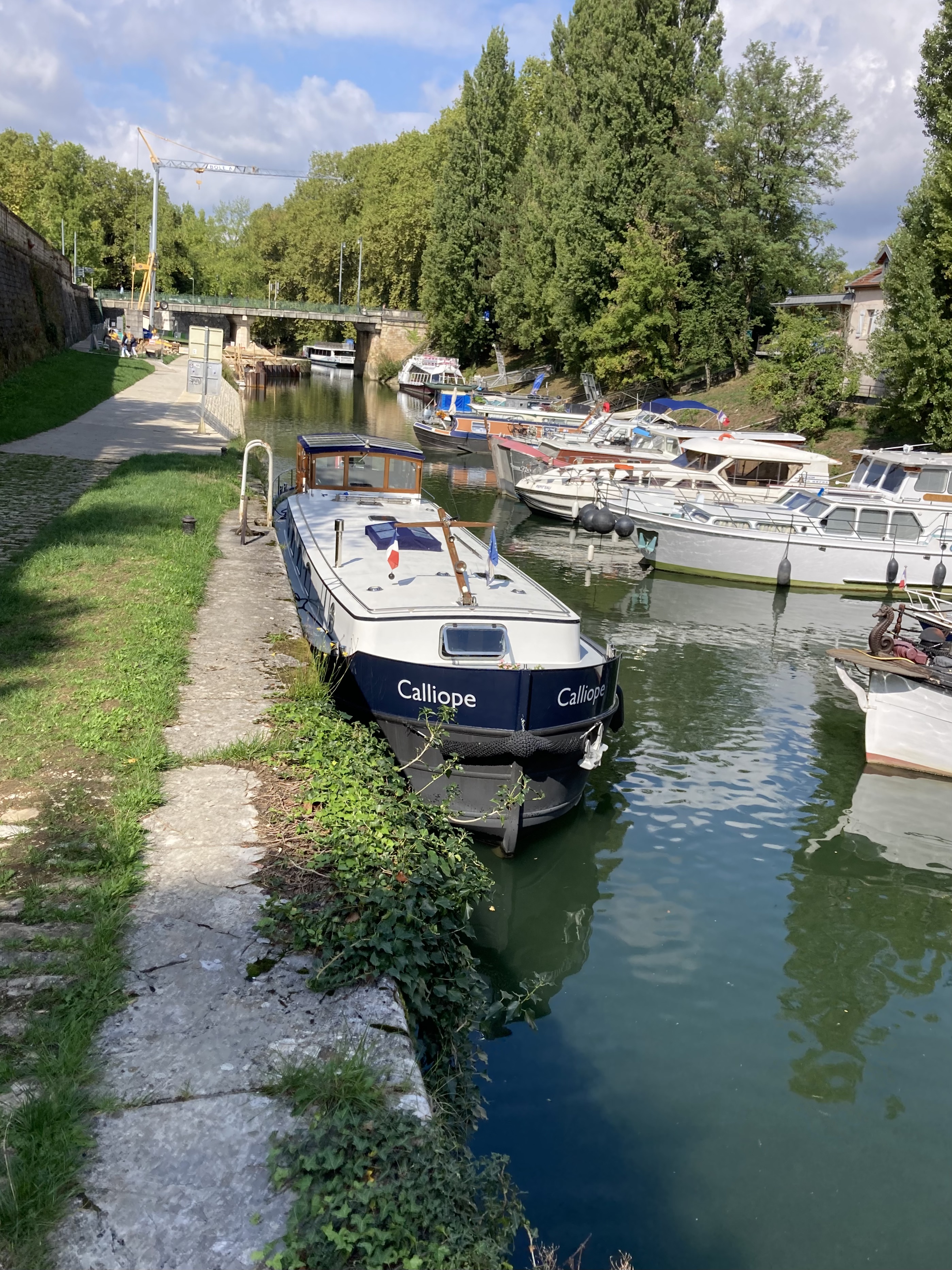
It is only 4 kilometres from St Symphorien to Saint-Jean-de-Losne so it was not long until we were moored up on the stepped town quay. It is always an interesting place to tie up as you have to find the rings set at various places and levels on the steps, and make sure you have ropes long enough to secure your boat!

This time it did not take long and we sat back to relax and enjoy the end of another epic season, this time including time on 9 different rivers, and about 6 canals. The rivers were:

  • Leie
  • Scheldt
  • Sambre
  • Meuse
  • Moselle
  • Saar
  • Rhine
  • Doubs
  • Saône

Not bad!

All that was left to do was to turn the corner into St Usage, where Calliope was to spend the winter, then go back to the UK and start planning for the 2023 cruising season!

Hope to see you all again in April

South West on the Rhône au Rhin

Part 1: Strasbourg to Mulhouse including 72kms of Le Rhin

6th to 9th September 2022

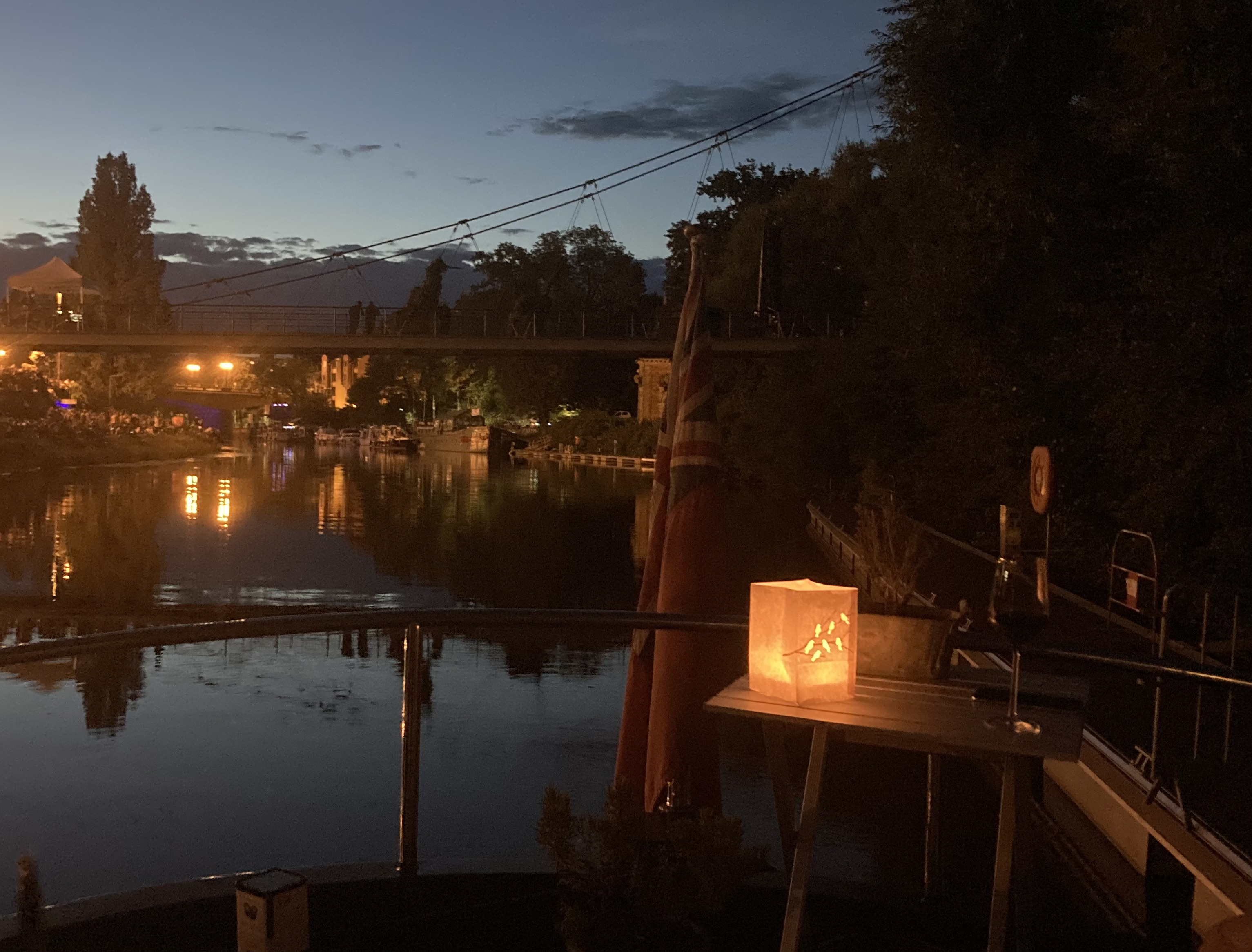
We were in Strasbourg on a beautiful mooring in the Basin de la Citadelle (Port d’Europe) with this lovely view from our back deck.

We had been there since late July, originally planning to use the Canal des Vosges to travel southwestwards, but water shortages through this very hot dry summer had resulted in several canal closures, including the Vosges.

So the change of plan was to use the Rhône au Rhin canal, now separated into two branches and necessitating a 72km strip of the Rhine itself. To go on the Rhine we have to have a pilot aboard – someone with a Rhine license. All boats over 15m must have a qualified person aboard on this big and often commercially busy river – although this regulation is due to change from 15m to 20m – which will let us off the hook.

It isn’t too difficult to find a pilot with the licence – and our search was made even easier by discovering two of them working at the Port d’Europe; one of them was free to come with us – Alain. We booked him in and set about enjoying our last week in Strasbourg!

Alain was to join us at the lock where the northern branch of the canal joins the Rhine at Rhineau; on September 6th we set off for a gentle two day trip down to meet him.

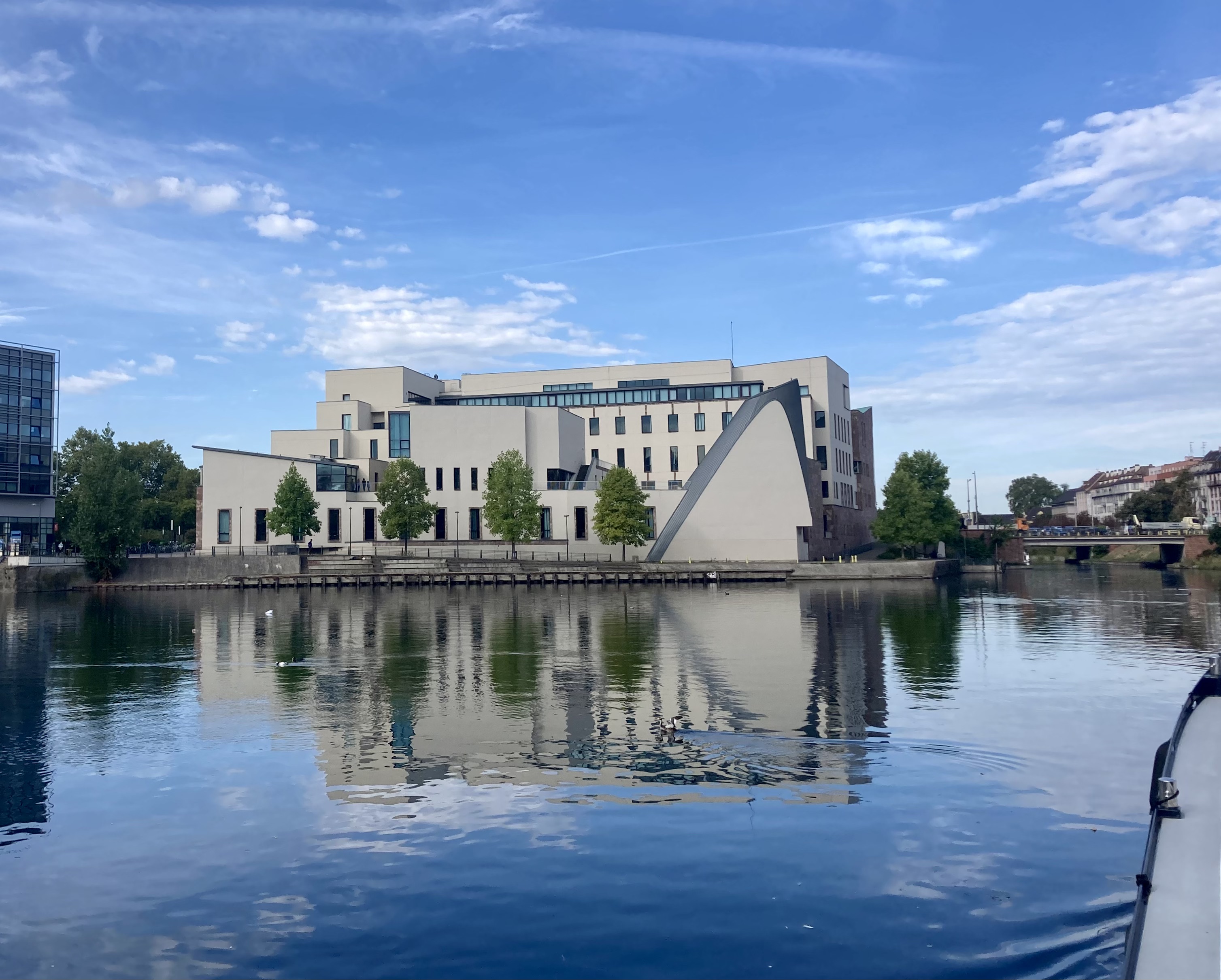
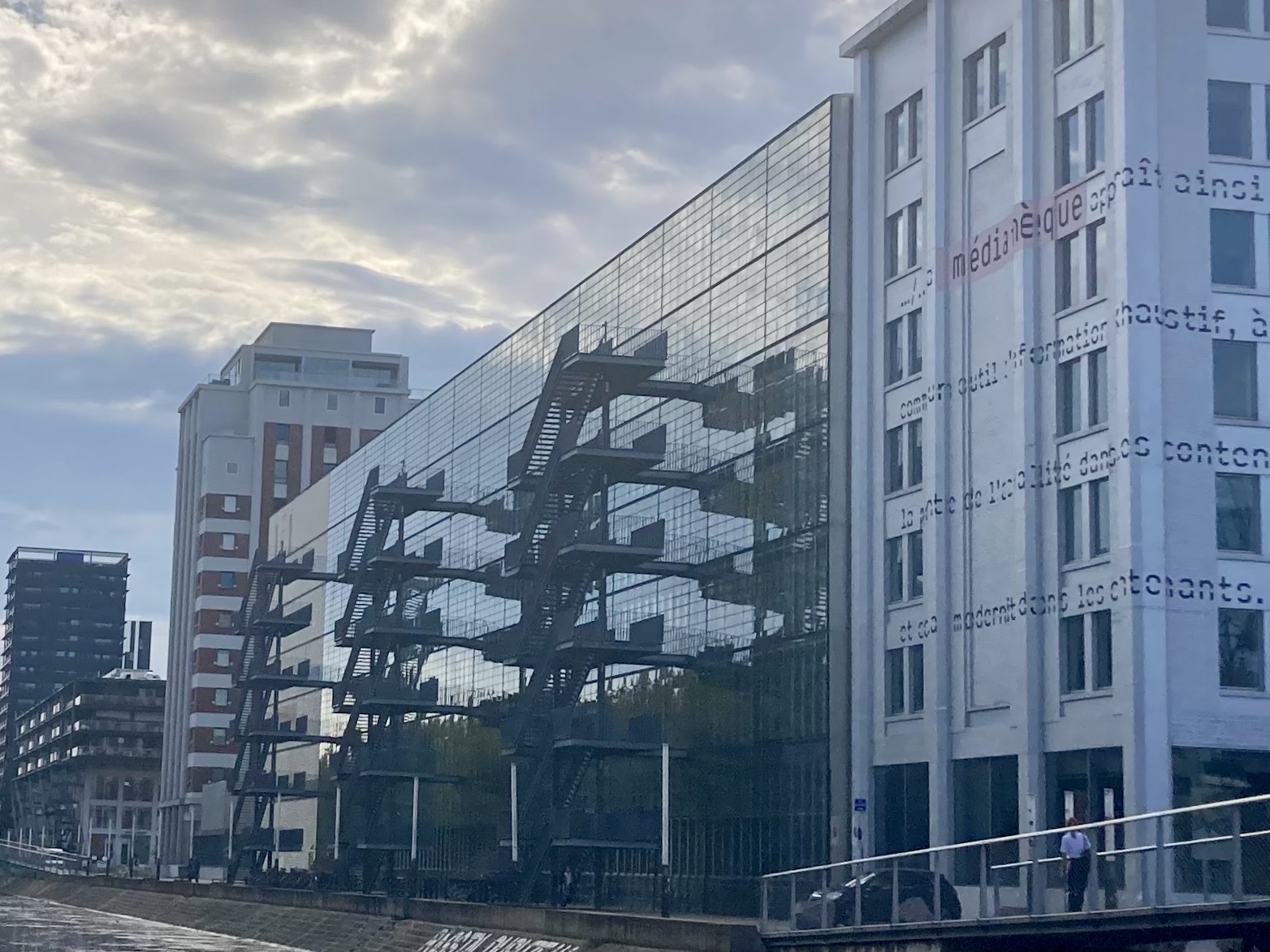
It was interesting to move through the edge of the city on the water, seeing some of the more modern buildings after all the historic houses in the city centre.

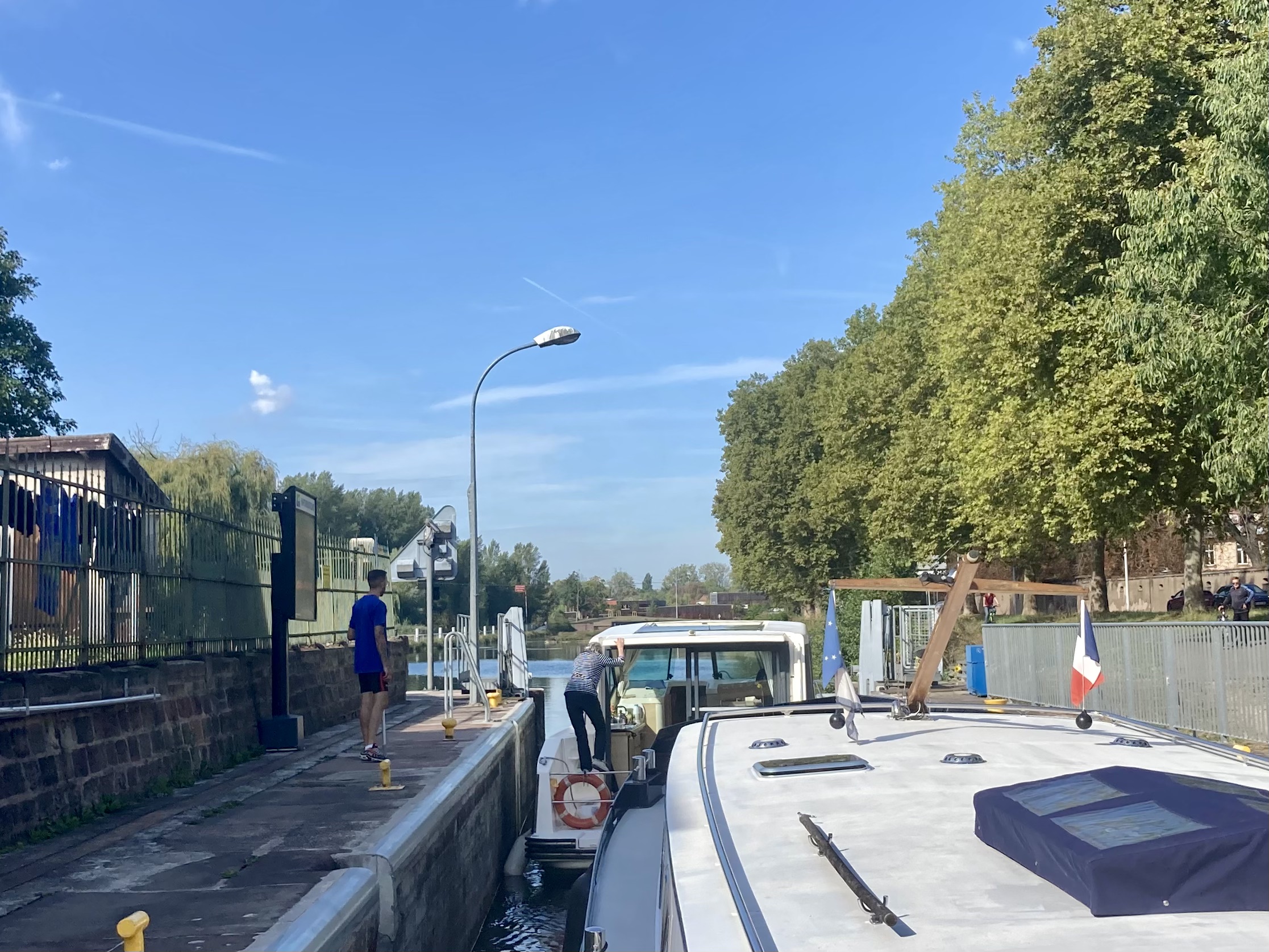
We were soon at the first lock with a holiday boat practicing the ups and downs of inland waterway navigation with the help of a friendly éclusier. The first few days on a new boat can be a bit of a steep learning curve, though it is our experience that nearly every other boater will help immediately if help is needed, and often even if it’s not!

If we are early to a mooring it’s our practice to step off Calliope and catch the ropes of a later arrival; we have many friends to this day made from that simple gesture.

Soon we were out of the built up areas, enjoying the shade of the trees lining the banks – it was still rather hot!

We quickly discovered, after that first lock, that the method of lock operation on the Northern branch of the Rhône au Rhin is the pole, or ‘perche’ in French.

Here one must give it a good tug, whereas on other waterways in France it is necessary to twist the pole.

No confusion here – it is clearly marked.

And when you get beyond it, is is also clearly marked to leave it alone!

The VNF don’t want people leaving a lock to pull the pole again!

We were going rather well until we got to Plobsheim, just on lunchtime. The lock was not working; in order to find the phone number to call for assistance Stewart had to put me ashore in a rather precarious position, onto some narrow wooden guide rails, some rotten. So I had a Russian Roulette walk ashore – would I lose my balance and fall in, or would the wood give way?
In fact neither happened and I scrambled through a bush and up a steep bank to raise the alarm. Just as I was looking for a number to call from the lock a VNF van sped up and out jumped a friendly female éclusier. Our predicament had been caught on camera, and leaving her lunch half eaten she had rushed to the rescue.

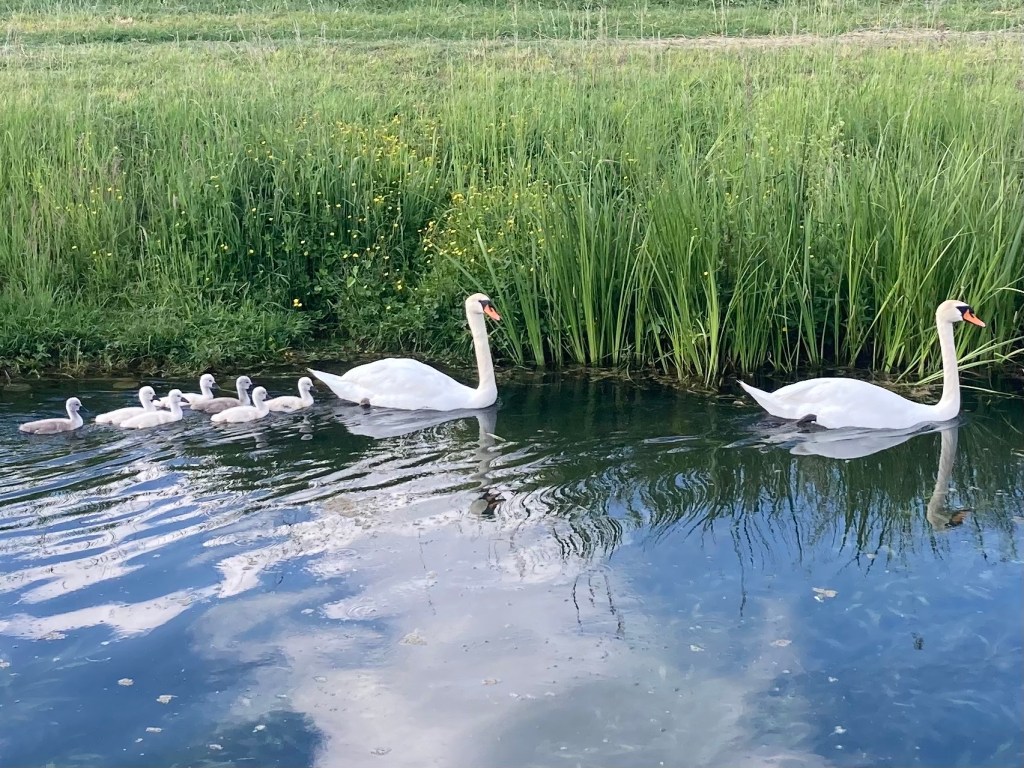
Before long we were in the lock, accompanied by a family of swans who had to be persuaded to leave before the lock gates closed.

Almost immediately the Captain had another obstacle – a narrow aqueduct over the river Ill (pronounced ‘ill’, and very difficult to explain any other way…). Lovely lovely spot.

We continued on to Krafft, a village with a VNF (Voie Navigable de France) depot, office and quay. Although not immediately an attractive mooring we found it just what we needed. It was quiet at night, secure, and with a nearby boulangerie for the morning bread!

The local VNF team had gone to the bother of making one end of the quay a haven for boaters.

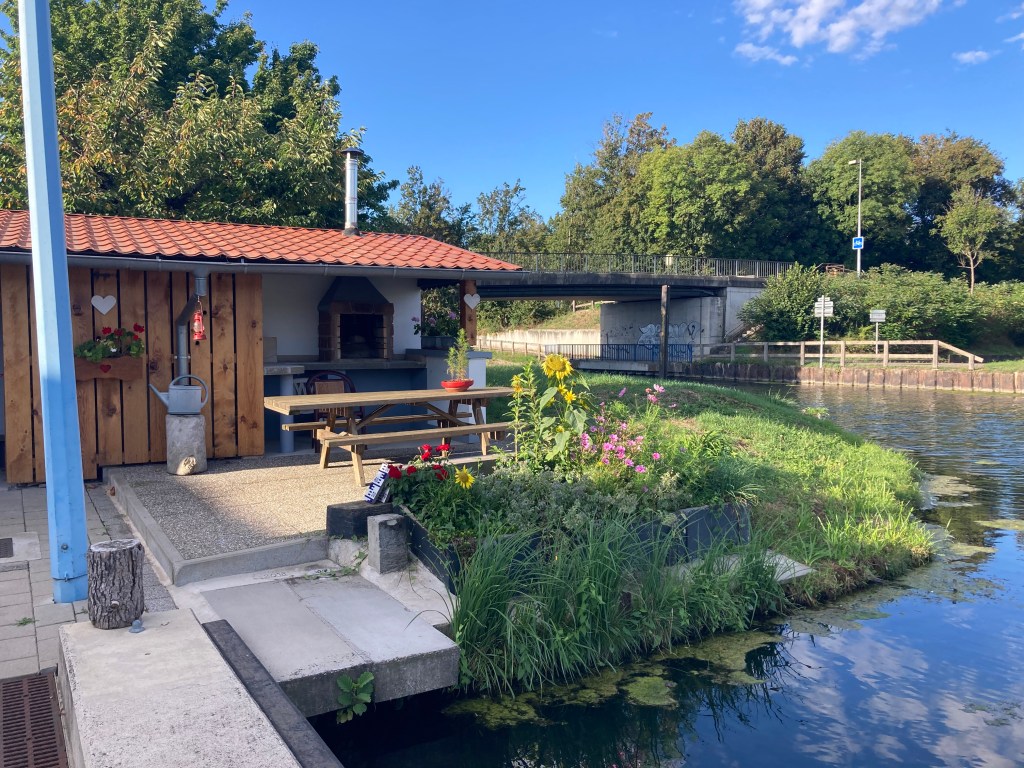
A line of huts included the rubbish bins, and also a covered seating area with barbecue, picnic table and garden .

We could easily go into the office and organise our trip through the lock onto the Rhine for a couple of days time – you have to book your lock slot.

As the sun went down and dusk crept in we felt very fortunate with our mooring.

Next day we did not go far. We began by crossing the Canal de Décharge de l’Ill, essentially a man-made way for the river to escape ever since the canal system here was built. It meant , for us, going through a narrow barrage, which can be closed off to protect the canal Rhône au Rhin if l’Ill is in flood, then over the crossway, where on the day we crossed there was little flow of which to be wary.

If you have read my blog before you may by now be bored of my interest in the changes to the canal system over the centuries.

Sorry!

But here is another example of the ancient and modern kilometre markers.

We had considered going to a mooring right by the last lock, but it was not clear if there would be space for us, and if the water would be deep enough. So to be safe we stopped a few kms short at a mooring recommended by the éclusiers.

The last lock, immediately before our mooring, also had its interest. As we approached we saw a boat heading towards us, which then turned mid stream just by the perche, and pulled it sending the lock in motion.

Although we could have fitted in the lock with them we wanted to stop before the lock so that I could run up and check that the desired mooring was free.

So once more I scrambled ashore ( I wish I had photos of my 74 year old valiant scrambles) and went to the lock – only to find two New Zealand friends of ours on their boat.

We had a quick explanatory chat and catch up before they went on their way.

It was an excellent choice for us – another rural tranquil setting, and after a walk of 20 minutes into the nearby village of Boofzheim found another good boulangerie!

Back on the boat, just in time – it poured with rain. We all needed this water so much after the long dry spell, so were pleased to hear the heavy rain continue all night.

As night came in we could see distant thunderstorms through the trees and hear the lovely sound of raindrops on the roof.

It was quite a big day the following day – which we new was going to be a long one. So we were early to bed.

Then we were on our way, with navigation lights on, at 6.45 – a time we are usually still sleeping – and picked up our pilot, Alain, at 7.45. We dropped him off almost 12 hours later.

Alain joined us at the lock from the canal down onto the Rhine so we were straight out onto the big river, heading upstream towards our first lock.

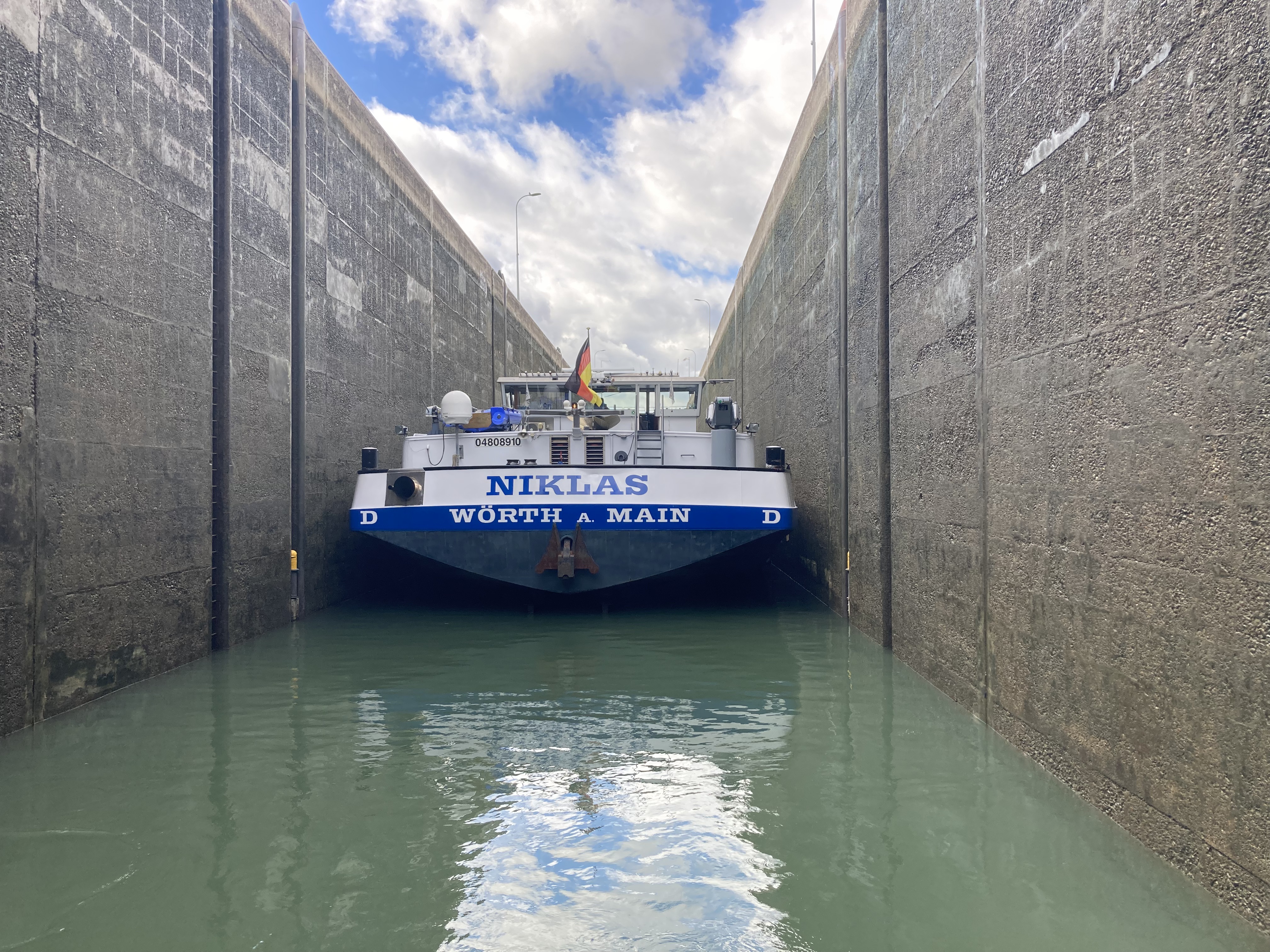
All the locks on this section of the Rhine (maybe on all of it) have two locks side by side, one twice as wide as the other, but both the same length. They are less deep than many we have been through on theoRhône but big enough thank you! We were in the smaller lock most of the time -though not every time, as you will see. As Calliope floated to the top of the first lock at Rhineau it had become almost daylight.

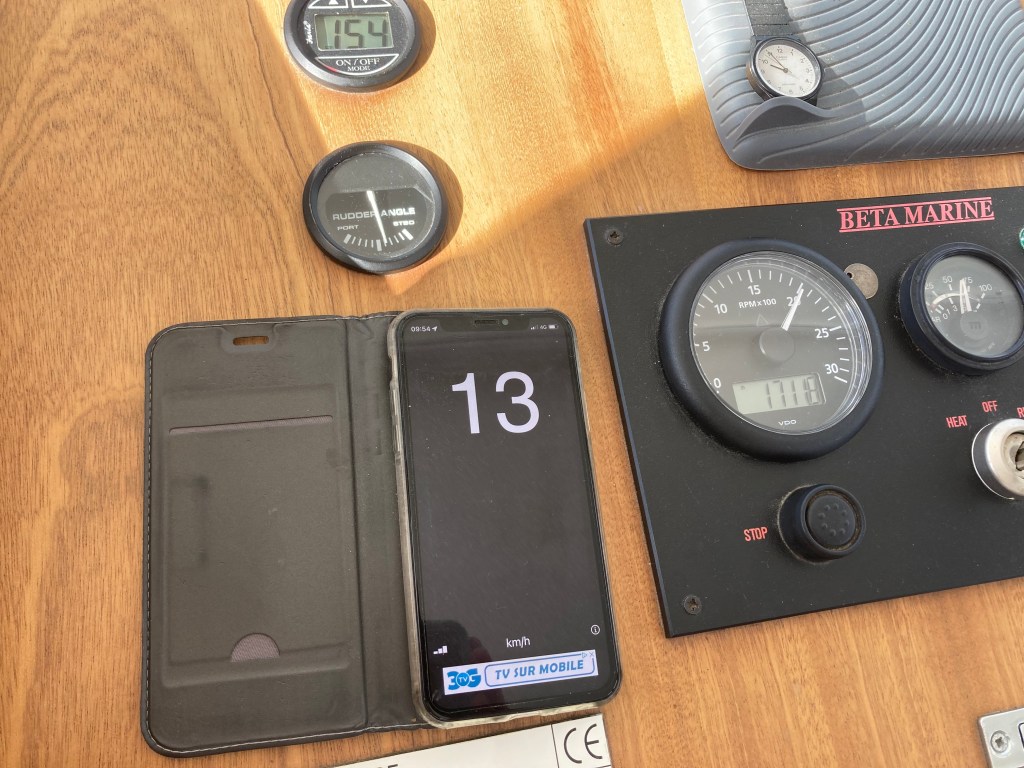
Alain encouraged us to use a lot of the power in our 150hp engine – something you cannot do in narrow canals where we would create too much wash and damage the banks.

Our here on the Rhine we were up to 1700 rpm which was giving us 13kph according to Alain’s app.

Calliope loved it!

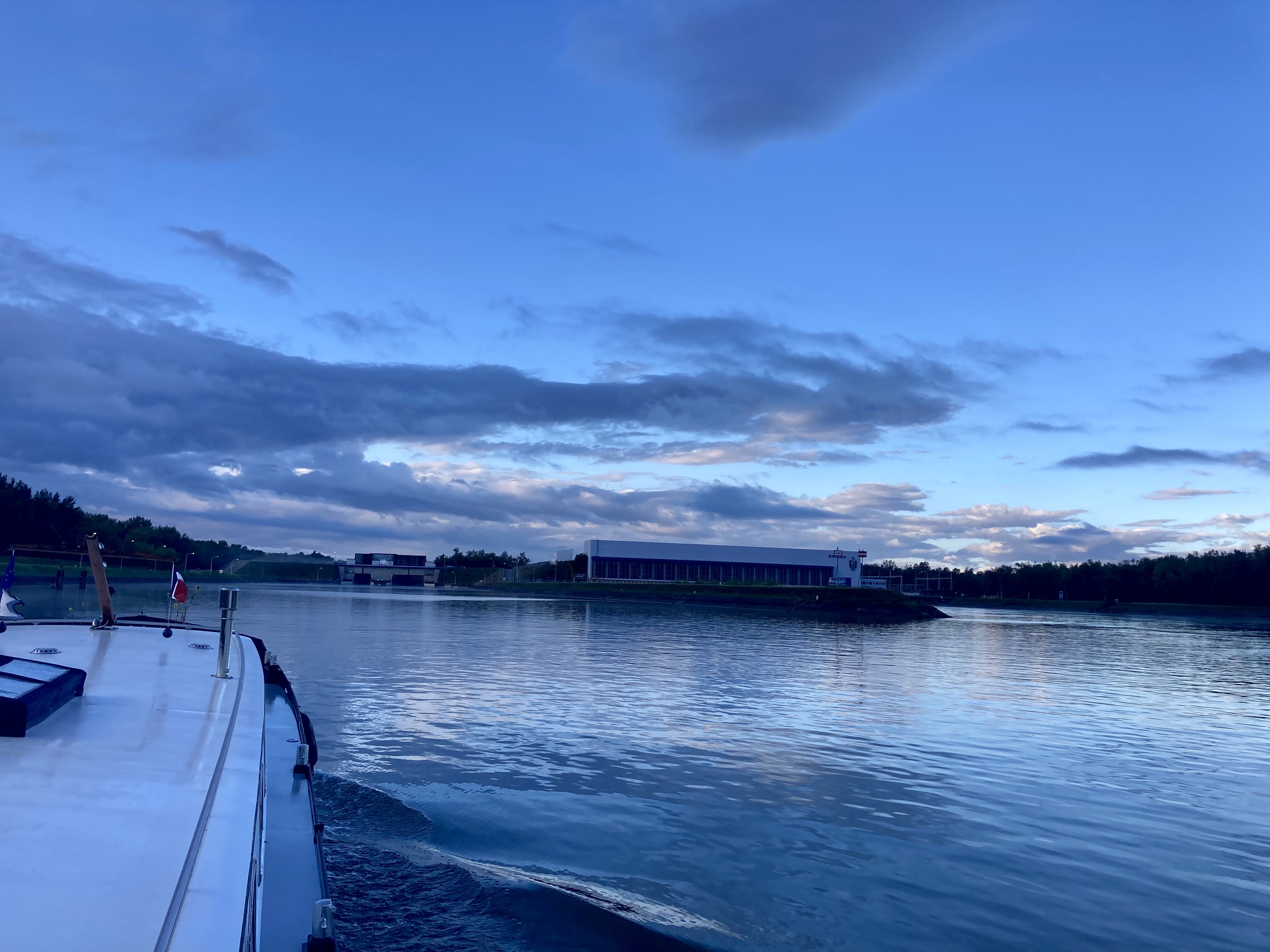
The wake we set up here was allowable, and the movement through the water looked beautiful as the sun rose.

That is Germany on our port side; France ran along to starboard.

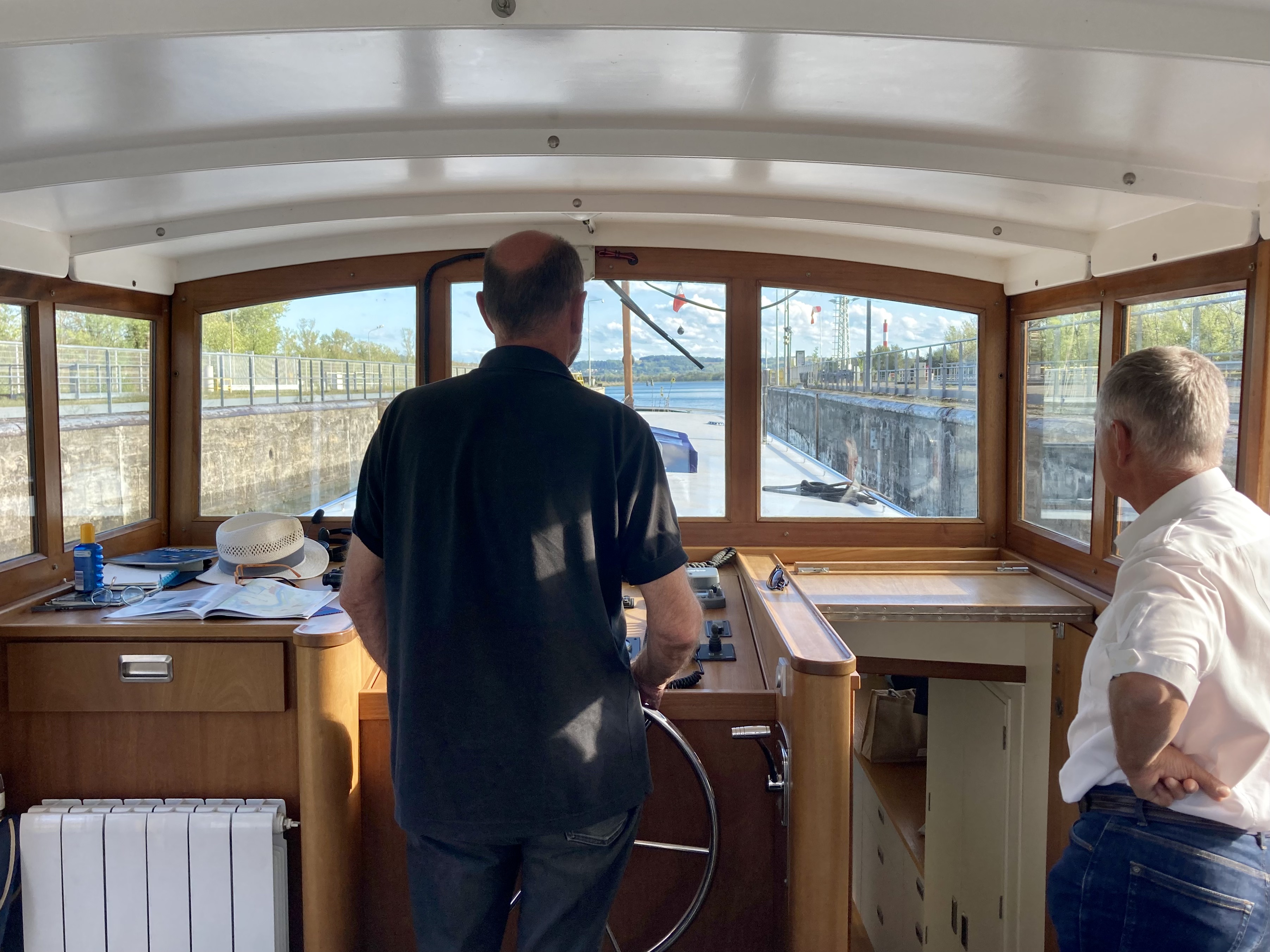
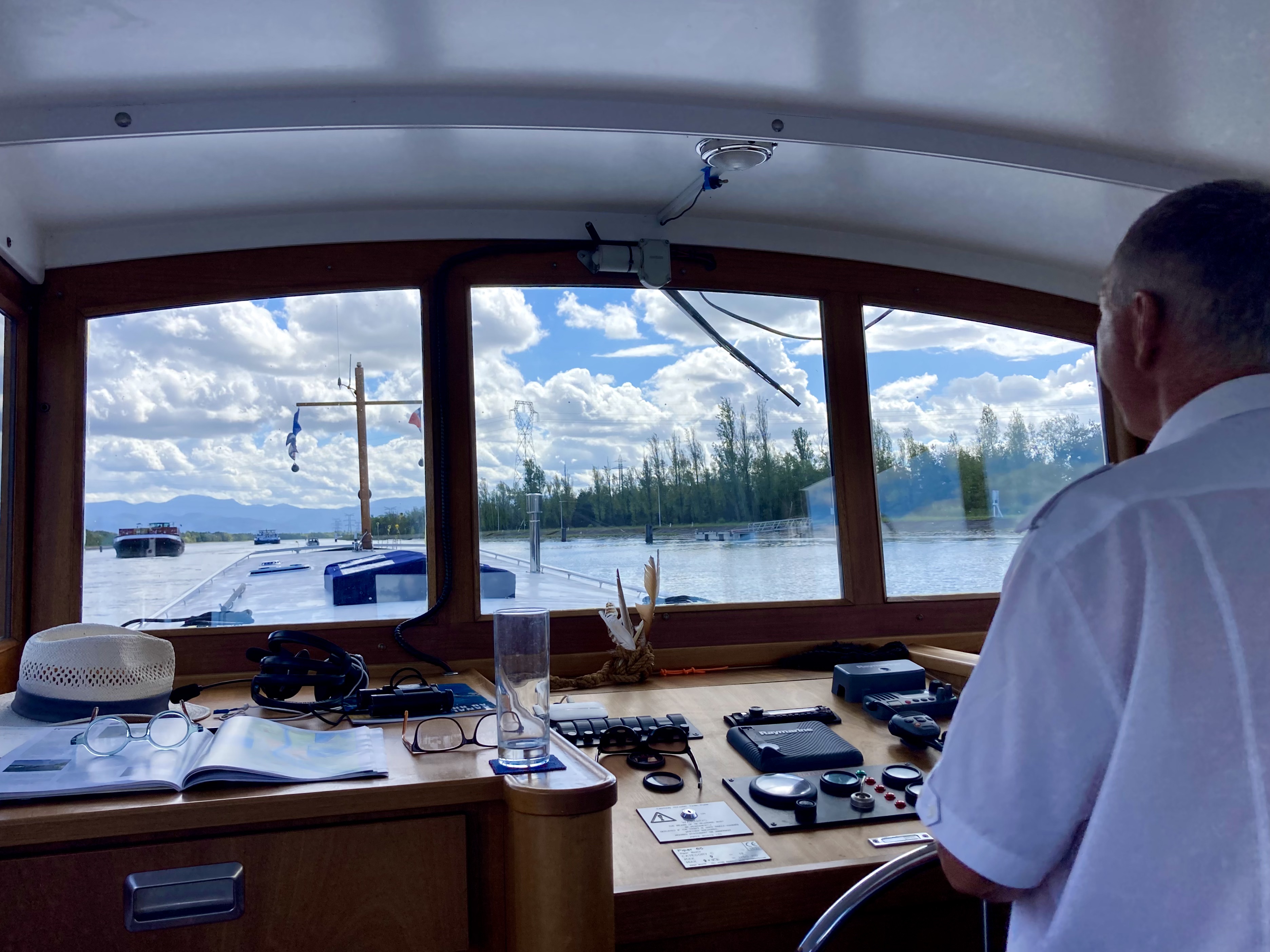
We all took turns at the helm, although Alain did most because he was so enjoying being back on a boat rather than in an office. Stu and Alain were in charge for the locks, and I was trusted not to hit anything in between on such a big wide open waterway!

We met up with other, much bigger, barges at the locks. I certainly would not be trusted with, or even want to try, to put one of these wide commercial barges into a lock that is about half a metre wider than the boat! How do they squeeze in? It made us look very narrow!

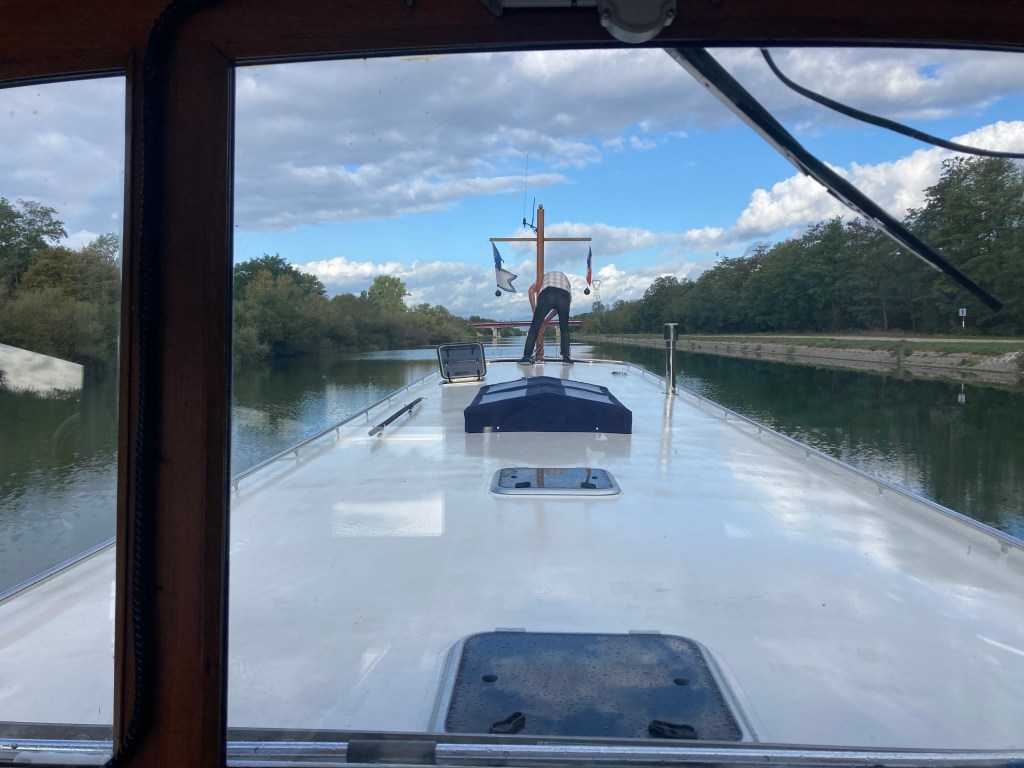
You will notice we now have our mast upright; it is normal for barges – commercial and pleasure – to travel with them half lowered to fit under the many low bridges we pass under, but with no such encumberments on the Rhine our pilot suggested raising it so that the VHF communication with the locks could be accomplished with more ease.

In many ways these locks are far easier to navigate than the narrow self-operated locks in the canals.

Such a breeze for the crew – I could put a rope round a floating bollard, secure it, go below and make a cup of tea whilst watching my rope through the window!

Most of our journey was through countryside, and to our East we could see across to the Black Forest mountains. I tried to explain to Alain the significance of the Black Forest, in terms of gateaux, and how I had a huge one made for my 60th birthday!

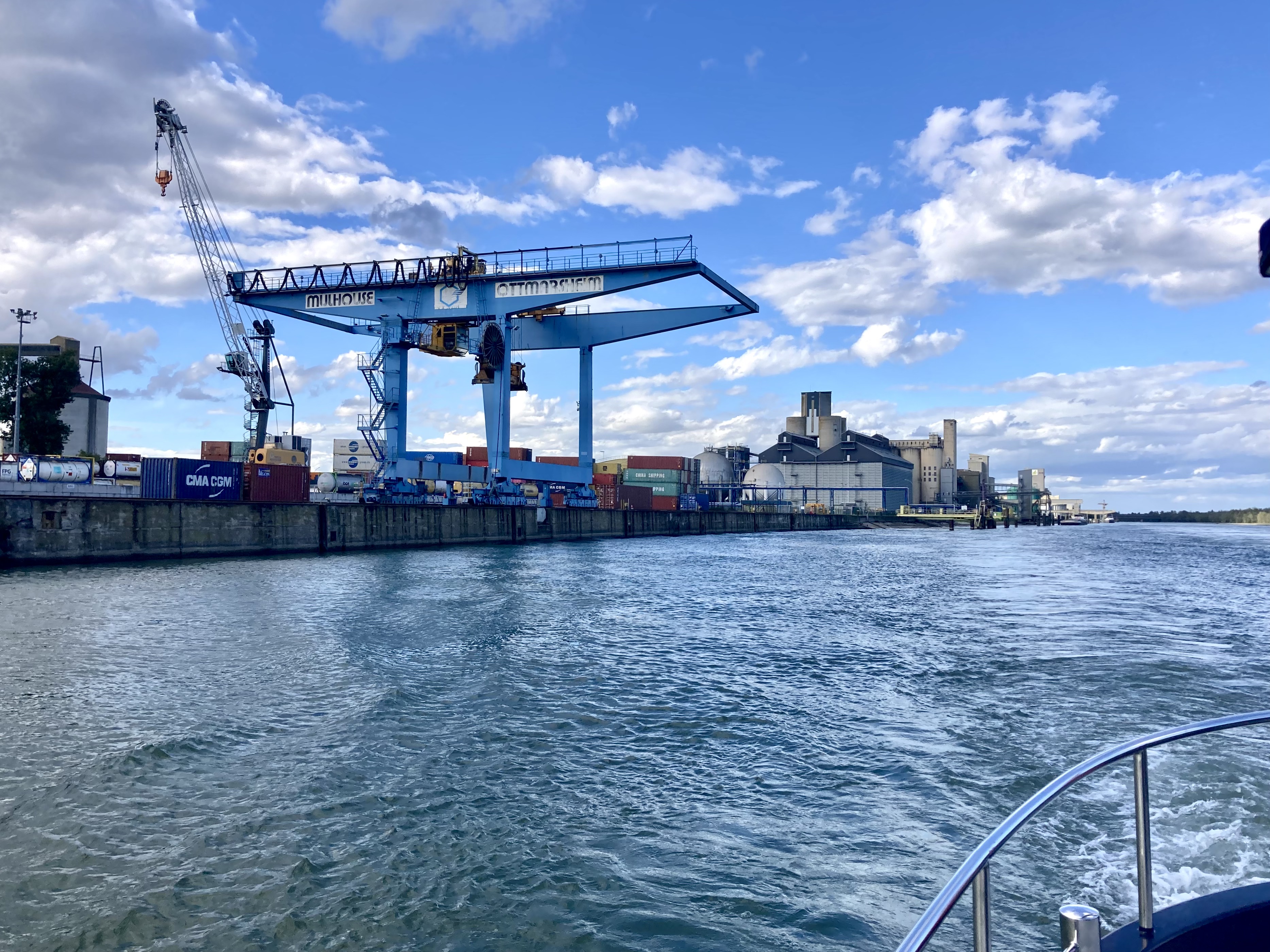
Later, as we got towards the end of our time on the river, there was a far more industrialised section at Ottmarsheim; this is on the French side, despite its name. We like to see these big modern quays, demonstrating the importance of water transport in the 21st century.

At last – 10 hours later and in fading light – we saw the sign for the southern part of the Rhne au Rhin canal – our exit.

The sign was telling us that we could aim for either of two locks. We had already agreed with Alain that we would go for the larger of the two, on the first side of the little islet.

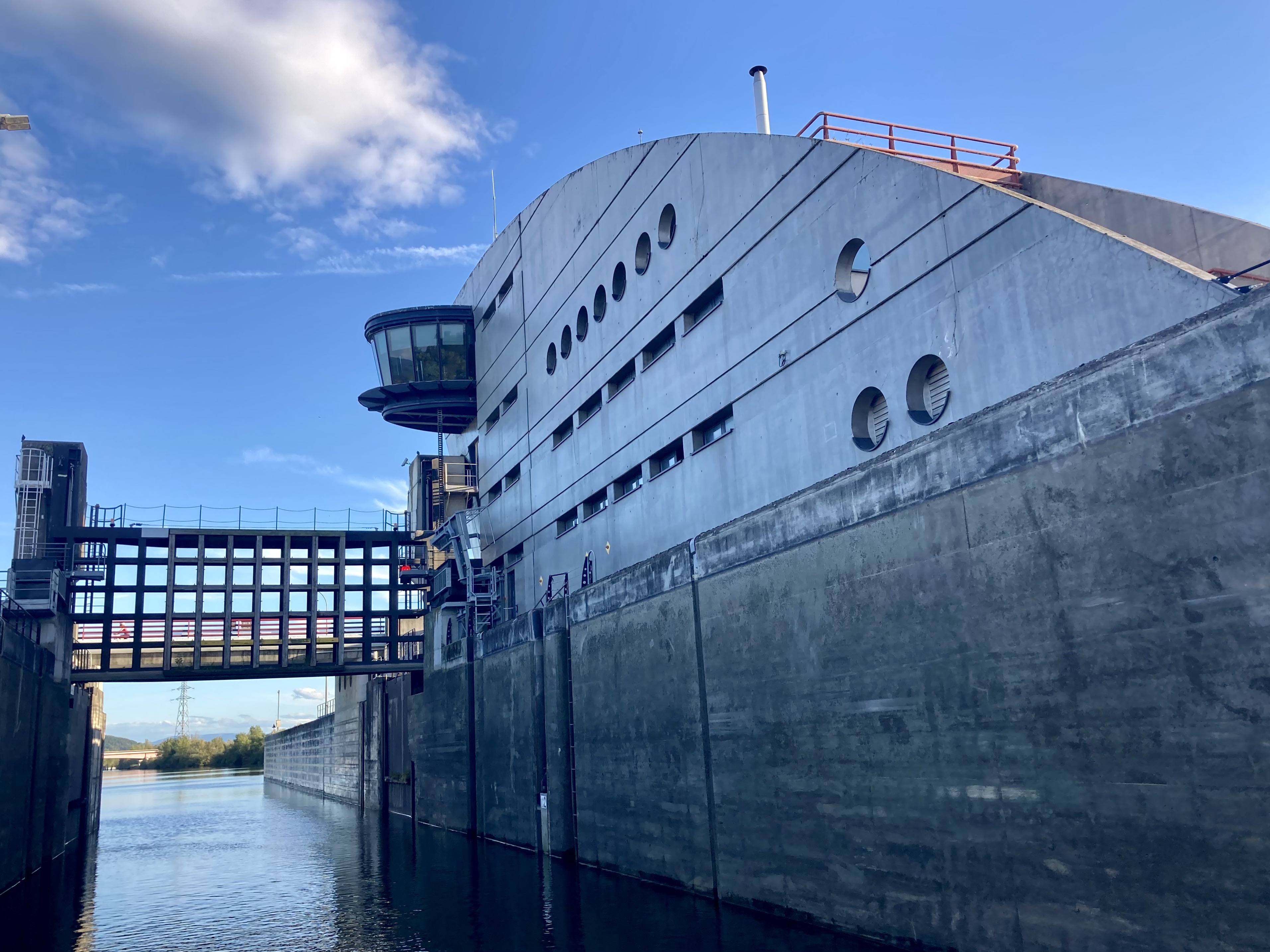
So at last we get to our last lock of the day, Niffer, an extremely interesting and different lock! I have searched and searched for information on the architect of this building but cannot find the answer. Interestingly it is the smaller of the two locks, known as Niffer-Kembs, that seems to have the notoriety, having been designed by Swiss architect Le Corbusier.

At this lock we had a different design of floating bollard – initially rather nice, but with the ability to trap your rope when you get to the top!

Alain was leaving us here, and as he stepped ashore he was luckily on hand to pull the rope free.

Bye bye Alain – thank you!

Cheers Captain – our pilot has left, we are off the Rhine, and back to our own devices. We have done it! It may not seem much to most of you, but we had been apprehensive about being on the Rhine and needing a pilot. In fact it was simple, enjoyable and educational, though a long day for people who usually aim for a maximum of 4 hours cruising!

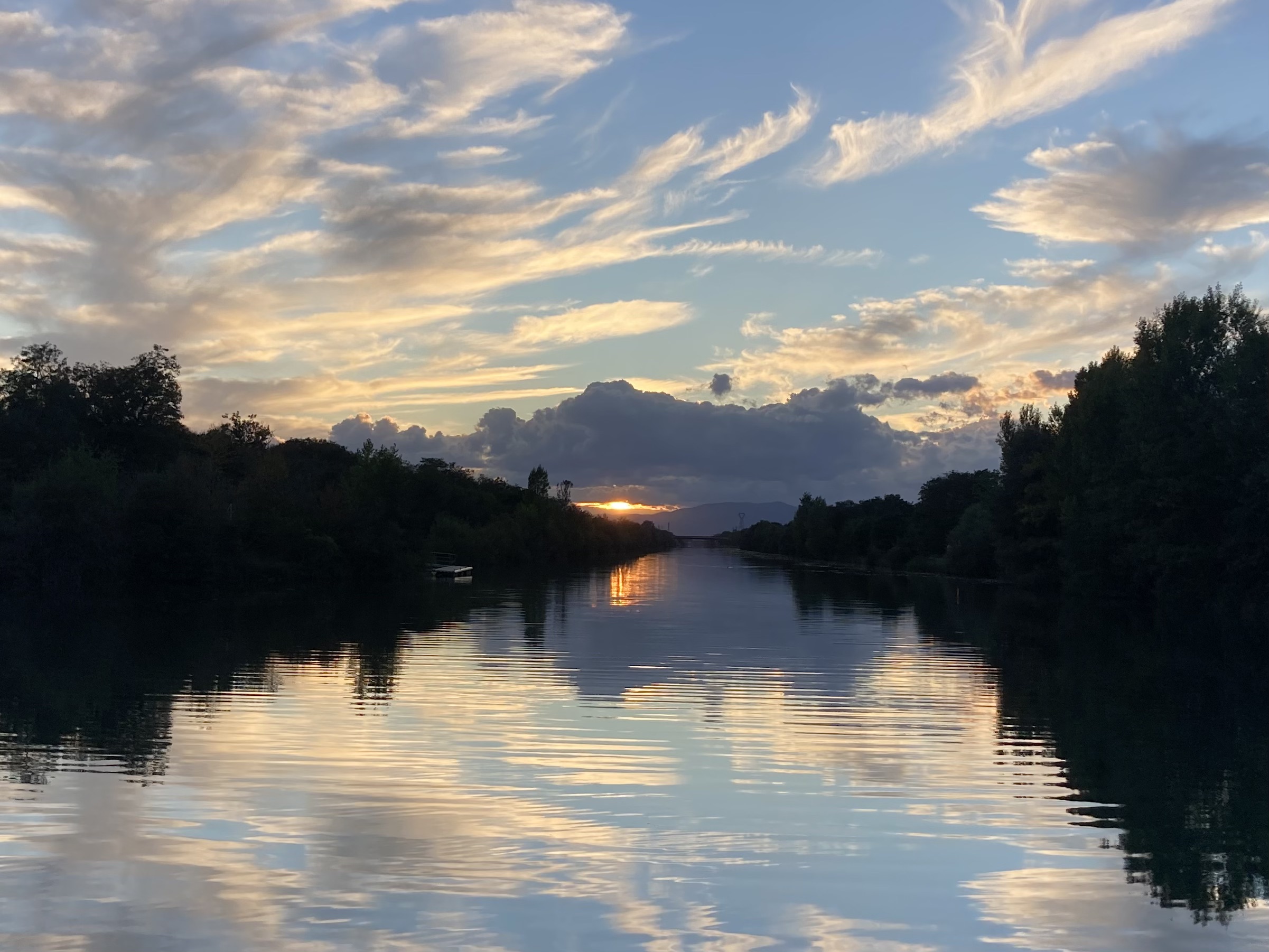
Then, as we look for a mooring, and the sun sets behind black clouds, we hear that our Queen Elizabeth II, Lilibet, has died. It cast a sombre mood over what was otherwise a feeling of success and relief. We drank a toast to the passing of a very special woman.

Then as we relaxed and settled down, out of the darkness came a bright light!

A big barge passing us, working late. Thank goodness we had our navigation lights on again!

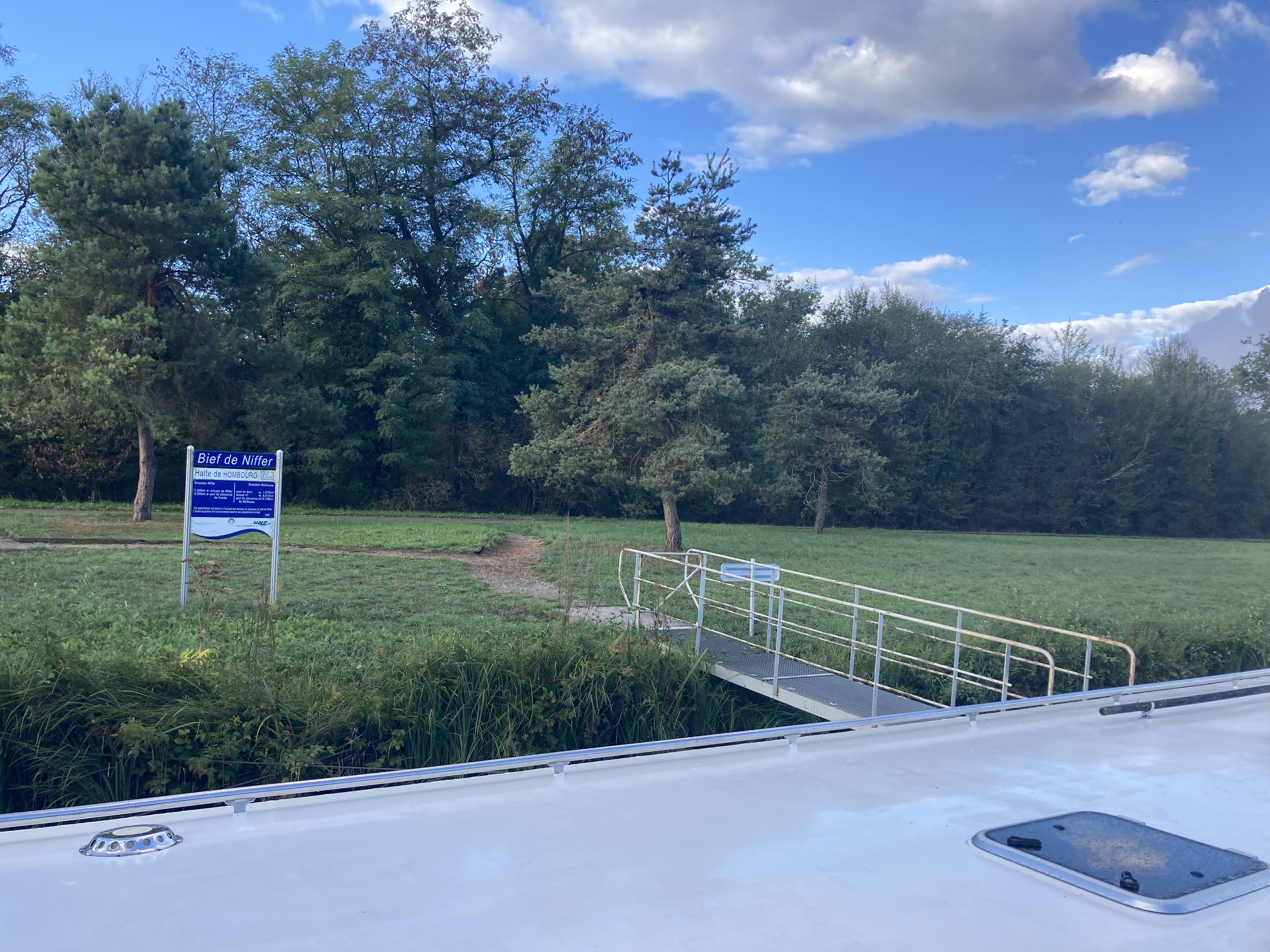
After the ghostly giant had passed though we had a very welcome peaceful night at the halte nautique at Hombourg.

The morning light was glorious; it made it all the easier to get up and move on to Mulhouse, a few kilometres away.

And the daylight gave us a better view off where we had spent the night – a good VNF pontoon on the canal, offering respite to those who have left the Rhine – or are about to join it!

Before we set off Captain Stu lowered the mast again to its normal cruising position.

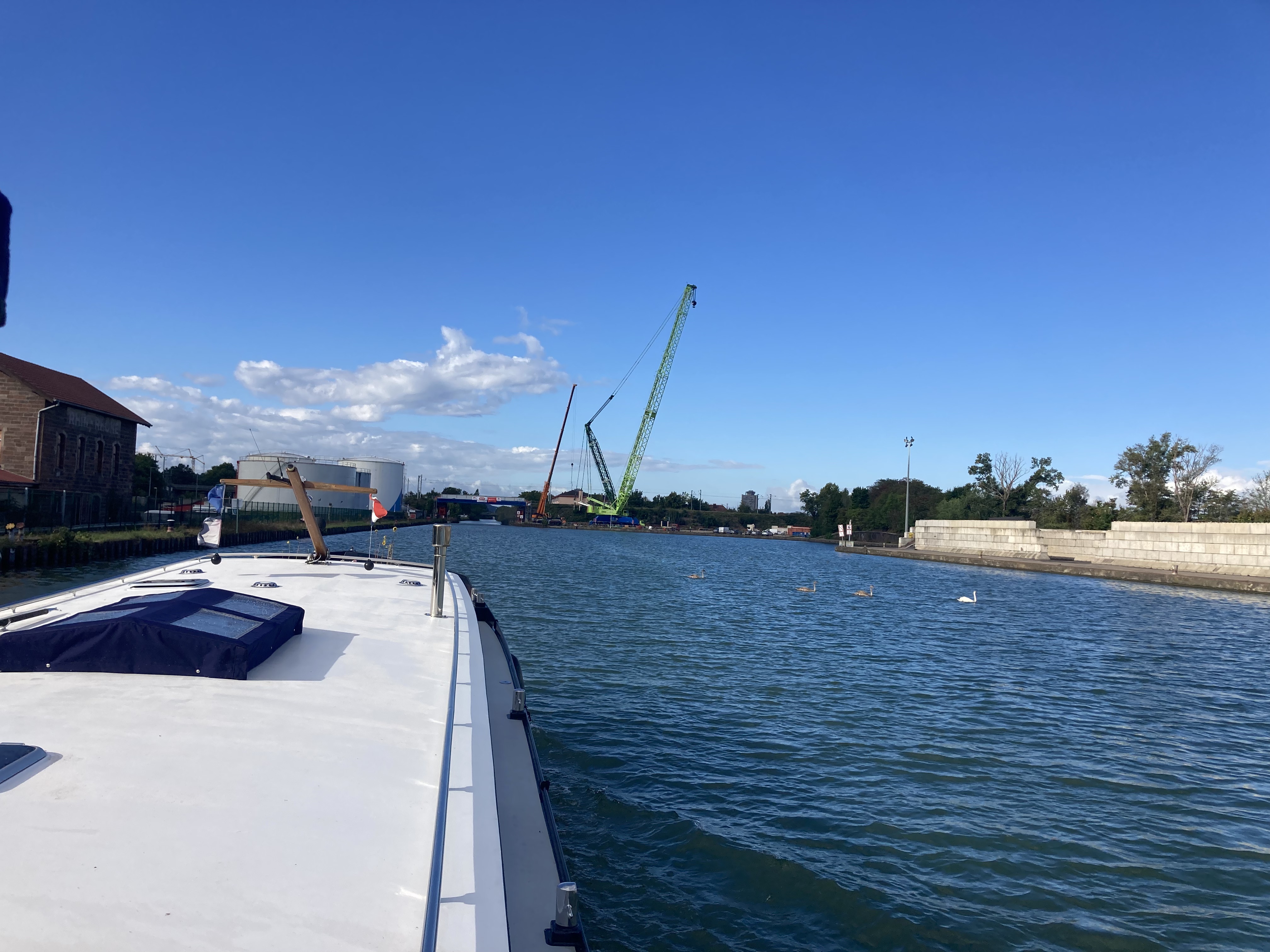
The run into Mulhouse started with a wide canal capable of accommodating commercial barges like the one that passed us in the night. We reached the right angle bend in the canal and found the wharfs where these barges dock and turn.

Then the canal narrowed to freycinet size – the size of the smaller 38 metre commercial barges, and closer to Calliope size, though they are still almost double our length.

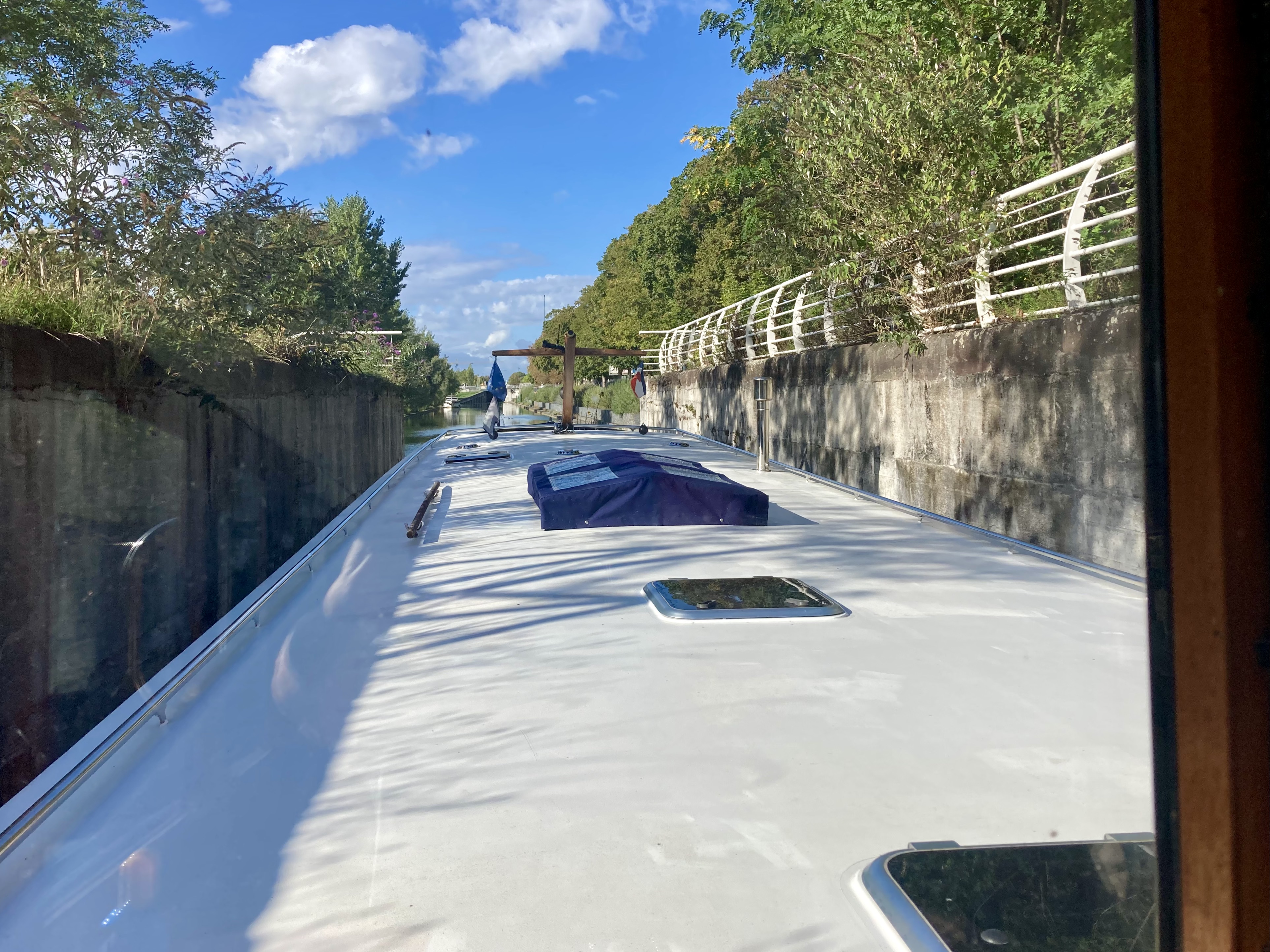
We arrived at a very modern lock – so modern that the VNF had not yet finished it so it was not yet automatic.

A very helpful éclusier came out to meet us, taking the details of Calliope and making sure that we had a current vignette – the equivalent of road tax, but for a boat in France.

Then the giant lock doors closed down behind us and we began what was to be quite a trip upstream over the next few days – but that is in the next blog post!

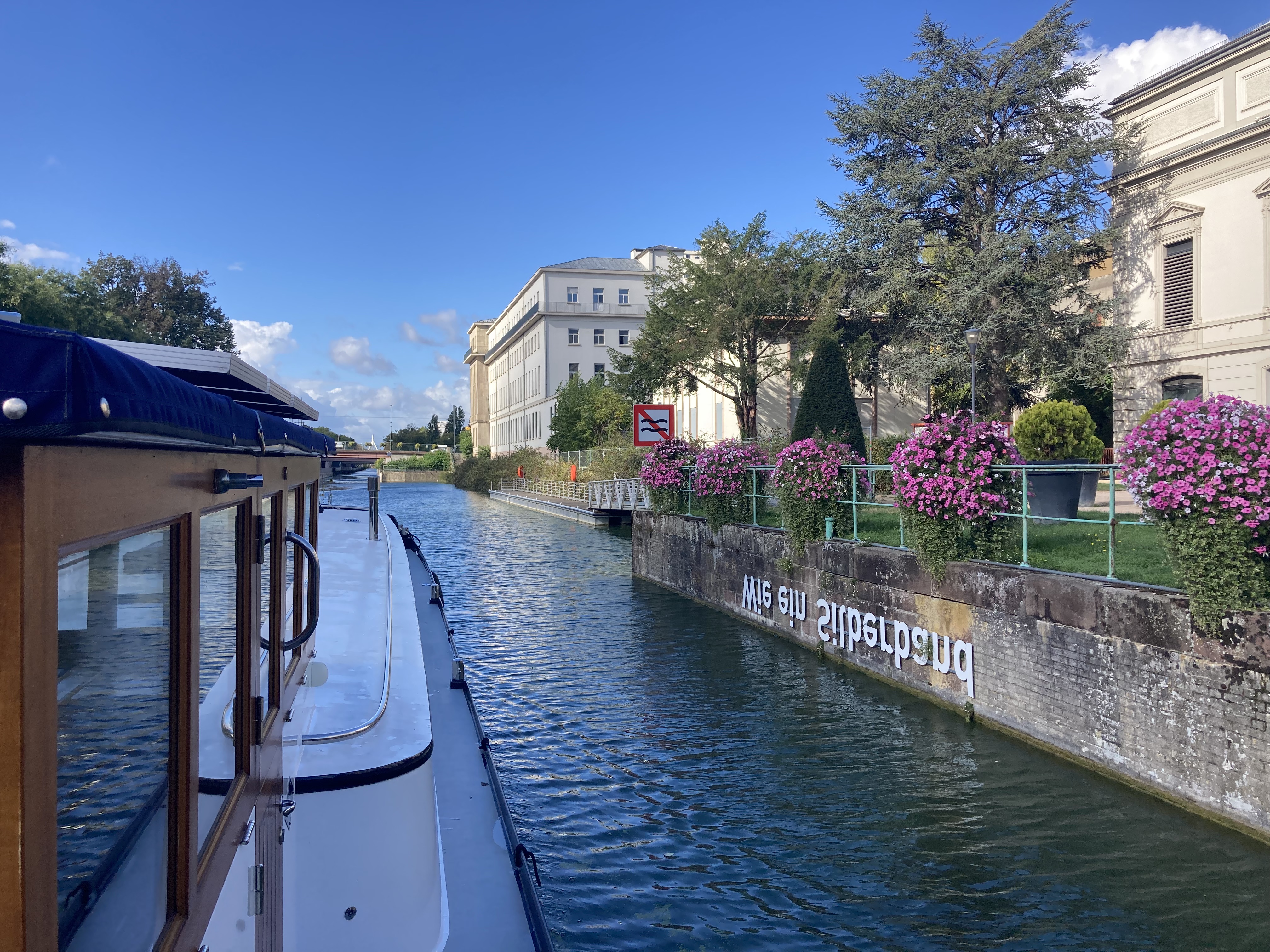
For now we were happy to cruise into Mulhouse, past good floral displays, and the development of what will be a lovely modern garden (not shown here). Stu tells me that the upside down writing is for reflections in the canal, but not calm enough or the right light for reflections as we went past.

We had called ahead to book a mooring at the Mulhouse port. Soon we were able to moor up to the hammerhead reserved for us – in plenty of time for me to find a local boulangerie – good fresh baguette towards our lunch.

There are only two more things to report before I sign off and leave Calliope in Mulhouse.

One is the city itself.

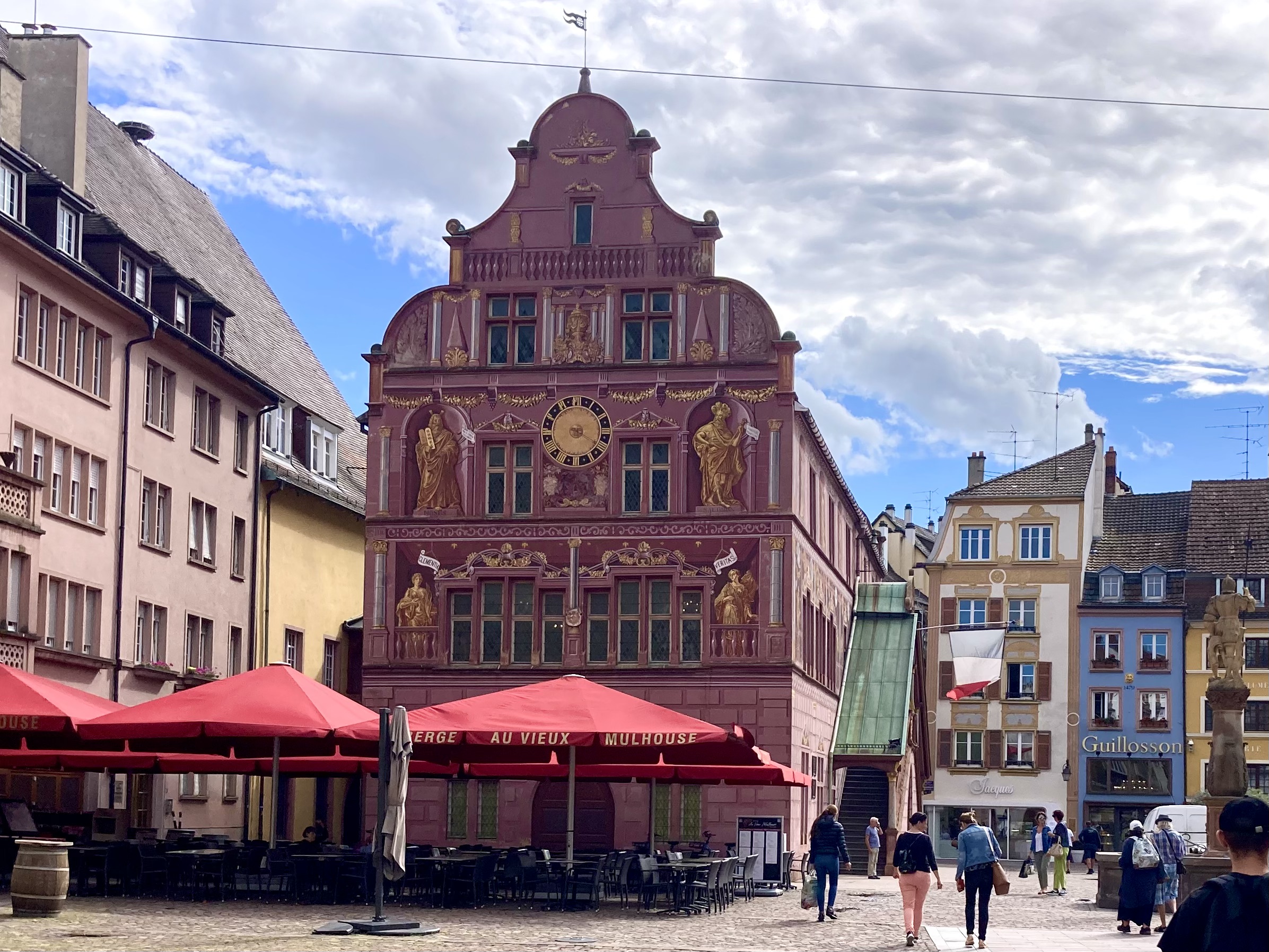
The city is full of interesting and architectural buildings – just a few shown here from our short walk around. To be honest we did not do justice to the place – we were still a bit tired and shell-shocked from the Rhine and the news about Elizabeth R.

It is worth a longer visit.

The other less glamorous delight of our stay was to find a working ‘pump out’ in the port. It really helps the black tank system to occasionally have a good clear out from the top via a pump out system, but they are hard to find in France and Belgium.

This tine it meant mooring against another very helpful barge and running the pipe across to Calliope.

It all worked exceedingly well, despite Stu’s slightly worried face!

We spent the evening and the night feeling ready for the Rhône au Rhin uphill journey ahead, as you will read in the next blog.

One week to reach Strasbourg

On Canal de la Marne au Rhin Est

20th to 26th July 2022

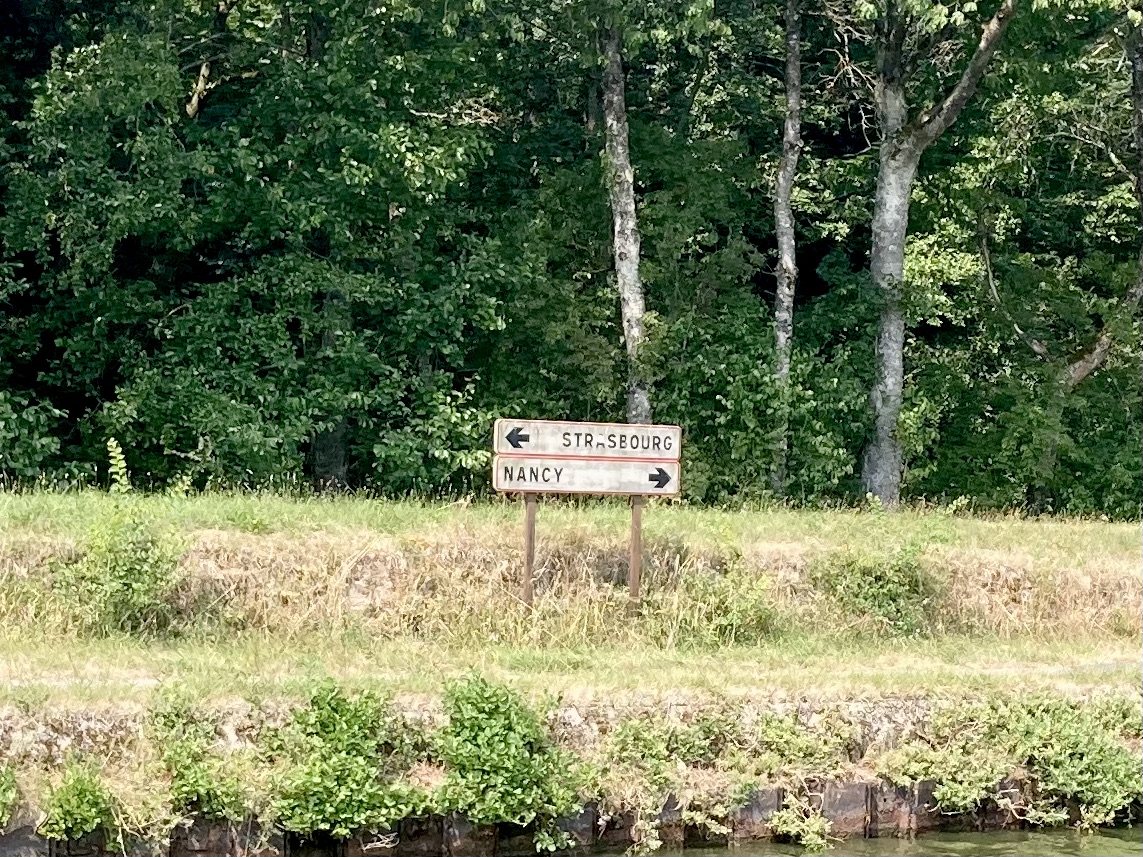
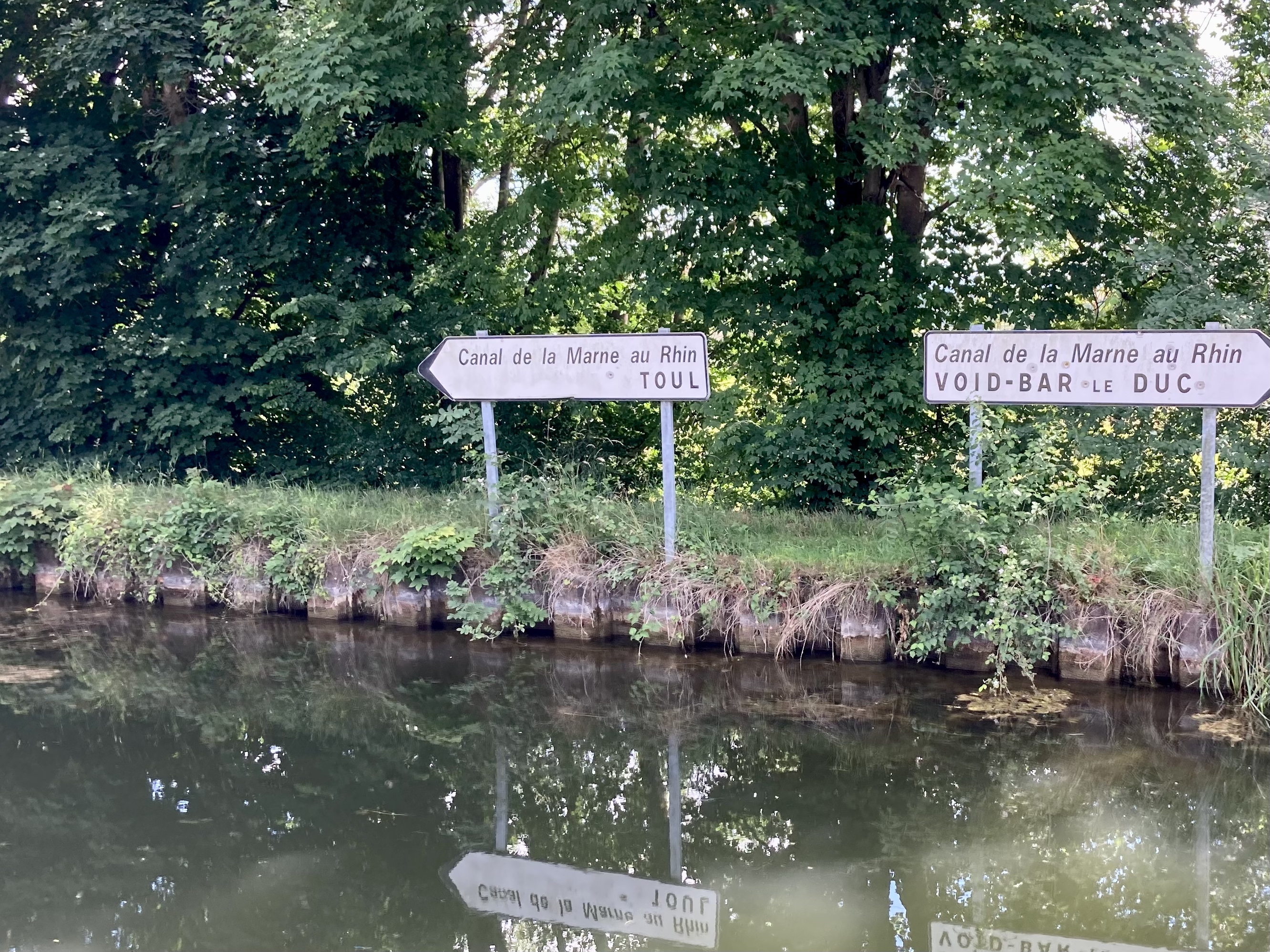
As we came to the end of the Canal de la Sarre we reached a T-junction and the sign above. For now it was an easy choice – we were heading for Strasbourg where our niece and her family would join us for a few days.

After their visit we might come back this way and travel towards Nancy – if the canals in that direction had not all closed. We were in the middle of a second heatwave and long weeks without much rain. The waterways of France were drying up; many had an ‘arrète de navigation’. But that is me getting ahead of myself.

We were now on the eastern branch of the Canal de la Marne au Rhin. Our last canal had brought us up to the heights of the Sarre river and we found ourselves looking down at the landscape, rather than up to the hills of the past weeks.

Our first stop was at Xouaxange. We had several attempts at pronouncing it and I am not sure if we ever got it right. The internet was not much help, suggesting equally unpronounceable phonetics. We found a nice empty quay in a simple park setting, and were joined later by some other boats, and camper vans.

It is a small village, with a few nice structures. These include the bridge from the quay to the village, and the church with its unusual tower.

An earlier decision had been made to eat out; we were short on provisions after several pleasant quiet rural moorings. There appeared to be one restaurant in the village and it was not the French cuisine we expected!

It was a very friendly, slightly quirky place with a mainly Madagascan menu. It began to rain (very welcome) as we approached so we sat inside next to an open window and enjoyed a tasty different kind of meal.

It did not rain for long, despite my rain dances and the country’s prayers.

By next morning when we left the skies were mainly blue again, but there was a freshness to the air that had been missing for a while.

The canal leading out of Xouaxange was narrow and on a long curve, following the line of a hill; lovely cruising as long as you don’t meet anything. 

We didn’t.

One reason for the narrowness was that we were about to cross a short aqueduct over the very upper limits of the River Sarre. It was proud to describe itself as one of the first (maybe the first) steel built aqueduct in the country, and is appropriately named Aqueduct de la Forge.

We had joined the Sarre on 29 June, where it joined the Moselle in Germany. At that point it had its German name – the Saar. Three weeks later we were looking at its beginnings – the first full journey of a river for us.

We continued along our high plateau looking at at countryside that was greener than it should have been after the dry spell. Maybe last night’s rain has got to work already.

Captain and crew had been wondering what mechanism would be used to open and operate the locks, bridges, tunnels etc along this canal.  We had handed in our remote control for the locks on Canal de la Sarre and were watching for clues.

The answer came big and bold!

We were coming up to two tunnels and a system of ‘detection’ was in place to know when a boat arrived at the end of the tunnel. We had to moor up behind a holiday boat that was already there and wait for the traffic lights to turn green.

After a while two boats appeared from the first, shorter, tunnel (Niderviller) and it was our turn to proceed.

As usual there was a long narrow cut leading to the tunnel entrance; we followed the holiday boat into the darkness.

At the other end we were required to wait again at a second ‘detection’ point – and again behind the holiday boat, which was tackling the tunnels quite a bit faster than us! I guess it’s not his own paintwork that is at risk.

This time, unusually, there was a second tunnel alongside the one for the canal. This was for the railway and trains came rushing past as we waited.

Then it was our turn for souterrain (tunnel) two – Arzviller – the longer of the two.

Stu had noticed a wooden ‘guide rail’ at approximate zig-zag fender height in Niderviller tunnel, and in the hope of the same construction here he gently steered towards the starboard side of the tunnel. I adjusted the zigzags to match the guide rail and Calliope glided through.

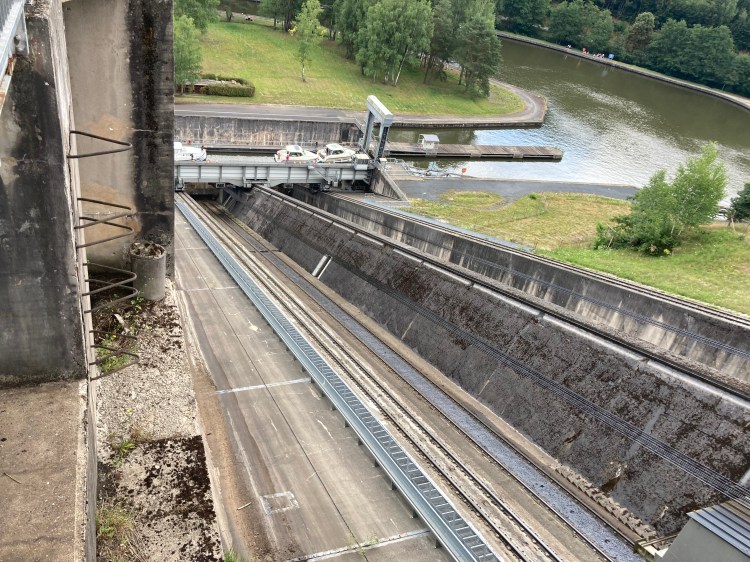
We emerged into a wide right angled basin – the ‘gathering and waiting area for the Inclined Plane of Arzviller.

The plane replaced, in the 1960’s, a series of 17 locks that took the canal slowly up a wooded valley – very beautiful, but also very slow for the working barges that were using it at the time.

As only 38.5m (length) of boats can go up or down at one time we were expecting to wait until there was a suitable space for Calliope’s 19.8m. The length was designed to carry the 38.5m freycinet working barges of the late nineteenth and twentieth centuries.

In fact we waited two hours, firstly in a queue of other leisure boats, and then because the passenger boat took precedence over us. People can buy a ticket to go on a passenger boat down and back up the plane, plus a small cruise.

But that was fine because we were able to get a good look at what was going on.

I found a good vantage point to watch the caisson (watertight box) come up the plane with three boats inside.

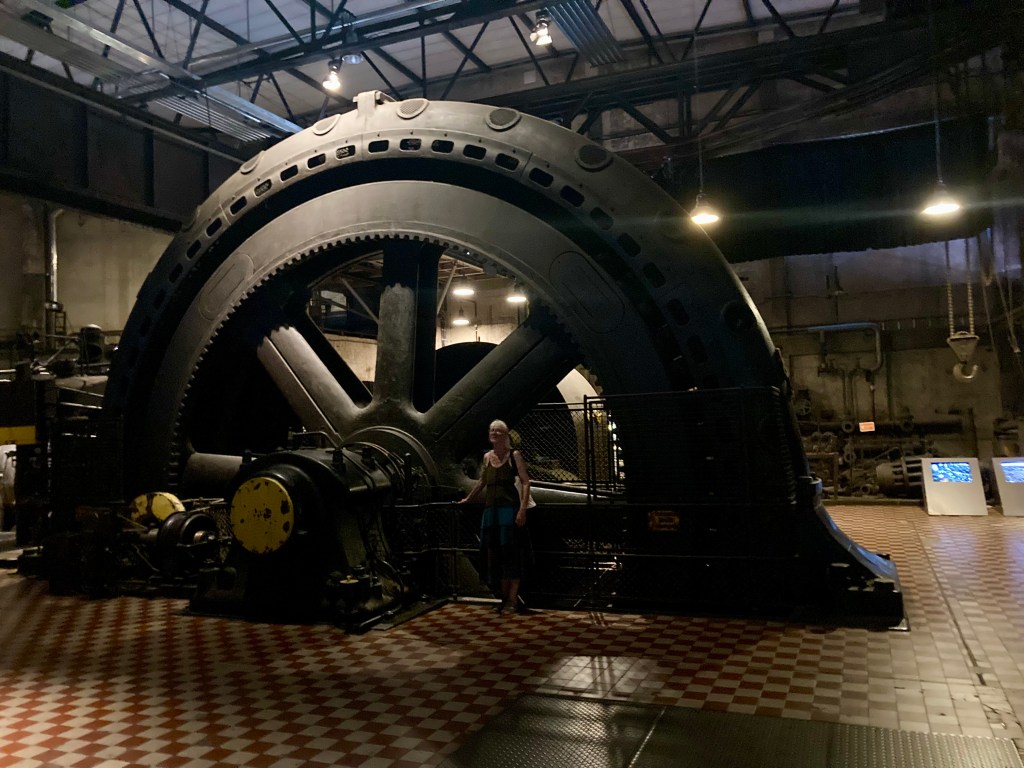
Then I had time to go into the building where you can see the huge winding wheels.

A sense of scale is seen when you notice the white van at the far side of the photo!

Next I watched the tank fill up with boats at the top, and make its slow majestic way down the side of the hill to the lake below, where the boats are able to ‘disembark’ as a door rises at the front of the caisson.

For those wanting to know more about this monumental structure you can read it here. https://en.wikipedia.org/wiki/Saint-Louis-Arzviller_inclined_plane

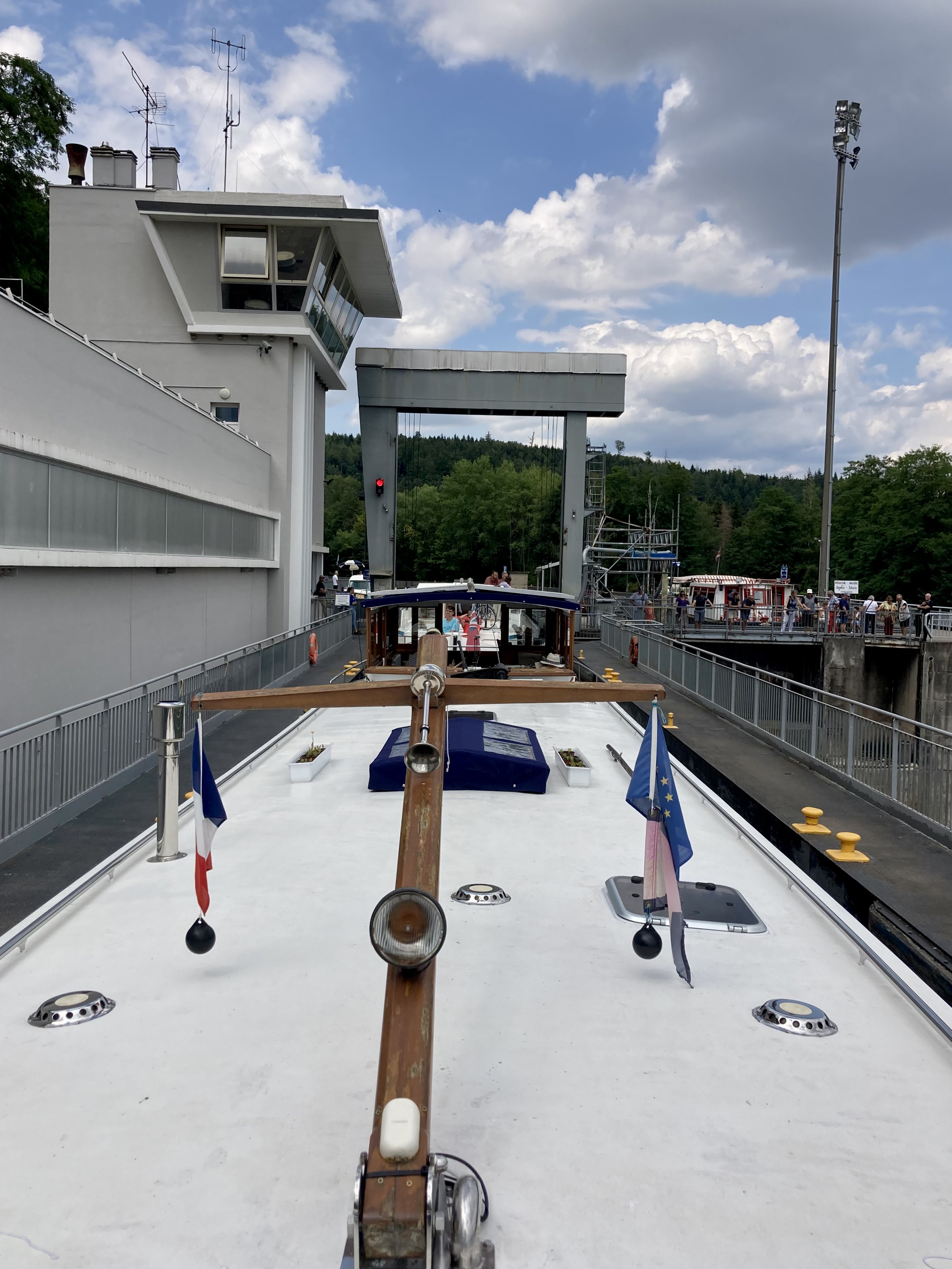
At last it was our turn and we entered the caission. This was our view, from Calliope down to the bottom.

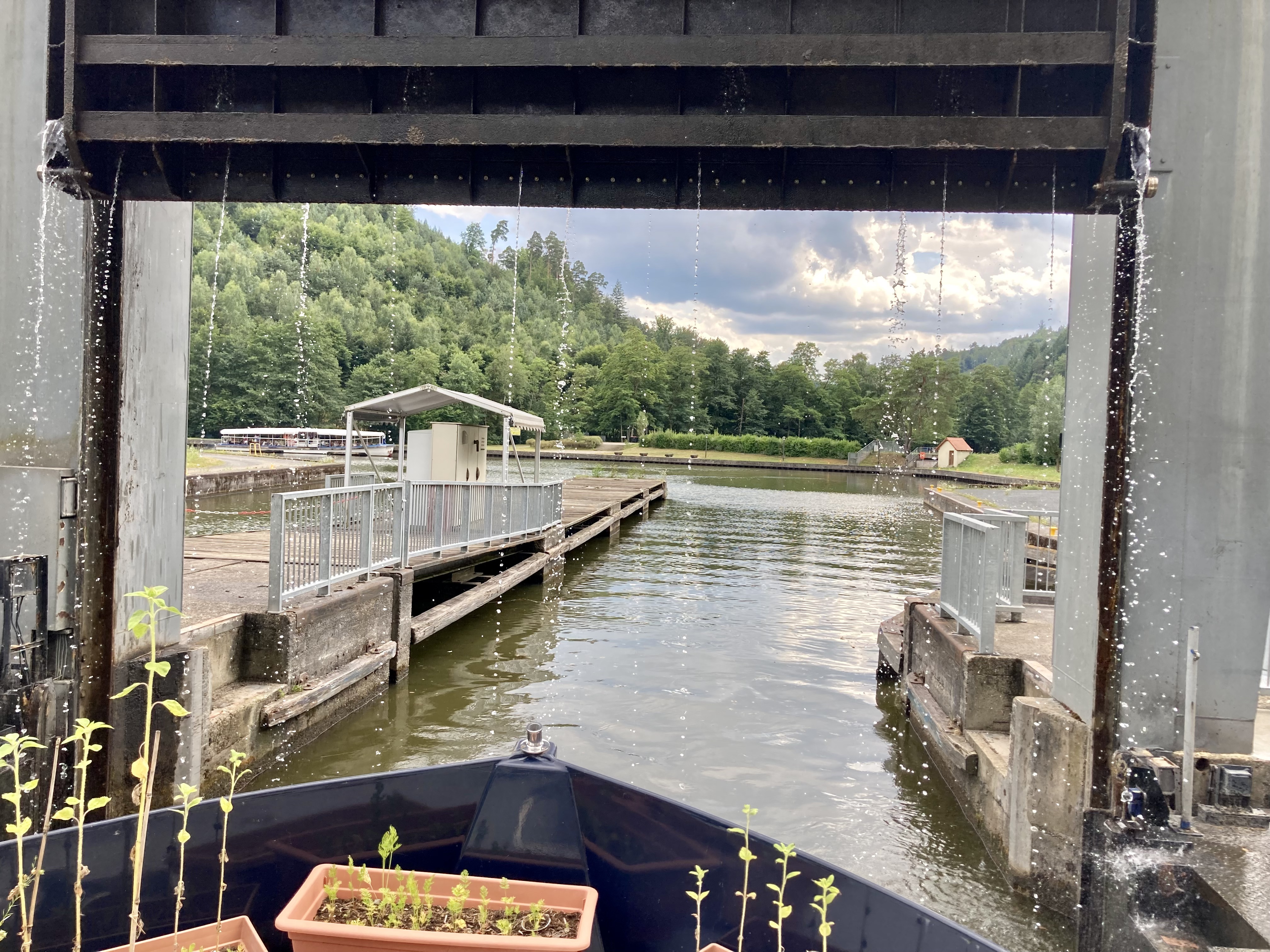
Here are three photos to show aspects of our descent. In the centre photo one can see the door to the caisson lifting up to let us out – with cooling water dripping down on the crew’s head!

We moored up for the night below the plane – and in plain sight of it!

In many ways it is a lovely peaceful mooring, although the road on the opposite side of the lake has fairly constant traffic during the day – not quite what we expected.

The first interesting thing we passed next morning was the entrance to the first of the 17 locks mentioned above. We have heard that the walk up past these old locks is well worth doing, but with our need to get to Strasbourg we could not stop this time.

It’s on our list for next time though.

There are so many fascinating and architecturally interesting structures as you pass along a canal – here is a rather lovely railway bridge, beautifully constructed of mellow bricks.

Now the wooded hills on this side of the uplands are becoming more obvious.

Locks are definitely downwards; lock houses are yet another design. One day I will collect together on one post all the many shapes and sizes of lock keepers houses we have seen.

By now we were getting closer to our overnight stop. Lutzelbourg castle could be seen atop a hill as we continued descending towards the town.

On the way into Lutzelbourg we saw an example of the little engines that pulled barges along the canals and through the tunnels for a short time between the days of horse drawn boats, and the era of boats with their own internal engines.

Initially these were apparently electric (not sure how), and later were run on diesel.

Coming into Lutzelbourg was a revelation. We had no idea that it would be such a pretty little place – almost Alpine in the way it clings to the side of the hill.

As we came through the lock above the long mooring we were able to look around a bit and see the river Zorn below us.

The other half of the town is down there, the other side of the river. .

And then we were there – tied up alone on a long long mooring in (rather hot) sunshine and with green forests all around; wonderful yet again!

Once more we were not to be alone for long!

Luckily we had, as usual, moored up by 1130. This second photo is the quay at 4pm.

It was nice to see so many people enjoying the canal. After all it is what keeps them open and navigable.

We did find a rather nice small shop in Lutzelbourg, with a good mix of fresh local cheese, vegetables and meat, wine and beer, and a reasonable array of dry goods too.

Almost next door was an excellent boulangerie, and across the street a few restaurants – including the one we  chose for a summer’s evening pizza.

We watched with interest next morning as the ‘great get away’ began.There are locks either end of the long mooring, so whichever way the boats were headed there would be a queue for the lock.

We waited a while until there seemed to be a queue of one in our direction and set off down stream.

One of the effects of the lack of water is that boaters are asked to share locks with other boats to save water. We were therefore expecting to share with the boat ahead of us, but they moored in the centre of the lock. Despite our polite calls in English and French they did not seem to understand so Captain ‘hove to’ and we prepared to wait our turn.

A passing lock keeper was not too pleased about this. He recognised it was not our decision not to share, and told us he had called ahead to the next lock to hold up the boat in front until we arrived to share!

At the next lock we discovered a very nice Norwegian family who had only collected their boat the day before. The previous lock was the first they had ever been through and to them our 20m barge looked much too big to fit with them.

But we soon got a system going for the pair of us and continued all morning sharing locks with them, getting to know them more and more in each one.

Down and down we went, through the trees and valley, with each turn as beautiful as the one before.

We passed plenty of lock houses, this one ready for winter already with a good stack of wood outside.

Both boats were on their way to Saverne for the night and our last lock as we entered town was a bit more of a challenge, both in turns of its structure (with a high sill at the top end) and the audience of ‘lunchers’ at the two restaurants alongside!

It is also twice as deep as all the previous locks as two locks have been combined into one. So it looked a bit awesome to our Norwegian friends.

Initially we were trying to space the two boats out to allow us all access to the bollards in the wall of the lock, allowing us to move the ropes down as the water level dropped. But then Stewart noticed that there were ‘sliding poles’; metal poles the full depth of the lock to put a rope round and ‘slide down’. That made it easier for us.

We all came through unscathed. I wish I had photos as it was an interesting experience, but it was a busy time!

There is a big modern marina at Saverne, with open air bar and food stalls, mini golf, and generally a nice place to relax – but it was full. So we continued round the corner to the stretch of the canal pictured above. The first section, complete with water, electricity and boards, is still part of the marina. This was also full (disregard the empty space you can see as mooring was not allowed there the day we arrived.

We went on to the end of the line, grabbed the mooring pins and a hammer, and jumped ashore to make fast! We are the second to last boat along, inn the distance. The last boat was our Norwegian friends.

I was soon off to find a supermarket and buy some good fresh produce. This meant crossing a bridge, where I took this photo.

In fact it turned out to be a quiet and pleasant mooring.

The Norwegians and their holiday boat were scooped up by the Capitaine of the marina as they needed water.

That left us at the end, right at the edge of everything, for the night.

All ther locks since we joined this canal had been set on motion by sensors that knew we were approaching.

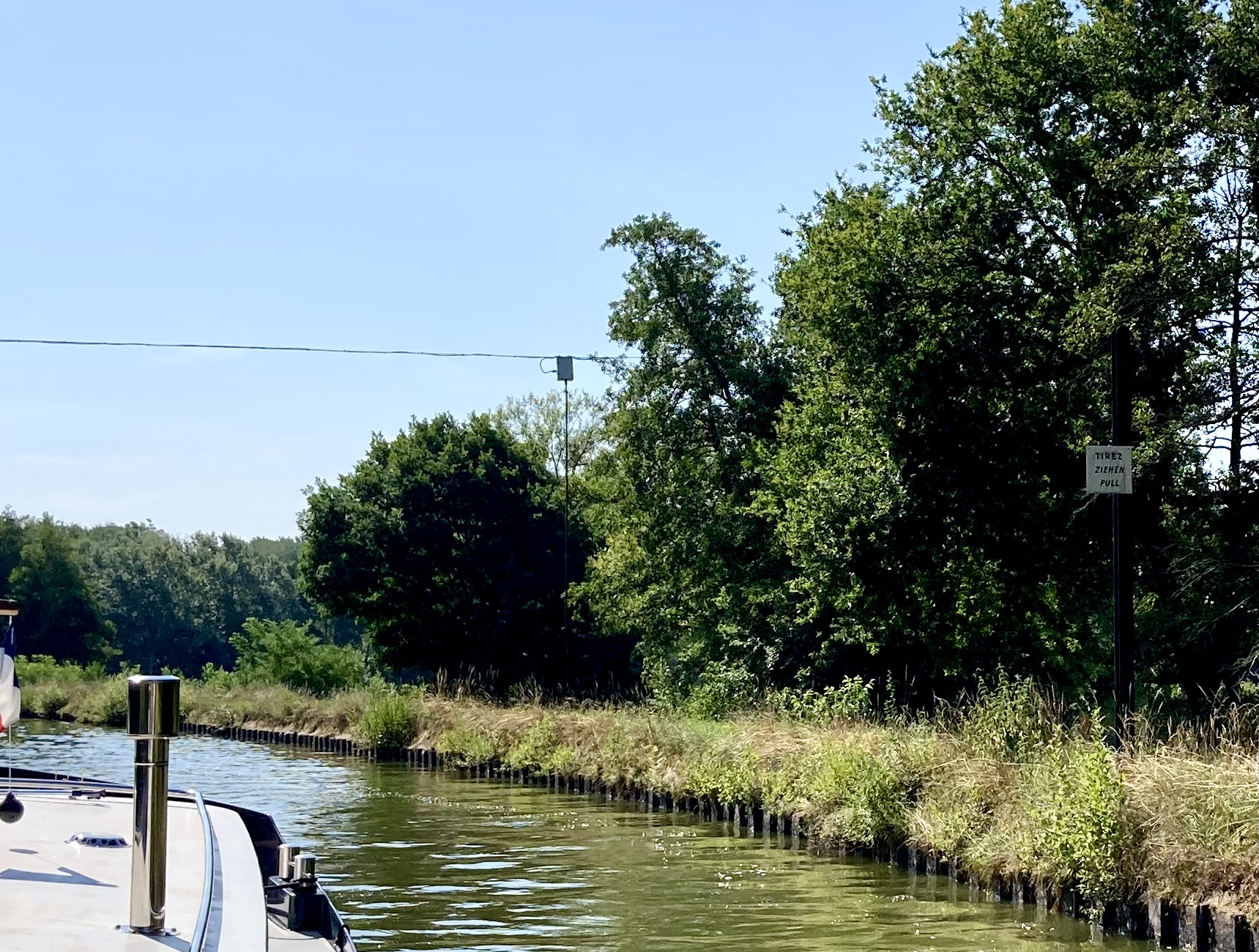
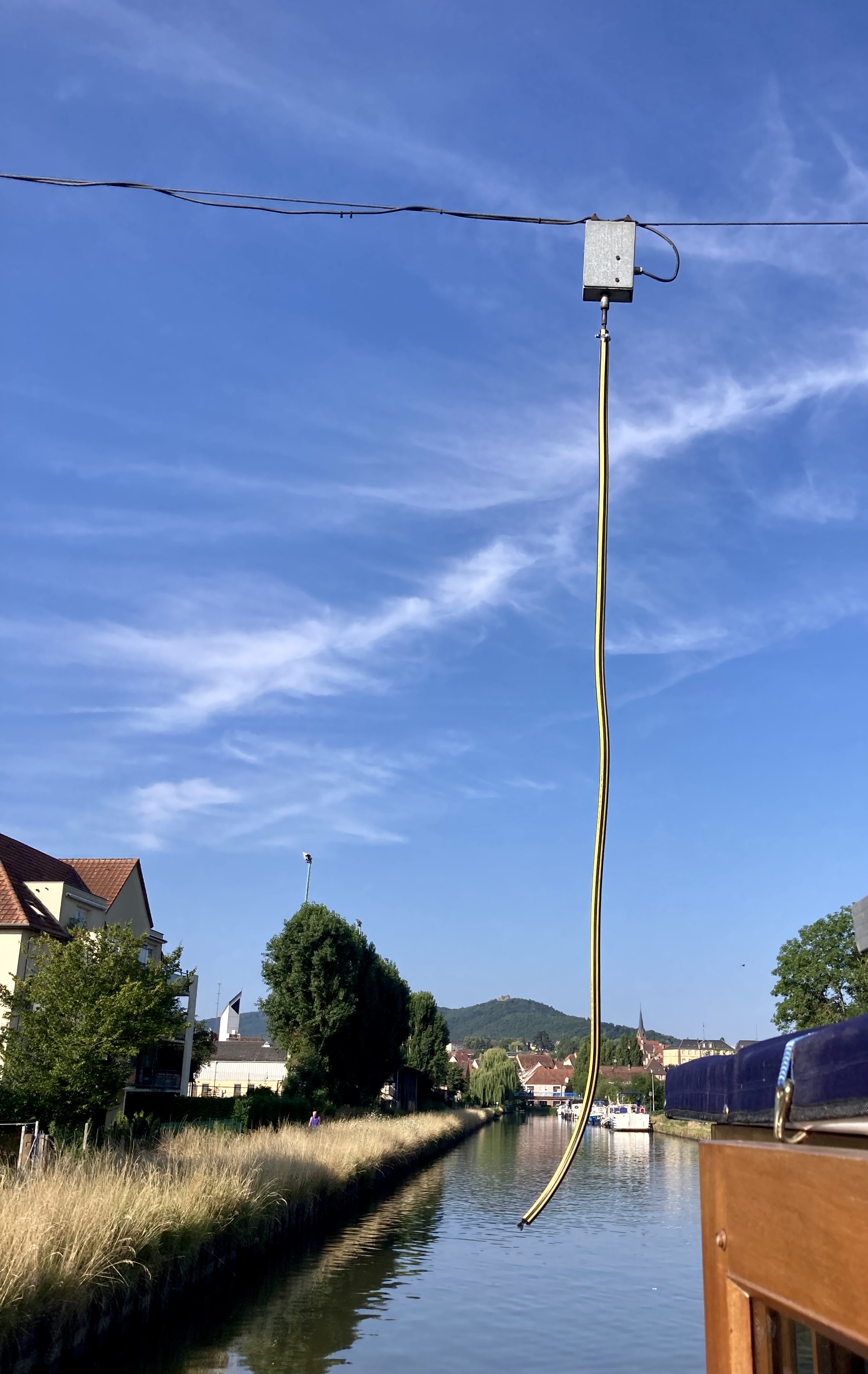
It was therefore lucky next day that we suddenly caught sight of a pole suspended above the water and in the shadow of the tree on the right a sign saying ‘Tirez Ziehen Pull’.

We were back to the most fun of the lock initiators – the pole to turn, or in this case pull, suspended above the canal. It then reopen ds on the helmsman’s skill in taking Calliope close enough, and the crew’s coordination, to hang on with one hand and reach out for the pole with the other.

Although, to be honest, Stu is such a good Captain that I can usually reach the pole with no exertion.

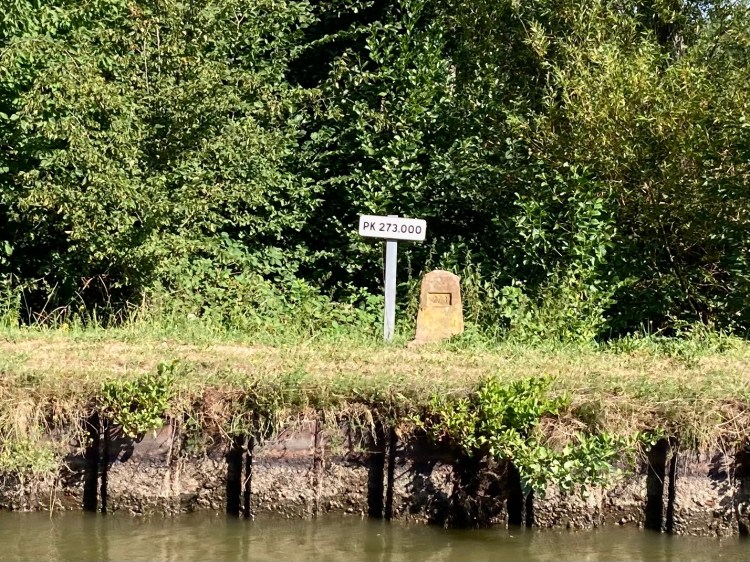
While I am mentioning canal side signs, here is a nice example of the old and new together – the old stone kilometre marker, and the new PK sign for the same point.

It was another scorching hot day and we were glad to have the front windscreen down, back doors open, and a breeze able to blow through the wheelhouse as we moved through the countryside.

There was no dozing off ih the heat though. Apart from several locks to descend there were also narrows in the canal where bridges passed over.

Some look impossible to squeeze through as we approached them, but I guess they are the same width as the locks.

Anyway Stewart steered us through them all with no bumps or scrapes.

Our next mooring was one of the most magical ever! It was a kilometre or two from the village of Ingenheim, out in the countryside, and so so quiet that most of the time we could not hear anything! Not even a bird.

There are just three yellow bollards set into the grass bank – but that is just enough to make an easy secure mooring.

Next to us, and the reason for occasional short term company, was an old boat imaginatively converted into a rest place for cyclists and walkers. A hut at one end provided shelter from rain or sun; a barbecue could be used by those with the food and fuel; and there were cycle stands at the front plus flowers for decor.

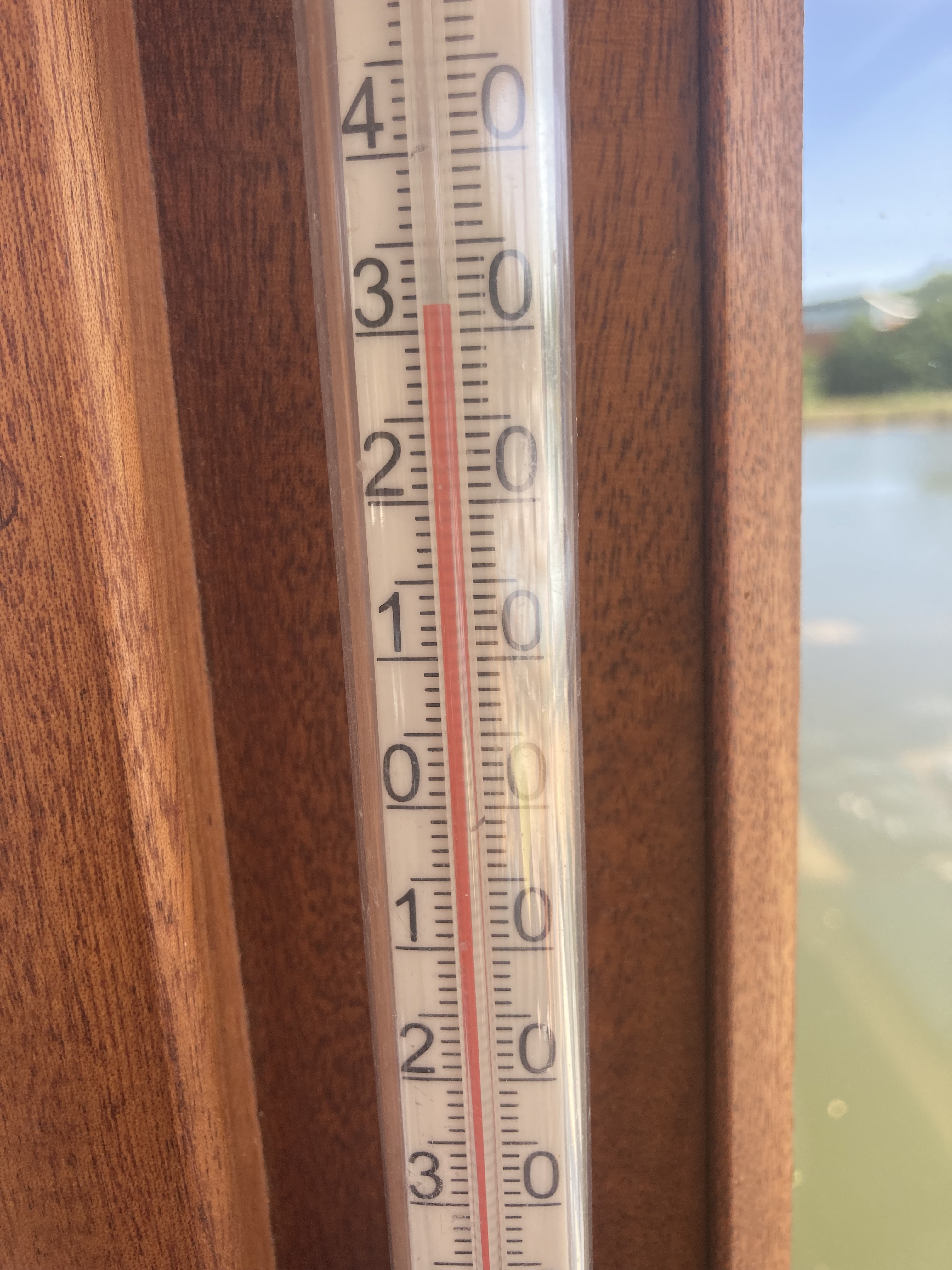
I have mentioned that it was hot – maybe 36°C – so many wasy were deployed to keep core temperature down!

Supper was preceded by long drinks in the shade of the bankside trees; the river Zorn, a short walk away, was a cooling place to paddle and sit in the shallows; hair was tied up any-old-how off my neck; and the Red Ensign jooined forcwes with the parasol to keep the sun from the back deck.

Together these measures meant we had a really pleasant summers day and night at Ingenheim.

As the sun went down, around 9pm. I went up to the nearby bridge to try and capture the lazy evening atmosphere.

Our mooring, and Calliope, can ben seen adjacent to the trees on the right.

In the other direction, towards the village, the sky was fading from blue to pink.

The end of a beautiful day.

Next time I want to stay there longer!

But as you know, we had a deadline to meet so next morning, an other blue-sky day, Stu reorganised our fenders while I walked up to the next lock, just half a kilometre ahead.

The lock system had changed again. Now we were in a loose ‘chain’ where each subsequent lock was expecting you to arrive. But we had ‘broken’ the chain by stopping overnight and I now needed to go to the lock and call up the VNF to open it for us.

I could have called from the boat using my mobile, but I like the exercise of the walk in the cooler morning air.

And its lovely to be off the boat and able to watch her glide up through the water, a scattering of ducklings ahead of her and last night’s mooring behind.

Mother duck and her babies kept out of the way, popping up in the breakwater by the lock.

Lock 41

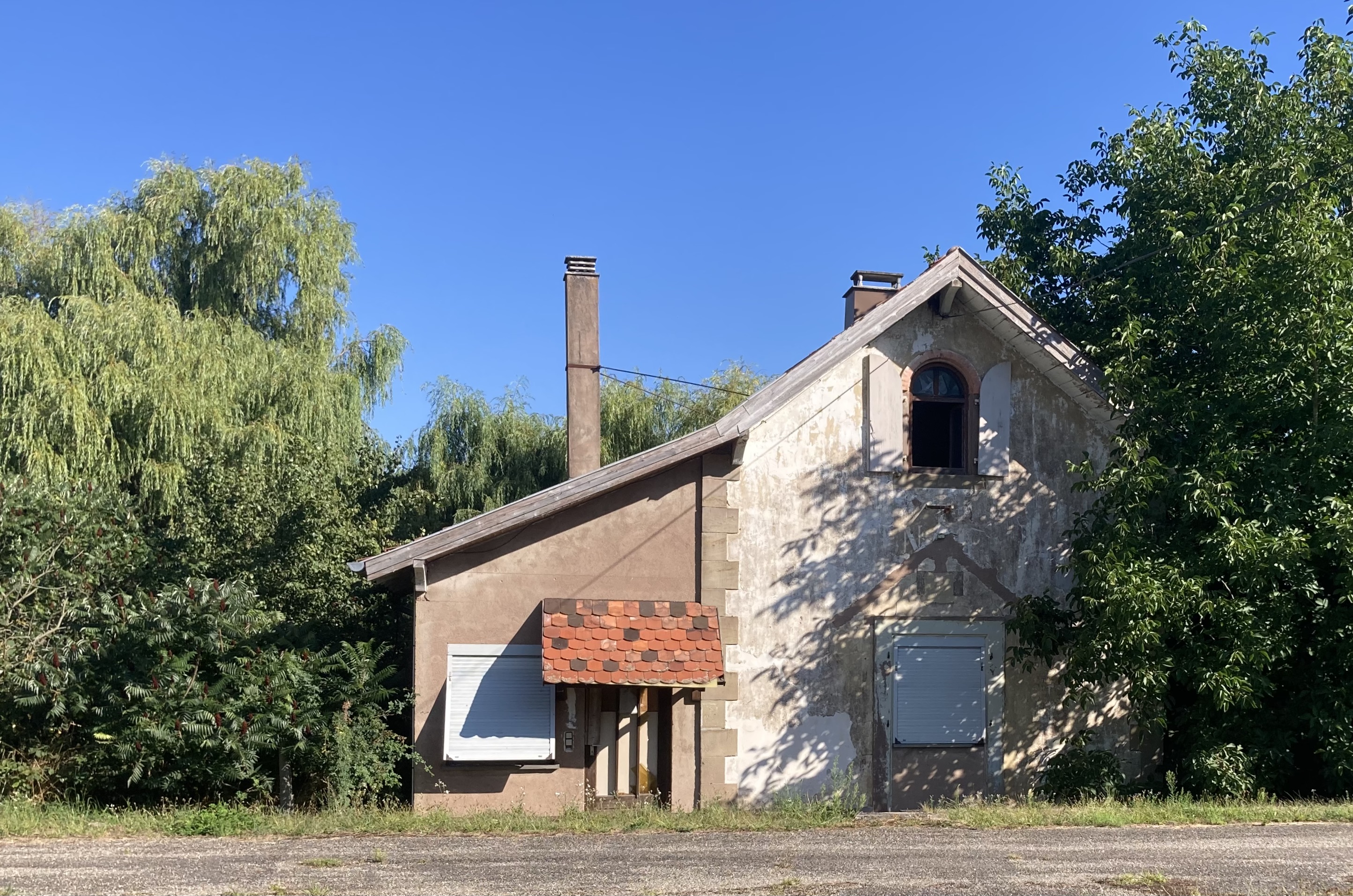
The lock house here, at Lock 41, is yet another of the abandoned ones. What a place to be able to buy, revamp and live in.

It was a bit of a day for birds, but not good photos.

Nonetheless here is a parenting Egyptian goose with some of his/her goslings …..

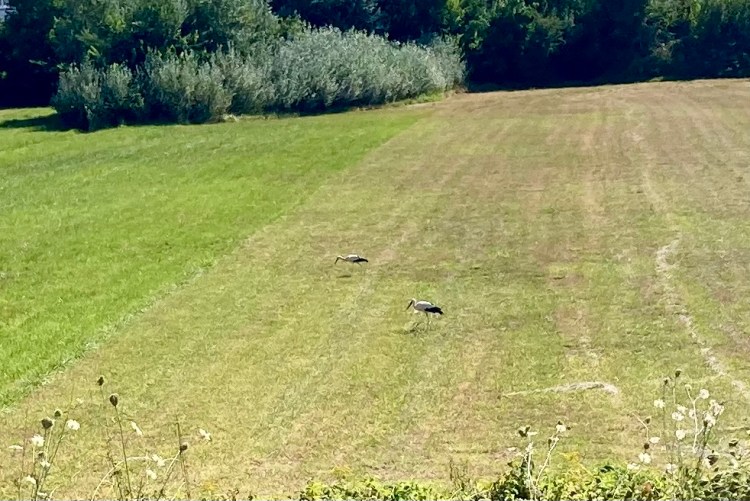
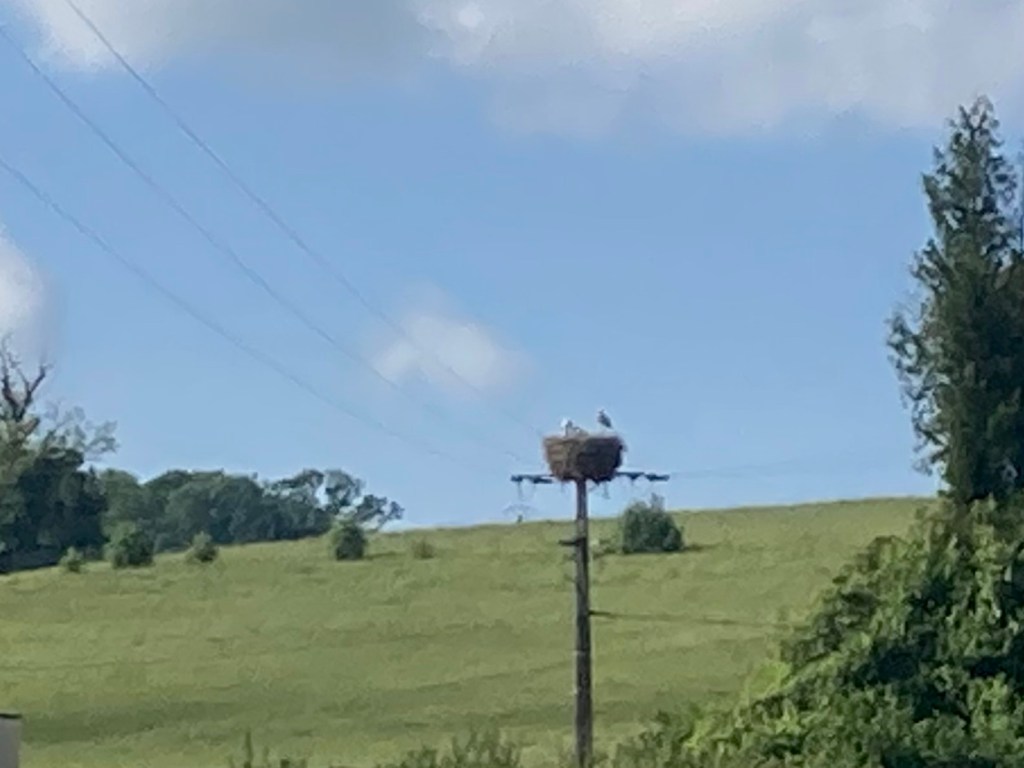
…. and here is one of many storks we saw in the fields, but they are never close enough to be in good focus.

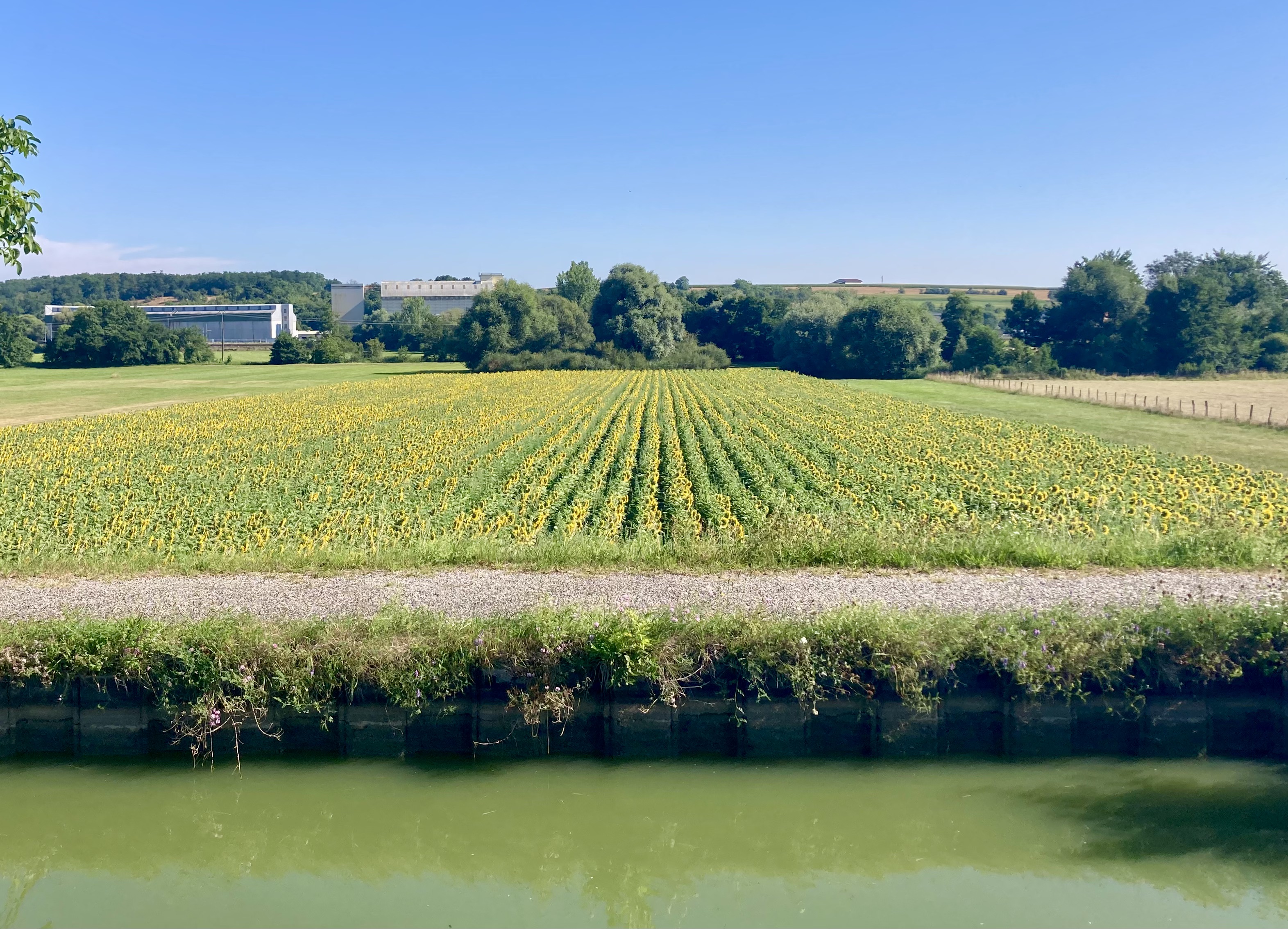
When we were cruising on the south of France, on the Midi and Garonne, we often saw golden fields stretching away from us, full of sunflowers. And I managed to grow quite large and glorious sunflowers aboard as well.

This year had been disappointing up to here, but suddenly we had a field of sunflowers, and my first bud showed signs of opening!

Coming on down towards the Rhine valley we realised we were getting closer to civilisation as we passed a working barge.

(Later, moored in Strasbourg, this barge passed us on an almost daily basis, moving up and down the canal carrying cement.)

Thos of you who have read a few of my blogs will know that I have a certain love of the differences I find in locks.

We often see white or yellow lines painted on the wall of a lock below the position of a bollard so that you know where to throw your rope when deep down in the lock and unable to see the quayside.

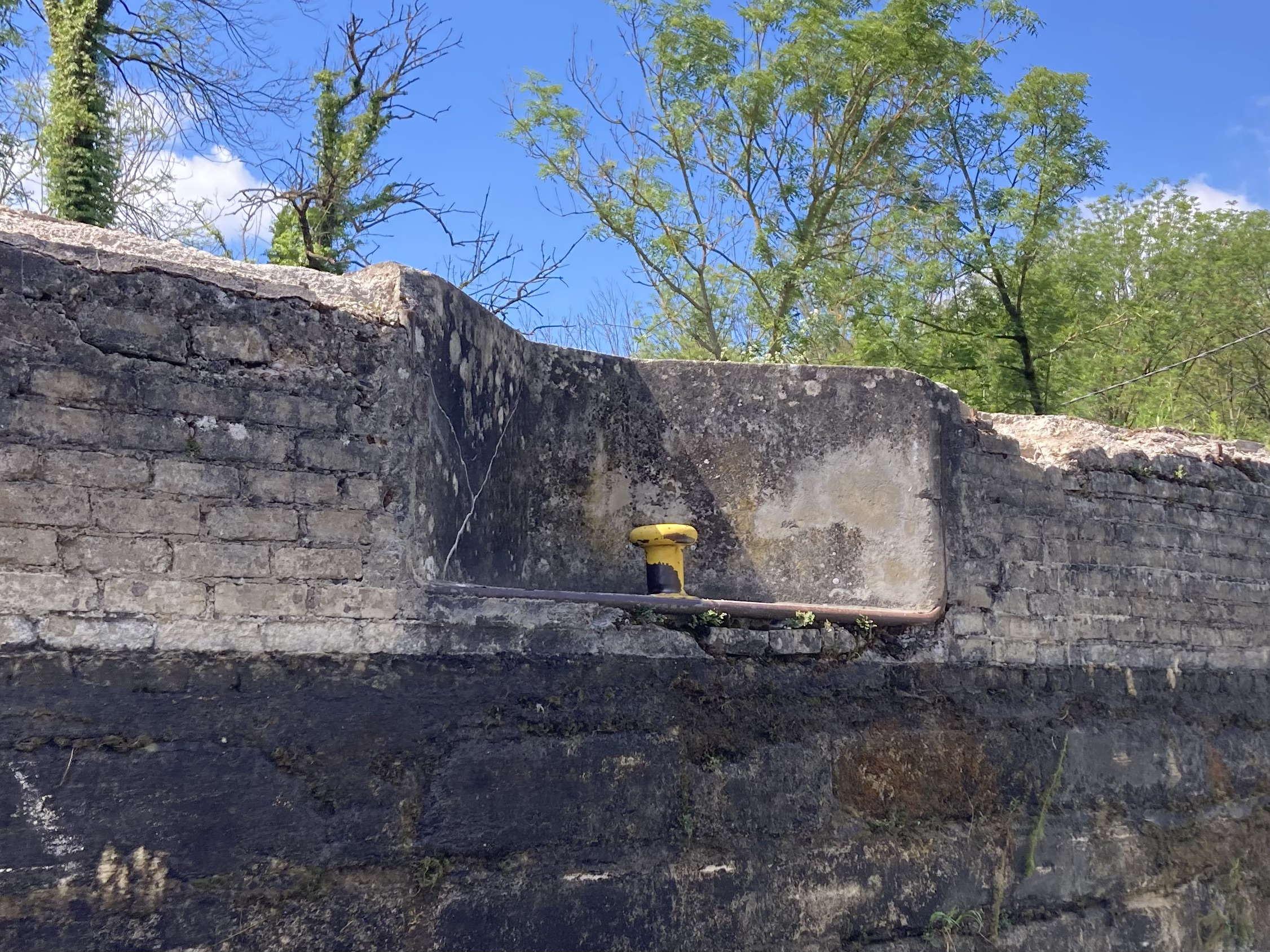
On this occasion as well as a white/yellow mark, there was also the outline of a bollard shape cut into the lock wall.

Rather lovely I thought.

By lunchtime we had arrived at Foret de Brumath – a mooring described as being rather gravelly and dusty. It was both those things at the commercial end, but quite pleasant and close to the trees at the leisure boat end. We tied up and waited for the sun to move round and bring the shade of the forest over Calliope.

As the afternoon drew on and the shadows lengthened towards us we were surpised to see another boat – another Piper boat – appear from the Strasbourg direction.

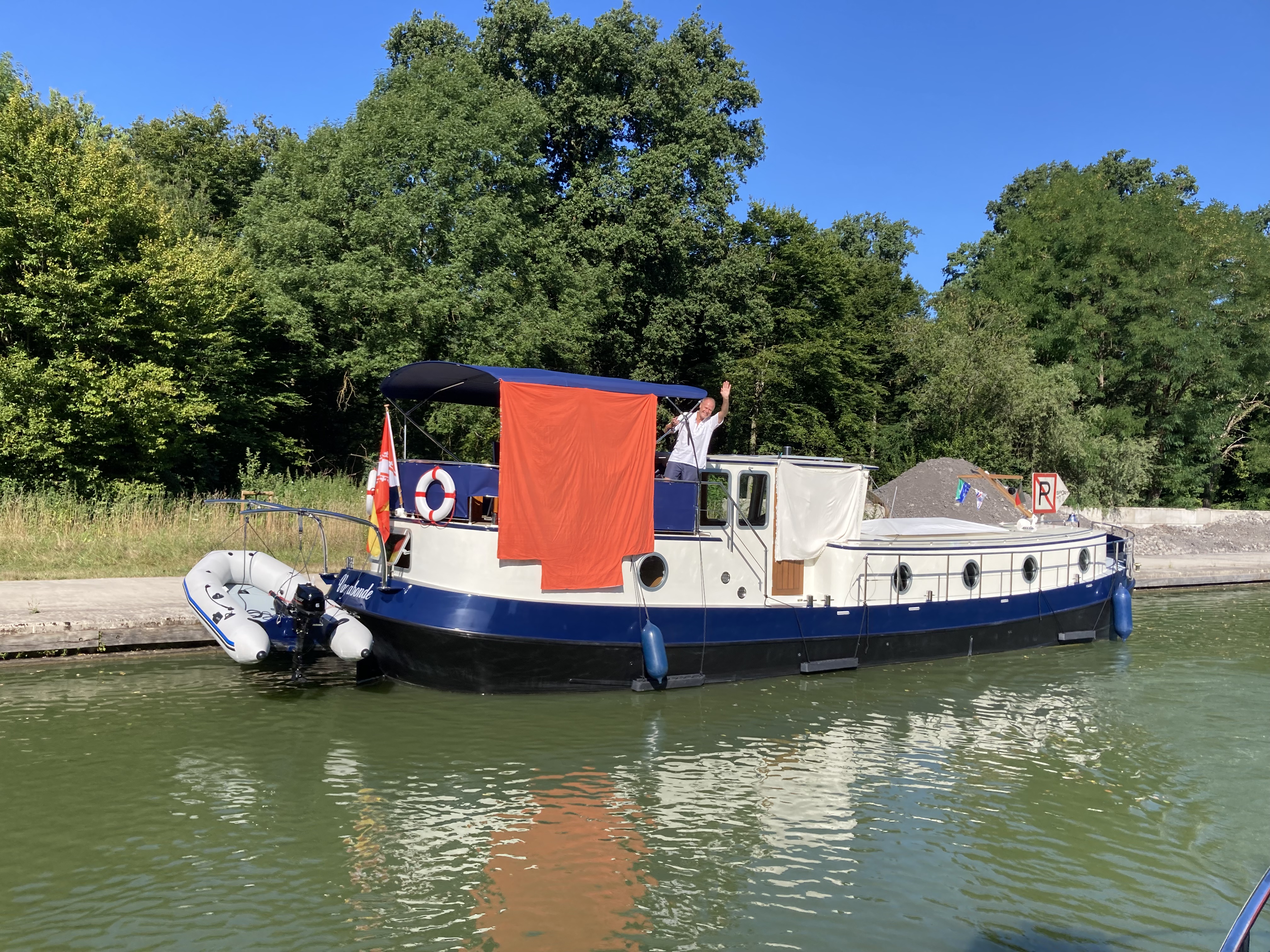
Naturally we went to help with mooring and discovered Gabriel, owner of Vagabonde and Capitaine of the harbour at Kembs, handling his boat single handedly.

We were invited on board later and had one of those unexpected delightful evenings of Franglais conversation, champagne and chocolate!

Thank you Gabriel – our turn next.

All to soon it was the next day and the parting of the ways – Gabriel continuing upstream for a short holiday, and us onwards towards Strasbourg.

I just mention that we passsed lots more storks – with their images captured no better than the ones before!

Easier to see, and more interesting to some, was the swing bridge at Vendemheim. (Have you noticed how Germanic many of the names are around here? Of course Alsace is onie of those areas that has swung back and forth between nations over time).

The bridge was shortly after two locks – all three structures controlled from the building at Lock 47. When we arrived there was small queue. It seemed that there had been a fault in one lock, boats of various sizes waiting to go in both directions, and also one holiday boat that had broken down all together. All they could tell us was that their engine had stopped working. We did not feel capable of helping, and they were not in any danger, so we had to leave them behind.

After the suburbs of Vandenheim we only had 10 kilometres and 3 more locks to go before we were well and truly in Strasbourg and looking at the visionary building that holds the European Parliament.

Sadly this is a place without British representation any more, but we can still admire the reflective curved walls.

I think we had just the right kind of sun and clouds for this photo – lucky me.

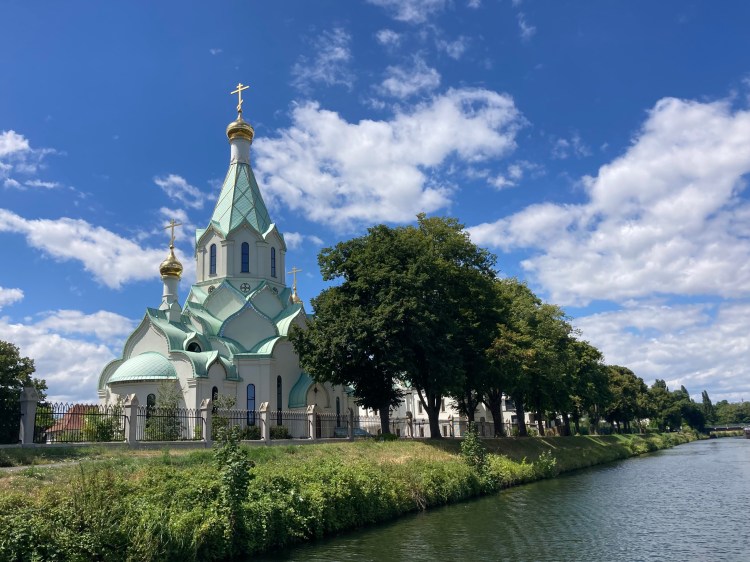
The next marvel was the Russian Orthodox church on the junction of the Canal de la Marne au Rhin and the Bassin des Ramparts.

This is where we turned to starboard, heading along the basin towards the Port d’Europe and our mooring.

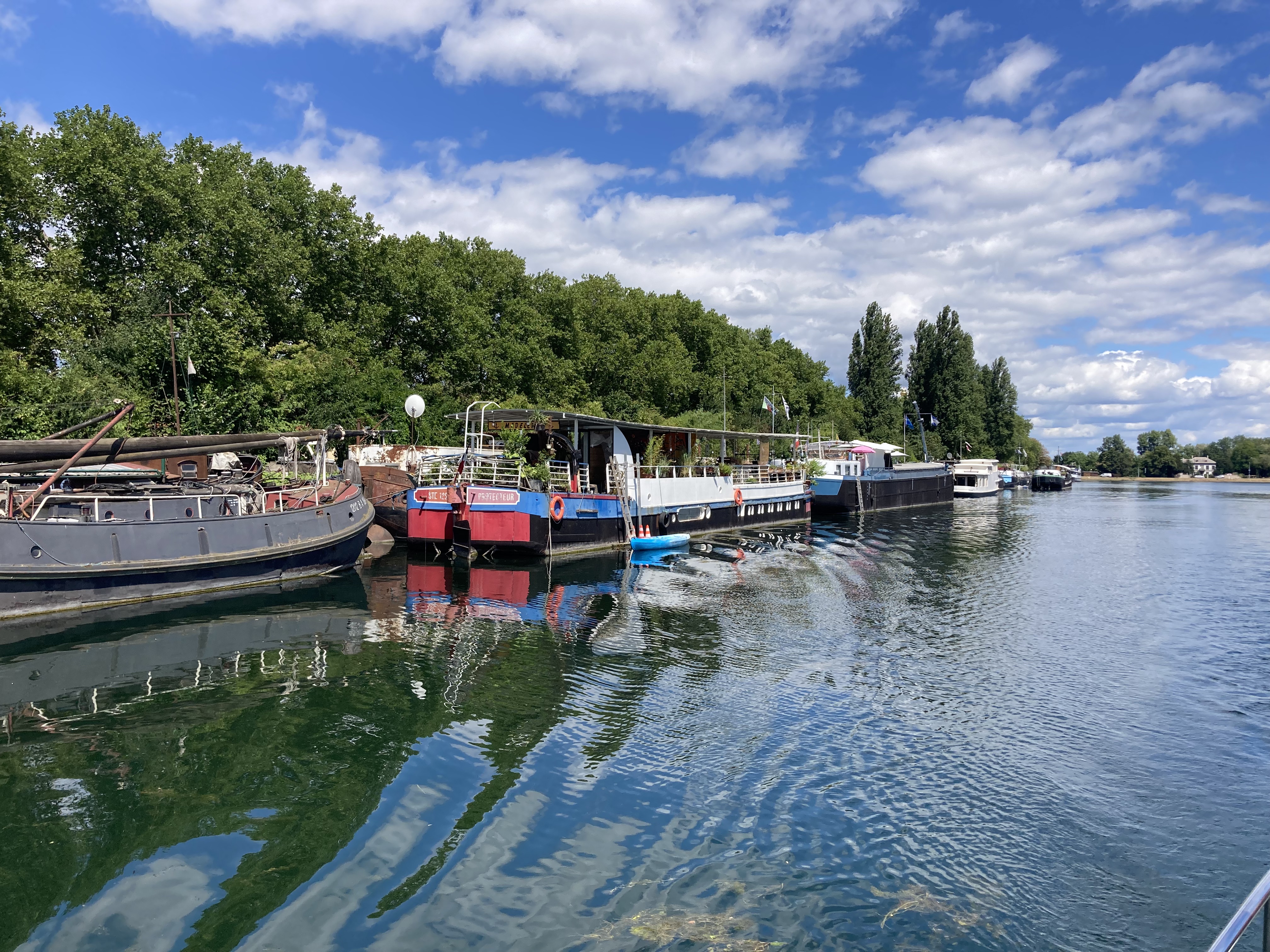
We cruised past a long line of old barges, some now houseboats and others waiting for new life to be injected into them.

Then we spied the port and the fuel pontoon where we had been told to wait until directed to our final mooring. We ‘double parked’ against another big barge – Melba – who were waiting for their mooring to be free. Naturally we got chatting, and when we all moved too our pontoons we found ourselves moored directly behind her! Mark and Debra are now firm friends.

Across Strasbourg port from the mooring

Relaxing that evening in the knowledge we had got to Strasbourg a day before our guests arrived we looked out over the port and marvelled that yet again we had been lucky enough to get an ‘end of pontoon’ mooring with our back deck open to this view.

As the sun set we planned our route by tram to the station the next day to meet up with Jo, Warren and Ollie.

Our last quiet evening for a few (fun filled) days).

And here they all are – well Warren took the photo. And it is not of their first evening, but of one of the breakfasts we enjoyed.

Warren and I liked the walk through the citadel park to the boulangerie for fresh croissants, pain au chocolate, croissant armandes, pain au raisin and anything else that looked tasty!

Well balanced of course by fruit and juice!

Of course having visitors gave us the perfect excuase to be tourists in this fascinating city, We all set off together and over their stay we sam any of the sights.

One of the best for us was seeing a statue of Calliope – the muse of epic poetry – on top of the opera house with the other muses. There she is – the wonder woman who gave her name to our boat.

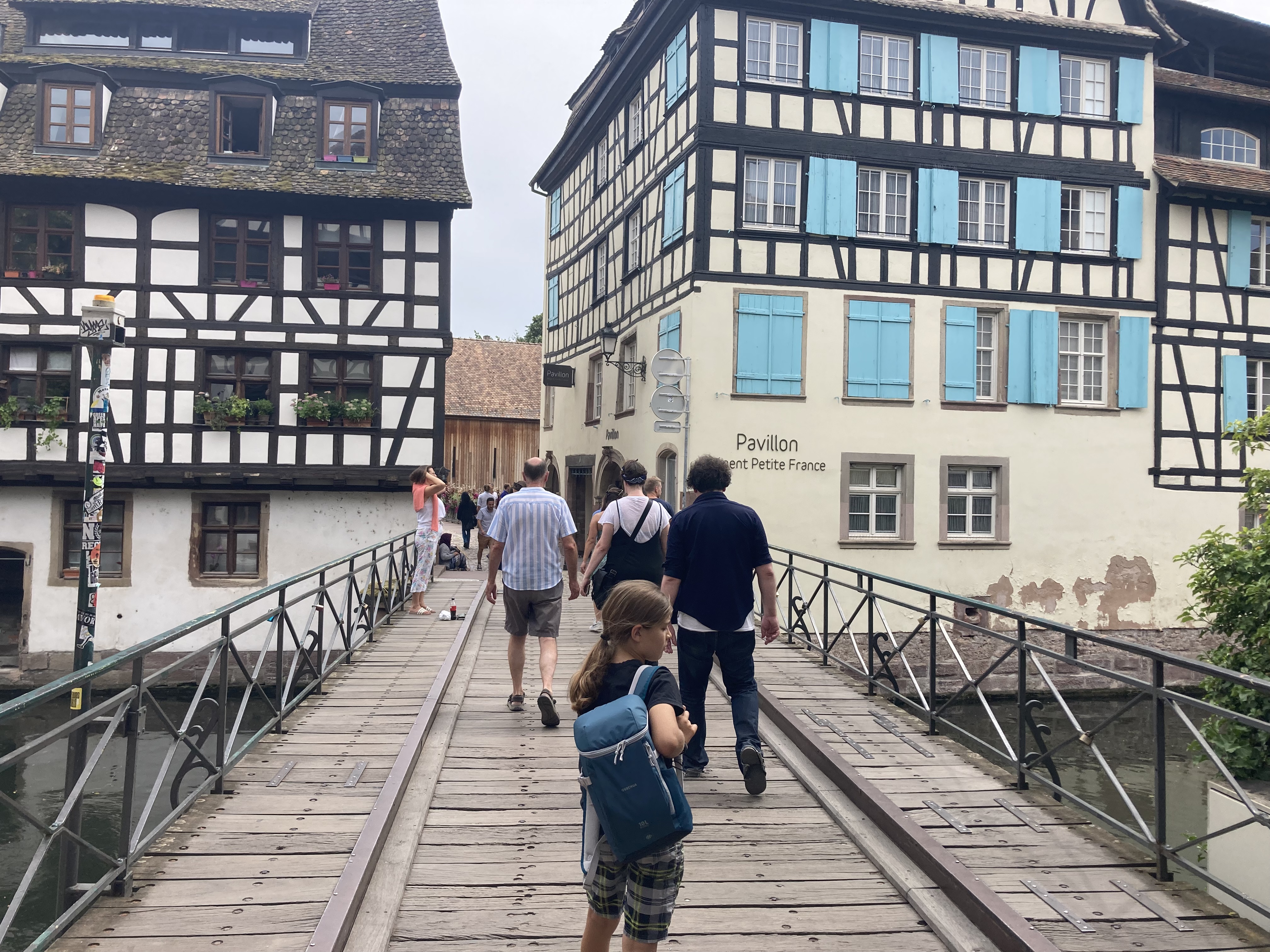
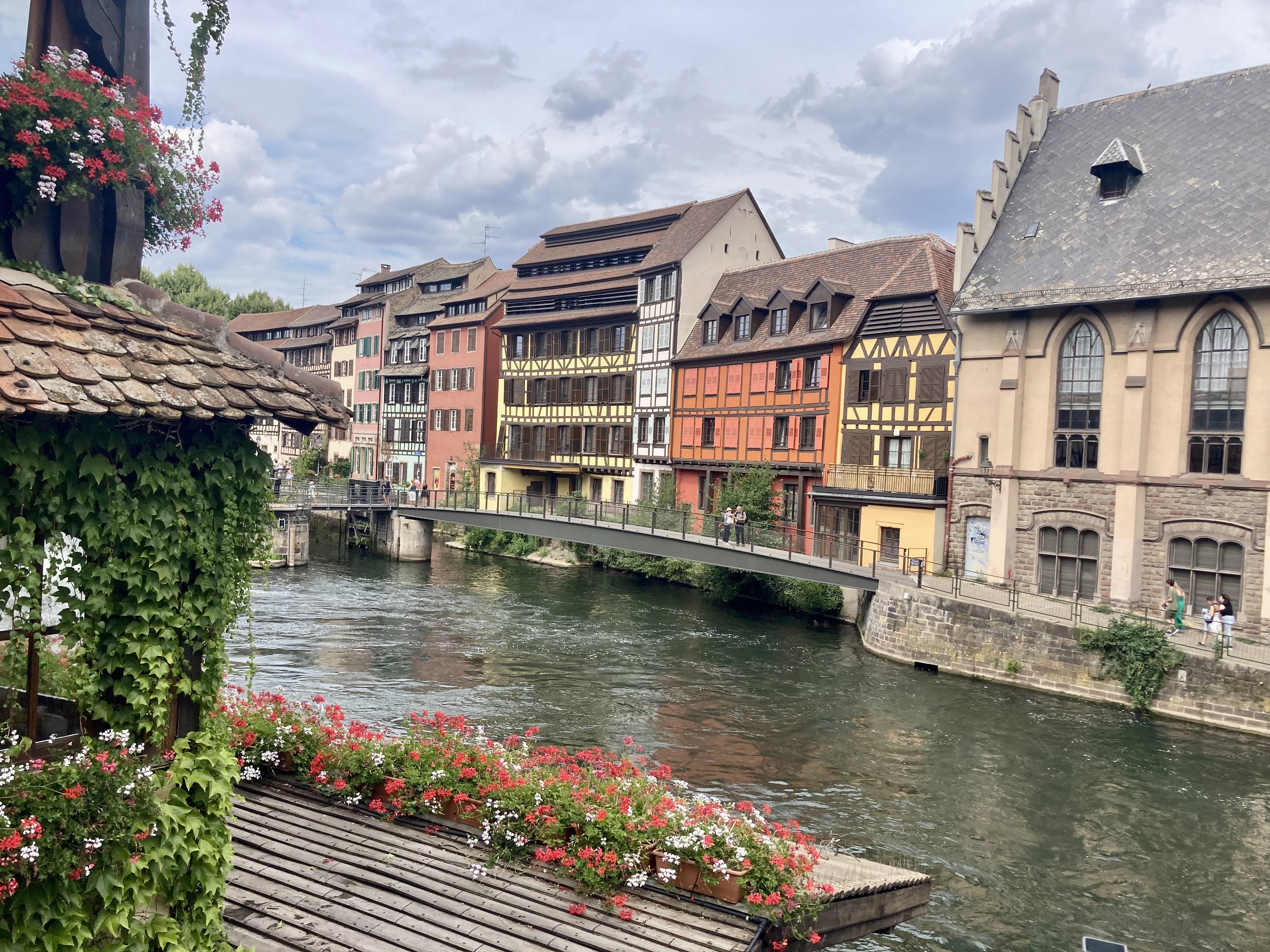
We saw many of the special places ion Strasbourg and these photos are a tiny sample of our wanders.

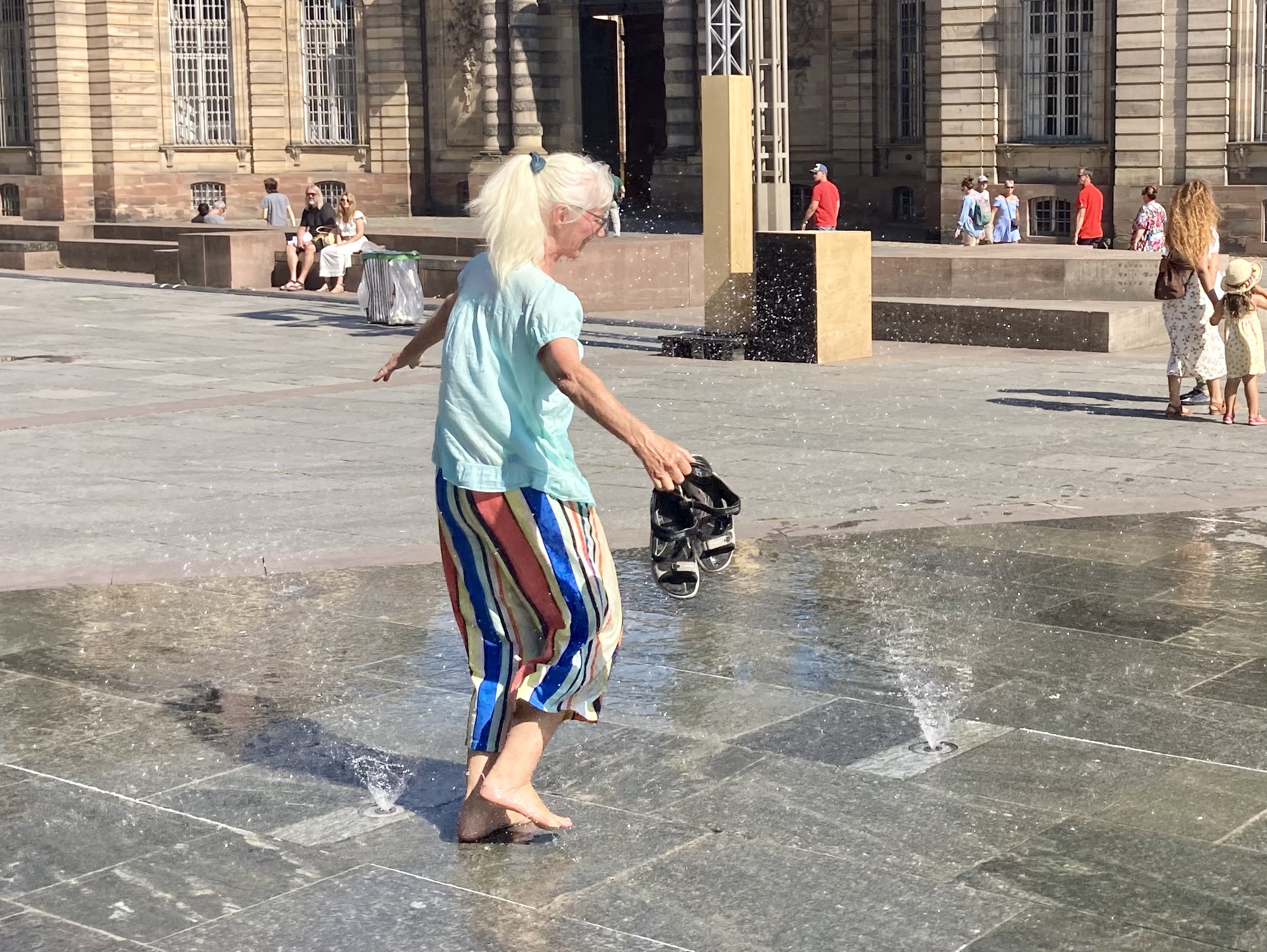
It was still hot, the heatwave continued with everyday riding into the lower thirties by afternoon. Thankfully the cathedral square includes a line of cooling fountains – just the place to get soaked and then allow the water to evaporate off, taking body heat with it. I was pleased that Jo and Ollie joined me in the fun,

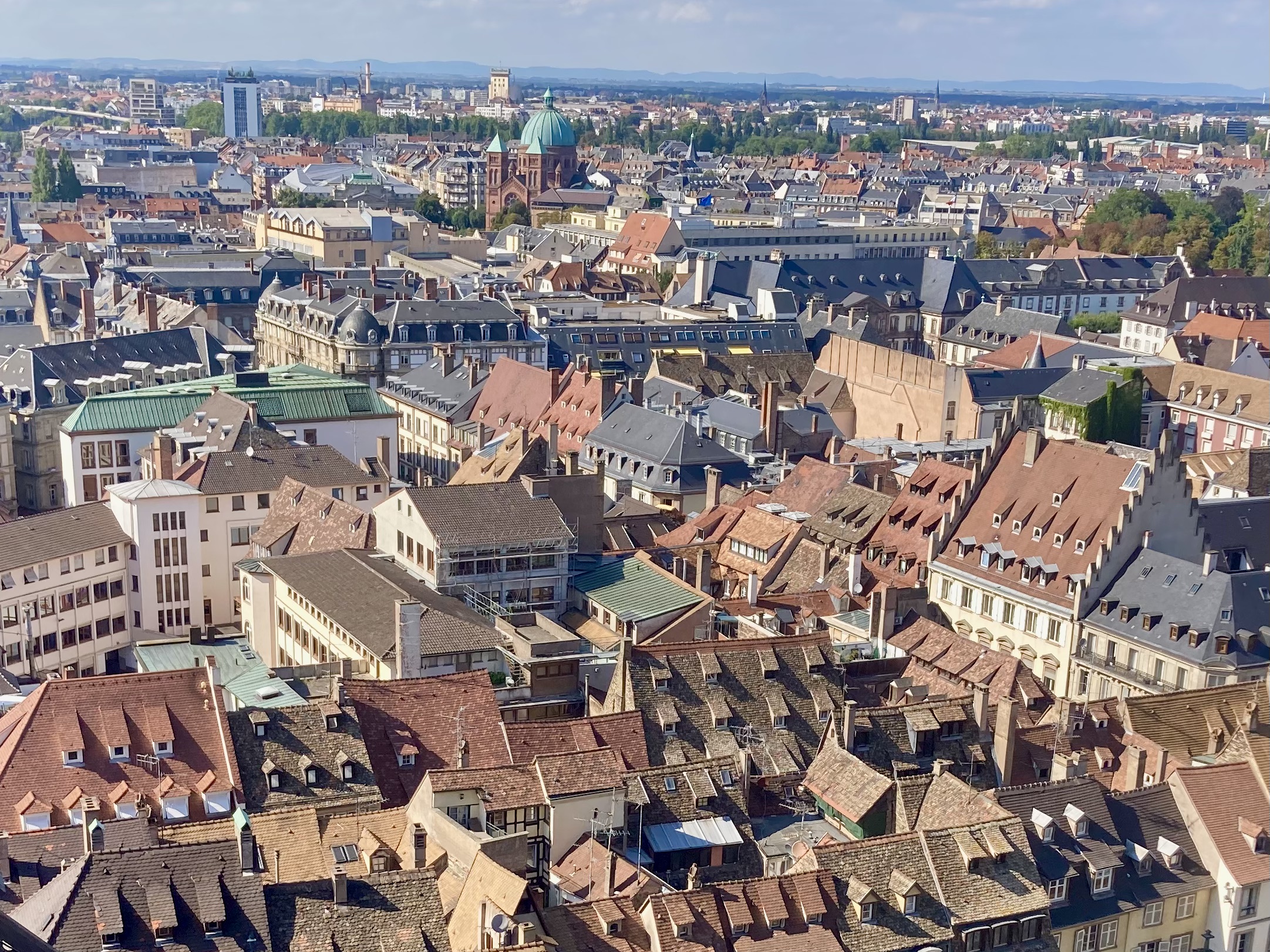
We cooled down at the right moment as the next thing we did was climb the 300+ steps to the top of he cathedral and look at the spectacular long views from the top.

We learned that in the past the townsfolk would go to the top of the cathedral for the day, taking picnics with them. There is a big flat platform there; it must have been a true breath of fresh air after the hot and fetid streets below.

The family were with us for three nights. Two of those nights we dined aboard and then sat together in the back deck as the air cooled and the sun set.

One of our favourite views was across to the boat sheds where the ‘gateau bateaux’ (passenger boats) went each night to be cleaned ready for the next days trips round the rivers and canals of the city,

According to Stewart they also had their rubbing strakes re painted; as we found out next day the boats are almost as wide as the two locks they have to go through, and with no space for fenders they cannot avoid a few scrapes.

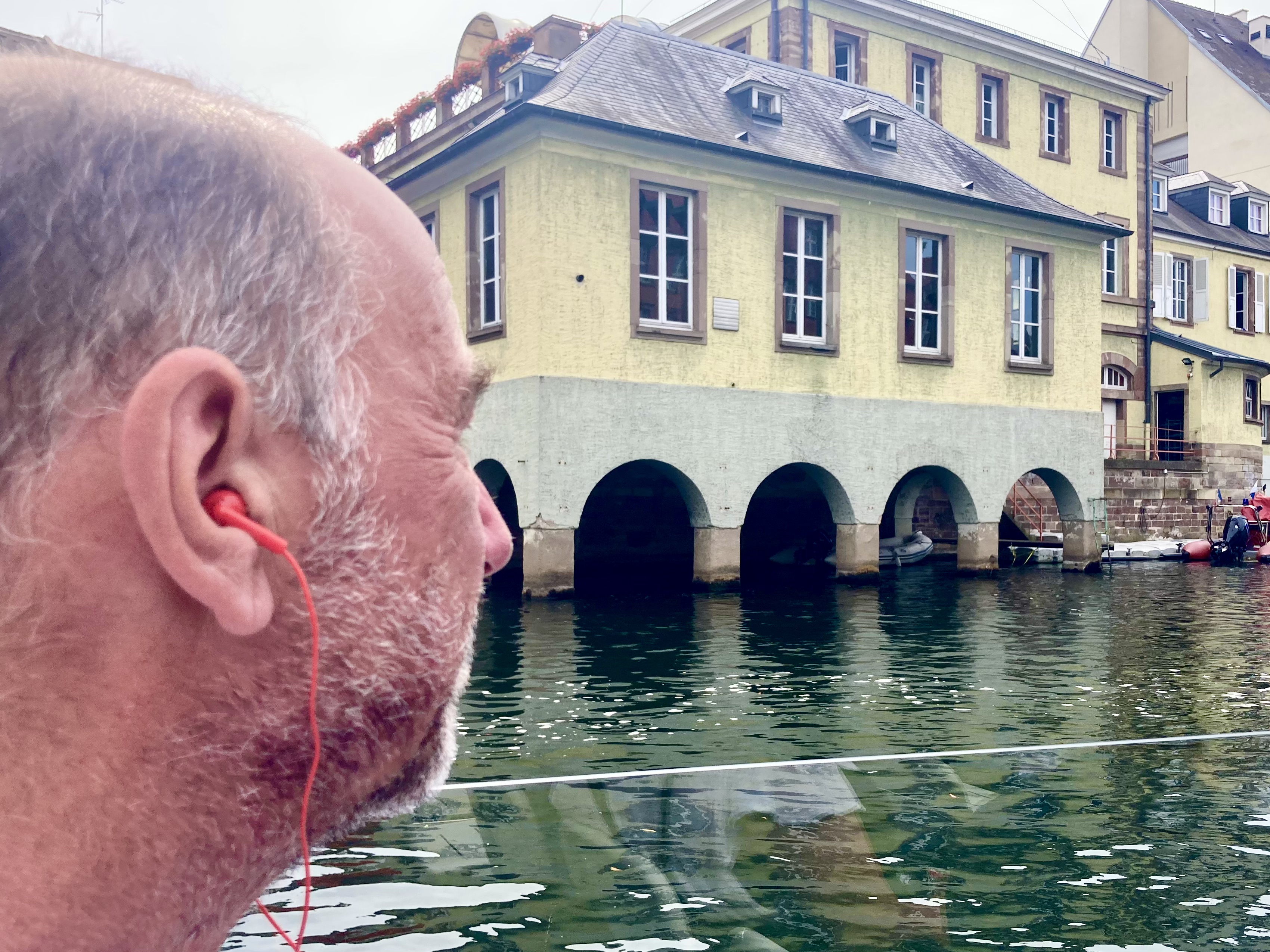
We thought we would give the boat trip a try – a real ‘boatman’s holiday! It was very good – highly recommended. We saw parts of the city that we might have otherwise missed and from a different angle.

The accompanying commentary, delivered in about 10 languages, was interesting and informative about both the history and the culture.

We had a good plan for after the boat trip too.

A refreshing Alsace beer or wine by the river.

And then an Alsatian meal in an excellent restaurant in a subterranean restaurant.

The curved ceilings were beautiful.

The food and wine were all good too.

It was the last evening with our guests and we enjoyed it to the full.

Then they were gone, and it was back to just Captain and Crew. On the way back from the station to see them off we walked oince more through the Citadel park which is immediately adjacent to the port.

Naturally it is a much quieter place now; soldiers replaced by coots and squirrels (including at least one red one!); guns replaced by shady trees and benches; parade grounds replaced by children play areas and paddling pool.

The original ramparts, moat and gateways now provide charismatic backdrops in every direction and it is such a cool place to walk during these sweltering summer days.

By now we had decided to return to the UK ourselves for most of August. Our planned route via Canal des Vosges could not happen for a while as there was not enough water.

And, more importantly, our niece was getting married and we wanted to be there!

So just 3 more evenings watching sunsets, and wondering if they heralded rain before we left.

The day we set off to our second home (Calliope feels like the first one) was blue and warm again.

Our journey of walk/tram/train/Eurostar/train/ ferry/taxi was accomplished in around 8 hours.

In less than 4 weeks we would make the return journey to continue our voyages!

Savouring the Sarre in Slow Time 2

Part 2 – the French stretch – Canal de la Sarre (Canal des houillères de la Sarre)

12th to 19th July 2022

We arrived in Sarreguemines with extra crew aboard – son and grandson – who had joined us on the German part of our Sarre (Saar) journey – as documented in the last blog post. We had moored up on the long upstream quay of the port, most of the time with no-one behind us; a very pleasant mooring.

We liked Sarreguemines, for loltys of reasons. One was the flower displays everywhere; someone had spent a lot of time designing and planting these, all round the town.

And then the evenings there, as darkness fell. The river was a magical place to be. especially for the Bastille Day fireworks. Even the secure gate from the pontoon to the park had its own twilight architectural delight.

But probably our greatest enjoyment was on the last day when, despite the heat, we walked back to the junction with the river Blies, and then upstream to the Moulin de la Blies ceramics museum.

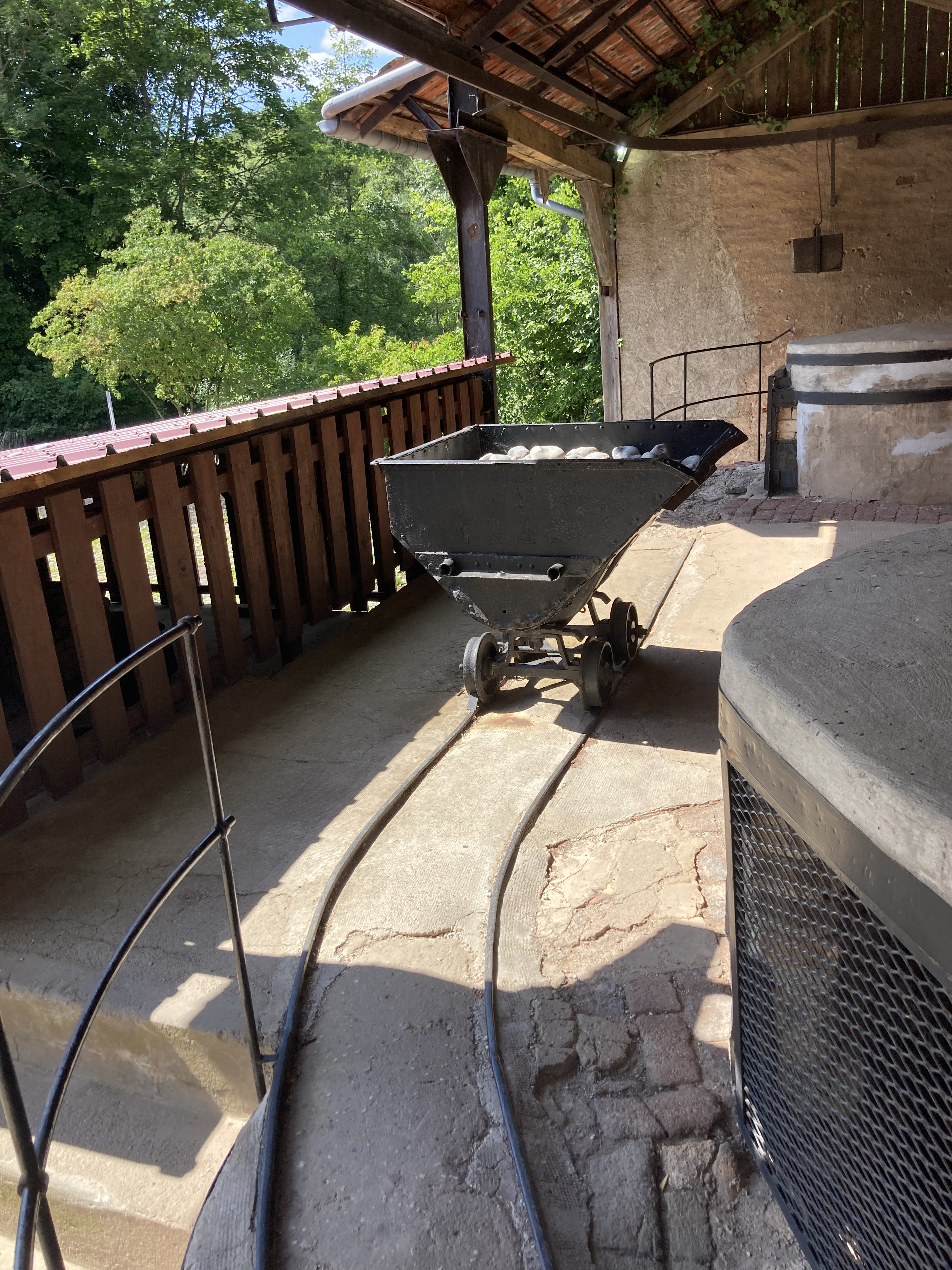
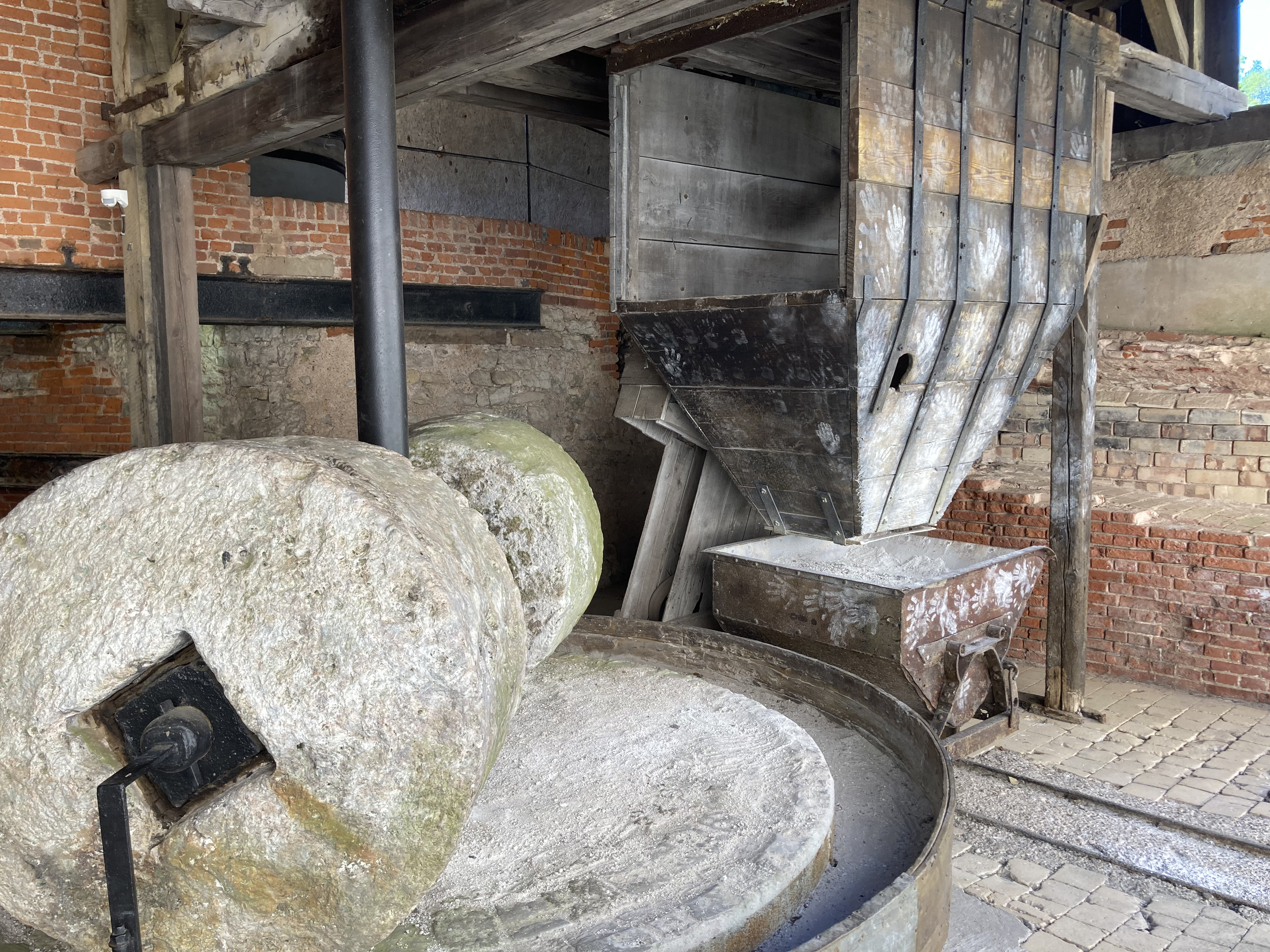
The museum is housed in the old ceramics works themselves, and includes everything from grinding the stones to add to the clay through to hand-painting the plates, pots, cups etc. It is fascinating and full of detail; easy to imagine the people still working there.

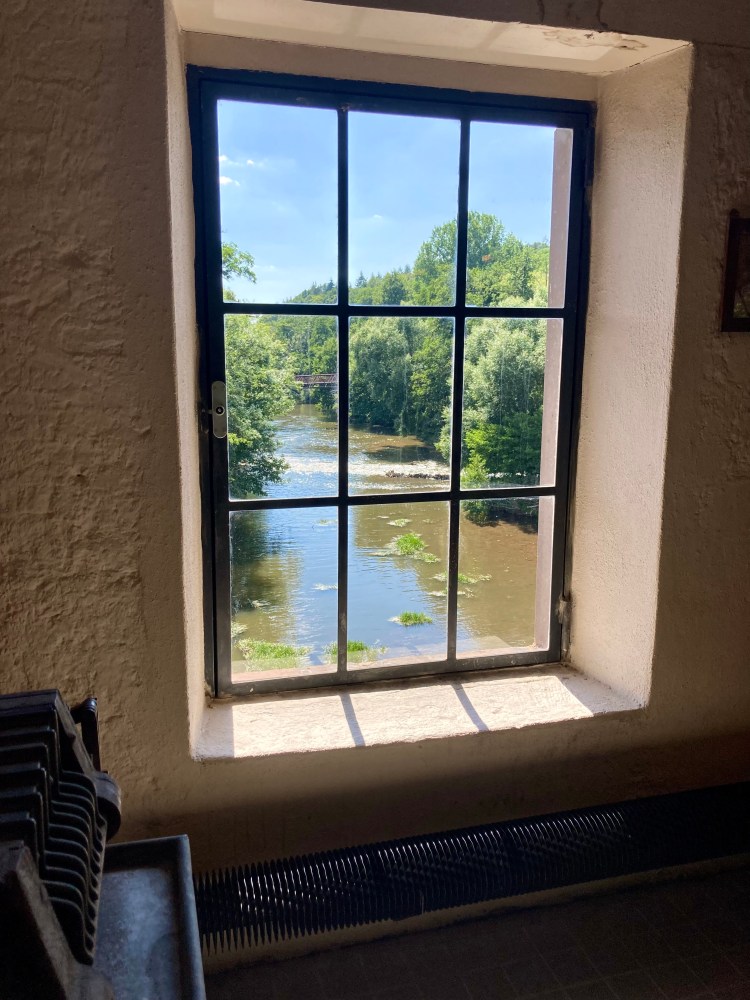
The views from various parts of the ‘works’ were often onto the Blies, an important part of the process.

Initially, before steam took over, the river provided the power for all the mills and wheels.

It was also the way that much of the raw material arrived, and much of the finished china and porcelain was taken away.

Some of the old ruined industrial buildings have been incorporated into a beautiful garden – very shady and welcome on a very hot day!

It is impossible tfor me to fully describe how interesting and enjoyable the museum is – but do go if you are in the area!

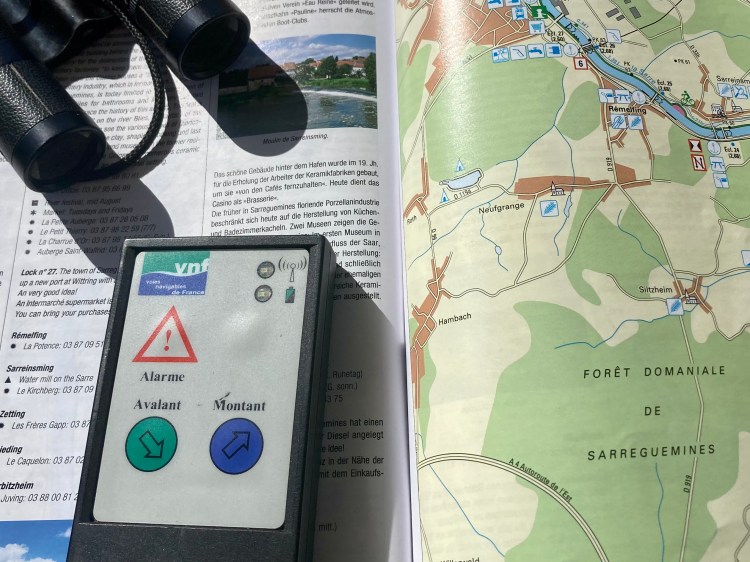
Next day we continued up the river, all prepared with our remote control for the locks, map and binoculars.

Officially we were now on the Canal de la Sarre (formerly Canal des Houillères de la Sarre) with the river running along to port. It was built to allow the transport of coal from the mines around Saarbrucken, hence its name – houillère meaning coal mine.

The weather was still hot – somewhere in the thirties – and we hoped to find a mooring with some shade.

Along the way, at Rémelfing I think, we had a friendly audience as we went through the lock.

All went according to plan and we waved a cheerful goodbye as we continued to Zetting.

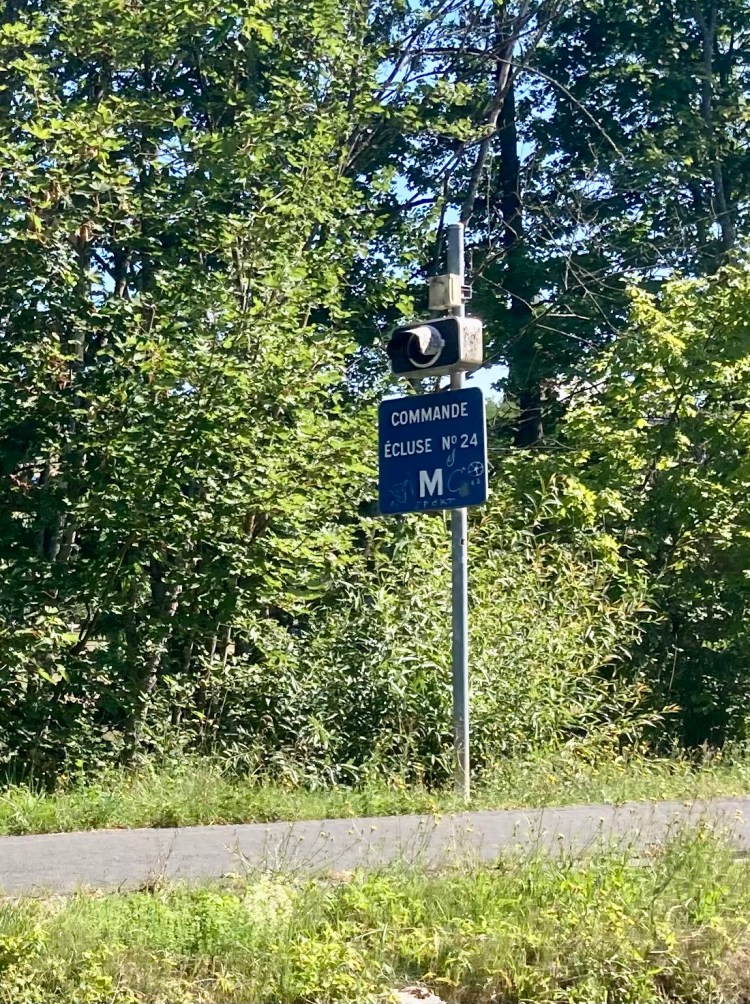
Each stretch of river or canal has its own design of a sign to tell us to activate our remote control for the next lock – the ‘zapping stick’ as it’s called on Calliope.

Sometimes the wireless signal can be operated from a hundred yards away; other times only when you are right next to the sign.

I’m not sure what the M signifies. The rest of the stuff around the M is graffiti, in case you are trying to work it out!

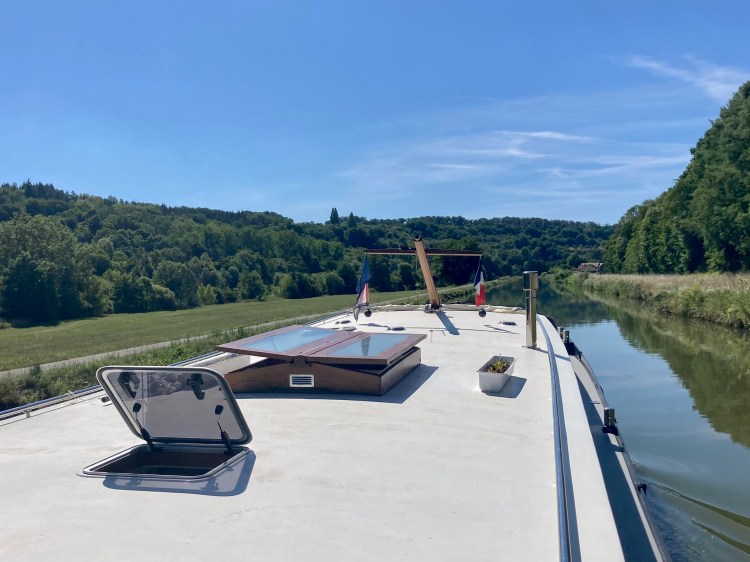
Although not far out of Sarreguemines we were cruising through lovely open countryside, with all vents open to catch as much cooling breeze as we could on this beautiful sunny day.

As always we were wondering if there would be space for us at our planned mooring, and as is almost always the case, there was!

The only other boat along the quay seemed to be an abandoned holiday hire boat. No-one came near it while we were there. The life jackets were neatly piled up inside and the bikes on the back. It was bit of a Marie Celeste moment.

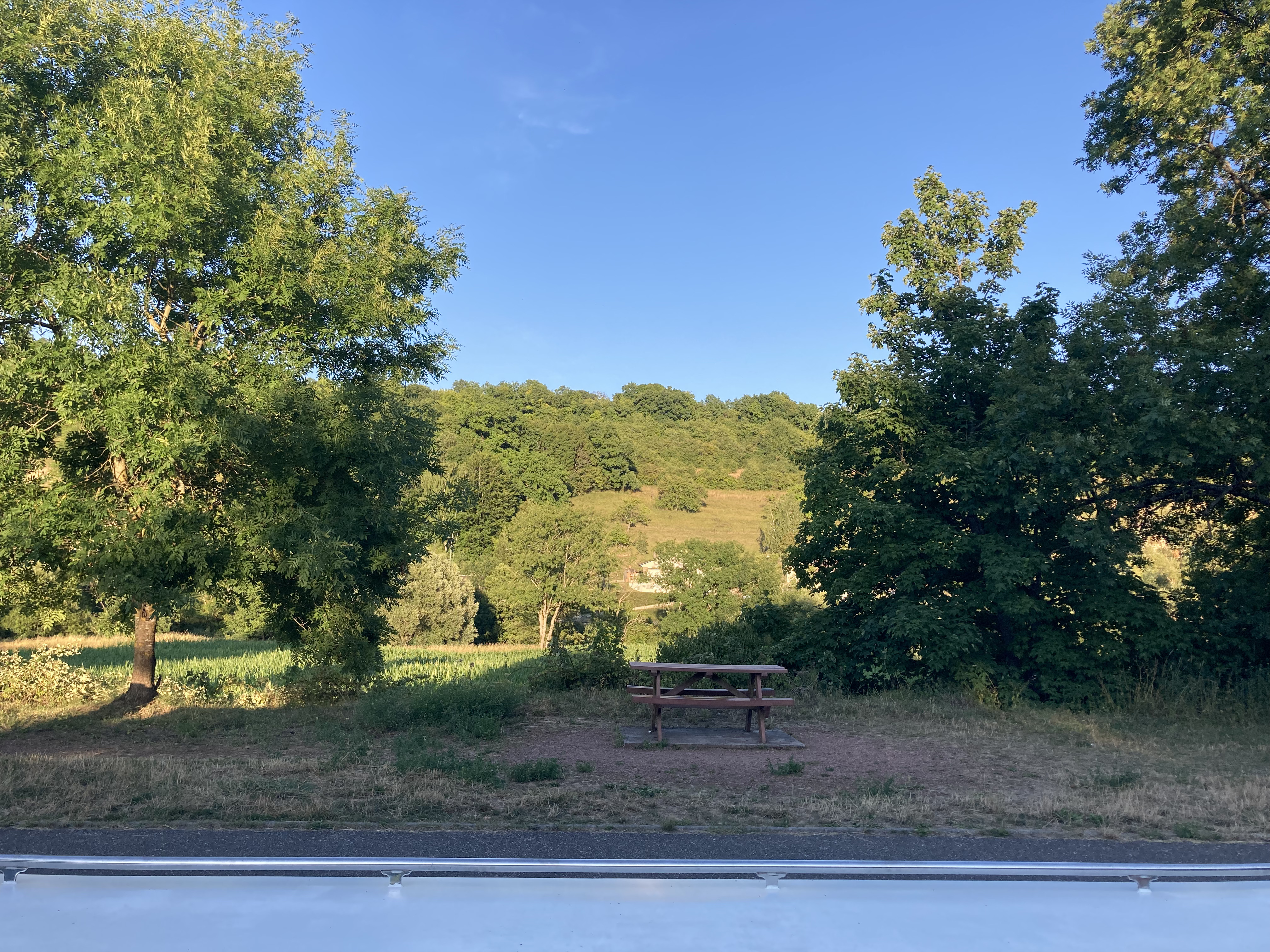
At this point the river Sarre is canalised, with the canal passing along the side of a valley, about half way up, and the river Sarre down below. We had a lovely view across the valley from Calliope, and a picnic bench in the shade should we be a bit warm on the boat.

I tried, without much success, to get a photo of the bridge over the canal (next to the lock) and the bridge over the river (in the distance on the left with a car gong over it).

This was just to demonstrate now close together the two waterways are at this point.

One of the daft things that I try to do!

In the opposite direction we could see the fascinating Zetting church, at the top of the hill above the village. The tower was very old, ninth century, and originally a watch tower. The nave is romanesque and the tall choir is C15th. The history is fascinating and worth reading of you like churches. https://www.roundtowerchurches.net/rest-of-europe/france-zetting/

Stu and I walked up the rather steep hill, through the village, to the church.

I was hot!

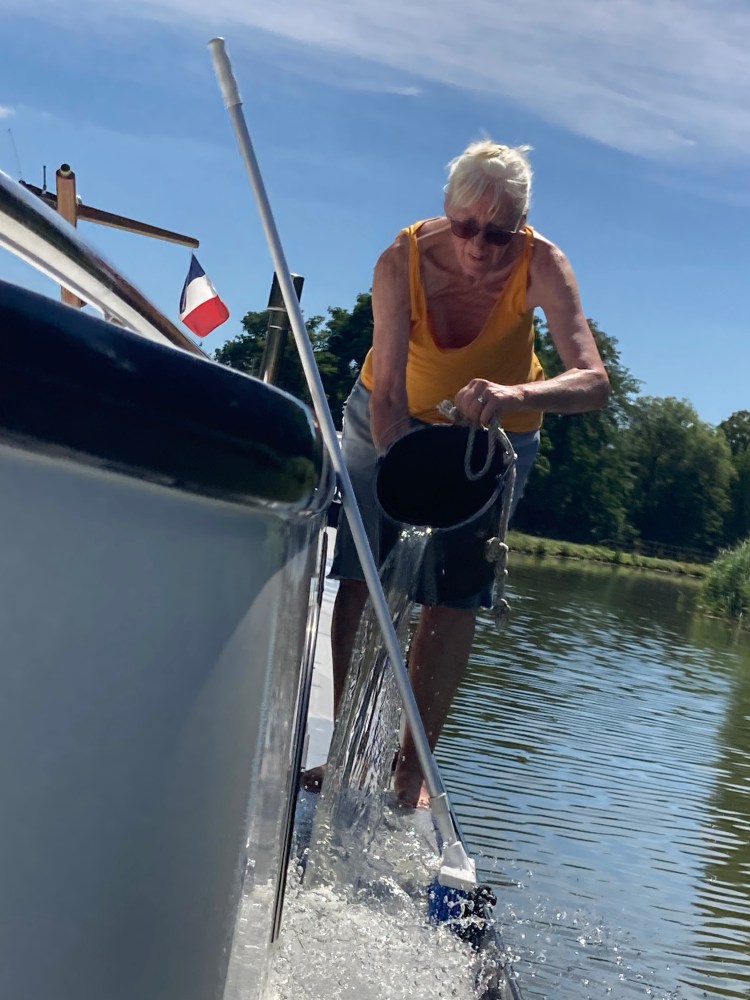
Zetting was an ideal place to get a bit more barge cleaning done. Although we have a pump and hose I do rather enjoy sluicing the deck (and myself) down with buckets of water, especially on hot days.

(Whoops, two photos of me in a row.)

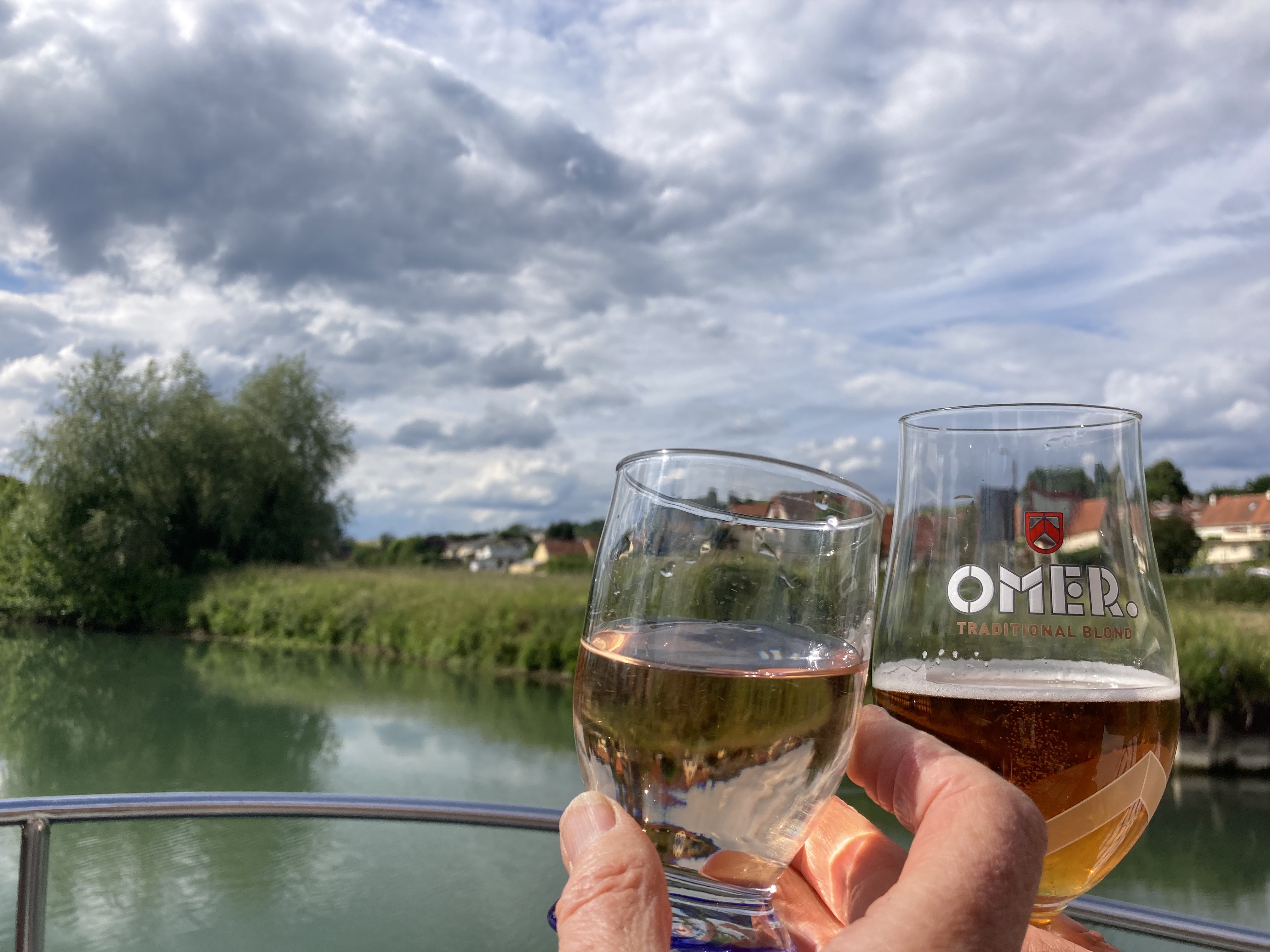
All of this ‘effort’ led to the reward of a cold Kriek beer at the end of the day.

There was beer for the Captain too of course.

And a quiet night at Zetting. Mmmmmmm, zzzzzzzzzz.

The following day’s journey was on to Sarralbe, with the canal running right against the river Sarre at some points, making for beautiful scenery and vistas.

It is not a long journey – maybe 3 hours in all – and with a couple of points of interest.

We were well and truly back into France now, and the PK (kilometre markers) were in a new French style. They are very clear and have totally replaced the old stone markers along this canal.

It was also fn to see the vivid green ex-lock keepers house at écluse 21. It is now a VNF office and the larger buildings next door, presumably storage areas, are the same height colour.

Day after day the temperature was around 30°C and harvesting was well and truly under way, leaving behind views of my three favourite colours – blue, green and yellow.

All of this made for a pleasant trip to Sarralbe – so named because it is where the River Sarre meets the River Albe.

A completely renovated port is now available for bateaux de plaisance to enjoy. There is a long pontoon with electricity and water, plenty of bollards, goods rubbish facilities and – it’s all free! A park with paths and shrub style planting pins alongside, all gradually maturing; in a year or two it will be even better.

We tied up at one end where we would be shaded by trees later in the day and had lunch. Then we set put for our usual walk around a new town. What we found amazed us!

Almost every roof and chimney stack had storks on their nests!

We later read that there are about 37 breeding pairs in Sarralbe and that they have been encouraged for the past 15 years to next there.

We were fascinated!!!

Of course there is more to Sarralbe than storks!

The twin steepled church is magnificent (and even here you can see the white markings on the roof of the stork inhabitants)

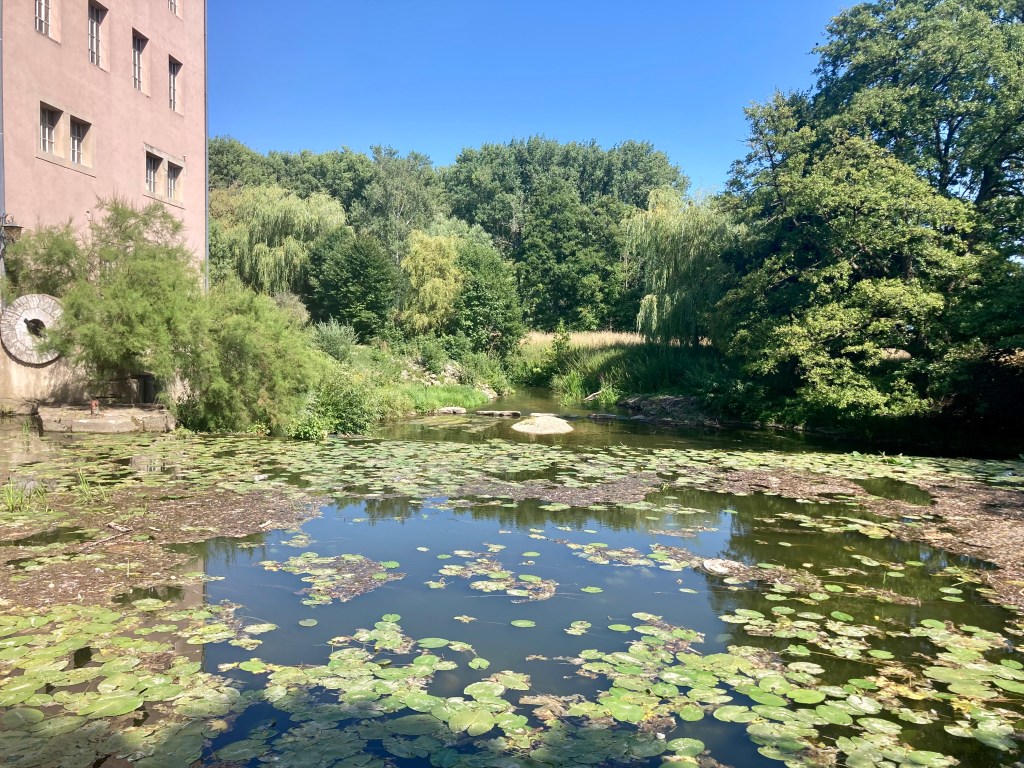
Then ther is the old mill and mill pond on the Albe – peaceful now but with busy industrial history.

And for those who’ve read a few of these blogs over the years – there was the shadow of a lavoir!

A tiled roof shows where the locals would come to rinse hew soap from their washing and exchange the latest talk of the town. The notice tells of those times now gone and how it looked on the past.

All of this was in temperatures of 30°C+. Captain and I had worn hats and sought shade as we walked the quiet streets. But this was not enough for crew, who could not resist the cooling effects ofnthe fountain on the way back to the barge.

Despite the charms of Sarralbe and the very pleasant port, once more we only stayed one night; we were on a deadline to reach Strasbourg in time for family who were coming to visit.

We were also very aware of the weather forecast and the top even hotter days ahead, so set off towards a known shady mooring next to écluse 16.

Soon after we set off on the Canal de la Sarre we found ourselves passing over the River Albe on an aqueduct. There is something marvellous about one waterway passing over another; they always delight me.

Our next lock clearly indicated when it was built – some 108 years ago.

Quite a few of the locks have inset stones like this – some more decipherable than others.

And my ability to get a photos will usually depend on whether I am needing to work hard with the rope, or have an easy ride!

The cruising time on this day was around 4 hours.

We knew we we must be nearing our destination the we saw the lovely little lock house for écluse 16.

Good to see that this lock house is lived in. Many of the empty ones are available to rent at a low cost once you have entered into a contract with the VNF to repair and maintain it.

We ‘sailed’ on, enjoying the shade, and enjoying the free flow of air through the wheelhouse with the windscreen down.

And then we arrived, to find a perfect spot at the end of the quay, with shade creeping across the grass towards us, boding well for later on the day.

It did not take long to set up a cool lunch under the trees!

We passed a pleasant time at Écluse 16. There is a ‘posh’ restaurant there, sadly closed on the day we moored up, so we provided our own supper and had an early night.

During the afternoon a barge passed by in the opposite direction, carrying the purple, pink and orange flag of the WOBs (Women on Barges). I too am a member, as was the lady on the boat along the quay. We are a friendly bunch, and a bit of chatter rang across the water as we all quickly said hello and farewell.

Note the assortment of drapes the boats deploy to give shade. The was an unusual heatwave for this part of the country and I was glad of our experience in the South on the Canal du Midi where we had invented good shade techniques!

In the morning we realised there was a small problem with emptying the black tank, which was three quarters full. Captain turned engineer checked and cleaned the pump valves, but this did not bring success. The obvious solution was to go to a pump out and empty the tank that way, but we were not sure of the closest one.

Luckily my WOB friend from the night before had a sensible solution. She suggested a mobile pump-out service, such as would go to empty a septic tank at a house. So anticipating there being more chance of finding a local ‘vidange’ service closer to civilisation we decided to make a run for the end of the canal that day – a rather hot one!

Apart from the heat the cruise was lovely, with the canal passing through large areas of lakes on both sides.

We were due to see plenty of locks and their lock keepers houses. The one at éluse 16 is now a restaurant, as mentioned. But most stand empty. Some are large, some small, and all a sad sight compared to their importance in the heyday of canal coal transportation.

In fact there were 15 locks to go through, so I invented a ‘very-hot-weather’ dress style. I kept a bucket of water outside the wheelhouse with a long sleeve cotton shirt in it, and each time I went to the bow for a lock I put on the soaking wet shirt. The water evaporated as we went through the lock, keeping me cool! That plus a hat and lots of water to drink kept me fit. The Captain did the same, minus the wet shirt!

As we approached the end of the canal, after lock 2, we came to one of the last moorings at Pont Albesch. The canal widens here and there is a long quay, some of which is very suitable for mooring, and shady in the evening. We moored up, had lunch, and began to search for a vidange option.

It was the Captain who came up with an answer. He searched for farmers who empty tanks of various kinds as a side-line, and found one ……. within sight of the mooring! The nearest farm to us, whose cows we had been watching (you can just see them in the photo above), also ran a licensed vidange business! How lucky was that???

Having worked out the French for ‘can you empty a tank on a boat’ in French I rang and was soon in conversation with my new friend Eric. He came to look at the task, agreed he could do it and promised to be back after milking the cows that evening.

With this good news I relaxed and went for a cooling swim.

I frequently swim in the rivers and canals – especially if I can see plenty of healthy fish.

I keep my head above water and take a shower when I come out. So far no ill health has befallen me.

It turned out that a farmer’s work is never done; when Eric had not reappeared at about 8.30pm I walked up to the farm, and was introduced to his cattle. I love farms and livestock!

Eric and I agreed that it would be best to leave it for the morning, and as good as his word he was there at 8.30am, with tractor and pump. He and the Captain disappeared into the engine room, where Eric lovingly stroked our Beta Marine engine before connecting the pipes.

Within minutes our black tank was empty, any possible blockage easily removed, and we were ready to bid au revoir to our new friend.

Thank you Eric, and thank you to our WOB friend for the totally logical suggestion.

Off we went to complete our journey on the Sarre / Saar and its associated canals. At the final lock, 1, it was time to hand back our trusty remote control.

All the instructions are there, in three languages. And after some careful peering, without his reading glasses, the Captain returned the ‘tèlecommand’ to its rightful place.

This was all done in a little purpose built modern VNF office on the lockside.

And it was pleasing to see that the lock keeper’s house was being lived in.

The remainder of the canal, we knew, had more big étangs, or lakes, either side. But the banks were built up and we could not see them. All we could see was the circling black kites, watching for fish far below.

It was not long until we were turning to port to join the Canal de la Marne au Rhin Est.

It would only be a few days until we arrived in Strasbourg!

And our cruise down to there is the next edition I must write!

Savouring the Saar in slow time 1

Part 1 – the German stretch : 29th June to 14th July 2022

We turned onto the Saar at 1005 in the morning, saying goodbye to the Moselle which had been our friendly waterway for the past 11 days, and to Luxembourg where we had moored for the past four nights. Now we were in Germany and the scenery was immediately different; the vineyards disappeared; wooded valleys lined the banks.

Before long we were into our first Saar lock. We had been told that the left side (in our direction) would have floating bollards, an asset in these deep locks. With the usual great German engineering the locks operated smoothly and our ascent was gentle!

We discovered a new waterways sign on the Saar – the two white lines on a blue background.

It means that two boats can moor alongside each other between the signs, presumably because the river is wide enough at that point.

The words underneath mean it is suspended in winter service (Google translate) but dont depend on me for the interpretation.

Before we left the Mosel and turned onto the Saar we had phoned ahead and booked ourselves two nights on a pontoon owned by a restaurant in Saarburg. Usually we cruise in fingers-crossed mode, and are very rarely unable to moor at our first choice. On this occasion, however, because we much preferred the idea of mooring beneath the castle at Saarburg rather than at the main mooring just outside of town we booked ahead for this ‘two-boat’ pontoon.

It was a good decision. We were then right next to this marvellous old town and could explore it easily. It is a fascinating place as you can see from these photos – quite a history.

We did climb up to the castle one morning, going before it got too hot. I think we counted 381 steps up to the very top of the tower.

Well worth it for the view! No wonder a` castle was built here.

We could even see Calliope far below.

Somehow we still had the energy for a bit of fun right at the top!

As well as getting to know the old town itself, walking the narrow streets, we also went to two of the museums because of the industrial heritage each displayed.

Just behind the mooring is a bell foundry, now a museum, but it feels as if the workers have just gone home for the night and will be back tomorrow. The making of a bell is an ingenious and time consuming process – especially making sure it rings the right note!

These photos show something of the place, but one really needs to be there to understand it all. One thing that stood out for Stewart and I was that the moment of pouring the molten brass into the carefully constructed mould is so important that the priest from the church that had ordered the bell would come to the foundry, with other dignitaries, to say prayers for a safe casting.

The other museum that attracted us was the watermill museum. Water cascades through the middle of the town, although that was not its original course. Alongside the cascade first one, then two, then three watermills were built to mill a variety of products. Two of these buildings now form a museum, with the water still pouring past and turning waterwheels.

After two days and nights in town we set off for the country leaving the pretty and historic town of Saarburg behind.

We soon had another lock to rise up through. And this time I was fascinated by the structure of the gate at the top end.

Looking up from the depths I could see lines of small circles against the sky.

And down at my level there were much bigger circular spaces too.

They seem to be designed to let the water through in a slower more controlled manner – but I am happy for any engineer to correct me.

Then as we rose up I started to see the huge arcing mechanism that would lower the door in a curve to take it below the level of the water when the lock was full.

This would allow barges to move over the door and into the river.

Fantastic! And a far cry from the lock gates of centuries gone when there would be big beams of wood for the bargees to push in order to open the doors – but the locks were much much shallower then!

For those as nerdy as me, or just fascinated by the movement of water, here is a little video of the gate going down, and the river beyond.

There are several long long quays along the Sarr (and other rivers) set aside for commercial barges to take a break overnight, at weekends and between jobs. Most of these have 20m at one or both end where Sportsboots (as we leisure boats are called in Germany) can moor.

We were off to sample two of these, passing along a spectacular river valley on the way, still with a few vineyards to be seen! And a chance to get the bed linen washed and dried before our guests arrived.

We arrived at the first long quay, at Hamm, on a Friday at around noon. We were pleased to see only one boat – a work boat – moored on the entire length. Surprisingly this was moored at the very far end, and was more than 20m. The other end had a sign for boats carrying dangerous cargo – definitely not us – so we went and moored behind the work boat, which was empty and seemingly there for the weekend.

Yes, that is little us, dwarfed by the landscape and the work boat!

The views to the vineyards on the hills opposite were lovely, though slightly spoilt by noise from a road opposite.

We went for a walk around the area – all countryside. It was definitely sunhat weather, and we were pleased to find a seat in the shade half way round! Then we settled down for the evening. In fact we settled down for two evenings, staying there a second night.

Just a couple of extras for this mooring – a visit from a silver fritillary butterfly and a fly past by an air balloon.

The next section of the journey was a part of the river loved by hotel and passenger boats, because it goes through Mettlach, historical home of Villeroy Bosch, and current home to one of their factory outlet shops, right next to the river.

This meant that when we reached the lock at Mettlach we were told we must wait to use the smaller of the two locks until two passenger boats had left Villeroy Bosch and gone upstream through the lock.

This was the first time on the Saar that we found the large (commercial barge) and small (private and smaller craft) locks side by side – a feature we saw often on the Moselle.

Not a problem; all part of life on the water. We tied up in sight of the lock and had lunch while we waited.

This voyage upstream towards our next mooring was even more spectacular, than the day before, including a hairpin bend with high wooded slopes each side. A wonderful ‘lookout’ has been built at the top, right on the curve; we could just see people way up above us, looking down.

This photo may give a better idea of the scale, as we cruised on up river away from the ‘treetop walk’.

In case you are going to be in the area, here is its website:

https://www.baumwipfelpfade.de/en/saarschleife/

Not far then to Schwemlingen, the second of our long quays.

This time there was a cabin cruiser at the far end; we went to tie up next to it. We liked it even more than Hamm and stayed three nights. A big commercial barge came and went and a couple of other Sportsboots visited for a night or two as well.

The commercial barge was carrying its family as well as its cargo and it was wonderful to see how the youngsters made use of the on board crane for fun.

It was getting hot, and they certainly had the right idea, putting the river to good use.

We too had a ”keep-cool’ strategy! As the weather warmed up we took advantage of the breezes by opening up the dog box on the roof. It somehow makes Calliope feel even more summery!

While we were there we took a walk over the bridge to Besseringen to find a bakery, and anything else of interest. We did find some nice bread, and an interesting piece of art at the end of the village hall, but little else to be honest.

We were entertained one evening by the local fireman and women coming to practise their rib and man-overboard skills, plus the whooshing of hose practise into the canal.

And we were certainly entertained, if not enthralled, by the sunsets!

While we were moored up we had seen a lovely old tjalk pass by and had exchanged happy waves with the crew. Next day we found ourselves passing them, waving again.

Then at the next lock, with only a large commercial lock to use, we were asked (told!) to wait for another boat.

And after 15 minutes or so, who should arrive but the tjalk and crew!

We would have been happy to share the lock with any boat, but it was particularly nice to get a bit closer to this lovely boat and crew.

Captain Stu, being at the stern, was able to have a good chat with them as we slowly rose up to the top.

waved

We continued on our way, with fingers crossed, towards Saarlouis. We knew that the pontoon there was only about 40m long. Luck was on our side and we found a half empty pontoon to welcome the ‘just-under-20m’ Calliope; smiles all round.

Saarlouis rather took us by surprise. We had done no research beyond knowing that there was a big supermarket near the mooring.

What we were not prepared for was finding a town immersed in the history of Franco/German conflict. At one point in time Louis, the Sun King of France, ordered Vauban to build fortifications here – and many still remain.

Also there are lovely narrow side streets in the old part of town now given over to café and bar culture. We sat ourselves down and enjoyed salad with a local ‘pizza’ – the base was made of good German potato!

We were only supposed to have one night on the pontoon, but we sneaked in a second one (sorry to disobey the rules, but no other boats came along wanting to moor there). This allowed us to see a bit more of the town, and to stock up on beer and wine before our visitors arrived. Bizarrely the huge supermarket had hardly any beer and no wine boxes so we had to find a drinks store – an easy enough thing to do.

We also got our first view of the Saar Polygon. This is a monument commemorating the coal mining industry in Saarland, which ended in June 2012. As you move around it it appears to change shape – a very clever piece of design.

I keep giving weblinks in this blog – but there are so many things that I’d like you to know more about than I can describe or photograph. So here is a link to the Saar Polygon.

I tried to get a few photos as we cruised nearby to catch the different perspectives, but alas the best I got looks almost the same as before. So I have added a couple of other things I likes along the way – a church that I think is at Bous and some colourful buoys.

Next stop – Völklingen. We knew it was a popular mooring because of the UNESCO Heritage status of the huge Ironworks (steel mill) museum. As we got close we saw the magnificent outline of the old industrial site that we would soon be visiting.

We had left early, for us, to make sure that we got there in time to secure a mooring for the next few days. It was a Friday, so a little anxiety about lots of boats turning up for the weekend.

We need not have worried. We arrived to find a long empty pontoon apart from a couple of very small boats that seemed to have long term moorings. It was far lovelier than we had hoped; we had expected something rather industrial, but in fact it was a quiet mooring with nice scenery around.

We got secure and then began the fun of registering with the town hall, in German. My German language skills date back to school about 60 years ago, and were not great even then! But Google Translate came to the rescue and we registered, and got the code to the pontoon gate so that we could get back in.

We had a relaxation day before son and grandson would arrive in Saarbrucken, following their flight to Luxembourg. That allowed us a walk around town, on both sides of the river. The steel mill side was quiet and typical of a town that has had a busy industrial past, but is now mostly a suburb of Saarbrucken. It does have two good looking buildings with verdigris weathered roofs. And some great street art running through a subway – this is about a fifth of the total work.

We also had an external view of the Ironworks, or steel mill, that would be our focus on Monday.

So awesome against the blue sky – but of course when it was a working site the sky would have been sulphurous yellow and smoke would have obliterated all the structures.

The mooring was also by the ‘Alte Sluis’, or old lock, that served the steel mill many years ago. It is now a quiet place for turtles, kingfishers, green woodpeckers and photographers!

Apparently the European ‘pond turtle’ is now quite rare so we were lucky to catch a glimpse.

And a glimpse is about all I can include here!

By the end of Saturday we were pleased about our early arrival. We had visited the local supermarket and stocked up on German delicacies, beer and wine ready for our guests and sat back for a quiet evening. We celebrated being there with a gentle G&T on the back deck, and waited to see the sun go down.

The next day the pontoon completely filled up with friendly German and Swiss boat crews! So our advice to you is arrive Monday to Friday, as it seems popular at the weekend.

There really was a surprising amount of wildlife around.

This musk beetle turned up to delight us – I had no idea what it was, but Google helped!

And on a more ordinary note, the two Völklingen swans came by to help me get rid of all our old crusts.

(I too have read that I should not feed bread to swans, but everywhere I go I see them thriving and see people giving them bread, so I don’t know.)

Sunday was not really about Calliope cruising, but as it was our main visit to Saarbrucken I have included it. We bought train tickets online to go and meet Ashley and Harvey, walked up to the station and were pleased to see it was not long to wait for the train.

But a slight setback occurred when the train came in! Everyone on board was wearing a mask (Covid) and ours were back on Calliope 15 minutes away! So crew made a mad dash back, returned with masks and we were on the next train. Phew!

Saarbrucken is a big modern city with some genuine old features. The area around the town hall and Sant Johanner Markt is lovely. We ended up there for a lunch of worst and frites while waiting for the airport bus to arrive.

We also walked by the river and looked at the potential mooring – very nice and green on that side of the river, but with a full motorway on the other bank. Not for us then!

Once back in Völklingen with family we had an evening on board catching up with news and planning the next day.

This blog cannot do justice to the amazing place that is the Ironworks museum. When we went there was also a music video exhibition in the Blower Hall, so here are a couple of photos from there. TRhere was everything from Madonna to Peter Gabriel, Ganman Style to Queen, Leningrad to lots of things I’ve never heard of!

I hope this photo gives a sense of scale – yes that’s me by that big wheel – not a doll!

This is where the ‘blast’ originates for the blast furnaces that we saw later.

One of the things I most loved, both in the blower hall and throughout the steel mill, was the sense that the workers had just gone home; that they would be back.

Their tools, work clothes, and things like coffee mugs sat waiting to be picked up and used again.

Then the steel mill itself is so large and complex all I can do is add a few photos and a link to the web site – but it is superb! We explored it top to bottom.

So here are a very few of my photos, and the link to the wonderful website to give you a much fuller experience, and a longing to go there yourself!

The views from the top were far far reaching in every direction, and Harvey was proud to have his Pompey (Portsmouth FC) shirt taken to new heights!

By the way he doesn’t have pale blue hair. We all had to put on blue hair covers before we put on the hard hats!

Some of the steel mill complex has now been allowed to go back to nature; watching nature reclaim the area is wonderful, and we were all glad of the cool green spaces after the hot metallic ones!

Throughout the steel mill there were pieces of urban art, far too many to display here. One installation I liked was a careful placing of old work lockers – genuine lockers from various industries across Germany.

What they had in common was their connection to the people who used them – people who clocked in each day, hung up their home clothes, stored away their lunch boxes for later, and sometimes wrote little messages to themselves or others.

and a little more of the urban art ….

One exhibit was rather alarming!

Especially when it seemed to pick Harvey up and look round for somewhere to take him!

Luckily we rescued him from King Kong’s clutches.

It was exhilarating, informational, and exhausting – so we recovered in the museum beer garden before heading back over the river for supper in a Turkish restaurant.

[I am just wondering whether to share with you my most fun moment of the day ….. it does make me laugh so I hope it will amuse you too ……… ]

Enough of that nonsense!

Ashley and Harvey wanted some cruising on their short holiday; we planned to spend a day carrying on southwards, up river, through Saarbrucken, to Sarreguemines.

The journey was lovely, passing by interesting locks, villages, and of course through Saarbrucken.

For a while we were cruising midstream between France, on the starboard side, and Germany, on the port. Although this is obvious it really helps to make clear how often rivers are borders, and areas for battles – hence the many castles we have seen.

We reached a very different lock on the outskirts of Saarbrucken. We were in a new freycinet sized lock, with obvious work going on alongside. It looks like a big commercial size lock is being built there to allow more working barges up the Sarr.

It was quite funny because the sound emitted when one raises the blue lever to operate the lock is more like an alarm bell! It certainly caused me to check I had not pushed the red alarm lever!

The next lock was at Grosblieberstroff.

We went up the lock easily enough and sat back at the top waiting for the gates to open.

But they didn’t – and it was a few minutes before it sank in that all the notices on the nearby building. in three languages, were telling us that we needed to collect a remote control to use at all the locks from here to the end of the Canal de la Sarre!

Once the remote was collected the gates smoothly opened.

We were soon underway again, cruising in the most beautiful weather, with the front windscreen down and a happy Captain who was in both shade and breeze at the same time.

Both the additional crew members helped out at locks and, in Ashley’s case, at the helm as well.

Calliope is a lovely boat for two to handle, but it is still a treat to sometimes have someone else sitting out i the sun!

We still have to give them some time off!

The last lock, on the edge of Sarreguemines, was essentially the border and we passed back into France from Germany; time to change the courtesy flag again!

(I did say that this was the German stretch of our Saar journey, but I will allow myself a few extra hundred yards just to complete our time with Ashley and Harvey aboard.)

We knew there was lots of pontoon space there so were initially a bit despondent when it all seemed to be full of boats. Then we saw a third pontoon with only one boat. Hooray! We were soon secure on the mooring, and not long after another boat joined us, so three in a row, next to a park.

To cut a longish story short, it was mainly empty because of its proximity to a footbridge from where Bastille Day fireworks would be set off the next day. Officially it was ot of bounds for 48 hours. though we were n ot aware of that. But the Capitaine said we would be fine and we settled in with front-row back-deck seats for the spectacular the next day.

It was an easy place to settle in to. We were moored almost on front of Le Casino des Fäienceries – now a restaurant but built by Paul de Geiger, director of the Faïenceries, who had it built in 1878 to provide a meeting place for his employees. We were also treated to lovely evening skies and many wonderful floral displays – this one on the passerelle (foot bridge) just by the mooring.

As Ashley and Harvey had not had a chance to see Saarbrucken, and we all had the summer special €9 train tickets to go anywhere in Germany for a month, I returned to the city with them for another wander. Drinks and ice cream were the main requisites as we walked round!! Somehow the only photo of the trip was waiting at the station!

It has to be said that it was hot both in the city and back in Sarreguemines. We were in the shade a lot of the day, at the edge of a park, but even so we were looking for ways to cool down

Grandson had one.

And we all had another!

This was quite an eventful cooling, with Stewart spitting out beer, plus a wasp(!!!), and Ashley somehow knocking over a full 50cl of beer, trying to rescue it, the glass breaking and him cutting his finger!

But all was soon returned to normal. mainly due to a very lovely and efficient waitress, who immediately appeared with elastoplast, a new beer, and jugs of water to clean up.

The night that ended with fireworks, and began with the usual bustling fun of a French town partying. We found somewhere to get beer, Creamant, burgers and chips, with plenty of music up and down every street.

Later we watched one of the best ‘feu artifice’ displays I have ever seen outside a major city. They were doubly fabulous because of the reflections in the river alongside Calliope. Thank you Sarreguemines.

All too soon it was time for Ashley and Harvey to go home. We began by walkng through the park and over the passerelle towards the station. Then they reversed their journey from 4 days before, by train to Saarbrucken, bus to Luxembourg and air to London. Stu and I walked with them to wave goodbye, then back to a quiet empty boat.

It was so lovely there in Sarreguemines that we stayed an extra night and visited the wonderful ceramics museum and gardens – but that is in the next blog – the French part of the Sarre!

One river; three countries

170kms of La Moselle, travelling through France and Luxembourg …………. looking at Germany!

16th to 29th June 2022

We left Toul part way through a heat wave, with temperatures in the higher 30°C expected for the next few days. We were still on the canal de La Marne au Rhin for one km, going under two very different bridges – one that was part of the original fortifications around the city, and the other a modern lift bridge.

Then we went through two locks at right angles to each other and dropped down just over 6 m to join the river Moselle. At the second of these locks, 27 bis, the window of the old lock office had been replaced with a mirror! It’s me having fun – definitely not being vain.

And then we were on our way out to join the river.

In all the Moselle is 545kms long so our travels, just beginning, were along less than a third of its length.

The first section of the river, towards Pompey and onward to Metz forms the northern arc of ‘la boucle de Nancy’, a vaguely circular set of waterways comprising La Moselle and La Meurthe which go through Nancy at their south-eastern edge. It is an attractive stretch passing through lots of countryside, and in areas the river widens out to form lakes covered with swans.

After our ‘loop’ down the Moselle and up the Saar we would be heading for Nancy and see more of the ‘boucle’. For now the northern arc was our direction, and a gentle 16 kms of that on our first day.

Boating friends had told us of an ultra shady mooring at Liverdun, ideal for enjoying two or three extra hot days. There were two locks along the way and at the first we found a yacht form the UK waiting for us so that the lock keeper could drop two boats down together. They looked even smaller than us in the mighty cavern of the second 7.3m lock at Aingeray.

It was one of those locks where we needed to move our fore and aft ropes down the ‘step bollards’ in the wall of the lock.

Pleasantly, in this lock, the bollards were a comfortable distance apart for Calliope, although not quite as easy for the yacht who had to take both ropes to a mid point , and share step bollards.

Following the yacht, Magic Hen, along the river we realised that they were heading into the almost hidden entrance for the Liverdun mooring, and its 20m pontoon …….. would we both have space to moor there?

Luckily the answer was yes; the pontoon is ‘moorable’ on both sides and soon we were both secure in the small inlet with trees all round.

There was only one thing. At this tine off year, midsummer, the sun is so high in the sky that there is never any shade until sundown! Ah well, with our usual selection of parasols and drapes we will keep Calliope cool enough.

And there were colourful picnic tables under the trees just right for meals and drinks with new friends in the shade. (We discovered that the crew of Magic Hen were not only from the UK, but were from Winchester – a city we know well and not far from our town home).

During our stay there we went for a walk up (and up) the hill to the old town of Liverdun, perched way above the mooring.

There are many interesting old buildings up there, including the chateau and the church. There are also great views up and down narrow streets, some with pieces of artwork to decorate the way.

There was even a very smart lavoir building, dating back to 1901. Prior to this the washerwomen of the village had to go right down the hill to the river, then carry it all back up again!

I’m hoping that my photo of the sign outside the lavoir will give you an idea of the change for the local villagers!

It was easier on the way down!

We were also there on Farther’s Day – and had a great surprise. Our daughter called to wish the Captain a Happy Father’s Day, and said that as she could not take him out to lunch she had transferred some money so that we could go out for a meal courtesy of her!

Straight across the inlet from the mooring is a casual bar restaurant with plenty of trees and umbrella’s to keep customers cool. An evening stroll round the water meant we had a wonderful few hours eating and drinking. I think that looks like a happy Father/Captain!

The assiette of cheese and charcuterie to keep us going until our food arrived was HUGE! Sadly no room left at the end for any of their tempting desserts.

And all within sight of Calliope – actually about 50 yards away, although it looks like I could touch her. if you are observant you will realise that we are now on the inside of the pontoon. Magic Hen had gone, so we moved onto the slightly shadier side and were later joined by two holiday boats for the night.

After three nights at Liverdun the weather cooled a bit and we decided to move on down the Moselle to discover more of her charms, starting off under the bridge at Liverdun – a long and graceful arched structure.

The first lock and town we passed was Pompey – a special for me because that is my home town, the nickname of Portsmouth. It is not an exciting or scenic photo I’m afraid.

We passed various riverside industry that day, from the derelict to the functioning. I love the colour and structure that they add to the landscape.

Calliope cruised on until we reached Pont-à-Mousson, named after the bridge that went over the Moselle towards the hill named Mousson where a castle once stood.

We found the hoped-for mooring empty – one that has a notice suggesting that only VNF and commercials to use the space but the DBA (Dutch Barge Association) mooring guide says it is commonly used, so we used it and had no problems! It is a dead end start to the re-routed Meurthe river, and a nice place to stop.

There is a big abbey the other side of the Meuse, seen here through the huge windows of a building that is the covered market, open on a Saturday. Sadly, for me, we were there on a Monday!

There were other lovely historic buildings and quirky modern additions around the town, seen on our quick walk in search of a shop that sold fresh milk! The old lavoir building on the left now seems to be a centre of music, both learning and performing, and on the right is an innovative way to encourage people to recycle their plastic bottle tops – to my mind a great idea that could be adopted all over the world.

I went for a second walk later, round the park and leisure grounds adjoining the mooring. It was great to see all kinds of sport going on – tennis, boules, football, a gym, rugby – and a stunning sky as a backdrop.

We had planned just the one night stop here so were off next day after breakfast, passing by the afore mentioned abbey at closer quarters.

Before long we found ourselves part of a little convoy of four bateaux de plaisance, moving dow the Moselle through lovely scenery on another blue day.

Calliope shared a few locks with them – plenty of space for all.

And in one lock I saved the life of a little fish caught on the platform of a bollard in the wall as the water drained from the lock!

My good deed of the day.

Now we had a different set of sights to take in. On the left is part, I think, of an old roman aqueduct. Certainly there is one in the vicinity, so I hope this is part of it. And secondly the paraphernalia required on the water to repair a bridge from below.

It is one of the delights of our cruising life to every day be gently (mostly) introduced to interesting and/or beautiful things to look at. To be honest it is the main reason we chose to do this wonderful crazy thing, seeing Europe from the waterside rather than the roadside.

We were heading for Metz, apparently a vibrant historically interesting city. To make sure of our place there for three nights we had contacted the Capitaine of the port and reserved ourselves a hammerhead mooring. Unfortunately it was not to be. When we arrived another, much shorter, boat was moored across ‘our’ hammerhead and refused to move. The Capitaine could not be reached by phone and was not in her office – so after hovering around for a while in the middle of the port we decided to leave Metz to another day and find ourselves a good mooring for the night.

Continuing down the Moselle our nerves were soothed by the countryside around us, including this little old watermill on the eastern bank.

We knew, via the DBA, that there was somewhere to stop in an old unused commercial port, miles form anywhere. That sounded like our kind of place – and it was!

I had imagined lots of old half-ruined buildings, rusty cranes etc. Instead we found that all traces of industry had been raised to the ground, apart from the old quayside, and nature allowed to take over. We were moored to a high sheet metal piling quay – always a slight challenge for fendering until a commercial boat or two had passed the entrance to the port and we had tested our method.

The weather was heating up again, so time for some shade to be added to the back deck, and for the Captain to take a rest from a longer day at the helm than planned (I expect I took a turn – I always offer!)

Then all was calm.

Now some might look at this mooring and think it awful, but I suspect those of you who read this blog read it in part to see how peaceful the world of inland waterways can be – so this photo is for you.

My final two photos from PK287.7 are these – our damsel fly visitor – the only visitor we had that evening – and the final view over the top of the sheet metal piling before the sun slid below the horizon.

One task I had set myself for that evening was to find a mooring where we could book in for a few days, top up with water (although we still had almost half a tank) and top up with food. I chose Basse-Ham, and what a good choice that turned out to be!

But first a mini-review of our journey there – all good!

First of all, on a grey but warm summer day, we came to our first double lock at de l’oren. This is where one of the locks is a much smaller one for leisure boats – see it here on the left just after we left it. On the right is the ‘grand écluse’ we have usually been in.

Not much further down river we passed the one remaining furnace complex of the old steel mill at Ucknage, now a museum piece with exhibition hall.

Although interested, we did not stop as we had plans for another revitalised old steel mill on the Saar.

Then another lock experience at Thionville where, despite there seeming to be a small boat lock we were asked to wait for the large one.

The waiting was initially moored to a long lead in quay, but when we saw the very wide commercial barge that was to leave the lock and pass us by the Captain realised we had better move one further out of the way so that the working boat could swing her stern round to get back on track on the bend in the river!

It is hard to see at this distance but I hope you can see that the barge is almost the same width as the lock. I reckon there was half a meter each side, if that!

As we left the lock and headed towards Thionville town there was a neat juxtaposition of bridges and modes of transport – shame there wasn’t a train passing lover the railway bridge when I took the photo!

It was getting on for lunchtime by now so, knowing there was a pontoon in Thionville, we quickly hatched a plan to stop for half an hour, buy readymade sandwiches as a treat and have a lunch stop.

But, as you can see from the skipper’s face, the Thionville pontoon was sadly in a state of disrepair. We could have tied up to it, but exposed metal might have scratched Calliope – a risk not worth taking for the sake of a sandwich!

There is always the making of a snack lunch on board – I forget what we had that day – and it was only 7kms to Basse-Ham.

We knew the port was next to an aquatic centre, and through a narrow entrance channel, so easily caught sight of the huge sailing/canoeing centre building, and the Port de Plaisance sign.

And there we were on our home pontoon for the next three days, with the skies turning blue. Apologies for the messy ropes and hose – we were still sorting out the mooring and the water filling at the time!

Just to try and give you an idea of how pleasant this port de plaisance was, we were surrounded by reed beds, still waters, and reflections worth keeping.

There was bird life to watch and be perplexed by. The kingfishers, magpies, crows, starlings, moorhen chicks and swans were easy to identify.

But this fuzzy creature, in fact a quite large startlingly black and white winged bird, with a pinky buff breast, foxed us for quite a while.

As did the very deep note croaking frog that was somewhere in the reeds, croaking regularly all day and night.

That is until we realised they were one and the same! The bird is a Little Bittern – a beautiful and relatively rare bird, especially in the UK, which is where most of our bird knowledge comes from. It hangs onto a reed, turns its long bright orange beak to the sky, and emits this strange deep sound. For those who are interested, this Youtube video is much better than the video I managed to take, although the sound of our bird was a lot louder! https://www.youtube.com/watch?v=oM-DslEki4Q

We treated our three days as a bit of a holiday. Evening one was a stroll round the quite large area of the Centre Nautic, with its campervan park, playground, beach volley ball, chandlery and quirky outdoor ‘bar-in-a-hut’. And a fantastic sunset over the river.

Day two was partly taken up with a longish walk to the nearest supermarket for a re-stock. It involved starting off around the port, and all the permanently moored boats that we could see from our visitor’s pontoon. (the sunflowers are growing a bit at last!)

We were the recipients of a random act of kindness from a couple in a car who, seeing us walking steadily under the weight of our purchases, stopped and offered us a lift! Merci beaucoup. Next time we will get the bikes out!

That evening the skies changed! We knew we were in for a storm and sat on the back deck watching the black clouds stream in from south, hearing the rolls of thunder getting closer and more prolonged, and eventually having our share of the downpour. I always love this, for two reasons. First I love the cosiness of the wheelhouse when storms rage outside, and secondly heavy rain always gives the roof a good wash!

We ended up with our share of the lightning too.

I always admire those who can get good photos of lightning. Here is my best attempt.

That certainly cleared the mugginess from the air anyway.

Next day, back in sunshine, we walked to Basse-Ham village; the port is actually next to Haute Ham. It is a short country stroll, part along by the river, and then back through the fields. It is altogether a lovely area to spend a few days in.

Time to leave Basse-Ham – next stop Luxembourg!

Stewart took Calliope carefully out of the port’s entrance channel into the river, where a large barge was just passing so he slowed down to let her pass.

It was ideal cruising conditions and we followed Rumardo at a steady pace, noting our move into vineyard country – the famous Mosel region!

The first lock was not far away so crew got kitted out ready:

  • headset ✅
  • sunglasses ✅
  • lifejacket (required on Moselle in locks) ✅
  • sun visor ✅
  • cheeky grin ✅

[And I have not decorated my right ear to look like the skipper’s profile!]

Before long we were passing the castle at Serck-les-Bains. This time it is not down to Verbaun, but to a student of his called Cormontaigne – although his is just the latest restoration. There has been a fortress here since Roman times, which more latterly has belonged to the Ducs of Lorraine. These days it is open to the public, but we did not stop; it is there for another day.

Now the vineyards are really becoming the dominant landscape – neatly aligned rows of grapes growing on every hillside, using all available space.

And then, 4 kilometres after Serck-les-Bains, we are at the border of France with Germany and Luxembourg.

As we go through Apach lock with another commercial barge I am scrambling around on deck to take down our French courtesy flag and get ready to attach one for Germany – and I am still scrabbling as the big boat leaves!

And then it was done! This is where the Moselle divides Luxembourg, on the left, from Germany, on the right. Unfortunately we had not managed to find a Luxembourgian courtesy flag, so our EU flag, and ‘Women on Barges’ flag, had to suffice for the starboard yardarm.

We motored past the famous Schengen, and agreed that we both still agreed with the Schengen agreement! There is a museum and a mooring there, but the latter is mainly used by passenger boats.

Anyway we were in a bit of a hurry! We had heard that the diesel at Schwebsange, the next port, was cheaper than most places on the European waterways, so we had a plan to fill up with fuel. If you are reading this years later, 2022 was the year when oil/ petrol/diesel prices were rising crazily, for various political reasons. So filling up in Luxembourg where the duty and tax on fuel was cheaper was a good idea.

It was a Saturday and we knew that the fuel pump closed at 2pm, and was not open again until Tuesday.

We arrived by 1pm, with a big smile on our faces, and before long we were moored up at the fuelling quay with 500 litres of diesel pouring in.

The Captain sort of kept a close eye on proceedings – you never want the fuel to overflow! My old orange striped trousers were ready to soak it up if necessary.

The Capitaine of the port, Pascal, is an interesting and charming man. He had reserved a good long space for us to moor and before long we were secure.

That left us free for a walk round the little wine-growing village of Schwebsange before the storm that was brewing arrived.

The village was neat, small, and at every turn a reminder of its wine heritage. It was like an outdoor museum of the history of grape glowing in Luxembourg – fascinating. We had planned to have supper in one of the marina restaurants, and Luxembourg wine was now definitely going to feature.

We had a fine supper. We sat outside on the terrace overlooking the river and marina.

Pascal joined us for a beer, and advised us on which wine to try – a Luxembourg Pinot Gris from the very hills we had been looking at – under two kilometres away. We were not disappointed.

Then we chose a very local dish – gromperekichelcher. They are a rosti style potato, but much tastier, much crispier, and in our case made even more delicious with cheese and bacon.

We wandered back to Calliope, expecting a quiet evening waiting for the impending storm, but were invited to join a couple at their camper van, and another boating couple we’d met a few days previously, for a good franglais style conversation. The few words of Luxembourgish I had learnt – moien (hello), äddi (goodbye), and the easier merci for thanks – were not much needed until we left. But we did try another very good local wine – a smokey Chardonnay from Remich, a few kilometres downstream.

All of this was a prelude to the storm. It did come. As it it began to splatter rain drops on us we all bid a hasty äddi and watched the storm unfold from under our own cover. At first it was mainly high gusty winds and the rain, all in a strange pink sky.

And then we had the spectacle of pink lightning to complete the show.

Wonderful.

Reversing out at Schwebsange

We finished our time in Luxembourg with two short cruises. The first began with Calliope going astern out of the Schwebsange port, past the fuelling quay and onto the river. The weather still looked heavy, but was dry.

Our mini map of locks on the Luxembourg Moselle, and then the German Saar (next blog) showed that we had one lock on each day’s cruise – today would be Stadtberdimus/ Palzem.

First stop was Ehnen, a mere 13 kms down river. We did not know what to expect and were pleased to find another small , old Luxembourg village which has been dedicated to winemaking. Its streets are narrow and steep, set in amongst the vineyards.

The village is working towards being a major part of the Moselle wine trail; currently the tourist office is open, but the museum is closed, undergoing a massive renovation – still 2 years to go before completion.

The quay we moored up to is part of the renovation, preparing for the cruise ships to disgorge their passengers for tastings and knowledge. It is work in progress, but for us was a safe, sound, quiet place to stay.

We walked up through the village and intro the vineyards where there is a hikers trail.

From there we could look down on Calliope – hard to spot if you don’t know where she is!

And at the bottom of the hill, where the mill stream emerges, is an old bridge which, in UK, I would probably call a pack horse bridge.

I tried it out – it works!

It is centuries old (I regret I forget how many centuries!)

I had planned just to say a few words about Ehnen and maybe two photos, but there is still one more thing worth mentioning.

The small riverside park that separates the quay from the village is home to a set of modern sculptures that display various parts fo winemaking and the people involved. Vines are growing around them. Once the renovation is complete it will be a lovely setting for them.

We were still looking for blue skies when we set off to do the 12 kms to Grevensmachen. The terrain seemed to be leaving vineyards and entering tree covered slopes again, but in the mist it was hard to be sure.

What we could be sure about, and is worth sharing with prospective boaters in the Moselle, is that we always knew here we were.

The german bank of the river showed very clearly which kilometre mark you were at, with the tenths shown on a succession of smaller signs, and a + sign for half way. So for example above we would be at km221, then at km221.5, and later at km221.9.

The changeover of UKW (VHF) channels between locks was just as clear.

Then onto our last stopover in Luxembourg. So far it has made me want to come back by car or train and have a more thorough look round this Grand Duchy. The landscape opened up again and we were cruising past vineyards and pretty communes once more.

Before long we were through Gravenmachen and tied up at the quay. The owner of the boat already moored there, and an acquaintance of ours from several previous moorings, jumped down and brought us good news. This long quay, shared by passenger and hotel boats (who have priority), was empty for a week.

Luxembourg has a great system for quays like this. Often on a 100m quay there is 80m where hotel boats have first choice, and 20m for private boats like ours. If you don’t know when a hotel boat is due you dont know if you can use a big empty space. But in Luxembourg there is a lit up sign telling you when, to the minute, the next hotel or passenger boat is due! There we are down the far end.

So here we are on our first evening at Gravenmachen with the sun going down, throwing a magical light on the German shore

Gravenmachen was another revelation to us. Although modernised to a large extent the medieval centre of narrow streets is still there and some of the fortifications. Unsurprisingly there are many references to the grape!

There is a short and interesting walking trail around the town, including the one remaining tower, known locally as ‘the gaping tooth’.

One of the narrow streets follows around inside the rampart wall; houses have been built into the wall and are still there, mostly lived in, today.

Also just inside the wall is an artistic reproduction of the town’s lavoir which used two be two doors along

I find it a great atmospheric way to display what was there 100 years ago. It does not feel so distant to me. The image of the lady could easily have been my grandmother or one of my great aunts.

We passed two nights in Gravenmachen – our last two on the Moselle and our last two in Luxembourg. On day two we did go and find a local bar with a good outdoor area for a cooling beer before retreating to the boat for supper, and a glass or two on the back deck!

Ah, did you notice my funny one glass? That is because I am notoriously clumsy and it is harder for me to send that one flying!

Our last evening on the river was beautiful. Warm but not hot and with colourful skies and reflections.

We set off promptly the next day to cruise the final 11 kms of the Moselle before we turned off to join the Saar. The Moselle continues on downstream for 200 kms to the Rhine and is navigable all the way I believe. But we were due in Saarbrucken to meet family so needed to take the right hand turn onto the Saar.

So we looked back at the Moselle scenery we had become used to enjoying – those vineyards!

We found our turn to starboard at km200.8. Goodbye Moselle; we have loved cruising you.

And hello Saar – we look forward to what lies ahead! The next blog will tell all!

A few days R&R at Toul

11th to 17th June 2022

If you have been following the blog you will know that we were making our way to Toul to meet our good friend Hilary at Toul station on Sunday evening.

We thought it best to get there the day before so that we had plenty of time to find a good mooring, get some food and wine in and prepare the guest cabin and en suite!

On the 10th of June we had arrived at the top of our voyage up the Meuse and it’s lateral canals, stopping for the night at Pagny-sur-Meuse. That meant we would be dropping down into Toul; the De Breil navigation map showed us that we had 13 locks and a short tunnel to go, but only over 14kms.

It looked like a nice half day’s cruise, the descent feeling easier than the ascent of the past 35 days. The weather was more than fine, so we slipped our ropes 20 minutes after the two Dutch cruisers who had been our travelling companions the day before.

It was one of our favourite days when not is warm enough to put down the front windscreen and feel the fresh air wafting through the wheelhouse. (Looks a bit of a mess! But we have all these things ready – binoculars, sun hats, navigation map, log book ….. and the fine collection of feathers we have gathered over the years!

Such a beautiful calm start along the Canal de la Marne au Rhin!

I used the first part of the day to clean some off the roof. I think I have said before that I love all the jobs that involve water and for me it is fun to catch buckets of water from the canal and throw them down the decks.

It wasn’t long until we saw the tunnel before us – the Souterrain de Foug, a mere 867m. But even so it must be taken carefully and slowly.

I always love the entrances, usually with ivy hanging down and plenty of vegetation around.

This was one of the ones where we could ‘see the light at the end of the tunnel’ as we went in.

There were lights in the tunnel as well. On this occasion the Captain asked me too shine our torch along the side to help make sure Calliope did not graze herself on either edge.

All was well.

We came out into a wonderful sunlit scene. There is a wide ‘pond’ between the tunnel and the first lock, including a small tree covered island that used to be one side of a lock that no longer exists.

Two smaller locks were combined into one larger one and that is the one we now needed to wait for.

In the meantime the two cruisers who had started ahead of us were making their descent.

After about 20 minutes the lights were green for us to enter the lock. The lock keeper came out to say ‘bonjour’ and to collect from us the trusty remote control that had taken us through locks for the past several days and kilometres!

That first lock is 6m deep, compared with about half that for all the rest, proving the point that this lock replaced two previous locks before the tunnel.

The doors opened and we were set free to make our gradual way down to Toul.

From then on each of the subsequent 12 locks opened automatically as we approached. Most of them had bollards set just below the top of the wall, in a recess, and easy to use. Once moored ready to go we set the lock in m motion using the usual blue lever.

There was always a waterfall at the upper end as we went down, helping to cool the space – it was a hot day, and due to get hotter.

And in this way we descended 27.8m gradually and sedately to Toul, ending up after the penultimate lock next to the port. The port was quite full, especially the longer berths, and we had fingers crossed that the mooring we wanted a bit further on would have space for us.

We had already decided, on the advice e of our good friends on Pavot, that we would also descend lock 26 and hope to moor on a lovely long quay that separates the canal from the ramparts and moat around Toul.

There is always this slight trepidation before a planned mooring -will there be space or not? And in this case we were rewarded with a wonderful totally empty 80m+ quay!

Not only that, but sheep had been ’employed’ to graze the grass round the ramparts. It may seem odd, but we love sheep. My uncle had a farm and we used to help with lambing each year, so developing a fondness for this rather stupid animal.

We settled in very comfortably. Enough shopping was done to see us through Hilary’s first evening next day, and after that it would be fun to shop with her.

But while we are mentioning the sheep I should quickly explain our ‘Lamb Rescue’ moment. I was having a nice siesta when the Captain yelled to tell me a big fat lamb had fallen into the water! I jumped up and together we went to rescue the poor struggling animal.

First Stewart had to switch off the electric fence that enclosed the flock. Then we climbed over, making our way through long grass and brambles to a small old weir where the lamb was trying to get out. The wall was far too slippery for the lamb to make it, but my sitting on the weir, half on the water, I could grab it by one ear!

The Captain followed up by getting a hold on the scruff of its neck, and together we hauled a wet, very unhappy, adolescent lamb from the water and onto my lap! It did not take long to regain some sense and leap from me into a very muddy reed bed below before struggling back to the flock!

A somewhat different day on the waterways. We did follow it up by finding a way to contact the owner of the sheep, who later came to move the flock away from the brink of disaster and onto higher ground.

But more importantly, our guest arrived. The train was on time, I was at the station on time, and the walk back was short but exceedingly chatty. Stewart stayed on board to cook supper, and we had been shopping for a good French cheese course which seemed to go down well!

I think it is best to opt together our fun of the next few days. Things tended to split between a stroll to buy breakfast pastries, a trip into town to buy food or drink a beer, a siesta, and evenings on the back deck or back in Toul.

We tried the closest boulangerie on the first morning and it was so good we repeated the exercise every day except the day it was closed. And on that day we went to the next closest, which was almost as good. The pain au raisin was especially good and went well with a cuppa.

Toul is a very pleasant small city. At its centre is a ’round’ rather than a square, with lovely gardens and a fountain to enjoy from the shade of the surrounding cafés and bars, as you will see.

Absolutely fascinating to me was the inclusion of architecturally placed crates planted with bright and very healthy vegetables.

This could be seen in several of the council flowerbeds and was just one example of innovation seen around the town.

It wasn’t long before we first tried out the bars around the circle, or Place des Trois Évéchés to give it its nom Français. It means the place of the three bishoprics, and there are certainly some impressive churches around.

I have a feeling many of the photos will evolve beer or wine, and having a good time, but hopefully also evoke the feeling of Toul.

We did spend time on the boat, admiring the water with the ramparts and steeples beyond, and having a necessary siesta. 1730 (the time, mot the year!) found the three of us venturing back out to find somewhere for a meal.

As many of you will know it can be difficult to find a restaurant in France that is open on a Monday, but we did, after an aperitif at Trois Évéchés.

It was an interesting selection of drinks, with two typical French – Ricard (well done Hilary) and kir pêche – one for the Captain who has been cruising in Belgium for three years!

The restaurant, perhaps better described as a funky friendly music bar / bistro, was just what we wanted.

We were not exactly sure what we were ordering, but Hilary and Stewart both chose a baked Munster cheese with fried potato and charcuterie! One delicious serving would have fed the three of us.

(I had an equally tasty large pavé of salmon)

No space for dessert – shame!

We tried a new way back to the boat. Stewart as both Captain and leader of the troup marched to the top of the ramparts to find us a way ‘over the top’.

But that did not work and we reverted to a nice route past the port.

The towers of Saint Etienne rise up in so many views of the city.

Also at the port, and in the background of the photo above, are two examples of the little locomotives that were introduced to replace horses towing barges. The system did not last for long because the barges themselves became powered and no longer needed hauling.

We did a bit of slightly more formal tourism, going to the tourist office to buy post cards for our grand daughters and taking a walk round Saint Etienne Cathedral, Cloisters and gardens. The one extra photo above of a fancy looking blue and yellow building is where earthenware used to be made and sold – at least that is what I read.

There was one more morning beer at Trois Évéchés, linked this time to a visit to the small market that gathers twice a week around the circle.

It could become a very pleasant habit! It is one of the many pleasures of having friends aboard – we are shaken out of our usual routine and happily join in the holiday mode of our visitors.

It kind of works both ways – they involve us in their holiday making, and we can introduce e them to things we have learned about the place or country we are in.

Which makes it kind off weird to say that for Hilary’s last evening with us we went for a Chinese meal! But it was because many of the restaurants chose to also close on a Wednesday, so choice was limited.

There is a tunnel through the ramparts that leads back to the mooring, and we had fun with our shadows as we returned happily for our meal.

I am sure there are many tunnels through the ramparts, but I think this is the only one that is open. The ramparts are part of Vauban’s many military works and are still in a great state of preservation.

Here are a few more illustrations of the fortifications still there to be seen. I went for an evening walk to see most of these after Hilary had left; it all seemed a bit quiet without her!

So, with the timeline of the blog slipping a bit, I go to Thursday, and sadly time for Hilary to go home. One more pain au raisin in the sun of the back deck together, with a quiche also purchased for her lunch on the train, and it was the hour for packing and preparing to leave. It was due to be a very hot day both in France and the UK, so both of us were getting ready to keep as cool as possible,

We walked to the station together. As she waved goodbye to Toul I realised that I would be waving goodbye myself the next day as we left to drop down onto the Moselle – the next chapter of the blog.

The Magnificent Meuse part 3

Canal de la Meuse from Charleville to Troussey

25th May to 10 June 2022

[Be warned – this is a longer blog than usual, but then the Meuse is a long river!]

In truth many parts of the Meuse are canalised, all the way down to Givet and the border of France with Belgium. However it is more canal than river from Sedan up to Troussey, and when we left Charleville we were on course for Sedan after a few days on the Canal des Ardennes.

It was previously called the Canal de l’Est northern branch, and is a long stretch of almost 200 kilometres and 42 locks, taking us up into a different landscape, and past a succession of towns, villages, and through the city of Verdun. Due to our 4 days on the Ardennes we only had 12 days for the rest of the trip as were heading to Toul for a rendezvous, but we still had time to enjoy some great moorings, discover new boating friends, and have one good meal out and one not so good!

The day we left Charleville started well, for about the first half hour! Then as we approached the first lock, leading out of Charleville-Mézières, we met a small cabin cruiser coming the other way. They were English, like us, and after passing us they turned round and chased us towards the lock!

When we managed to speak to them we discovered that there remote control would not work on the lock so we agreed that they would follow us in, as long as ours worked – which it did.

But what also did not work was the lever to set the lock operation in progress! So now both boats were stuck at the bottom of the lock.

Calliope crew to the rescue – I climbed up and up the slippery ladder to get service for this unresponsive, quite deep, lock – while the Captain remained on duty on his ship!

Soon we were on our way again, our new friends with a new remote control, so everyone happy. We passed by some of the impressive centuries old fortifications of Mézières which we had visited from the other side a couple of days before, and before long we were out in the country.

There were a few locks to share with the other boat, including this one at Dom-le-Mesnil where we had an audience of a couple and their bike-riding dog!

The way off the river onto the lock cut was interesting!! Can you spot the arrow telling us which way to go? Luckily the Captain’s eagle eyes did.

The lead out of the lock was interesting too – with an old ‘weir-keeper’ cottage on the island between the two channels, and some rather large timber to avoid as we rejoined the river.

Our ways parted as Calliope turned onto the Canal des Ardennes, the detour of which is described in a separate post ………. and when we re-joined La Meuse four days later it was with the intention of mooring at Sedan.

That was not to be; a combination of two large barges already on the wall mooring, and the floating pontoon being loose from its stanchions meant that we needed a Plan B.

Our Plan B was a super-quiet mooring in the countryside near Remilly-Aillecourt. We have stopped there before so know that there ARE bollards in that long grass – you just have to step ashore and wade through it all to find them.

We had just one night out in the sticks; it is beautiful peaceful place to be as you can tell.

But we needed a few new supplies, so next morning we ‘set sail’ for Mouzon. We had a special sighting along the first mile – storks on their nest with their young.

You will have to take my work for it that we saw this clearly through the binoculars – I could not get a good ‘sail-by’ photo on the iPhone.

More easily photographed was a family of swans, with most of their cygnets much whiter than I am used to seeing.

We had heard that the little port at Mouzon did not have much space for bigger boats like ours and that we might have to go in or come out astern. That is not necessarily a problem, but we still approached with fingers crossed – and found the whole quay just waiting for us.

It is an interesting little town – worth a wander to see the old Abbey and its gardens, a huge mural depicting the town’s famous personages and industries, the one old gate that still exists into the town, and various towers and other old buildings.

The famous family of the town is the Sommers. In addition to owning a now defunct but massive felt factory and an automobile part industry, the family included a famous racing driver, Raymond, and an early aviator, Roger. The Sommers also gave money to the town for several community buildings and charities. Much of this can be seen in images on the mural.

The evening there had us sitting inn the sun, looking out from the back deck onto the canal, almost in the shadow of the abbey, and toasting the town!

Despite its charms we only stayed one night. I would have liked to be there for their monthly Friday market, held right next to the quay, and with lost of local produce (apparently), but we had just missed it and the Captain was not keen to wait 25 days for the next. As we left we passed one of the Sommer’s old factories – I think for felt making.

You have probably noticed that we often look out for quiet rural moorings! That is just our choice, and we designed the boat with the PV panels and a good size fresh water tank so that we can spend time in more natural surroundings. But for those who prefer, there are plenty of lovely marinas and ports throughout France and Belgium (to our knowledge) and in the Netherlands too.

However our next choice was above the l’Alma lock at a mooring we had noticed three years before, but not had time to stop. It is such a good little mooring, with the bollards located in concrete bays, along a concrete quay – so easy to locate!

We thought we were all alone in the middle of nowhere, as you can see from the photos, but were later joined by a delightful Swiss couple on their barge.

DCIM\100MEDIA\DJI_0386.JPG

And they had a drone! They went it up high and sent us this wonderful photo. We are the two tiny boats in the top left quadrant, above the lock and with La Meuse winding round behind us to the weir in the distance.

We did walk up to the weir which has an unusually configured fish ladder at the side – I don’t think it is for salmon, although efforts have been made to reintroduce salmon to the river. I didn’t see any fish leaping (wrong time of year) and didn’t take a photo of the ladder – apologies.

I also took an early evening stroll in the other direction, to the lock with it’s empty lock keeper’s house, and along the bank of the river – plenty of nature everywhere!

So after one night in the country we were moving on again, this time to Stenay. Again we were lucky with the mooring, as the first one in the ‘dead end arm’ of the port, (the best one for us), was free.

We had been advised to stop there and to visit a particular garden. It is highly productive and one can buy almost any vegetable or herb known in France, and many flower plants too. At the same time it is just a little quirky!

The path to the garden is exquisite in itself, with a lovely old walls either side and tiny stream running along.

We had a lovely walk round the town, finding amongst other things one of my favourites – a lavoir. This one used to belong to the convent of the Minimes. At the moment it is closed due to restoration work nearby, so my photos are a bit askew, taken through fences and front my clambering on forbidden walls. I wish I could have gone inside.

There is also a Museum of beer, just right for an early evening drink. It is on the site of a brewery and oast house so all the buildings were genuine beer making facilities!

My other favourite from Stenay is this old mill. You can just see the waterwheel at one side, although it is no longer turning. The building is now a hotel and restaurant.

The whole town is interesting, with a military history, and many old buildings. This is just a taste of the place. One of these is an old hydro electric plant, I think!

Then next day we went on to our other recommendation – Dun-sun-Meuse. To leave the port Captain Stu had to go astern back into the narrow channel leading to the lock; all was achieved with no fuss and bother.

We were helped through the next couple of locks by a ‘convention’ of éclusiers who seemed to have met up to discuss the amount of weed in the canal, clear some off it from lock gate areas, and have a good chat.

The landscape was changing dramatically. No longer the deep wooded valleys we had enjoyed so much further down the Meuse. Now the land spread out as a pastoral plateau with occasional villages on the distant hill slopes.

Then, as we got higher, the valley began to narrow again. We passed by the remains of two bridges as we got close to Dun-sun-Meuse.

I suspect they were blown up during one of the wars to slow down enemy advances, but this is speculation.

By around midday we had arrived. This place is marvellous. Firstly, for a bargee, there is plenty of mooring ….

…. water everywhere as the Meuse splits up around the town ….

….. an interesting steep walk up to the old mediaeval town at the top of the hill ….

….. to see the views, the old church, and some other features left behind from its long history ….

….. and a steep walk down but a different route (not sure this was such a good idea!).

We reward our walking efforts at a very good French restaurant where we went for lunch …

… followed by a brisk walk back to Calliope with a full tum!

This restaurant was the main recommendation we received for the visit to Dun-sur-Meuse!

And we recommend it to you too – Les Colimencarts.

Dun played quite a significant part in WW2, especially for the US army. In the months and years after the war the station became a central point for the bodies of soldiers to be brought, before being taken back to America.

Of course casualties were on both sides and a quiet German cemetery up a quiet track is a reminder of the many young men from that country who also died.

We actually stayed two nights in Dun-sun-Meuse; we needed that extra time to appreciate everything. I suspect we would have stayed longer if Toul had not been calling and we had to be there on time.

Before we left I went for my customary morning stretch to find a boulangerie and bread for our lunch.

I made the mistake of going before I had my breakfast and succumbed to the temptation of a giant pain au raisin!

It was the juiciest and most delicious I have ever had. Mmmmmmmm!

There was a change in locking habits after Dun-sur-Meuse; we were suddely presented with a lock that had nowhere to zap our remote control – and no ‘traffic lights’ to let us know what was happening. Then we saw our éclusier for the next few locks.

The weed growing in the canalised river along the next stretch was particularly bad.

All the éclusiers we met were as busy clearing weed as they were operating locks and taking ropes.

I am sure it is not what they signed up for, but they worked hard at it.

The lady above was the first of a series of helpful and amiable éclusiers. Some travelled with us for several locks; others did just one or two. Each day we were asked how far we would be travelling and what time we wanted to start next day. Their planning was immaculate and they were always there for us the next morning at the appointed time.

On we went, with Bobby the Ardennes boar keeping look-out for us from above.

The landscape was subtly changing again – still flatter than it had been, but now far more arable and farmed.

The weather just added to it all, setting the colours of field, sky and water more starkly against each other than normaL.

Our next mooring was easy to decide as we have been there before – Consenvoye. We were slightly concerned that there would not be space for us, and were kept in apprehension by the éclusier who was a little late meeting us there.

Another boat had already been waiting 30 minutes and we found a way to leap ashore and moor up to wait with them. Consenvoye lock is very unusual – it has sloping sides and a floating pontoon that rises and falls with the water in the lock. Boats tie to this and have a very calm ascent or descent. Here it is full, with the pontoon at the top, so just a bit of the sloping side can be seen.

We were offered the mooring above the lock, but it was not ideal – two bollards about 50m apart! and we like the little port, so in we went to join a boat we had been travelling upstream with. Shortly after we were joined by one more – space for all three!

It was pleasantly warm when we arrived; time to drop down the front windscreen and open the back doors for a nice cooling breeze!

But we had been warned by Meteo France of thunderstorms, and watched the sky carefully before going for a walk round the little village.

Luckily it didn’t rain much until we were back on board – but then it did rain, and rain! With the forecast next day for more of the same we thought we would give cruising a miss for a day and enjoyed a day’s rest.

During a more lengthy break between showers I went for a walk along the other side of the river.

Apparently I am of great fascination to young cattle as three fields of heifers and bullocks came running across to say a friendly hello.

When evening came the skies were not sure what was coming next, but put on a brave display for us.

We were due more striking sky displays over the following days and weeks, as you will see.

By now we were running out of a few essentials, although our big fridge and dry goods store always has the makings of something. The next stop on the schedule was Verdun, where we certainly could find all the shops and supermarkets we needed, so off we went.

Arriving in Verdun by water is always impressive, which ever direction you come from.

In this case we arrived from the North, past the big Porte Chausée, which unfortunately had a restaurant barge moored in front of it!

There is always this PMT (Pre Mooring Tension) when heading for somewhere popular like Verdun. Last time we went through the quays on both sides were full and quite a bit of rafting up too. We were therefore pleasantly surprised to see several spaces on the long main pontoon and found ourselves a space right at the upstream end.

This was another two day stop. It gave us plenty of time to shop, enjoy café life and sightsee. I don’t think my blog needs photos of Le Clerq Hypermarket, but a few of the old buildings of Verdun might be good to include.

Sometimes sightseeing and cafe life collided! The observant will notice that the two views are looking at each other.

One piece of history particularly interested us – the Pont-Ecluse Saint-Amand. This bridge, built in the 1680s, is also a special lock that can shut the water out of Verdun. This is done using planks lowered within each arch. The mechanism still works – the only one left in France. Along with two other buildings that have long disappeared, it would then flood the ground outside the city making it impossible for the enemy to attack from the south. It is yet another of that redoubtable engineer Vauban’s designs.

After dark the war memorial at the far end of the port was lit à la Française, made even more magnificent with the V shape metallic sculpture in front of it

Leaving Verdun to the South involves going up a lock and through a tunnel. As always the éclusiers were there at the appointed time of 9am and we were up and away

Looking at the map we could see that there were just two more nights to be spent on (Canal de) La Meuse. She had been our companion for over a month, apart from the 4 days on the Ardennes.

As we travelled along with our two éclusiers they did their usual work of clearing weed and small branches from in front of the lock gates; it all gets drawn in as the lock fills and can jam up the gates if not regularly hooked out.

On this occasion, not only was there the usual weed, but also a wooden bench seat! It took both guys to haul it out onto the side.

One night was spent at Ambly, somewhere we had moored before, but only for a lunch stop. It is another calm pastoral mooring, with a small recreation ground separating it from a quiet village.

If you ever got there, remember that the boulangerie (only shop in town) is closed on a Thursday! We of course arrived on a Wednesday and were not able to get fresh baguette next morning!

While there we had yet another big rain storm, which have way to rainbows and extraordinary skies – this is my attempt at a panorama of the evening sky from red/brown to blue/black.

And I cannot omit a rainbow!

As we left we had quite good blue skies with white clouds. but before long the rain set in, and out came my mother’s old sailing trousers.

They have come in handy quite a lot for locks in the rain over the years! Thanks Mum.

Eight kilometres up the river/canal we passed Lacrooix-sur-Meuse, its church standing out even against a grey sky. We have passed through here before and both times commented on how beautiful the mooring looks, but both times it has been full with other boats; maybe next time!

Of course there is natural beauty all the way, and I sometimes almost take it so much for granted that I forget to share it with you. So here, left to right, is a heron in flight, a visiting moth, and a tree I found rather lovely.

The day we left Ambly was to be our last with eclusiers for a while. Once we reached Rouvroy it was au revoir to our companions, until next time. Coincidentally we had discovered along the way that one of the guys had been with us when we went down the Meuse three years before! He looked up his records to check, and their was the name Calliope!

But now we were back to our remote control and ready to use it as we approached St-Mihiel lock.

As luck would have it, or in this case bad luck, the lock was ‘en pann’, that is not working!

As sometimes happens in these situations there was no easy place to stop an d wait so we went into the lock to make contact with the VNF.

It was a case of up the ladder again for Calliope crew to look for the usual intercom connection to the VNF office.

There was one attached to the lock office and I was soon reassured that help was on its way and the message was relayed on to the Captain. Before long we were travelling again.

We did have one more encounter with the VNF that day at Les Koeurs; the weed is so bad in this part of the canalised Meuse that clearing with a JCB grabber. And we had an intrepid engineer sitting on the gates repairing the flashing light that signals the opening and closing of the lock gates.

The only other excitement of the day was the negotiation of a ‘tight turn’, under a railway bridge and through a short tunnel. With Stu at the helm it all seemed a lot easier than the map had suggested!

By 1430 we had arrived at our overnight stop, Sampigny. Friends had described it as very quiet, peaceful, and dark over night, but our stay began with a good deal of (necessary) noise as the grass verges were cut!

We went to see the village while the grass cutting continued and found some interesting buildings, including a chateau above the village which was the summer home of Raymond Poincaré, president of France from 1913 to 1920 – a difficult time to be president! The chateau is now a museum: https://www.meusetourism.com/en/things-to-do/visit/museums-and-cultural-venues/F837000298_musee-raymond-poincare-sampigny.html

Our walk also took us past another lavoir for my collection. I know it was hard work but I somehow feel I would have found some enjoyment in meeting the other women of the village there as we washed and rinsed our sheets and clothes.

Back at the boat we were met with nicely cut grass, quietness, and soon after two other boats, both Dutch, about which more later.

That evening, using the long light evenings of June, I went for a walk in the other direction, and between huge flat fields of crops. I also saw my only sign indicating that the Meuse itself was meandering a way over yonder, and we were on the renamed Canal de l’Est.

And now we were on our last day going up. It was to be a slightly more difficult day than normal up to the top, but all manageable. Indeed part of the stimulation of this boating life is the occasional challenges, all of which Calliope and her crew are capable of overcoming.

We waited for the two Dutch cruisers to set off first as they were travelling a little faster than us. Having allowed time for them to get through the first lock, Vadonville, we followed on. Two features here that I liked – the little (sadly empty) lock keepers house, and the change of metalwork design for the railings on the bridge. Each canal or stretch of water has its own design. One day I will make a gallery of them all!

The next ex-lock house was happily inhabited, and by someone with a sense of fun!

It was soon after this that we caught up with our Dutch friends, side by side at the edge of the canal.

We slowed down and asked if we could help. One of the boats with a water cooled engine had repeatedly had the filter blocked with weed. There was nothing we could do and they had it under control so we passed on by

But we did understand the problem!

Luckily Calliope’s engine is keel cooled, meaning that water is not extracted from the canal

Even so weed can become a problem if too much gets wrapped around the propeller, so Captain Stu throws the propeller into reverse before and after each lock to dislodge any loose bits and this usually keeps us weed free.

However it was so bad on this canal that as we approached the last 4 locks and were having some lunch it became apparent that some more thorough untangling was needed!

That’s the crew’s job and I love it!

Calliope sensibly has a ‘weed hatch’ in the engine room, meaning that on the rare occasions when weed, rope, plastic bags etc need to be cleared it can be done easily without having to go into the water.

(Hmm, the engine room looks a bit untidy! But it was just moving things across out of the way fo the weed hatch!)

On we went towards the last 4 locks which would take us up the final 12.15m over 2 kilometres to the summit of this waterway. I remembered from our descent 3 years ago the three bridges – one railway and two road – making nice shapes against the sky.

The water level along the section between the last three locks seemed particularly low, and makes it quite difficult for boats that draw more than about 1.3m

On this we were OK, with a draught of 0.9, but even so we needed to keep clear of the edges!

On up past the cement factory next to lock 2. We were stuck inside the bottom of the lock here three years ago and gained a nice dusting of cement!

Ironically there was a problem here this time too and we called up the VNF service man who was with us in no time at all.

Lock Troussey

And then the last lock, No. 1, of our journey on La Meuse and her associated canals. I felt quite sad in a way. I both looked forward to the new waters ahead – the Saar, the Moselle and more – and at the same time felt I was leaving a friend. Soppy thing aren’t I???

At the top of the lock we lined the Canal de la Marne au Rhin and were invited to turn right towards Void and Bar-le-Duc, or left towards Toul. No question about it – we were meeting Hilary in Toul in two days time so a turn to port please Captain!

In truth that was the end of the Magnificent Meuse adventure, but to finish off the day ….

… we cruised along the ‘top of the world’ towards Pagny-sur-Meuse, so still sticking with our river.

Water levels were down here too.

We tied up in Pagny with blue skies all round. A bit later the two Dutch boats arrived and moored behind us and we all discussed the weed and water level problems.

I went back to the weed hatch to ensure all was c lear – only to find that as well as a bit more ‘non-troublesome’ weed there was a fishing line tightly wound round the propeller shaft. That is a bit more of a nuisance, but I really do like clearing it – anything in the water for me! So with scissors in hand I gradually cut it all away.

Calliope and crew ready for waters new!

4 days on the Canal des Ardennes

(The first 28.5 kms there and back to be precise!)

As we only travelled one third of the way along the Canal des Ardennes I will just give a short description of our few days there. Others who have travelled the full canal have far more credibility in talking about the journey.

We were on our way up La Meuse towards Strasbourg, but having a few days to spare decided to check out the first 30 km of the Ardennes.

Leaving Charleville on a bright and sunny morning we only had 15 km until the entrance to the canal. It all began with a bit of excitement in the lock out of Charleville, but that is all in the Magnificent Meuse part 3 blog.

Eventually we approached the three meter lock that leads from La Meuse up to the Canal des Ardennes. We now knew that we would operate locks on the canal with the same tele-command (remote control) as on the river.

Immediately we are in the lock we notice a difference – the way that the bollards are set into the lock quay.

Being a bit of a lock nerd I recorded this, ex[pecting it to be a feature all the way along the canal; it wasn’t!

Just this first lock.

We spent our first night moored below lock six at Pont-à-Bar. The bollards there were spread out rather widely and so for the first time in years out came a mallet and the stakes to be banged into the ground for a secure mooring. And we joined the camper vans for the night.

We were there in time for lunch and I couldn’t wait to try my blue dessert! It’s an Ardenoisse I had bought in Charleville to eat just as we joined the Ardennes canal.

It’s a very delicious series of layers of chocolate sponge. a nutty mélange, and a blue moussey/ custardy/creamy bit on top.

Definitely worth a try.

It wasn’t a particularly splendid place to stay but we did have a nightingale singing and when walking back to lock 7 for some exercise I got this nice photo of some of the old aiguelles from a needle weir.

I cannot help but be intrigued by these old weirs, that stopped the water by a line of these needles (aiguelles). The men, and I suspect they were all men, who walked along the weir adding and removing these wooden stakes according to the flow of the water deserve huge credit and admiration in my opinion.

This rather grainy photo is of the Charles family, a farming family, who earned a ‘few more pennies’ by being at the beck and call of the local weir management, and when the river Saone was in flood they would adjust the needles and thereby the flow.

On a lighter note, the verges of the canal were covered in all manner of wild flowers and grasses, just a couple of which are given space here.

leaving the Po0nt-à-Bar mooring

As we set off next morning we were joined by family just starting out on a holiday boat. They were learning about locks as we passed through the first, and helped by operating the levers.

We were up and off, into a very different terrain. The landscape around this section of the Canal des Ardennes is open pasture with dustan woods ands hills; very calm and beautiful.

The next obstacle that we all encountered was the two locks and tunnel at Saint-Aignan. We all went through together– I guess quite an exciting trip for a family on holiday.

Then at Malmy lock we were all held up by a lock with no lights on the ‘traffic sign’ and nowhere obvious to stop for me to go ashore and call the VNF service. 

Canal des Ardennes

OK – no lights on lock, no response from telecommand, and nowhere to drop off crew ……. Except onto little metal platform attached to lock bridge. That’s one for me then!

Stewart was magnificent in approaching the bridge just slowly enough for me to leap onto the platform. This allowed me to get to the intercom at the lock – which also was not working! Hmm – what next?

The phone number we had for the VNF did not work, but luckily a short discussion in broken French across the water to the holiday family ascertained they had a different number and would call up. This worked, and help was on its way.

In the meantime Stewart was manfully keeping Calliope midstream whilst she was being pulled towards the pumping system that puts water back above the lock. I realised that by sliding down the bank through long grass and nettles I could secure Calliope to a giant drain! This was done.

I love it when there’s a bit of adventure. Then a short wait for the VNF van …. and all was back to normal.

La Cassine

We had been advised to stop at La Cassine and were delighted to find the mooring completely empty when we arrived. The family stopped too – but just for their lunch. Then we were alone in the landscape.

There are two outstanding things about this morning.

One is its location out in the country with nothing but a couple of chickens from a local house to disturb the peace.

And some cattle to show benign interest.

La Cassine

The other spectacular thing about the mooring is it closeness to the ruined chateau of La Cassine.

The ruined chateau at La Cassine is such a find! Originally C17, and destroyed by a thunderbolt, it has had various owners and iterations. Finally it succumbed to fire in 1920 I think.

La Cassine

Now used every summer for Son et Lumiere spectaculars, it used to have acres of formal French gardens, of which little now remains.

All of this is a short walk from this peaceful mooring on Canal des Ardennes, as many of my boating friends will know!  If you are ever near La Cassine and you like old buildings we strongly recommend you go and have a look.

sun set at La Cassine

After our peaceful night we carried on at the canal to Le Chesne. This was just a 12 km 2 lock journey!

Along the way we noticed several places where the canal bank was being restored with huge sandstone boulders.

In places the canal is quite shallow, with a fair amount of weed growing. It is good to see that work is being carried out to maintain this old cross country canal.

Le Chesne

We moored up in the middle of town and soon discovered an excellent boulangerie for our lunch.

Le Chesne

The afternoon was spent having a look round the town on both sides of the canal. It is a quiet place with just enough in the way of food shopping to keep us going. The old church next to the canal is interesting, with its side tower. The town seems to have been founded on its agriculture, but I have struggled to find much information and am open to correction.

Locks after Le Chesne

In the evening I walked along to see the start of the dramatic drop of almost 60m over 8 kms and through 25 locks. This is much described in other peoples’ blogs etc; one day we will do the journey up or down. For now, here is the start.

Le Chesne

Then back to the boat for a perfect summer’s evening aboard Calliope.

We were then at  PK 29 and the extent of our short exploration! So the next day we used the winding hole to turn round and go back towards La Cassine.

This time we were not so lucky! The mooring was full and we had to continue on downstream . But then our luck turned and we found the mooring at Malmy completely empty.

For the second time on this canal out came the pins and we moored up to one bollard and a couple of stakes in the ground. It’s funny how those old skills of jumping ashore with mallet and pins come back to one, and for the skipper, his hammering in of the pins is a never forgotten art!

Whenever we stop at one of these quiet rural moorings we are so glad we made the decision to have a good set of PV panels rather than a generator. It means that we can go days without needing to plug into shore power, and without disturbing the peace with generator hum.

Once again we had something to explore. This time the 13th century church just outside the hamlet of Malmy. We were disappointed not to find a mooring space at La Cassine today, but stopping at Malmy has meant we could visit this little C13 Romanesque church. It is interesting to see the features that are very similar to the church at Le Chesne – note the roof on the tower.

It had come to my consciousness rather late that the mooring at Pont-à-Bar was so called because of the bridge at that point over the River Bar. I then noticed on the map that the river tracked the canal nearly all the way up to Le Chesne, and was in fact alongside us here in Malmy.

I went to investigate and found the river close by. The map shows Malmy at the bottom, with the canal shown as the main blue channel and the smaller wriggly blue river to the right. My photos are up and down stream at Malmy bridge.

Back on the boat we had a quiet and very peaceful night with a beautiful sky at sundown, before heading back towards La Meuse next day. 

On the way we noticed the interesting little hamlet of Omicourt. It has quite a history – worth googling.

Then we had the Saint-Aignan tunnel to go back through, on our own the time.

The tunnel is a shortcut through the hill that the River Bar winds slowly round. You can see in the map above how much time is saved!

It’s such a lovely view when you emerge the other end, heading towards écluse 4 for the first drop down ……..

……. and then, after a neat 90° turn to port, go into écluse 5 for second descent.

Of course we were lucky with the weather; it makes the scenery all the more stunning.

Less than an hour later we were motoring slowly past all the boats moored up in Pont-à-Bar, some seemingly still waiting their awakening from winter.

We also noted the very useful looking chandlery and small boatyard. These places are surprisingly rare along the waterways and you never know when you will need some ropes or boat cleaning products etc – or even the help of a boat mechanic!

We continued on to the lock, dropping down behind the big metal doors that would let us out on to the river; that tell tale gap at the bottom letting us know that we were level with La Meuse and the doors would open any minute.

And turning to starboard we set off towards Sedan, and eventually Strasbourg.

A short but pleasant sojourn on the Ardennes! One day we must return to do the more exciting flight of locks down the other side.

The Magnificent Meuse 2

Part 2 – From Givet to Charleville

13th to 24th May 2022

(This year we joined the Meuse in Namur and headed upstream. The first section of the journey is in the previous post – https://calliope.blog/2022/05/26/the-magnificent-meuse/)

Across form the mooring in Givet

After our one night in Givet next on the agenda was Vireux-Wallerand. To get there we had three locks, 10 kilometres, and a small tunnel to navigate.

At Givet we had been handed a telecommand, or remote control, to operate the locks for the foreseeable future.

It’s always quite nice to have this control, and not be radioing lock keepers in my faulty French!

The first place to put it into use was at the beautifully named ‘les 3 Fontaines’ écluse – although the three springs were not to be seen from the lock!

We were nonetheless pleased to see the arrival of a lock keeper to help us with our ropes in this 3.28m deep lock. It is not all that deep in the scheme of things, but with the bollards set back out of sight from the deck below it was more than handy to have the ‘hook-on-a-long-stick’ lowered to pick up our ropes and drape them cosily around bollards!

As the water raised Calliope to lock-keeper level Captain Stu got quite chatty with our new friend.

From the lock is it a matter of around 200m before the entrance to Ham tunnel – and 564m to the other end. This 142 year old tunnel has no foot or tow path through, and no lights, but as one can see the daylight at the other end it is not too bad.

The only thing is ….. we know that the middle section is not lined, and has quite rough overhangs, and ‘underhangs’ of rock, so the crew’s task was to help light the way with a torch.

As usual Captain Stu steered us through perfectly, and soon we were rediscovering the daylight at the top, south west, tunnel cut.

This tunnel cuts out a huge 8-10 meander of the Meuse, and we avoided passing Chooz Nuclear Power Station, which is situated at the end of this Meuse loop. Probably just as well as two of the reactors are currently closed down due to corrosion!

At the 3.2m deep Ham lock the other side of the tunnel we were pleased to have the assistance of an éclusier again – her you can better see the passing down of the hook!

You can also see how I, on deck, have absolutely no sight of the bollard that I would otherwise be throwing a rope around!

The cut leading away from Ham écluse and tunnel is about 1km in length. At it’s end is an old pont levée, now permanently raised in a salute to the many boats that have passed beneath. As we left the cut I looked back at the difference in width between the main Meuse and the channel we had been following!

The next things to catch the eye are the white sculptures lining the bank. These are by the late artist Georges-Armand Favaudon who died in the village here earlier this century. There is more to come of his work in Fumay.

I am sure I have commented on the stunning scenery of the Meuse valley in Part 1 of our Meuse journey, but I have to say it again! And I will repeat this several times as the days go on. The open expansive space, the colours unspoilt by pollution, the air, all lift the spirits and just put a wide grin on the face!

Another 4 kilometres and we arrive at our stop for the day. The river separates the two small Vireux towns (Vireux-Wallerand and Vireux-Molhain) and the mooring, on the Wallerand side, is near the bridge that links the two.

A walk round the two towns did not take long; sadly they are past their prime, but the mooring was agreeable, and looked great from the far side.

We were next to a small local chateau, now hotel; we had visiting water fowl, a friendly Capitaine, and a good place to cool hot toes!

And also we had a friterrie very close by!

I forget whose turn it was to cook, but a decision was quickly made that one more fritterie meal was in order!

This was just a one night stay, with Viereux-Mulhein delightfully illuminated; in less than 24 hours we set off for Fumay. We had heard good things of this town, recent host of a DBA barge rally.

We were lucky with yet another beautiful day; I have to say that this style of retirement might not suit everyone, but it absolutely suits us – the ever changing scenery, the interesting places, the overall tranquility, and always just that slight frisson of adventure and challenge.

The largest photo above illustrates this perfectly – wonderful scenery, calm waters, an interesting bridge – and just ahead a much narrower opening to steer through. Never a dull moment.

We arrived to find two barges already on the long quay, but the space at the upstream end was empty and just waiting for Calliope. Two other boats arrived later – plenty of space for all.

So what did we think of Fumay? We liked it; we stayed two nights! Here is a taster of the town.

Fumay’s history is in slate mining. I said that the sculptor Favaudon would be mentioned again. He made a memorial to the slate workers of the past – a long bas relief showing much of the hard labouring that this industry required.

There is only one pit head left to see now, high on a hill above the town, but the many slate roofs and walls are good evidence that it was much used locally.

Whilst in Fumay we discovered a need for that old thing called cash!

The Capiatine only took cash, as did the very special butcher (where I bought some of his boudin blanc with onion, rillettes, tête de fromage and paupiettes).

The only cash point in town was not working, so we walked a couple of kilometres back down the river to Heybes, where we had stopped on our Meuse cruise downstream three years before.

The ATM was easy to find, just by the town hall.

Phew – back to pay our debts!

It was pleasantly hot while we were in Fumay – a good excuse to get the front windscreen down for its 2022 debut. It’s a feature of Calliope that we really value in hot weather, especially when cruising. (And yes, we really do own that many hats – and a few more in a cupboard below!)

It was sufficiently hot for another 2022 first – my first swim!

It was lovely.

And after the swim, chairs draped with black towels to dry off in the sun.

(Sadly one of these chairs was misappropriated that night. I hope it is enjoyed by a Fumay resident.)

It is clear that Fumay has had a busy commercial past. The town steps up and back from the quay along quite steep and narrow lanes. There are some fine houses, and even the smaller abodes have plenty of character. Many date back to the 17th and 18th centuries – a few older still. Naturally there is many a slate roof, and quite a few are decorated with bright tiles.

Our time there coincided with the town swans family visit – and not just on the water! I’m not sure if they are looking for the Salle des Fêtes of the Voie Verte.

There is not a lot of space for gardens up and down the streets, so this wall high display of irises made a real splash of colour.

The quayside has more than a row of pretty houses. Almost hidden is a little courtyard that leads to the offices of a drinks wholesaler, Ets Deillon Billuart, and their super little wine shop!

All looking far too good to drink except on a special day – so I expect a few special days will be invented very soon.

Luckily we had ‘every day’ wine stocks aboard so could do justice to sundowners on a back deck on a warm evening – our good-bye to Fumay as it was time to move on upstream.

Looking on the map we found we were within striking distance of one of Stewart’s favourite moorings – Revin. A plan was hatched to move on there and keep fingers crossed for a mooring space.

The first lock, amusingly called l’Uf, is around a long bendy loop in the river; in fact it is more than 90% of a full oval. When we arrived we had to come up quite close in order to see the lights – and found two reds. This means the lock is ‘en panne’, or out of order. Stu thought we might moor up to wait, but the thoughtless crew distracted him and the current from the weir unhelpfully pushed us away, so the Captain took us back down stream a bit to turn round and return.

By this time we could see that another barge was waiting to come down the ‘broken’ lock (just visible far right on photo) so when the VNF service man arrived we had to wait for their locking down before we locked up. A small hitch in a beautiful area.

The wait gave me a chance to get a photo of the weir – these new ones have replaced the old needle weirs over the past 20 years or so.

Up and on we went. I cannot help noticing the grand houses built on the banks.

What was it like to live there in its heyday?

Probably Air BnB now 😅

Then we just had 8 kilometres and one more lock before the lock and tunnel complex at Revin.

We have been through the lock and tunnel before 3 years ago, but in the opposite order.

Then out of the lock, an immediate left hand turn, and into the tunnel. It’s a short tunnel, with very definite light at the end of it!

Then after an about turn in the river and a sweep round the curve we came into the port. The photo here is taken next day from the bridge over to the main Revin town. Calliope is in her favourite place – the very far end!

Revin port is very pleasant. Trees, flowers and shrubs are planted along the bank, and a hedge separates the port from a park.

Deciding to stay two nights or more is always great for a bit of maintenance – or cleaning in my case!

Stewart fixed up our pump that uses the river water and I was off on one of my enjoyable ‘cool morning of a hot day’ sprees.

Messing about with water is my forté.

(The bridge in the background is the aforementioned bridge over to the main Revin town)

After two good days in Revin, with food and drink supplies taken aboard, we were ready to go back to the county life and wilder moorings. Once more it was to be a short day – 10 kilometres and just two locks.

But what a 10 kilometres! This is without doubt one of my favourite parts of the river. The railway bridge near Anchamps exemplifies this; who could fail to be impressed by the river, the bridge, reflections, hills and scenery?

The second lock, just after the railway bridge, is called Dames de Meuse. It is named after the giant rock formations just upstream of the lock. Unfortunately I did not know the importance of the Dames rocks until later. I was more interested in the new lift bridge at the lock, and other work going on there.

This photo shows us just leaving them behind.

Here is the legend: in 1080, the Lord of Hierges had three sons who married the three daughters of the Lord of Rethel: Hodierne, Berthe and Ige. Shortly after their marriage, the men set off for Palestine to fight in the Holy Land. Hodierne, Berthe and Ige, the 3 sisters, betrayed their promises, welcomed 3 knights into their castles – their marital beds. But on the very day that Jerusalem was taken, God punished the adulterous wives, changing them into three enormous rocks, attached to each other, and overlooking the Meuse. They were given the name the “Dames de Meuse”. 

Just one kilometre further is Laifour – a tiny village famous now only for its links to the Dames de Meuse and the walks to the viewpoint to see them. But it is a totally delightful spot for those who love rural mooring. The quay sits beneath some of the highest wooded hills around, almost ‘ravine-ous’ in parts.

Here are a few of the buildings of Laifour, important in their day. In fact there is still a station; you could visit!

We were recommended a walk to the ‘red fountain’ a kilometre or so along the other bank. A walk round the little village only took ten minutes so we had plenty of time for red fountain exploration.

Here is our trip to the red fountain – a ferruginous stream bursting out of the rocks. Fable has it that it’s the blood of a young girl who spurned the advances of a local lord and took her own life. We started off across the railway bridge just outside Laifour, down the other side, past some foxgloves, and on along the opposite bank.

It really does run red – well rusty red to be honest. And that is no surprise, because rather that it being a young’ girl’s blood, it is the iron laden rocks of the area that lend the ruddy colour to the water.

On the way back the Captain strode out to avoid an impending rain storm.

Calliope was in his sights – on the opposite bank, in the distance.

Whilst I dawdled, took photos of flowers, and got caught out.

Luckily I could shelter under the railway bridge until it blew over.

Soon after I got back the wind got up and it really did start to rain, – and thunder. There is something nice about battening down the hatches and watching the storm from the warmth and dryness of a snug wheelhouse!

Soon after the dry weather returned. We were moored at the upstream end of the mooring on our first night, but when another boat arrived and could not get satellite reception at the other end we obligingly moved downstream! Here we are coming back in to moor behind them.

(We don’t understand why watching TV is more important than watching the nature and scenery – unless maybe your football team in a cup final?)

The most engaging of the local natural world was this family of goslings – the word cute is overused, but what else can I say?

Having said above that scenery is more important than watching screens, we do like internet connection for various things, including the news and this blog. The old iPad we have been using as a wifi hotspot was slowly dying and we needed a shop that sold mobile wifis, so reluctantly we left the Laifour paradise after two nights to head for the metropolis of Charleville.

On the way we made two stops – one for lunch at Chateau-Regnault, because they have a boulangerie, then on to Joigny-sur-Meuse.

Before we even reached Chateau-Regnault we there were a couple of locks.

The first, just outside Laifour, still had us sharing the wonderful scenery of the Dames de Meuse region.

The next, at Deville, was a little more interesting, being 3.30m deep and bollards set out of sight of Captain and crew.

Climbing on the roof is the answer, and soon we were secure.

Then there was a ladder …….. next to a pair of every muddy levers.

The debate – to climb up to a clean section, getting muddy hands and feet on the way, or just grab the blue pole and get one slimy hand?

I went for the slimy hand option.

Coming out of Deville lock we entered a 3km narrow canal which led us back to the main river.

We were lucky not to meet another boat on this section, and the barrage at the end looked quite narrow for Calliope, but it was all fine.

Montherme

There is really no need to add any more photos of our journey that day, but it looked so nice going through Monthermé, and a lot of people choose to stop there, that I have included one picture of the town.

So after the lunch stop at Chteau-Regnault we carried on the last 7 kms of the day. The little pontoon at Joigny looks a bit ordinary, but for us it was another afternoon, evening and night of tranquility.

And the reflections, evening and morning, were amazing! It was good to have all this calm as the next stop was big city Charleville.

Joigny lock was just around the corner, and was jolly sight with its various metallic works.

After this just 1 lock and 10 kms separated us from our destination.

I had it in my head that the lock into Charleville would be our last using the zapper (remote control) – mainly because it says Givet – Charleville on the back.

So I zapped with verve as we arrived.

Our journey there had been relatively uneventful, but entering the city was funkily colourful!

We fully expected to be able to moor on the long quay just outside the marina – especially suitable for bigger boats like us who cannot easily fit under the bridge entrance to the marina. But it was full, full, full.

Charleville

We knew from the DBA Waterways Guide that there was another mooring opposite, but some people had described it in less than glowing terms. Nonetheless we were determined to stop in Charleville, even if just for lunch, so we moored up on the South bank by a café.

Charleville

It turned out to be absolutely fine. In some ways we were lucky to arrive on a Sunday; we found out from boating friends across the water that a very local nightclub exuded a lot of noise on a Friday and Saturday! Whereas our evenings were brightly lit in an alternative way!

We had hoped to buy a new mobile wifi in Charleville but that was not to happen. What we did achieve was a good walk round an interesting city, created and designed by Charles Gonzaga in 1606. A good size statue remembers his efforts.

Charleville

The main square, Place Ducal, is huge. My photo does not do it justice and when we were there a huge marquee sort of spoilt the view.

Charleville place de Ducal

It is surrounded by bars and restaurant in typical French style, and we found ourselves first at a bar, and then out for a pizza; all very pleasant. I hope my (squiffy) photo from the restaurant gives a better idea of the ambience of Place Ducal.

Next day we decided to walk into the adjoining 1000 year old town of Mézières. Some of the fortifications are still in place, and currently being renovated to show them off better.

Even more amazing in Mézières are the wonderful stained glass windows of the Basilica Notre-Dame d’Espèrance. They are surprisingly modern, made between 1954 and 1979 and based on the cartoons of the painter René Dürrbach. I rarely manage a good photo of stained glass windows, but the pools of rainbow light they throw onto the floors and columns of the church are easier to capture.

On our way back I noticed that the time was 1550 – ten minutes before one of the Marionette clock ‘performances.

There is a puppeteer school in Charleville and a clock has been set up with an automated puppet show every hour. Each show only lasts about two minutes, and is part of a total story.

The bit we saw was spectacularly uninteresting, with four shadowy black puppets slowly making there way across the stage – if we had understood the story, told in French, it would; have been better I know.

And I am not knocking it – it is a marvellous thing to have going on every day.

Charleville

We really did like our mooring – closer to town, completely safe, and free! We ended up staying three days, which is quite a long time for us constant travellers.

We were on the town side of the passerelle over to the main mooring, marina, night club and various other leisure pursuits.

We had old friends on two of the barges opposite, and made new friends with another, and able to meet up with them in one of the bars; it is always congenial to have a bit of a waterways gossip.

Charleville Rimbaud museum

We were right next to the old mill building which now houses the museum to local poet Rimbaud. It is a glorious monument, specifically placed by Charles Gonzaga at the end of a street leading out of the main square.

The arches underneath were no longer used to turn waterwheels, but made good photographs.

And outside on the pavement is a lovely installation of chairs, the back of each one designed by a different artist.,

All good things come to an end, and we had many other good things ahead, so after three nights we got ready to continue our Meuse experience, but with a dalliance on Canal des Ardennes along the way – the topic of the next edition of the blog.