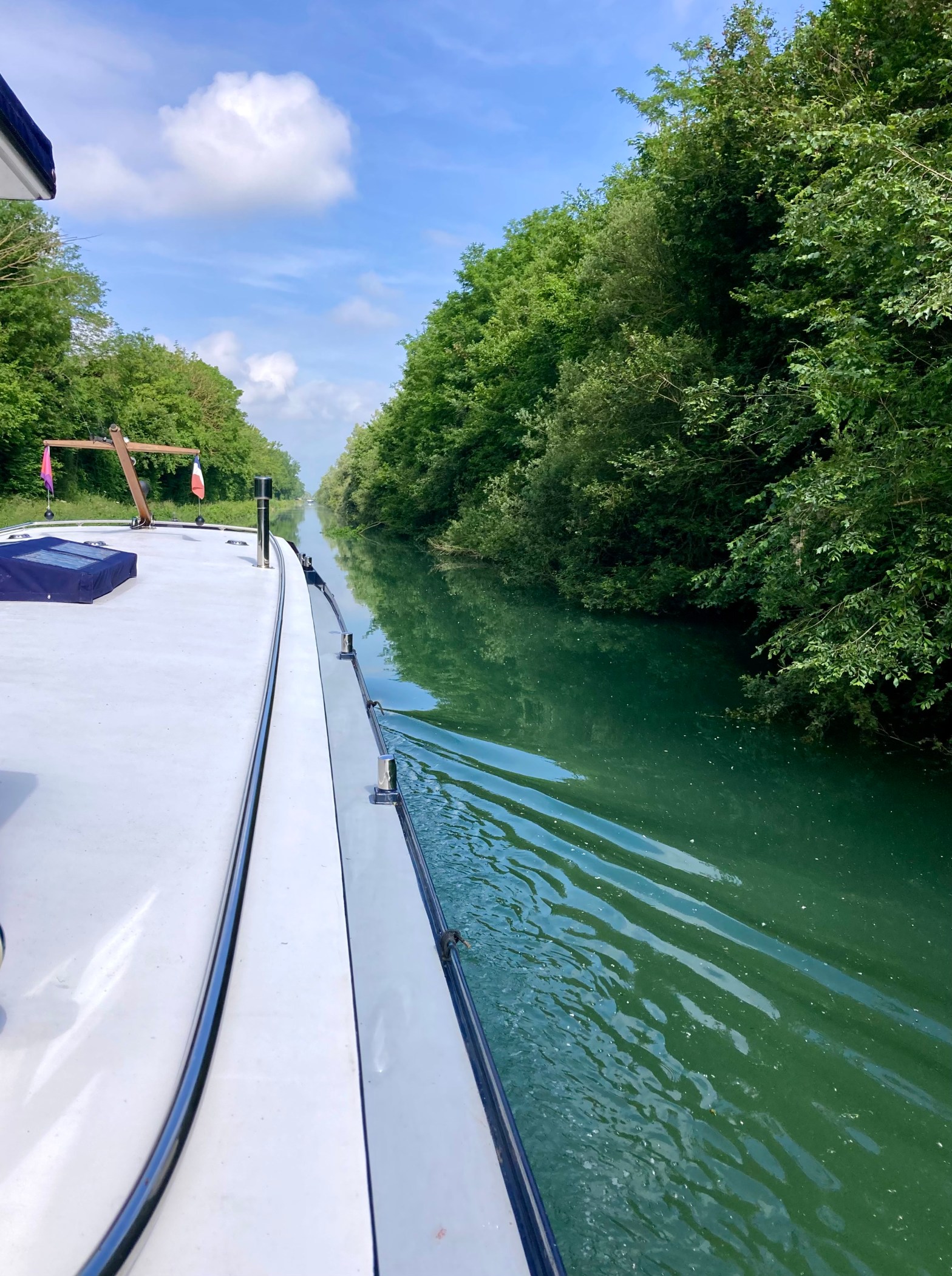
29th May to 3rd June 2024
We are just traveling a short distance on this canal, which follows the winding Marne Westwards towards Paris for another 19kms after we turn off towards the north and Belgium at Condé-sur-Marne.
Compared to the 224 kms of the Canal Entre Champagne et Borgogne which we had just left after a 3 week journey, this is both a short trip and a short blog!
Vitry-le-Francois

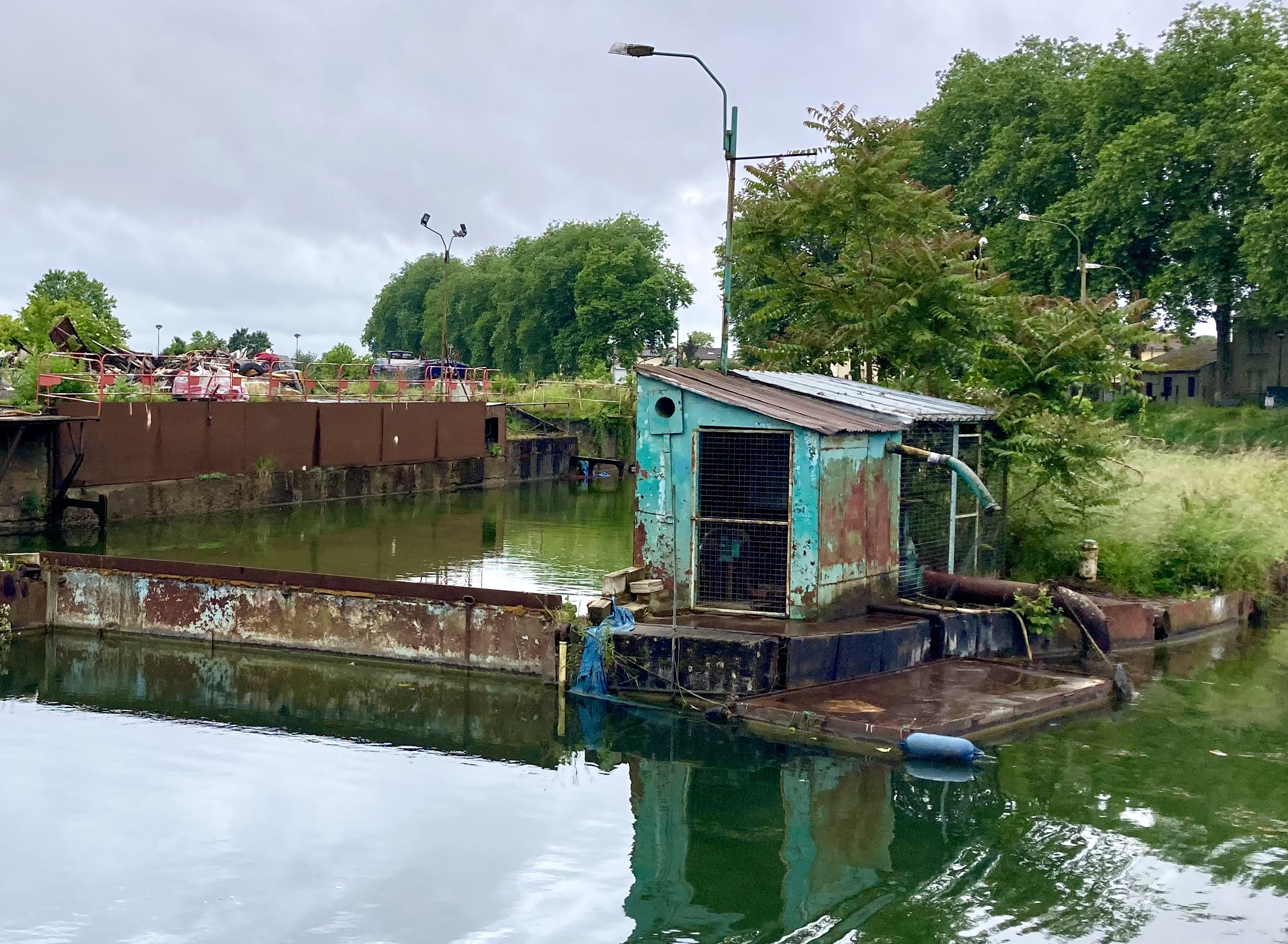
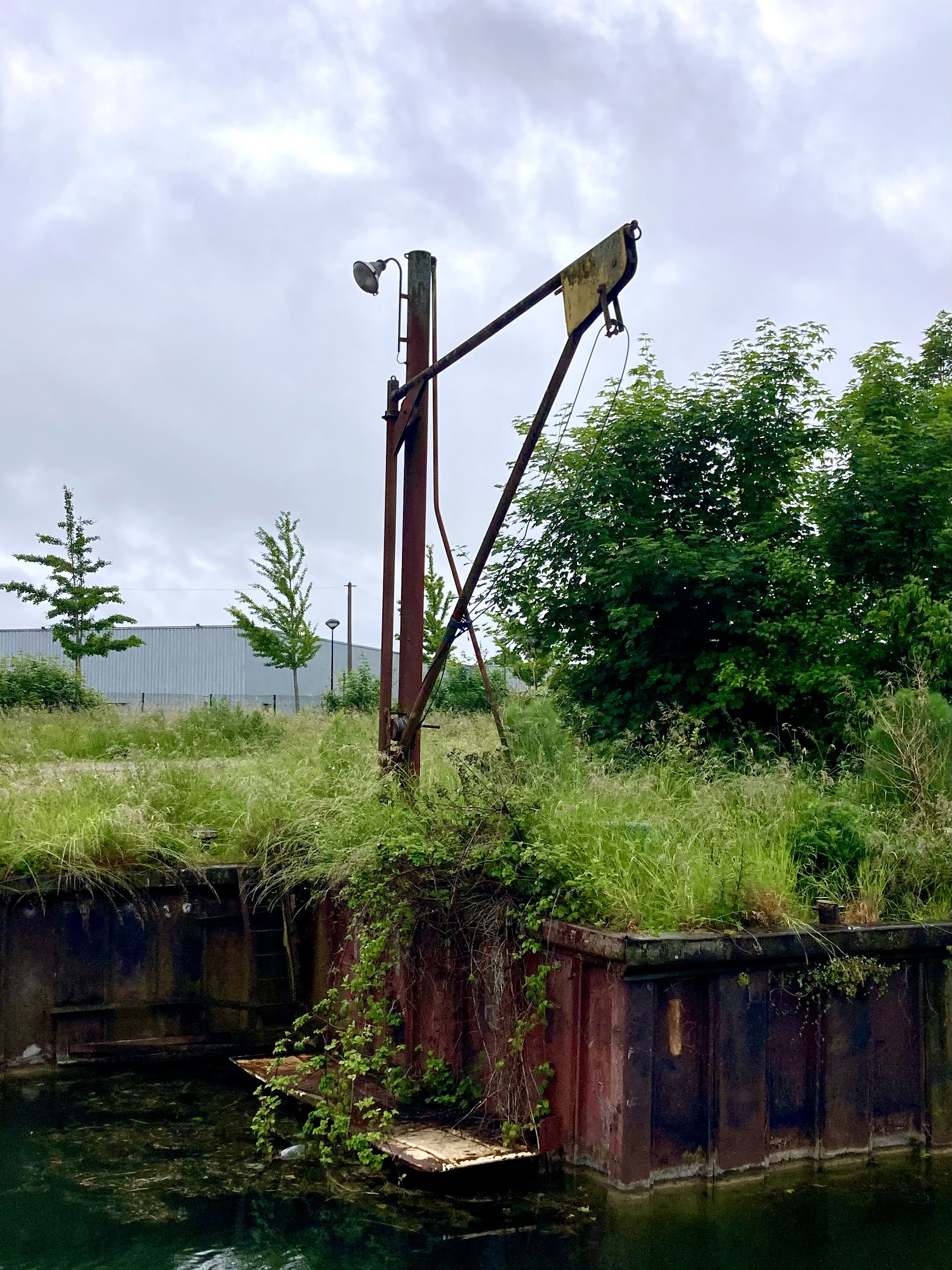
Vitry is a meeting point of 3 canals and has been a major port in the past. It is much quieter now; we cruised past remnants of the barge building and repair yards and soon came to the huge ‘pond’ where the Canal de la Marne au Rhin goes off to the East, and we turned up the Lateral à La Marne.

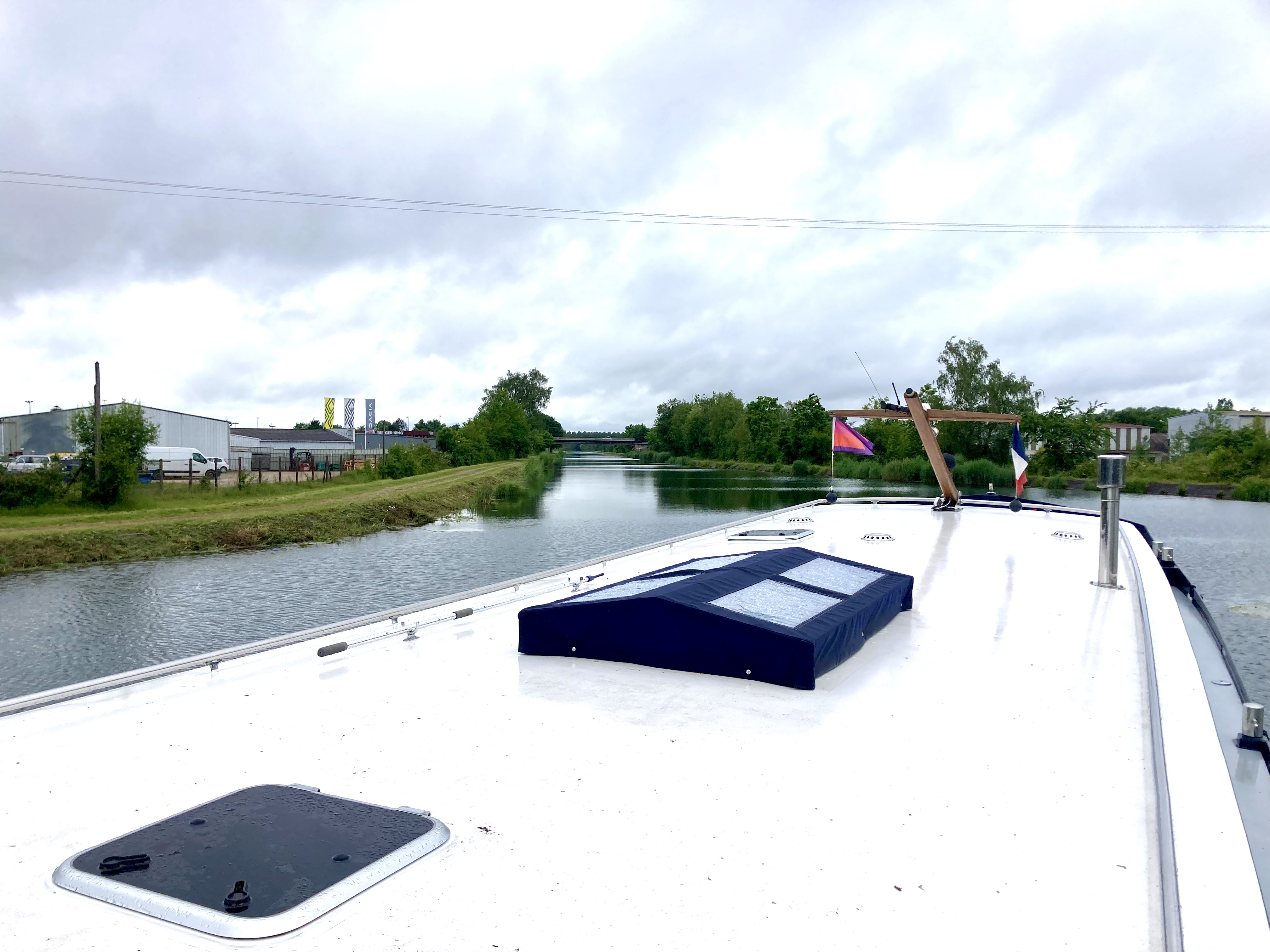
We had been following the Marne since her source up in the hills near Langres; the Entre Champagne et Bourgogne tracks the river valley to Vitry, and then the Lateral à la Marne takes over as far as Dizy where boats join the actual river.
Soulanges
The first part of the canal seems so wide after the Entre Champagne et Bourgogne, but it was soon to narrow down to more normal freycinet proportions, ie locks with available width of 5m.
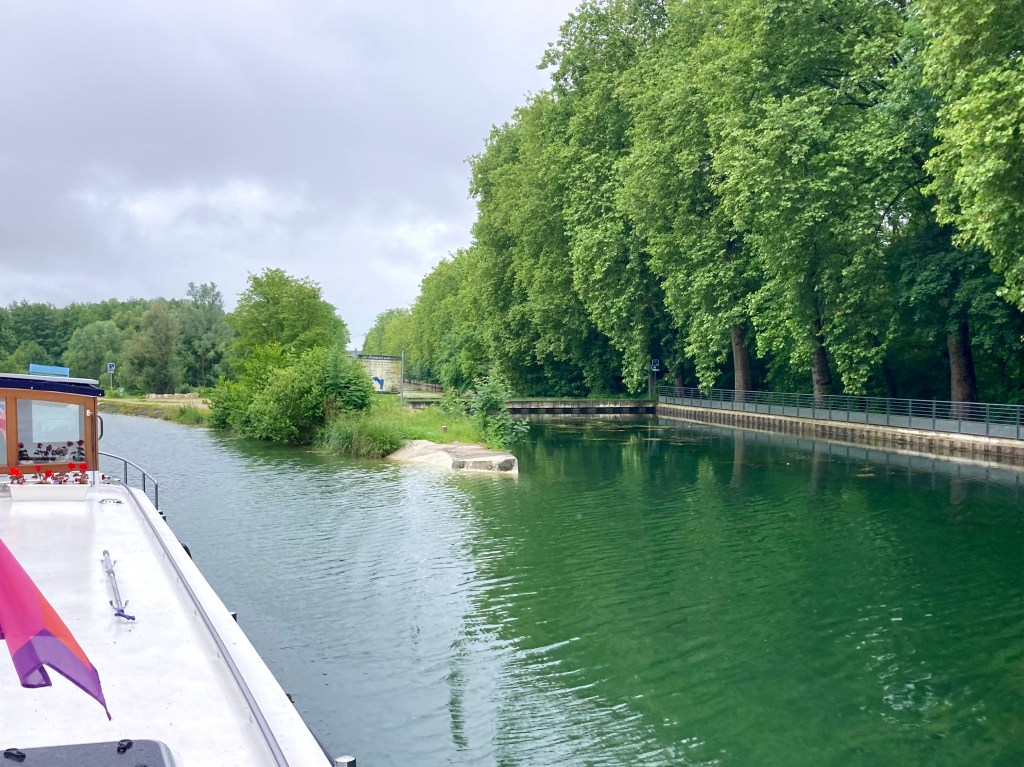
The first kilometre and a half is part of a ‘ring road’ round Vitry. It was a necessary build; modern barges could not navigate the original winding canal that went into the centre of the town.
You can still see where the old and new join up.


The locks on this canal are prepared for each boat by the turning of a ‘pole’ that hangs out over the water. I have always gone to the bow to catch and turn the pole as soon as possible; our technique changes later as you will see!
The ‘pole’ is actually a long hollow rubber tube and does not damage the boat if it hits. They are easy to turn – a quick twist of the wrist and the mechanism gets going, adding a green light to the red one at the lock. Once the gates lock open the red light disappears, leaving a green for GO as the signal to enter the lock.
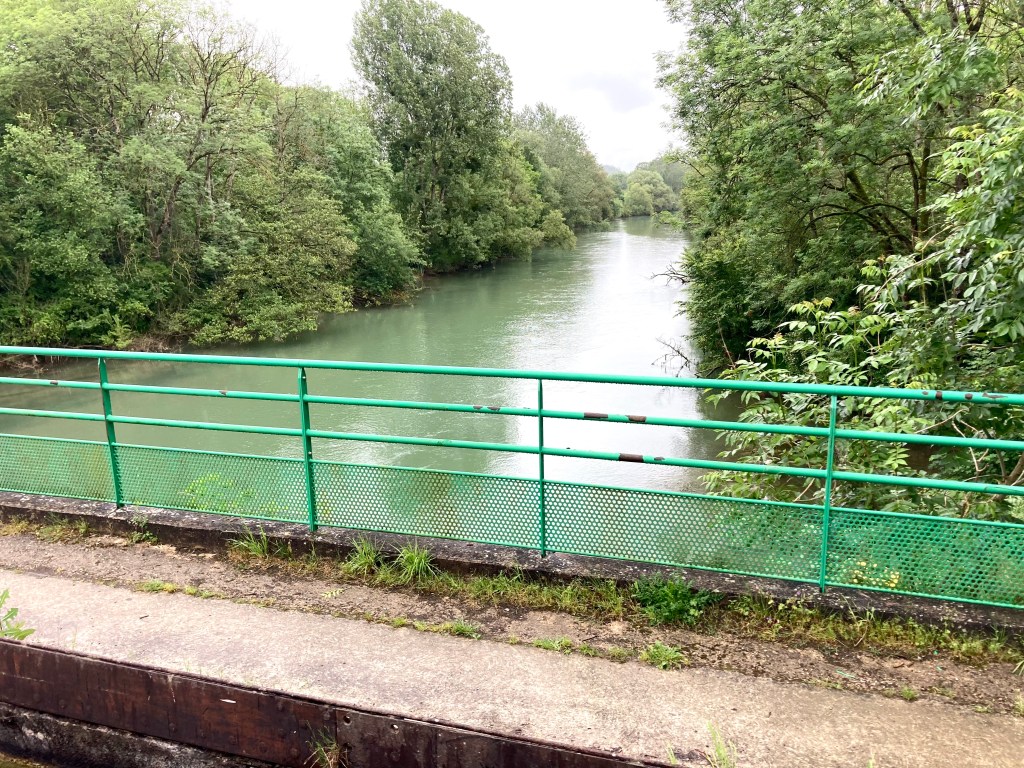
As we entered the écluse (lock) we went over a pont canal – a bridge over a river.
In this case it was La Saulx, just before it joined La Marne.

That is as far as we were going before a lunch stop – at one of our favourite rural moorings. We didn’t have time to stop there overnight, so a midday break was the next best thing. It is an old industrial quay with many of the old buildings still in evidence.
While we were eating a big working barge came by. This is the so called ‘Freycinet’ barge, designed and built to fit the locks on these older canals. She came by slowly and gently, hardly causing a ripple aboard Calliope.
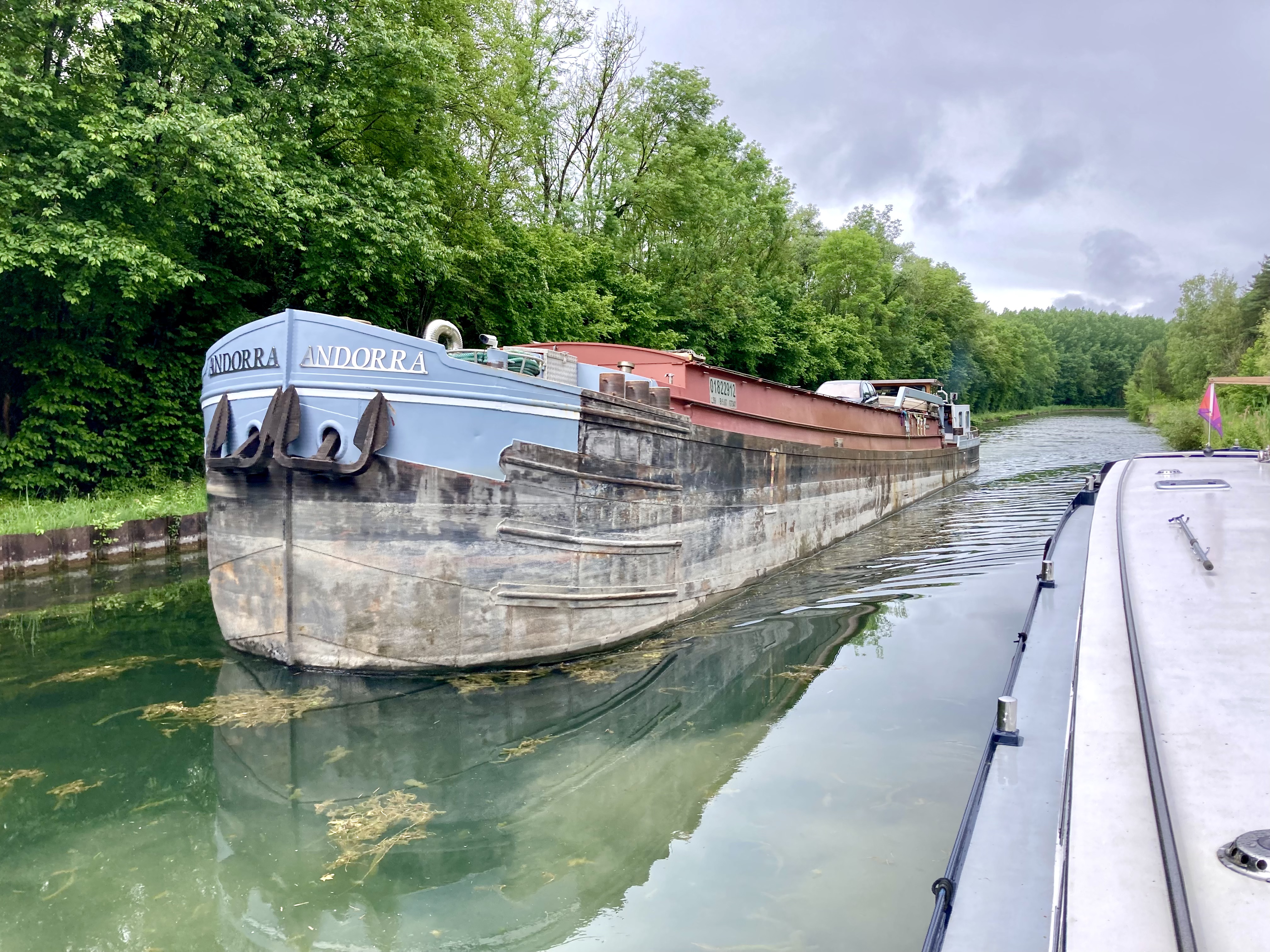
And it was watching the Captain of this barge singlehandedly drive the boat and turn the pole for the lock that led to our change of technique – more like his!
The first lock after lunch had a little surprise for us.
It was situated next to another lock that dropped down to the Marne river, with an old lock-keeper’s house between the two so that he could operate both locks, I guess.

The third lock, Couvrot, gave me a chance to take a photo of the style of lock-keeper’s house on this canal – they are different on each one!

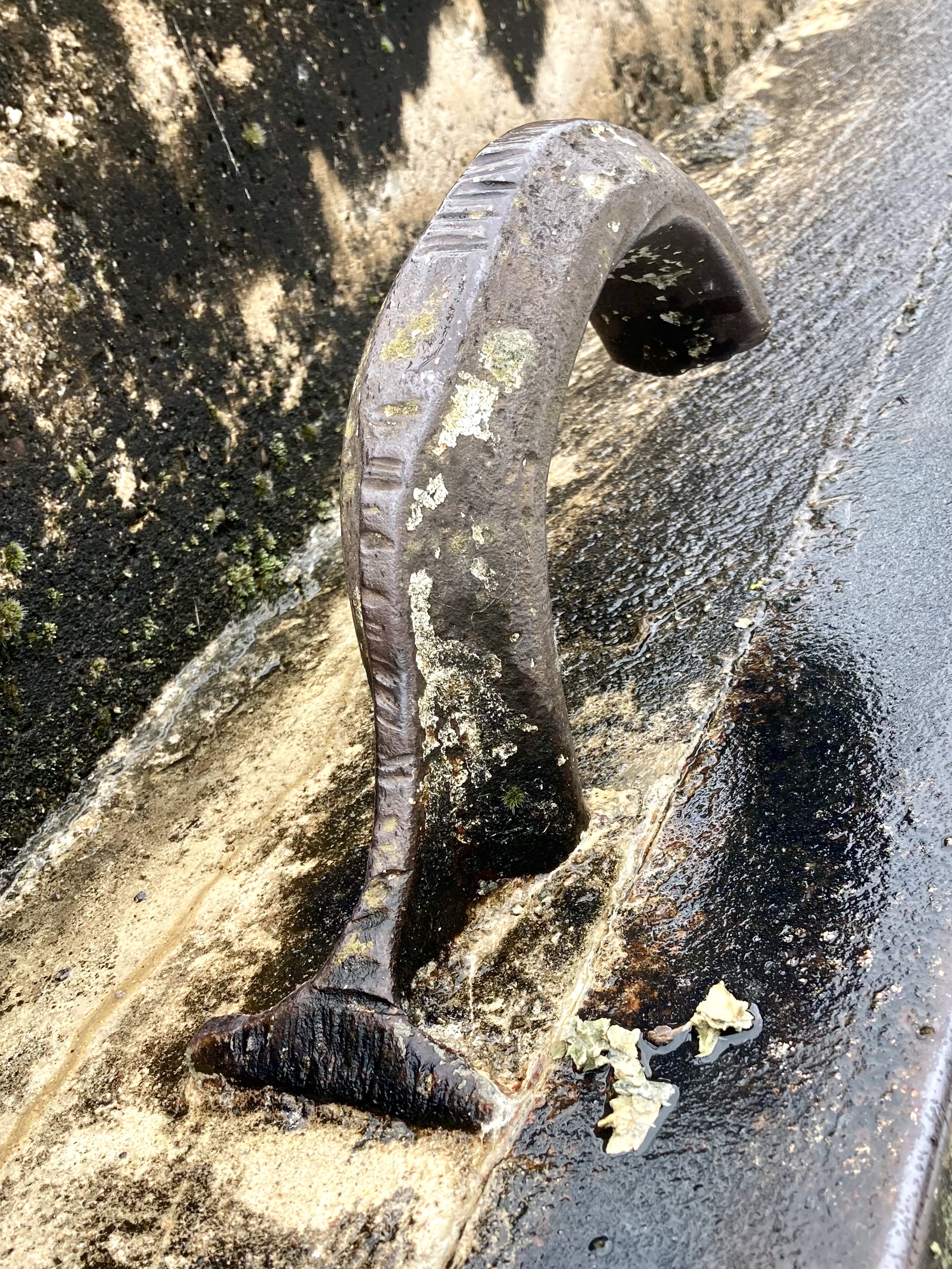
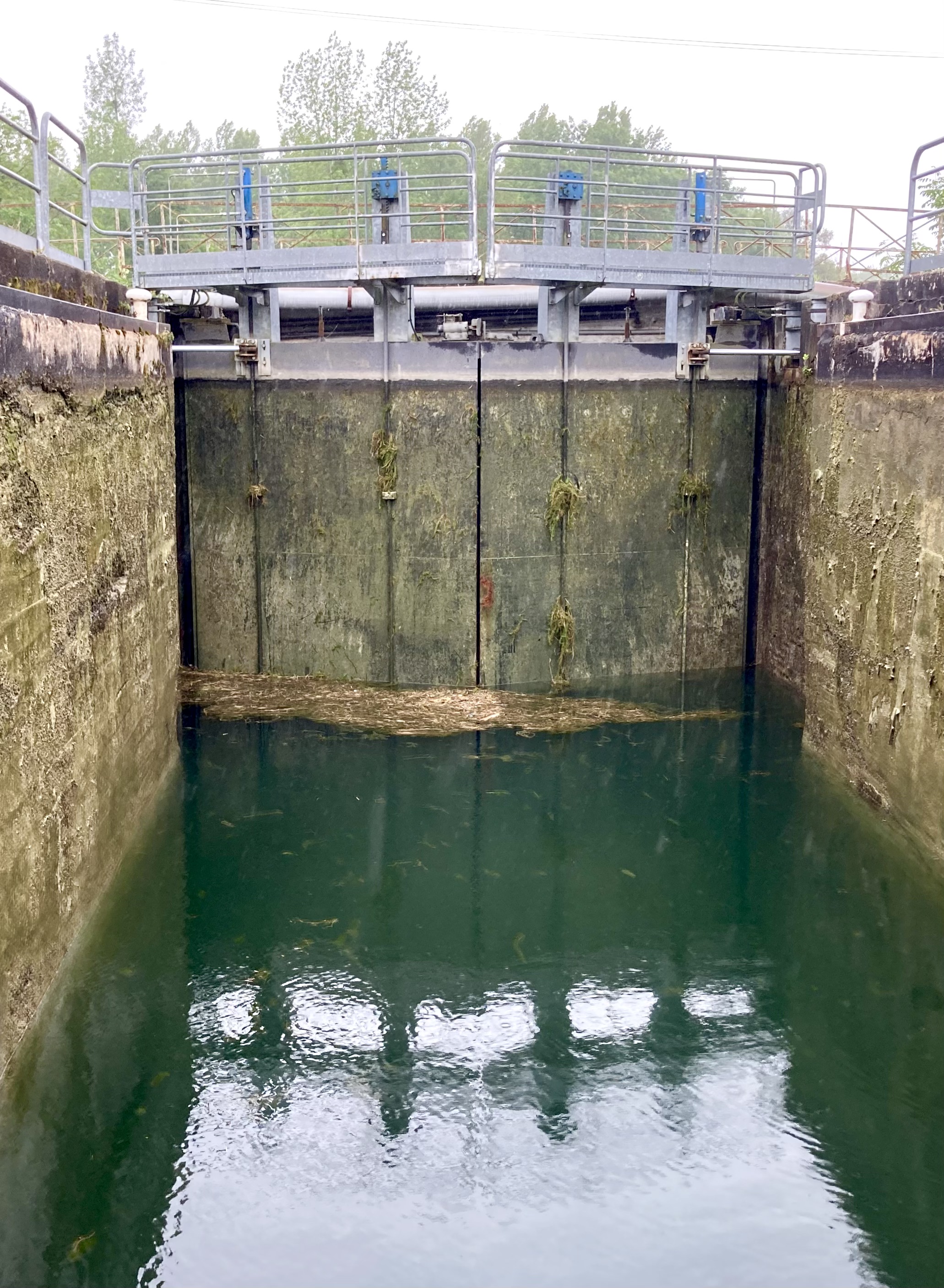
The lock keeper houses had the look of a bungalow, but in fact have at least one floor below the level seen here; the looks have ‘hooks’ to tie up to as well as bollards – this one resembled a fish tail and was splendid in an antique kind of way; and the lock door were made of big vertical sheets of steel, unlike the panelled version we had seen on the last canal.
And then by 2.30 we were tying up at Soulanges.
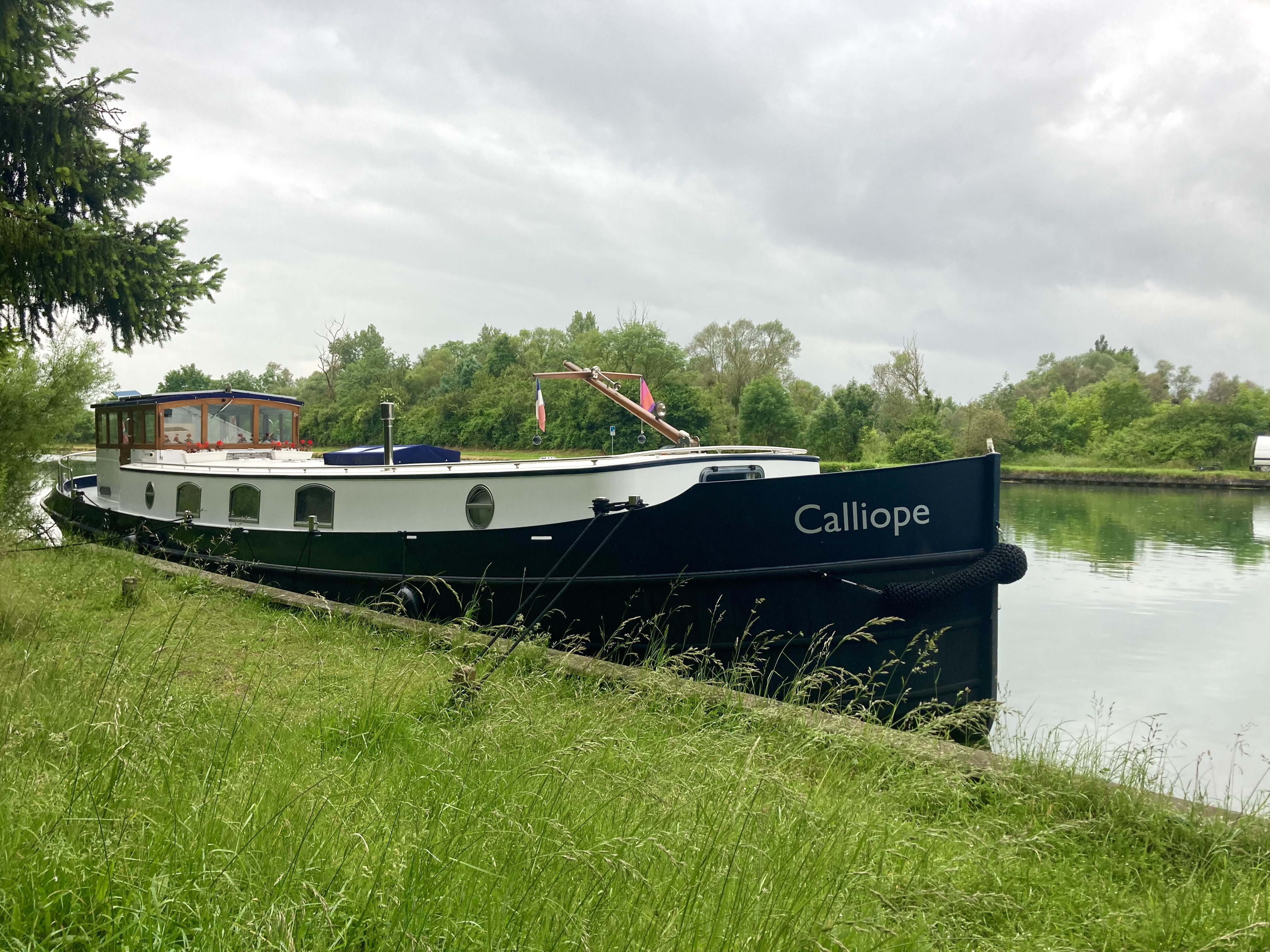
As we approached we thought there was not room for us – it is a 30m quay and there was a 12m cruiser tied up in front, looking deserted. But the delightful Stefan and his Jack Russell, Fonsey, appeared from the boat and helped us tie up. We overhung at the stern a little bit, bt that was of no consequence; we were there!
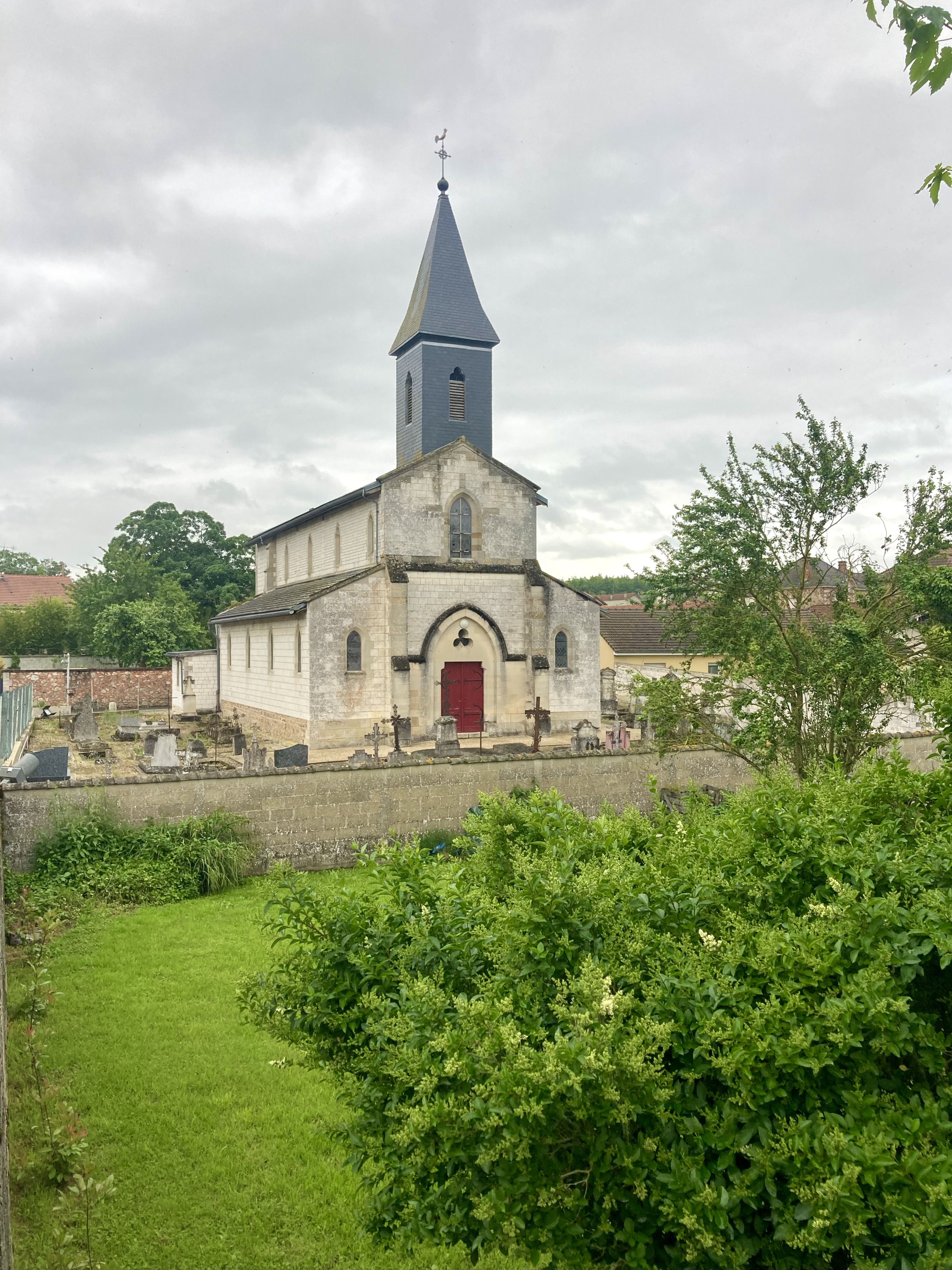
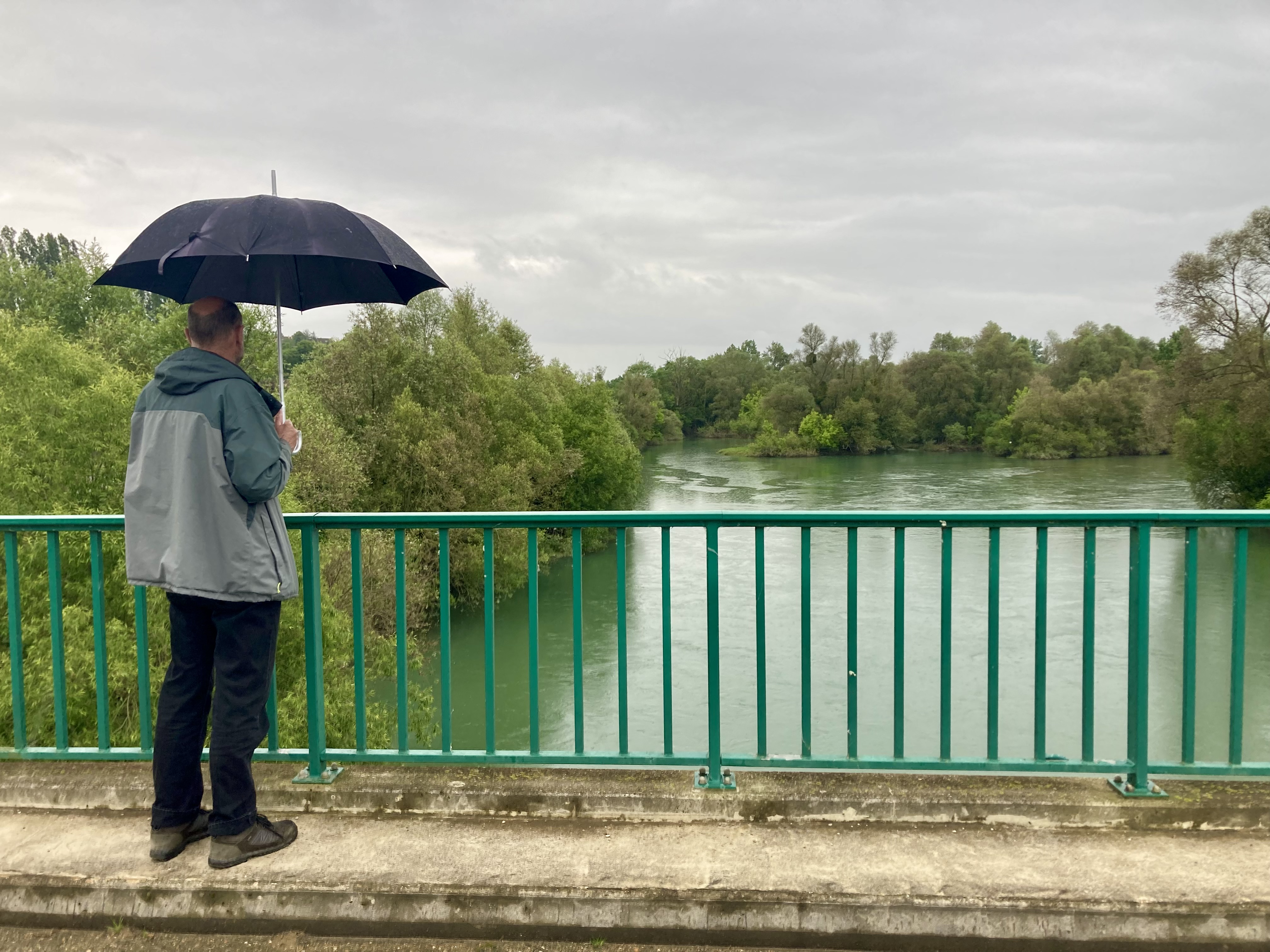
One of the delights of Soulanges is that it is so quiet; no shops, bars, or restaurants, but it is very much a lived in community. We did have a walk round the village in the rain, past the church, village hall, library, and several quite grand houses. And then we walked across the canal to the ever present River Marne, but now quite wide and fast flowing.
Chalons-En-Champagne
Leaving Soulanges always seems a shame … but good things in store.
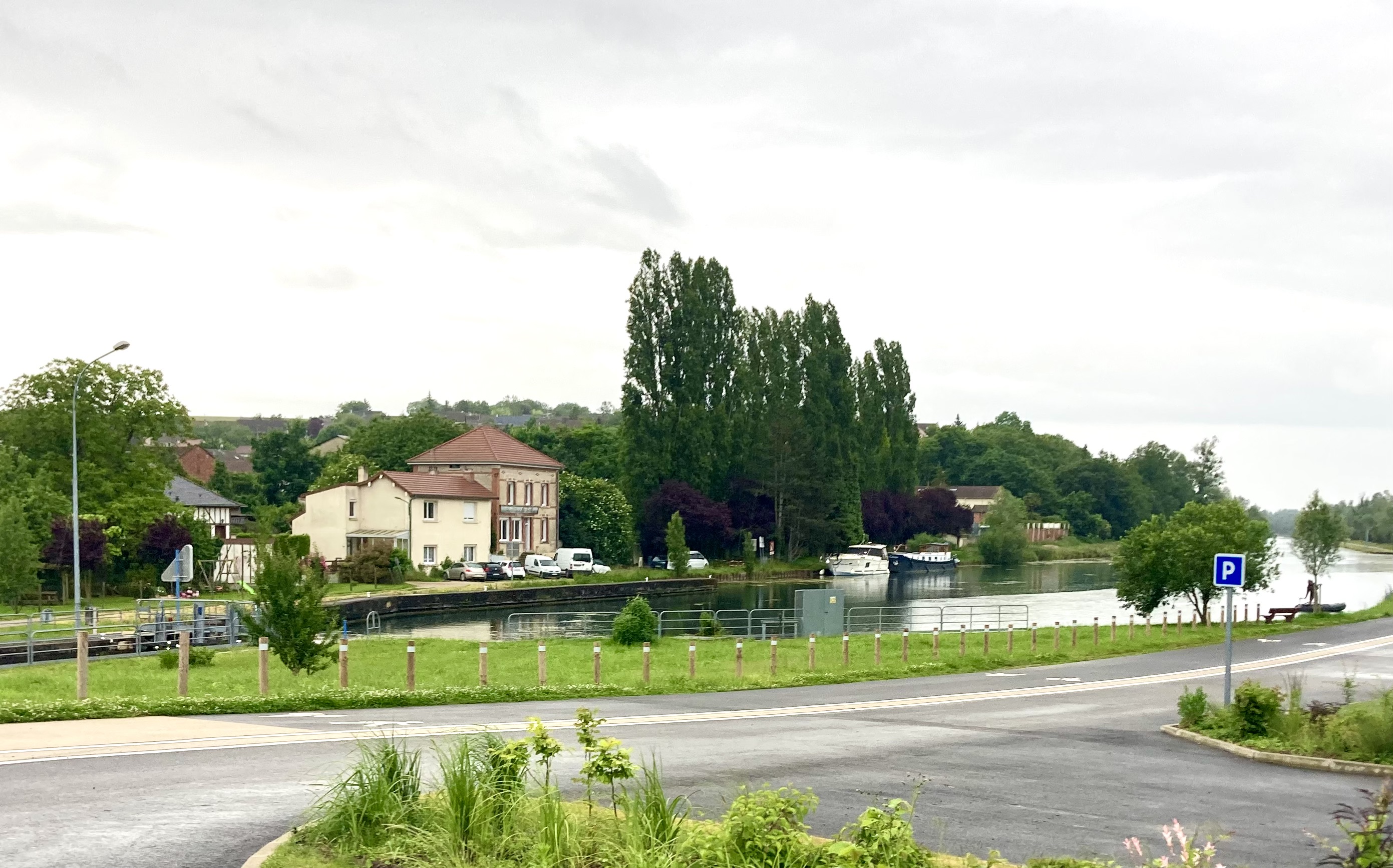
We had a 20 kms, 5 écluses (locks) stint in front of us to reach Chalons. We left Soulanges ta around 0900, starting with over 100 yards astern in order to get to the turning pole for the lock. You can sort of get the idea from the photos, with Calliope moored under the tall trees, the lock to the left, and the pole out of sight up the canal on the right!
There is not too much to mention about the cruise to Chalons.


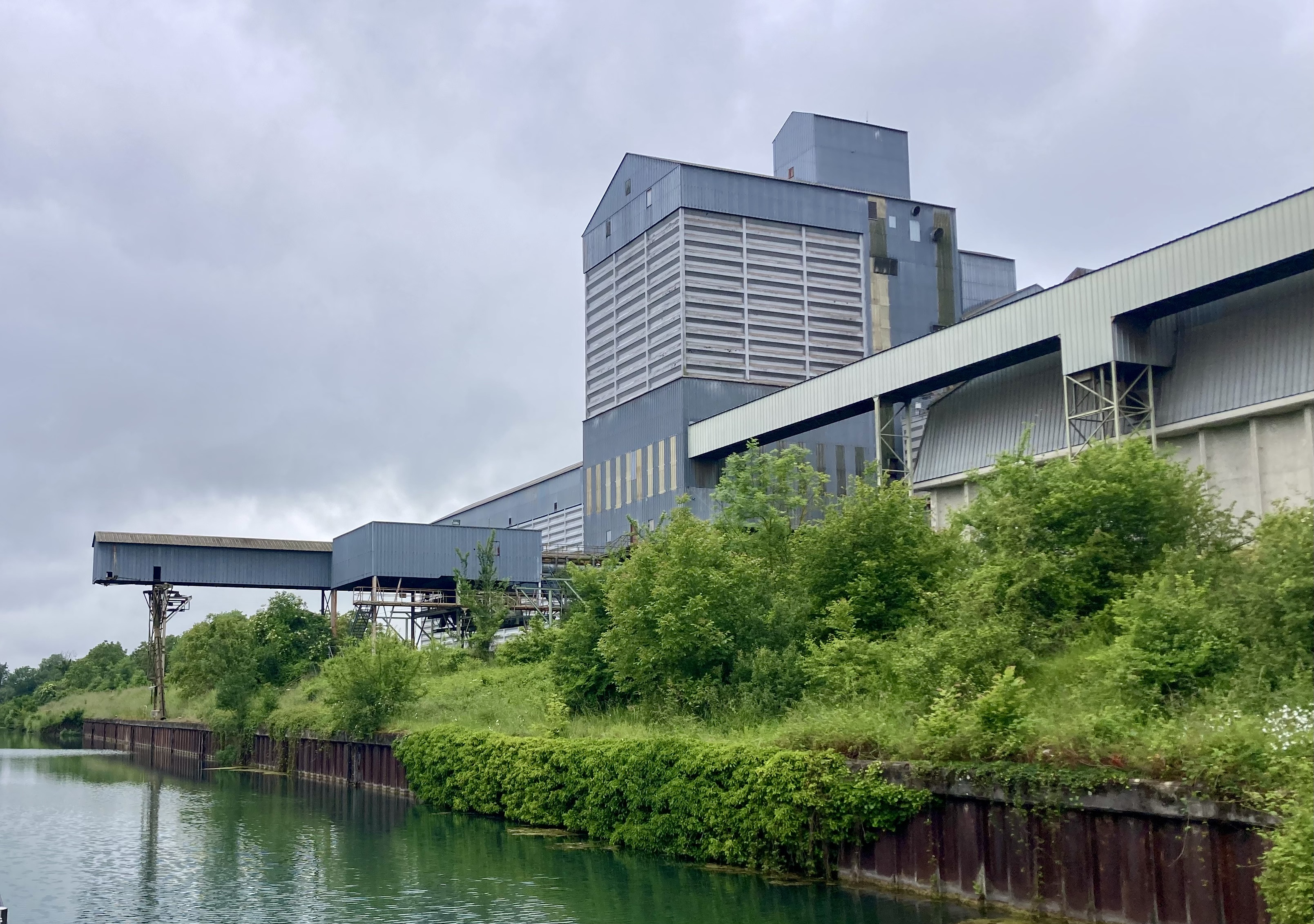
There were some interesting industrial shapes as we got closer to the city.
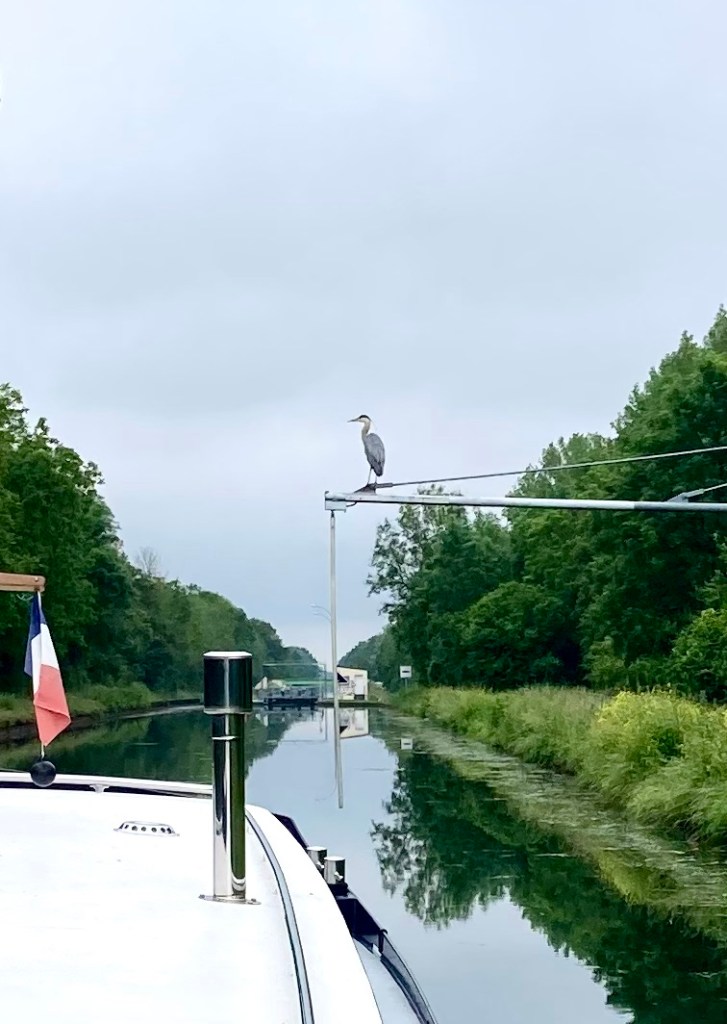
And a heron who decided to supervise us turning the pole for one of the locks.
But flew off into the grey sky when we got close!

We arrived at Sarry Écluse, our last of the day, at around midday and were pleased with our progress. But yet again we found ourselves in an ‘en panne’ (out of order) lock and were stuck for a little while. I went to make a phone call to the VNF centre using the automatic caller on the side of the lock building – just out of sight in the photo – but that did not work either.
Then I spotted the phone number to call in the window of the building, and soon help was on its way.


There are often benefits to these short stops, allowing for a cup of tea or even a meal, or, as in this case, a chance for a couple of photos. (to be honest the first lot these two is from a lock about an hour beforehand.)
These photos were my opportunity ro show what the quayside and flooring is like in these locks. The bollards are a step down from the main level around the lock, and there are railings surrounding it all too. This can make it ridiculously difficult to throw a rope round a bollard when you are a bit of an amateur like me! I end to throw more rope than is needed, and then out gets tangled up on the railings! Be warned!
It is really quite simple when one concentrates. 🙃

About an hour later two familiar sights hove into view; the paserelle from the Grand Jard to the Jard Anglais on the other side; and in the background the cathedral of Chalons-en-Champagne. We were within a few hundred yards of our mooring.


And here we are, moored up to a colourful bollard, and sticking out a bit; so later, once we had talked to the Capitaine about where she wanted Calliope to be, we moved up.
Chalons is without doubt one of our favourite French cities. It somehow manages to have a historical and a modern feel any the same time. It is the capital of the department of Marne, despite being only a quarter the size of the nearby city of Reims. Formerly called Châlons-sur-Marne, the city was officially renamed in 1998.
There is always something going on here.
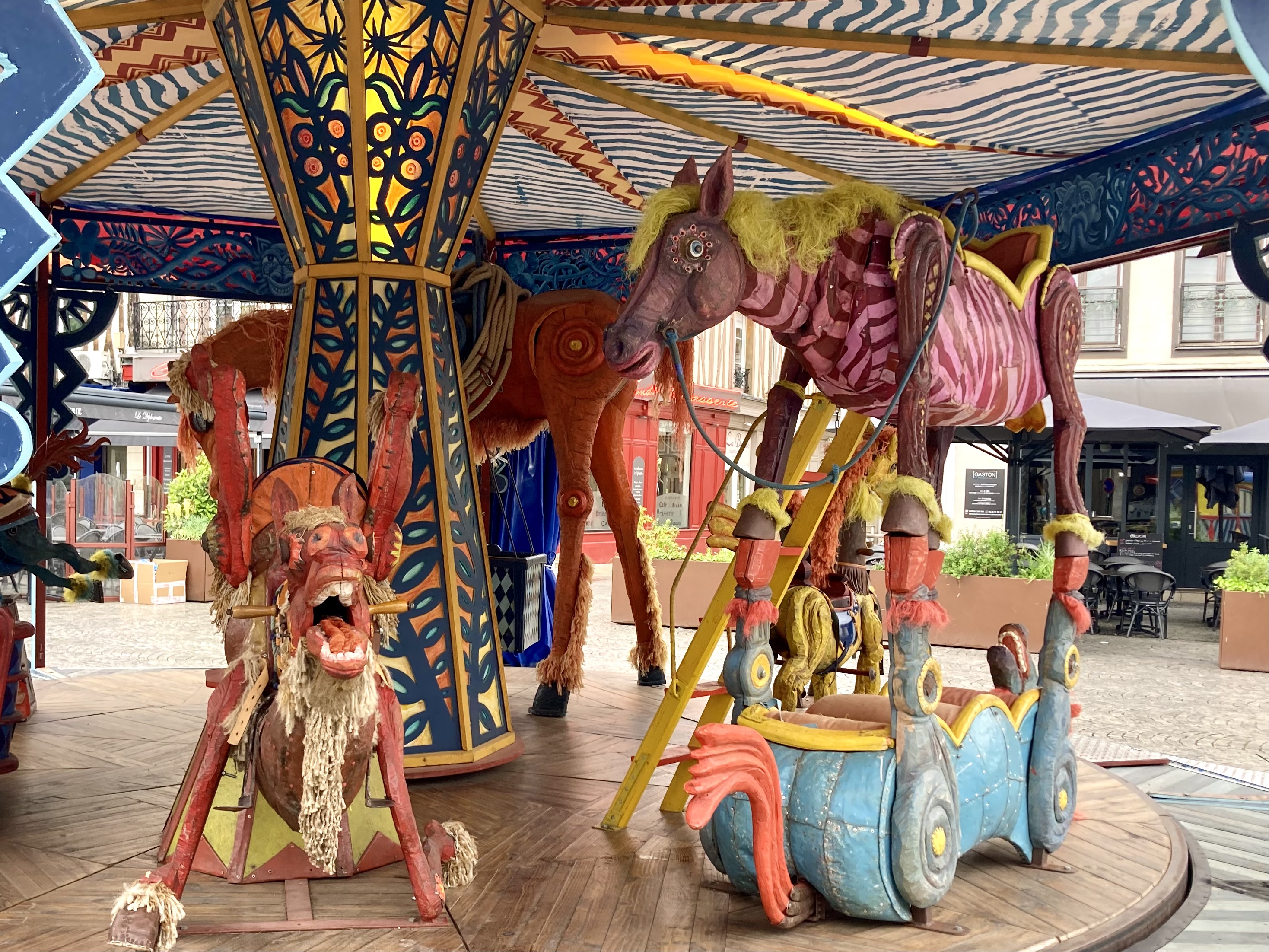


In the Place de la République there have two new additions. One is a very modern minimal fountain that I love, but somehow did not photograph. The other is a crazy take on the galloping horses of a carousel. I also love this!
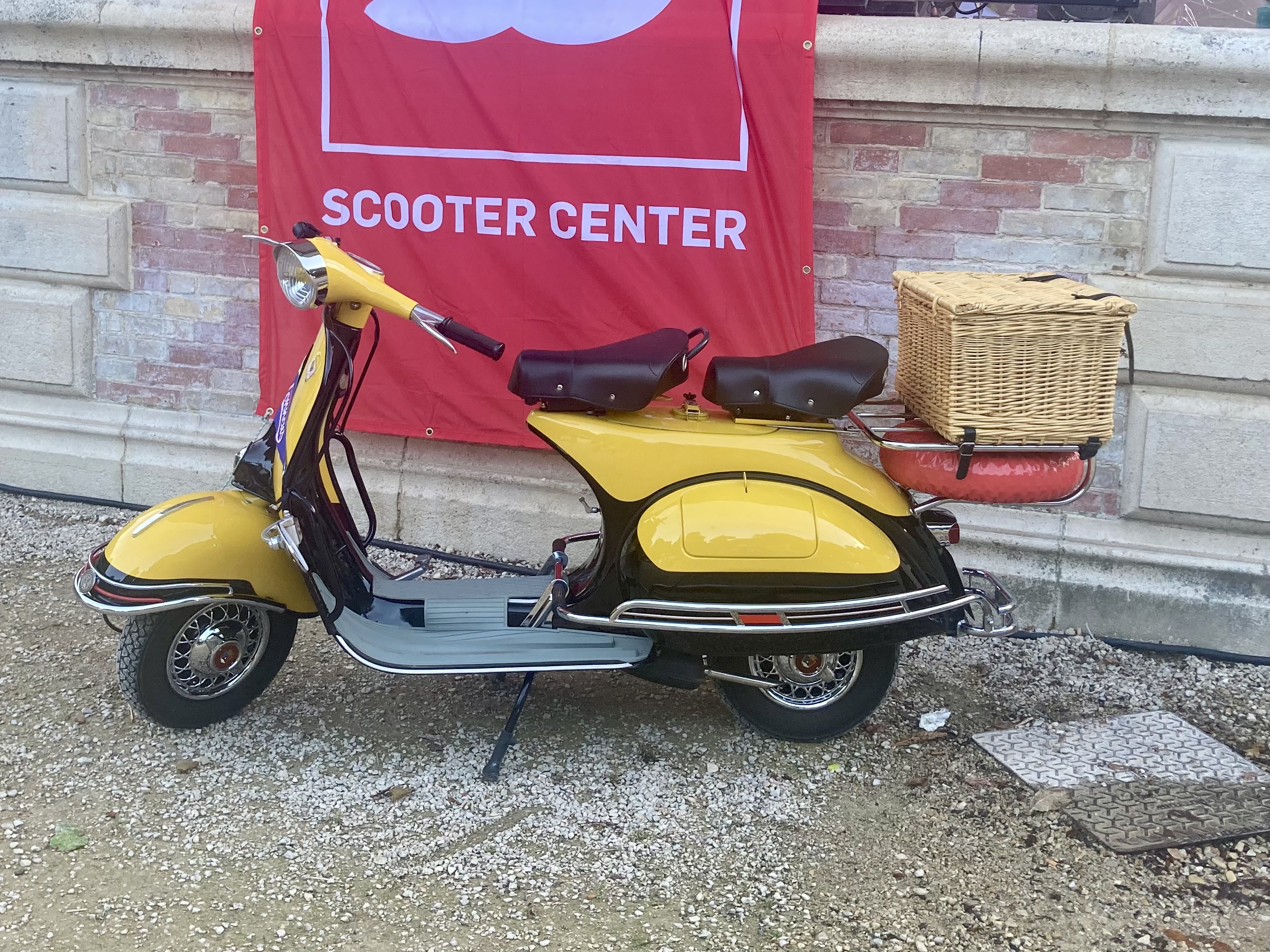

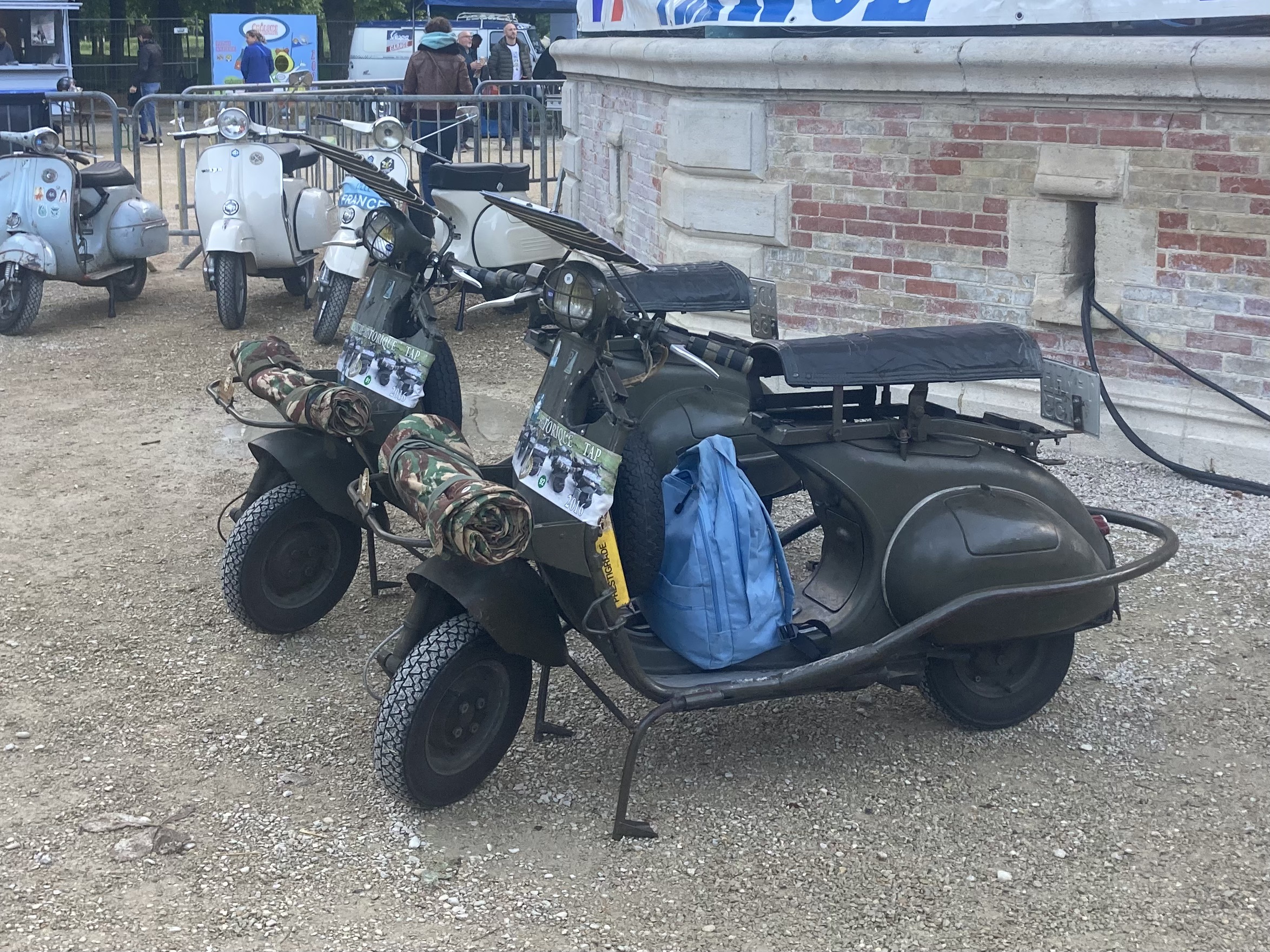


In the Grand Jard there were two ‘goings-on’. Above are photos of the National Vespa Rally. This took place around the bandstand, along with several food and drink stalls, and live music in the evenings – audible from our boat, but neither too loud nor too late.
Chalons is home to the National Circus School as well. This particular weekend they were starting their show that would continue into the following week as part of the Furies Festival. That is something not to be missed if you can ever be there at the start of June. Regretfully we had to leave the day before it began this year.

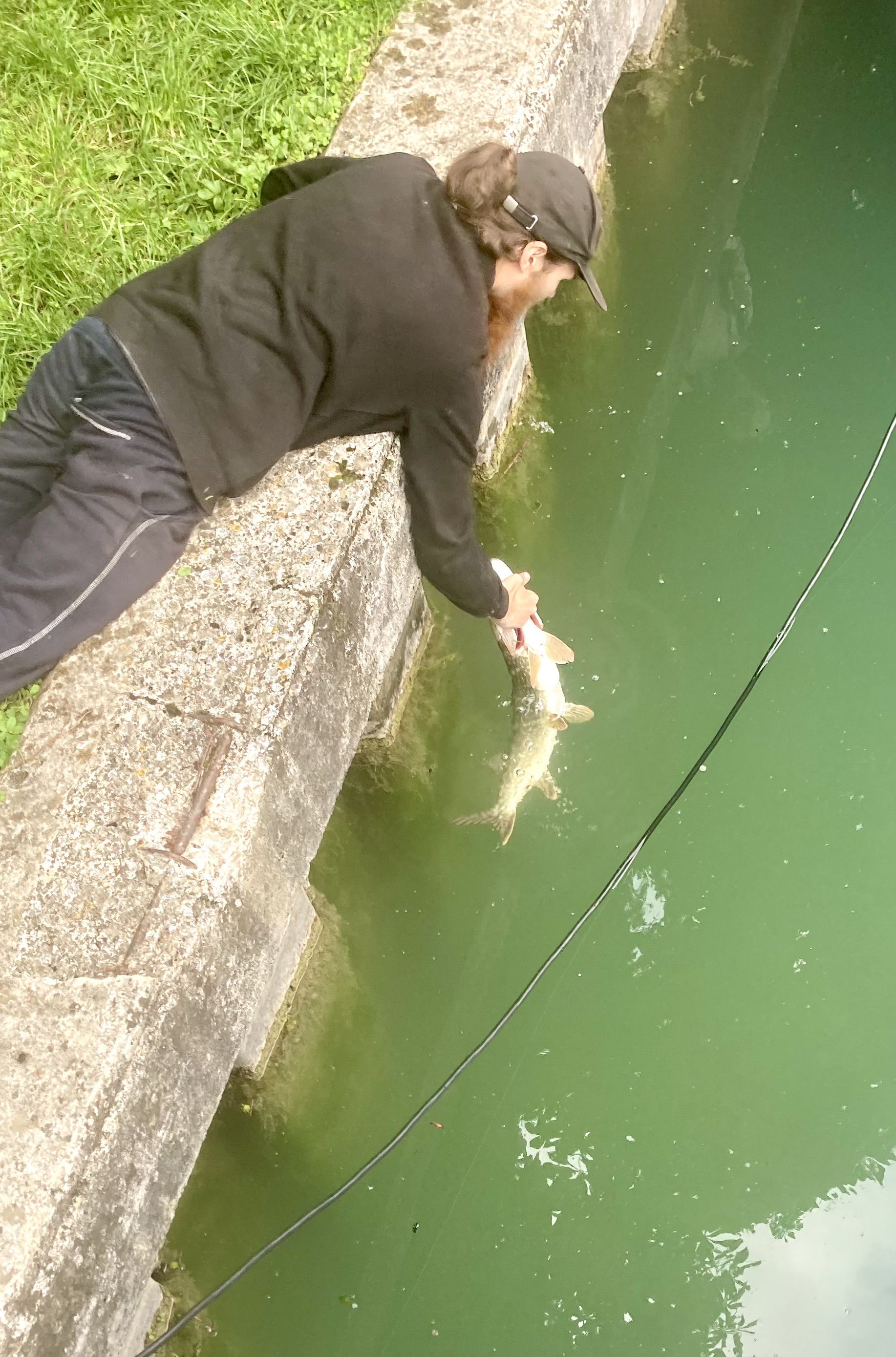
On the nature and sporting sides of things the quay is a popular place for fishermen and women. This young lad got very excited when he caught a big fish (pike?) right by our bow. Once he had got a few photos he carefully lowered it back into the water and gently stroked water through its gills until it recovered from the shock, and with a quick twist and splash it was gone.

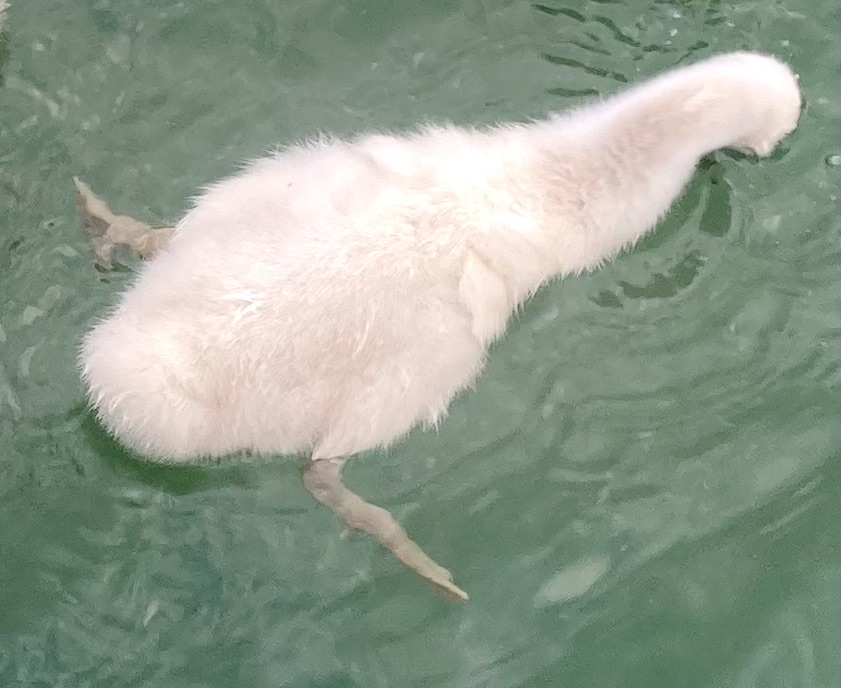
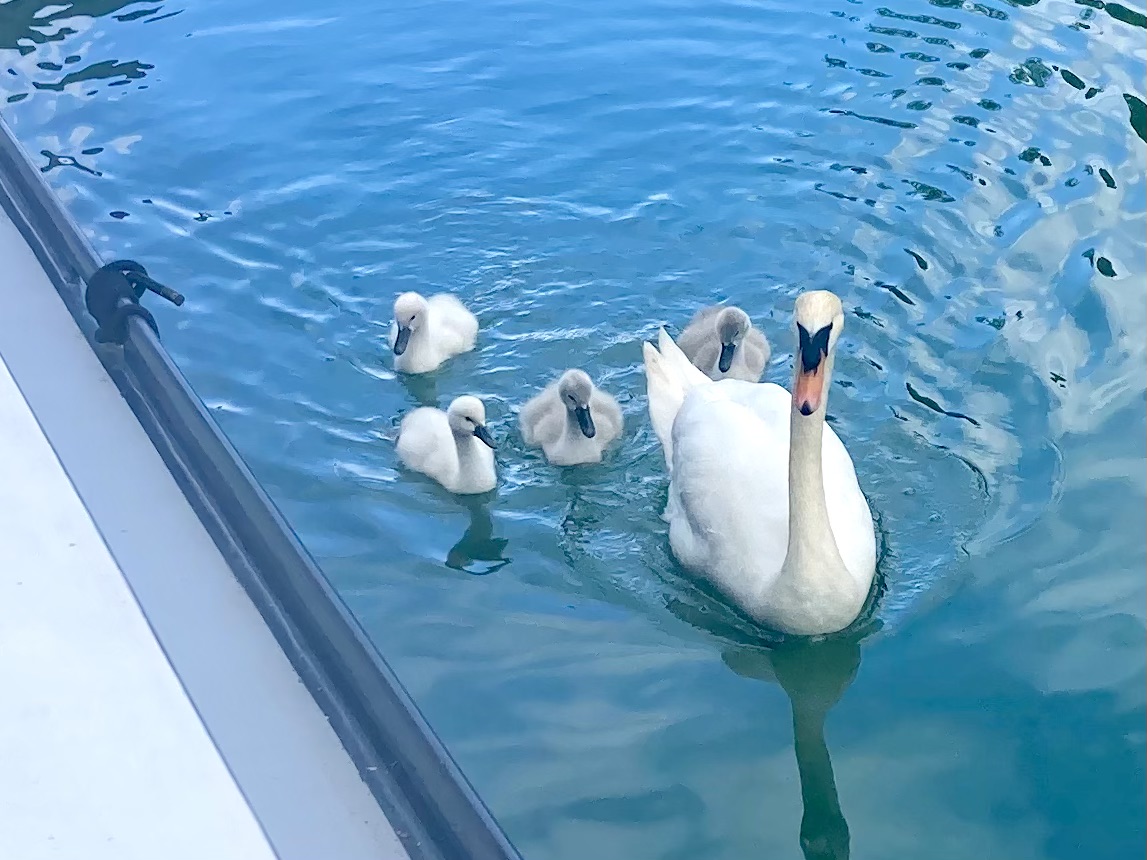


Then there were the swans with their four very young cygnets. They were paraded before us every day, and sometimes we had something suitable le to feed them with.
I’m not sure why the water looks so blue in one photo – maybe the sky was blue at that moment and the colour was reflected back.
And then Hellen arrived.
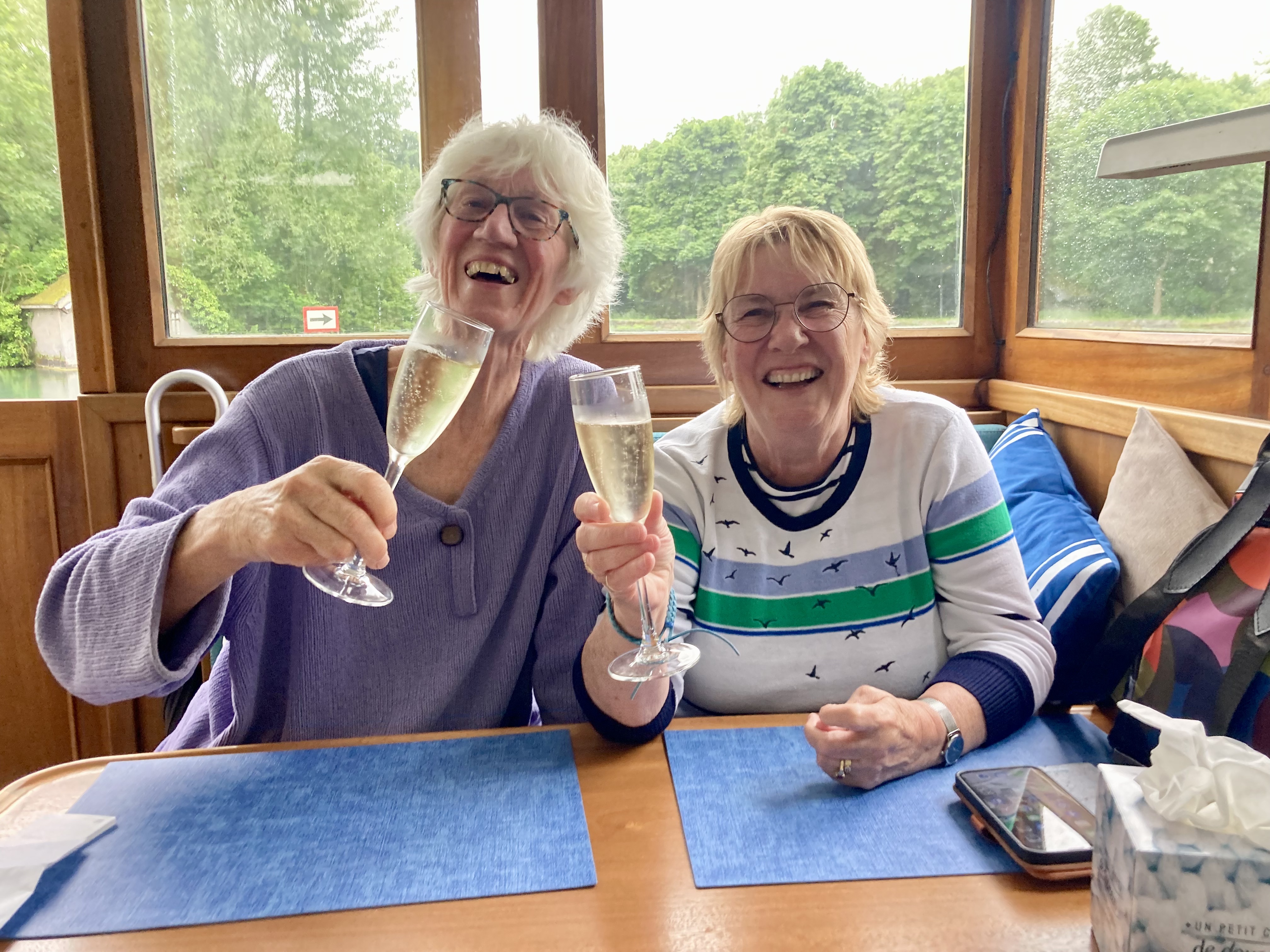
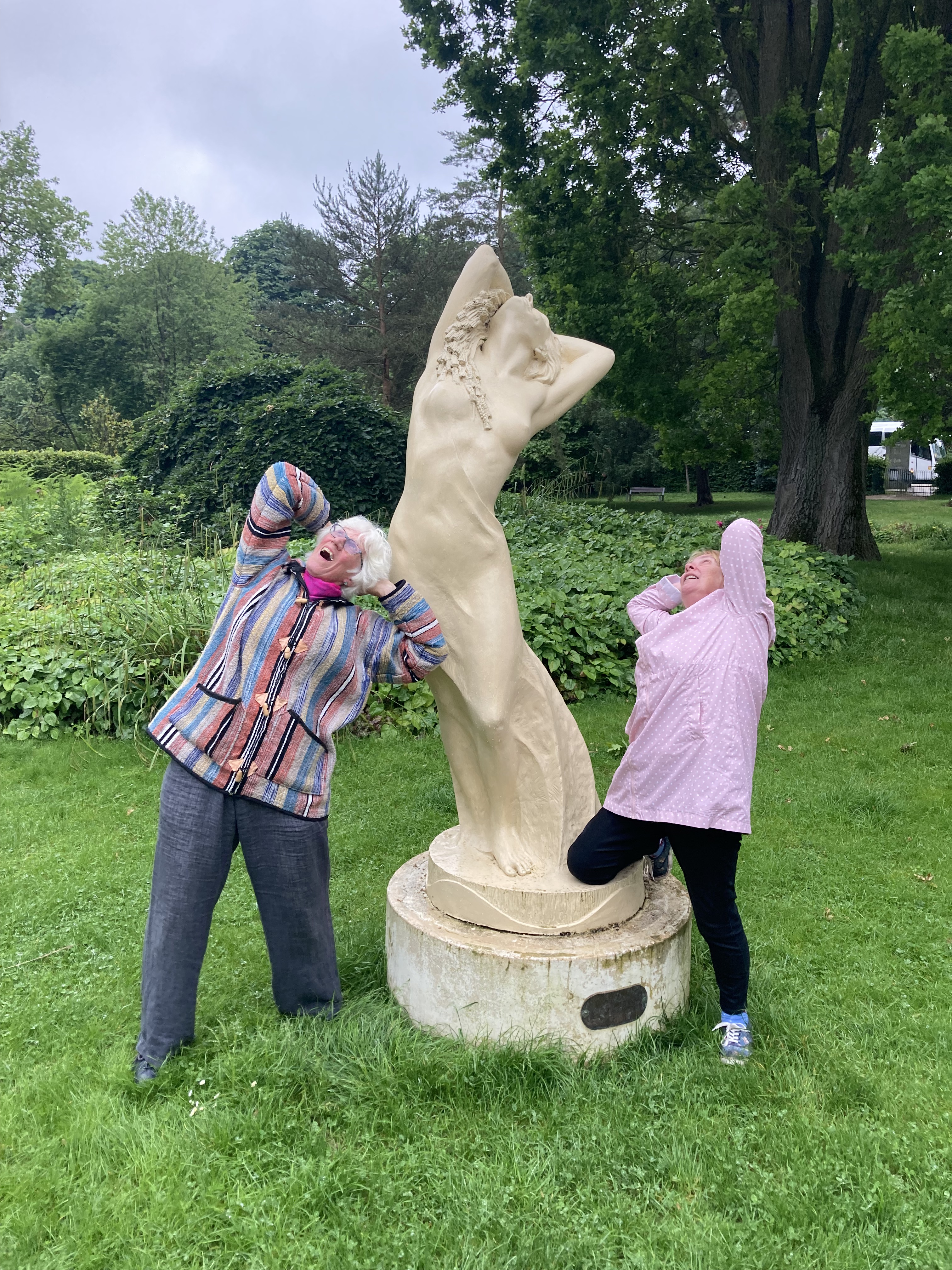


The most important time in Chalons for Stewart and I was the visit of Hellen. She is a great mate and generator of a lot of fun! We treated ourselves to a really good French meal one evening, and bought lots of good stuff from the market on Sunday.
The various fish products were superb.
Then it was time for Hellen to go on Sunday afternoon, and for us to leave next morning.
Condé-sur-Marne
Somehow early June was being a lot greyer than early May had been. We phoned the éclusiers to ask for Chalons lock to be opened, slipped our ropes, and by 9am we were in the lock and going down towards Condé.

There is a small canal that runs through Chalons – Canal Saint Martin. It links up with two small rivers, Le Mau and Le Nau. Part of it now runs underground and it is possible to go on a tourist boat trip through the canal, with a glass of champagne on your hand if you pay €8 extra for the drink and the flute.
We thought of doing this trip, best by night when it is accompanied by a light show, but could not get tickets before our bedtime!

As we left Chalons we passed over Le Mau as it joined the Marne. No time to take a photo on both sides, so this is Le Mau.

It’s a straight easy run down to Condé-sur-Marne and the sky was starting to show signs of blueness.
This was good as we were focused on the next stage of our journey to meet American cousins at Charleville-Mezieres in 9 days time.
We needed to put a b it of a spurt on compared to our usual three hour days!
The straight forward trip gives me an excuse for more canal and lock info!
The locks along here each have a sign telling you where you are, and how far it is to the next lock in each direction.
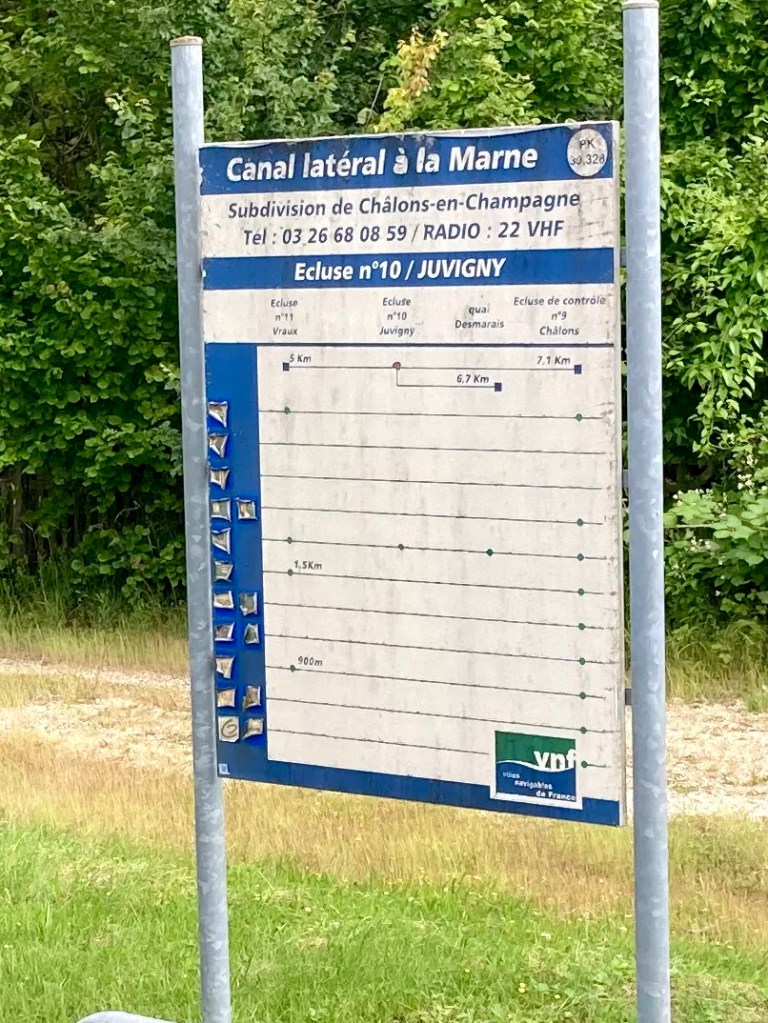
There is also other information about how far it is to the nearest villages, quays for mooring, marine engineers, pharmacies etc.
While I am mentioning distances, here is one of the PK markers letting boaters and bargees know where they are; essential before the days of GPS.

I have mentioned the lock keeper houses before, and how they are built over two or more stories, even if all you can see from the front is one.
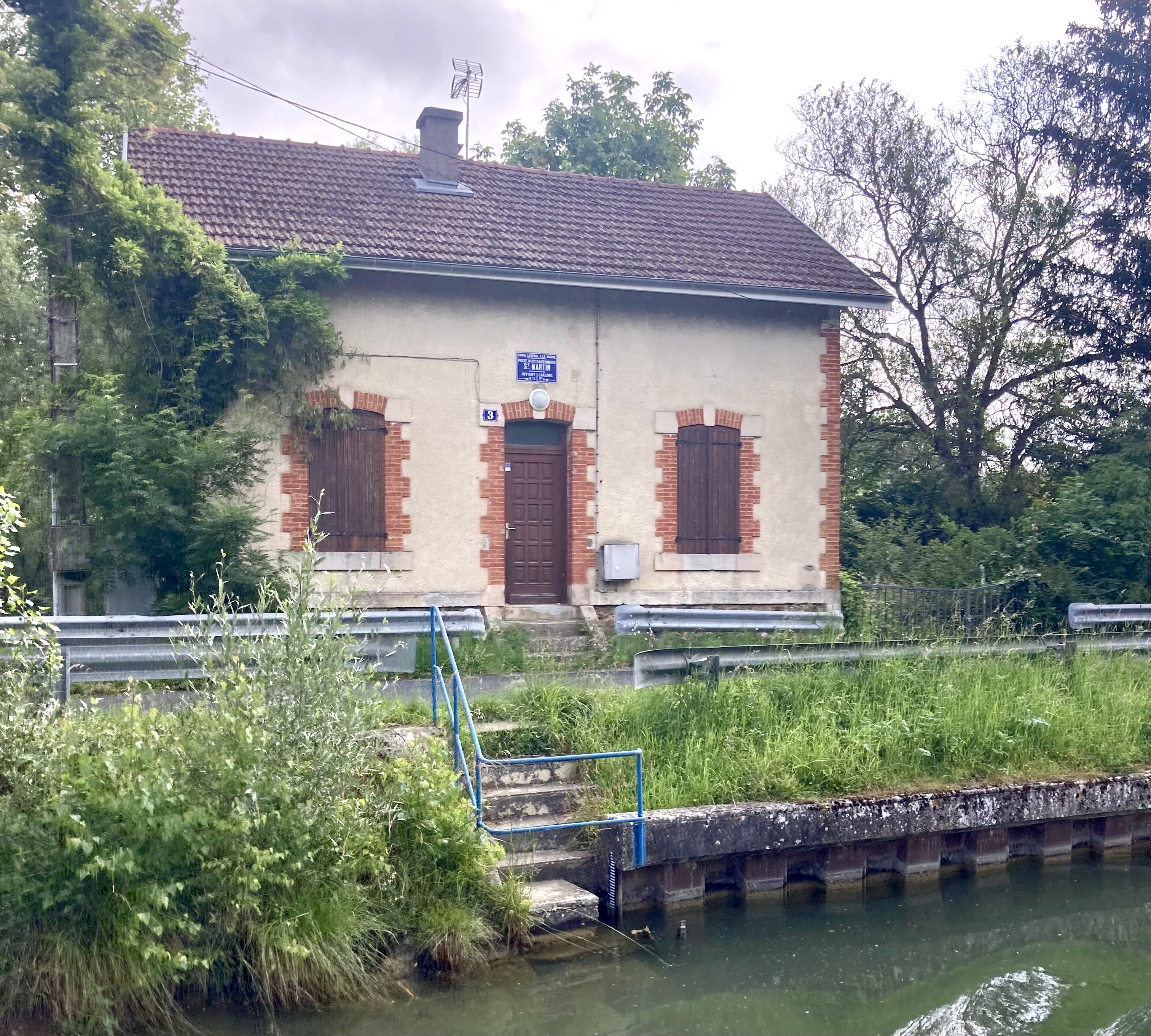
This photo shows it a little better; you can see some of the windows at a lower level to the side if you look carefully.

I know I have mentioned before these blue and red poles for use when in many of the locks, but that was in previous posts.
So here is a good example.
Once you are tied up in a lock like this you have to ‘lever’ (raise) the blue pole. This sets the lock in motion, closing doors behind you, emptying (or filling) the lock and then opening the doors in front.
The red pole is only for use on emergencies!
We came to one lock where maybe an emergency had occurred!
The railings across the gates had been stoved in! A boat had not managed to stop when entering the lock and had crashed into the gates at the other end – probably because of weed round the prop, which effectively removes your ability to brake as you apply reverse gear.
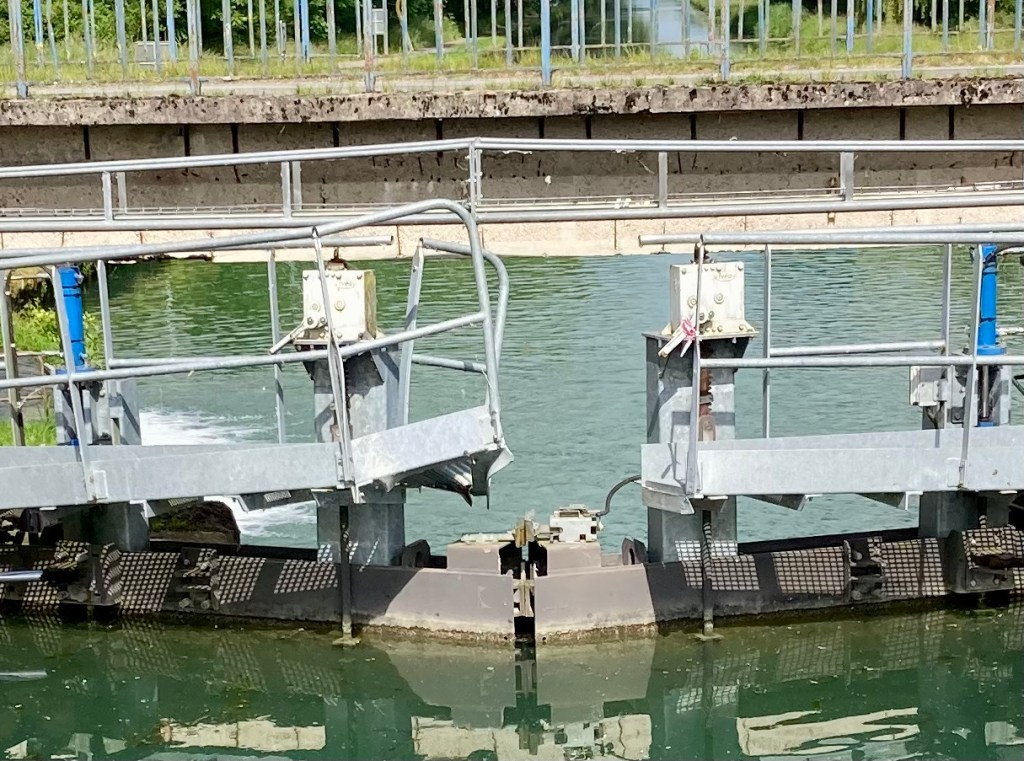
We never get smug about things like this. It can happen to anyone, but we always get super cautious when there’s weed about. It’s usually easy to rectify by giving the engine a couple of quick blasts of ‘forwards’ gear, though counter-intuitive as you are running out of space ….
It also helps when the crew (me) realises what all the revving and black smoke coming from behind means and gets a rope round the nearest bollard quick-time to brake us before we break something else.
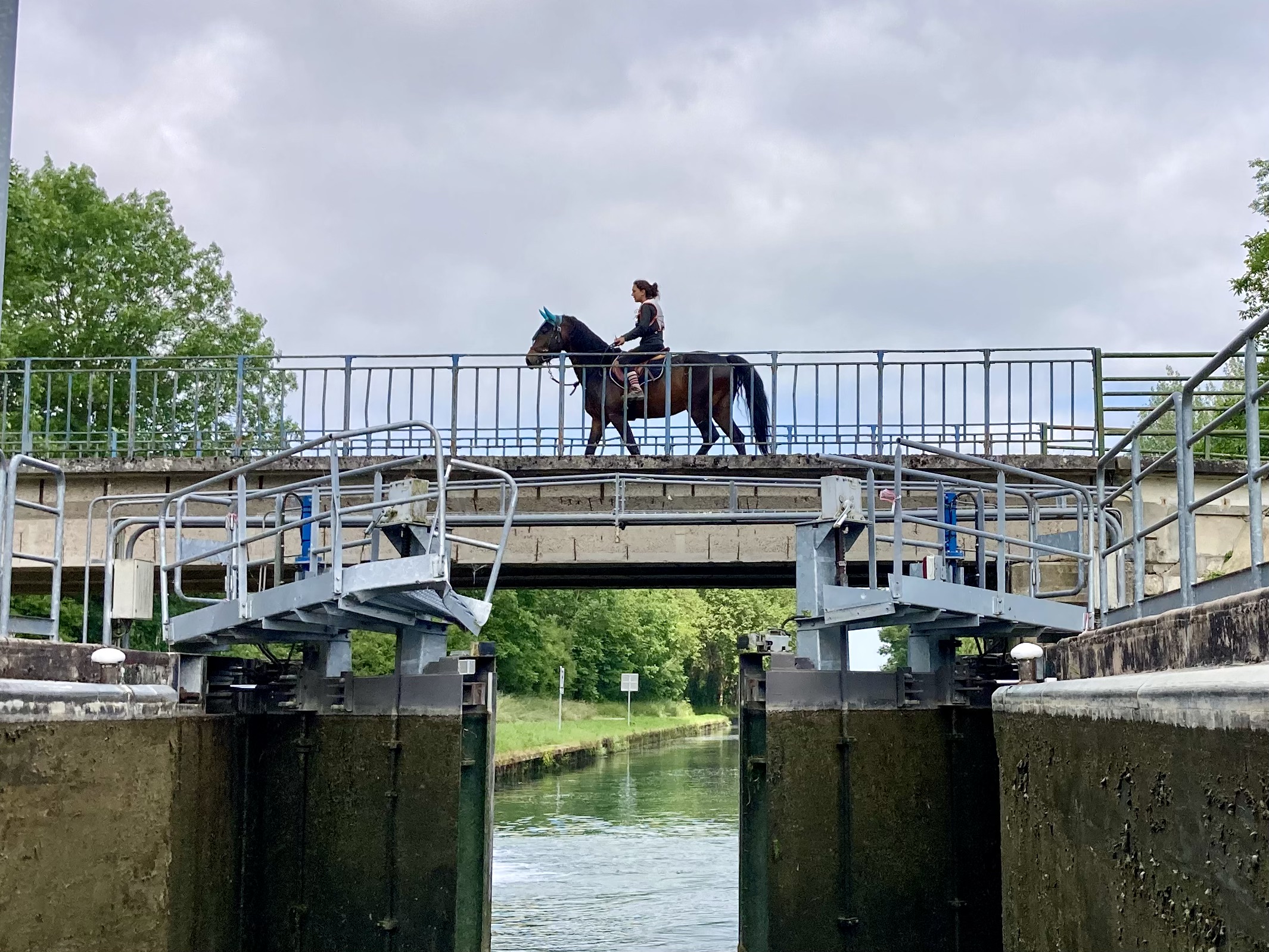
At this same lock, at Vraux, a young lady riding a sprightly horse came to cross the bridge just as the lock doors began to open with a bit if a creak and groan.
She showed herself to be an accomplished rider, persuading the surprised horses to continue across.

As we left Vaux lock we encountered a lively overspill, almost like a fountain in a town square.
These carry water from above the lock to below the lock when the lock is in use and the normal flow is interupted. Sometimes the current is quite strong and gives the boat a nudge across the canal.
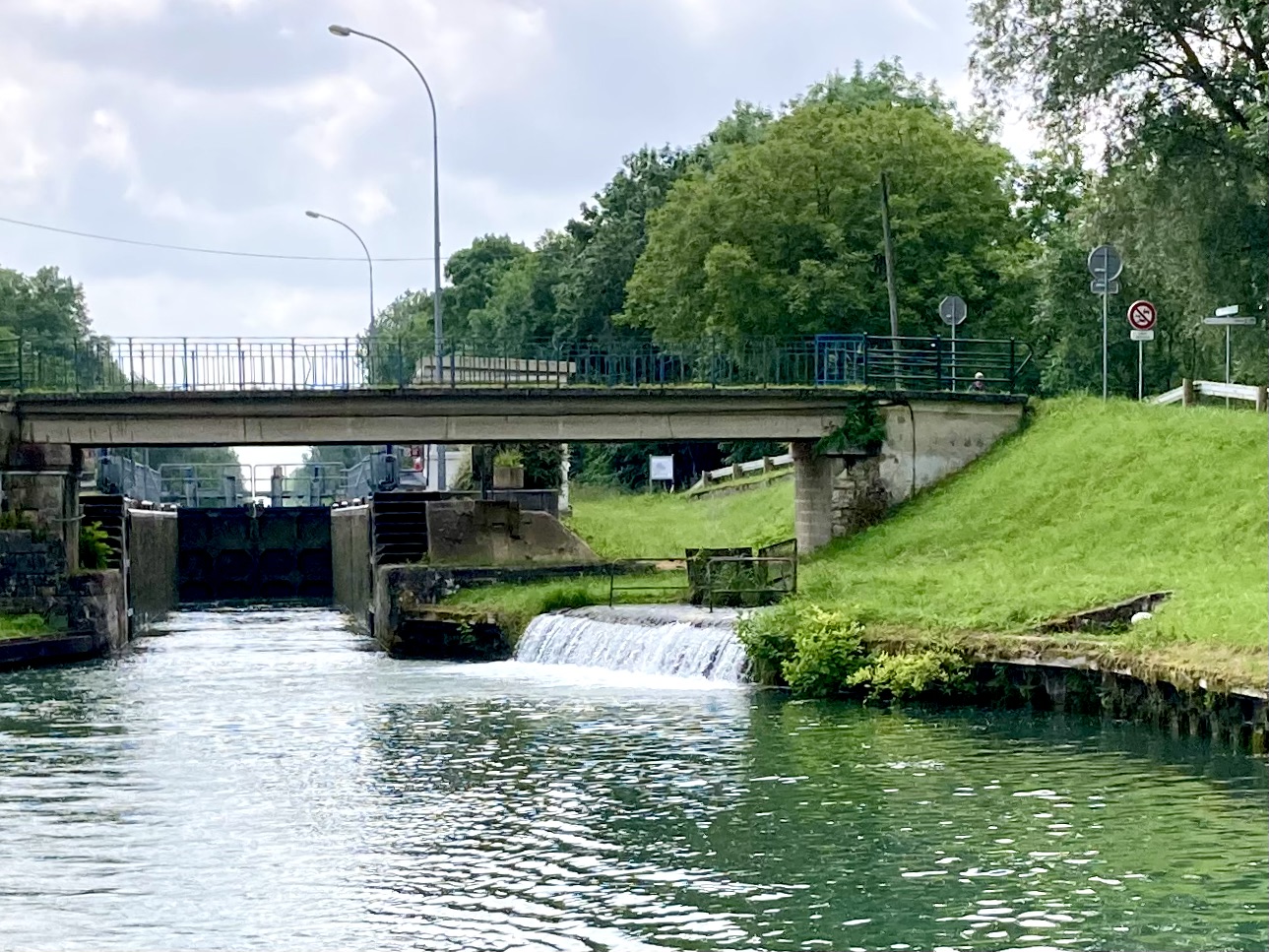
Here’s how it looks as you leave it in your wake.
We were now just half an hour from Condé and where we would turn off this canal onto the Canal L’Aisne à La Marne.

The canal was still straight and the sky becoming bluer. It is days like this that seem almost too perfect to be true.
All we needed now was a space to moor in at Condé, which we thought was likely, but you can never be sure.
We always have a Plan B available! Would we need it today?
Then we were at the junction, complete with good signpost informing us that straight on went to Écluse 12, Tours-sur-Marne, and onwards on the Canal Lateral à La Marne.
Turning to starboard, our plan, took us to the Halte Nautique of Condé, and onto the Canal de l’Aisne à La Marne.

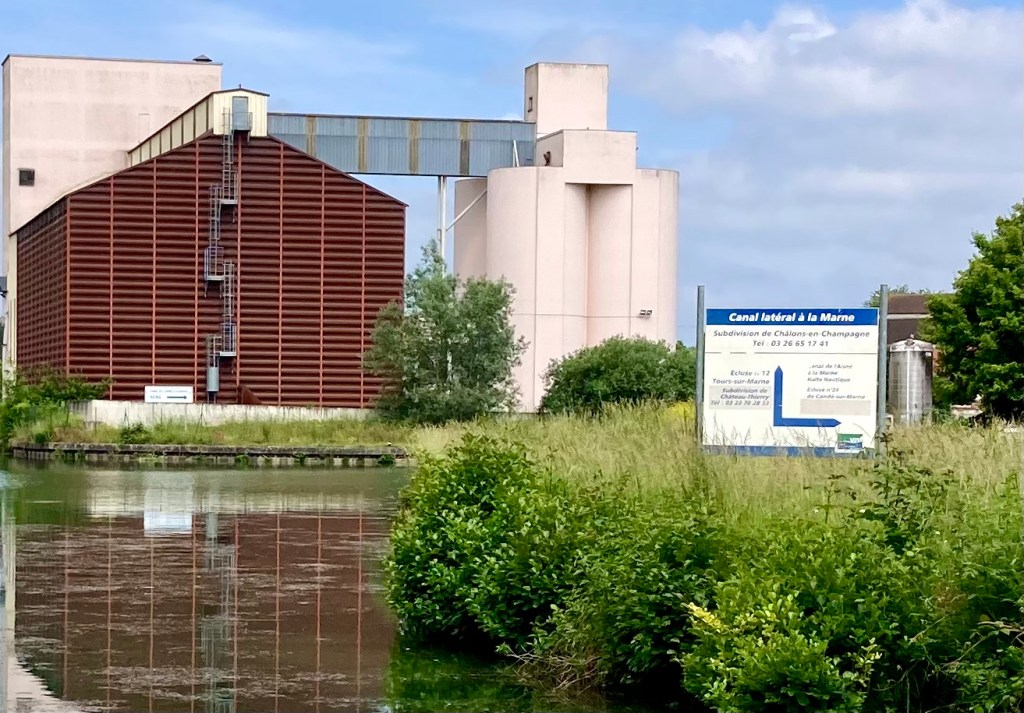
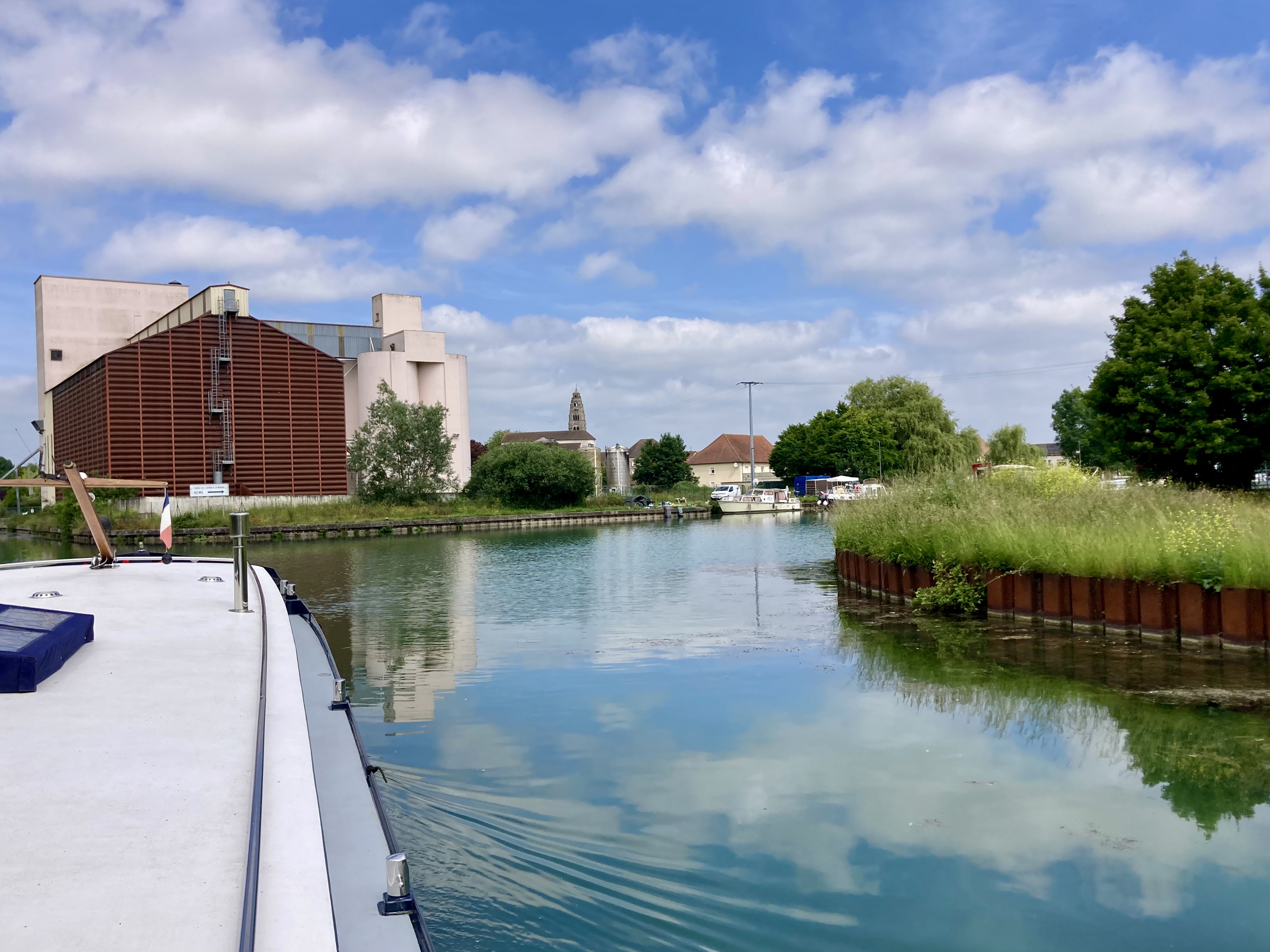
We took our turn to starboard and came up past the small Condé marina. We were more interested in the long quay beyond the marina, and were delighted to see yards and yards of mooring space for Calliope.


It did not take long to moor up, tied to a brightly painted bollard!
That was us sorted – off the Canal Lateral à la Marne and onto adventures new!
Relaxation for the rest of the day!
 goodshipcalliope