
of the Canal Entre Champagne et Bourgogne
7th to 11th May 2024
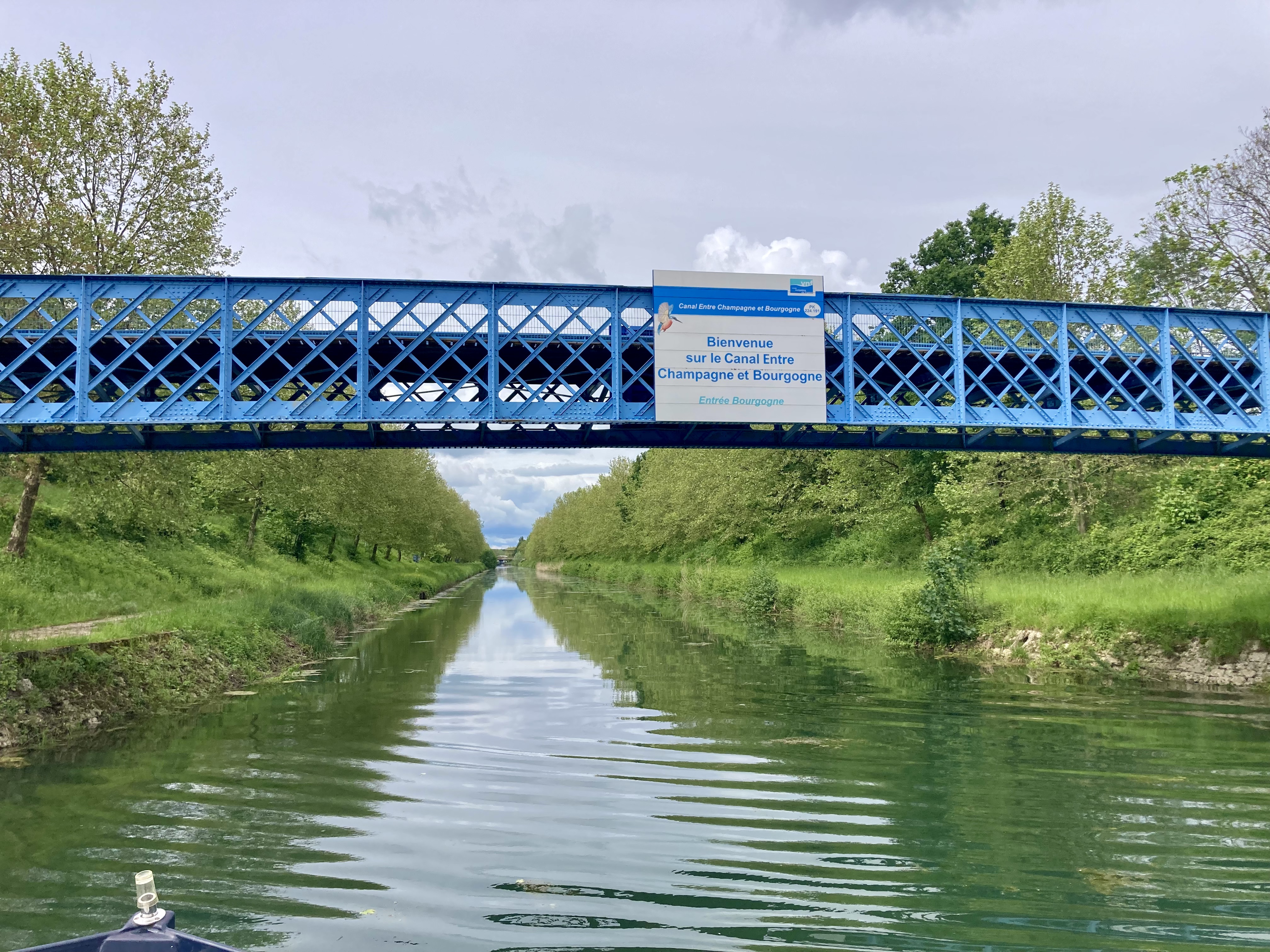
This canal links the Marne river to the Saône river and originally was named le Marne à la Saône, but tourist traffic and an interest in wines from different regions led to it being renamed in 2005.

The T-junction towards the bottom of the map show where we left the river and joined the canal.
Of its 114 locks 43 are in the Saône side and 71 on the Marne side – so overall we were facing just 43 ‘montant’ (ascending) locks on this trip followed by an easier 71 avalant (descending).
Maxilly-sur-Saône

We joined the canal just south of Maxilly and came up past some old industrial gantry’s to the first lock.
The site is now owned by a construction company. They have turned their back on the canal and now face the road on the other side of their complex.

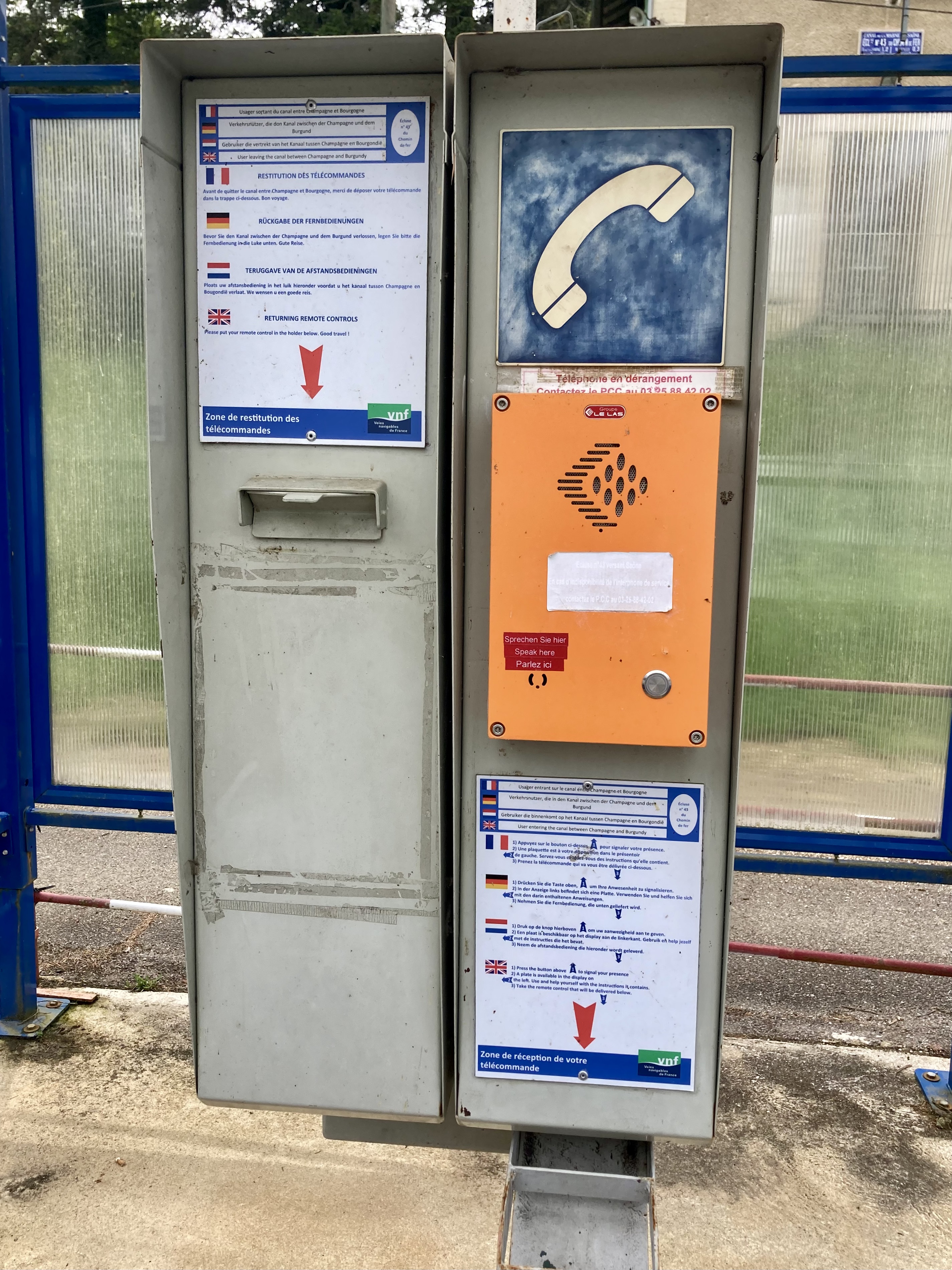
Here we announced Calliope’s arrival through the telecom at the lock. The instructions are a lot clearer now than they were 8 years ago! What’s more they are now in German and English as well as French. No excuse for not knowing what to do.
Having given Calliope’s name, length, draught, and our final destination we were presented with a remote control through a little despatch box below. This would serve to operate almost all of the 114 locks over the next two weeks.
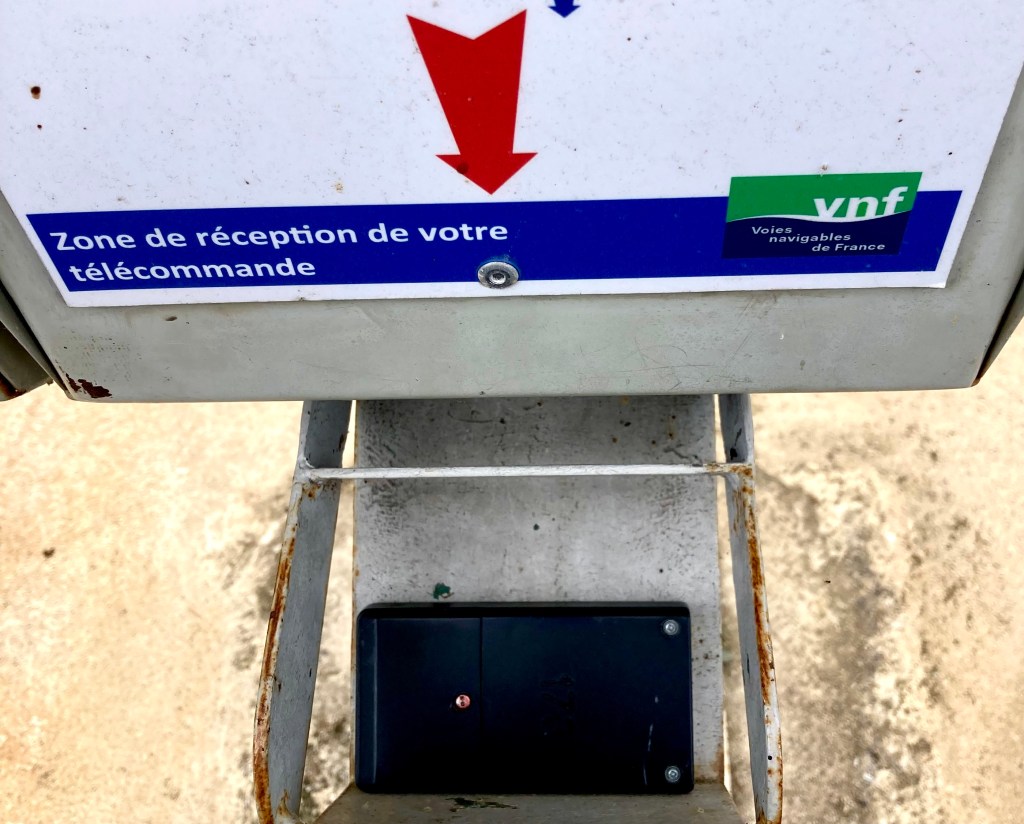
It is sad to know that éclusiers are losing their jobs through this automation, yet at the same time it is nice to have control of our own progress; a double edged sword.
Twenty-five minutes later we had come on up through the second lock and tied up at the almost empty quay at Maxilly-sur-Saône.

It was time for a pleasant relaxing evening, followed by a good night’s sleep before we set off in our upward journey next day.
Champagne-sur-Vingeanne
Our passage to the top of the canal began with 15 kms to Champagne-sur-Vingeanne. This allowed us to get ourselves back in tune with the canal and its locks.
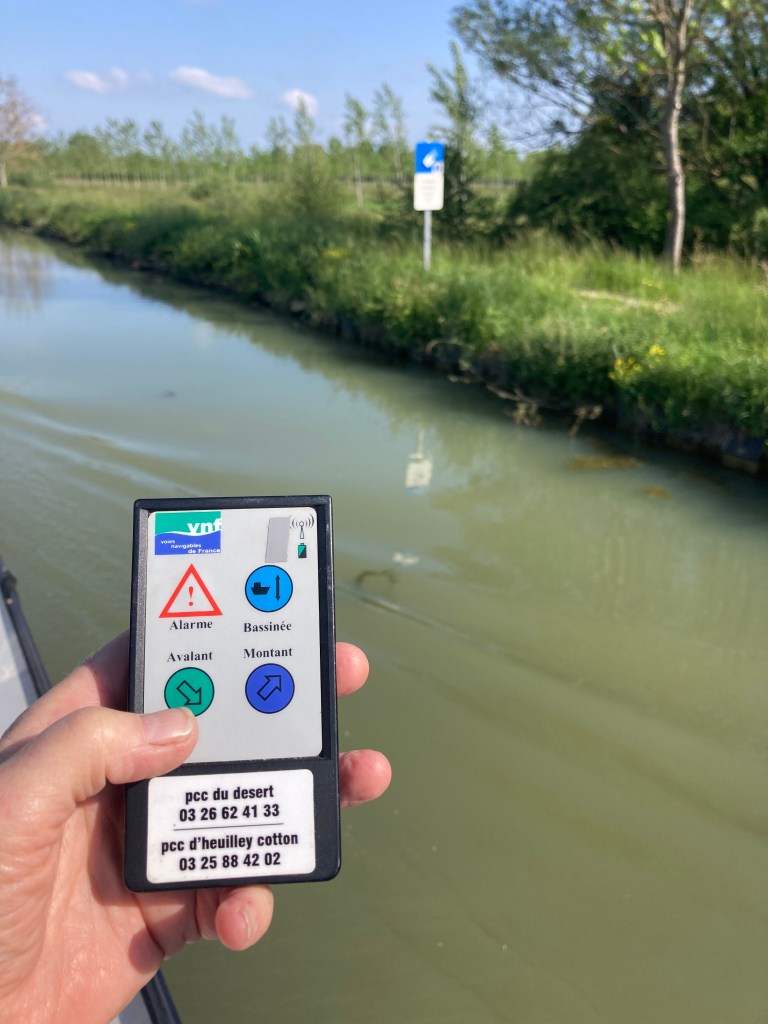
It wasn’t long before we were trying out our new remote control.
There are signs along the canal bank a few hundred meters from each lock reminding you to press the button.
In our case, going up, it was the dark blue button to use.
We had expected to arrive in the lock and use the blue lever to start things going, but when we arrived we found an éclusier (VNF lock keeper) there waiting for us.
He was there clearing some of the weed that had coagulated around the lock doors, and stopped work to the push the blue lever up for us.
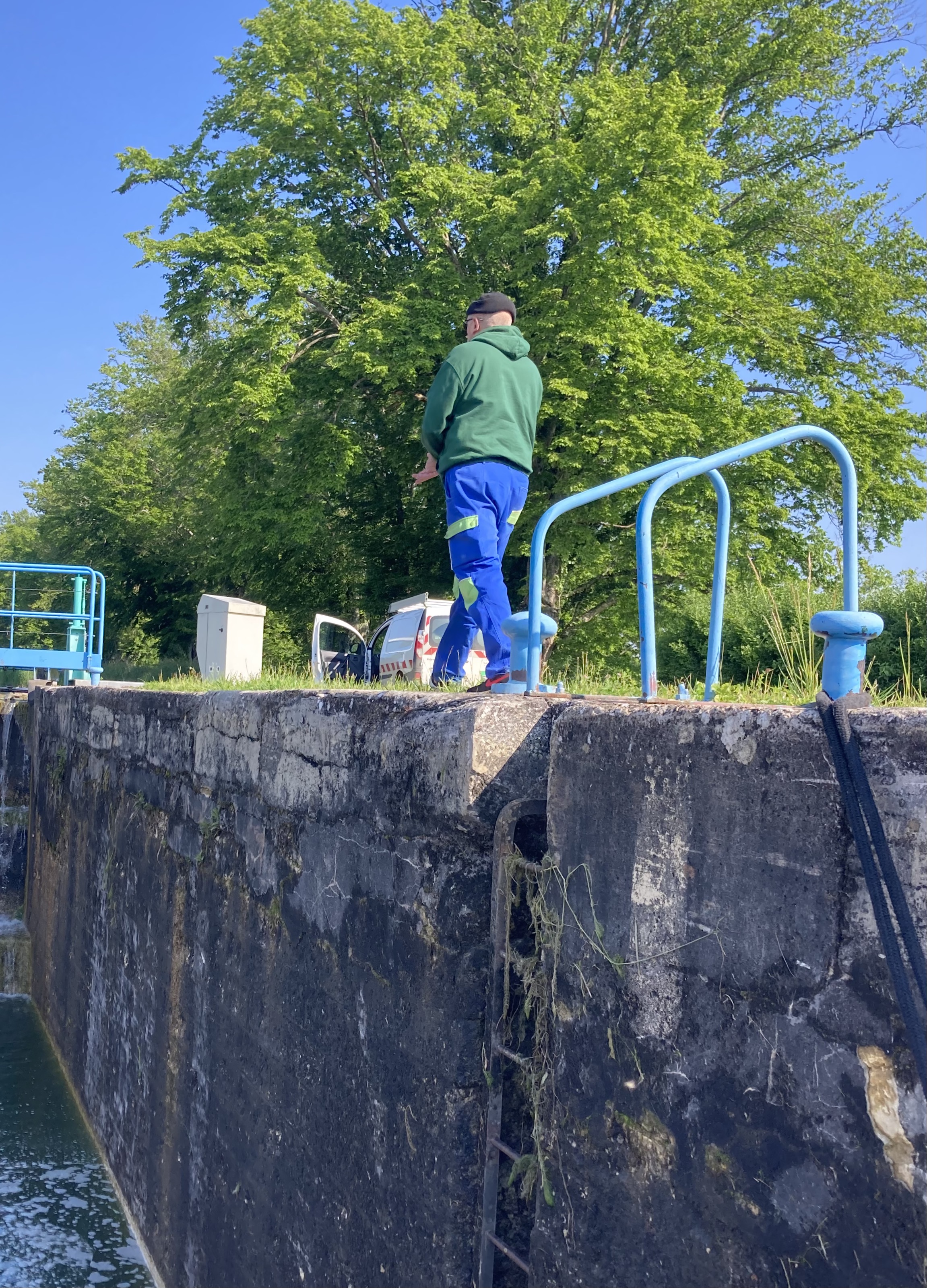
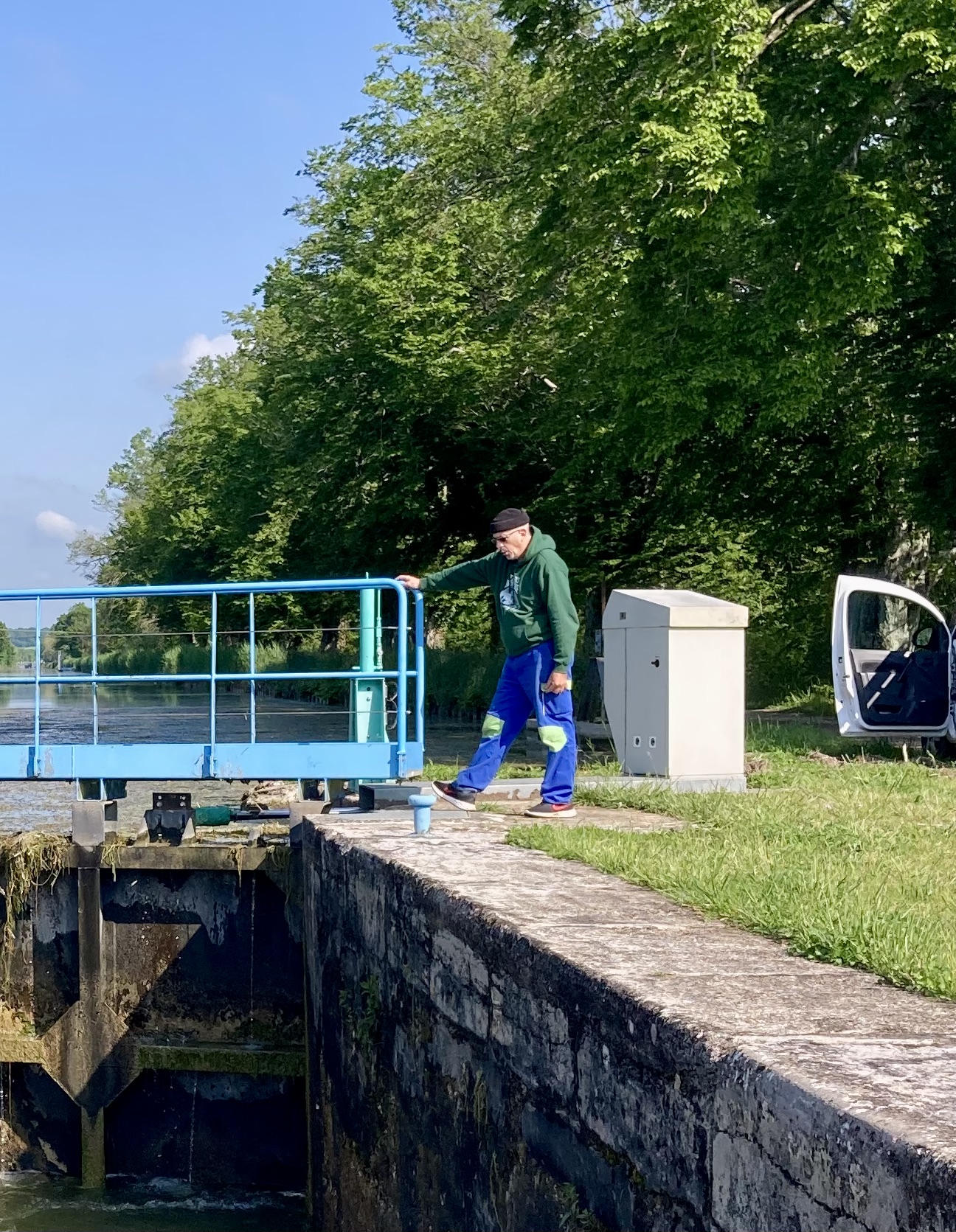
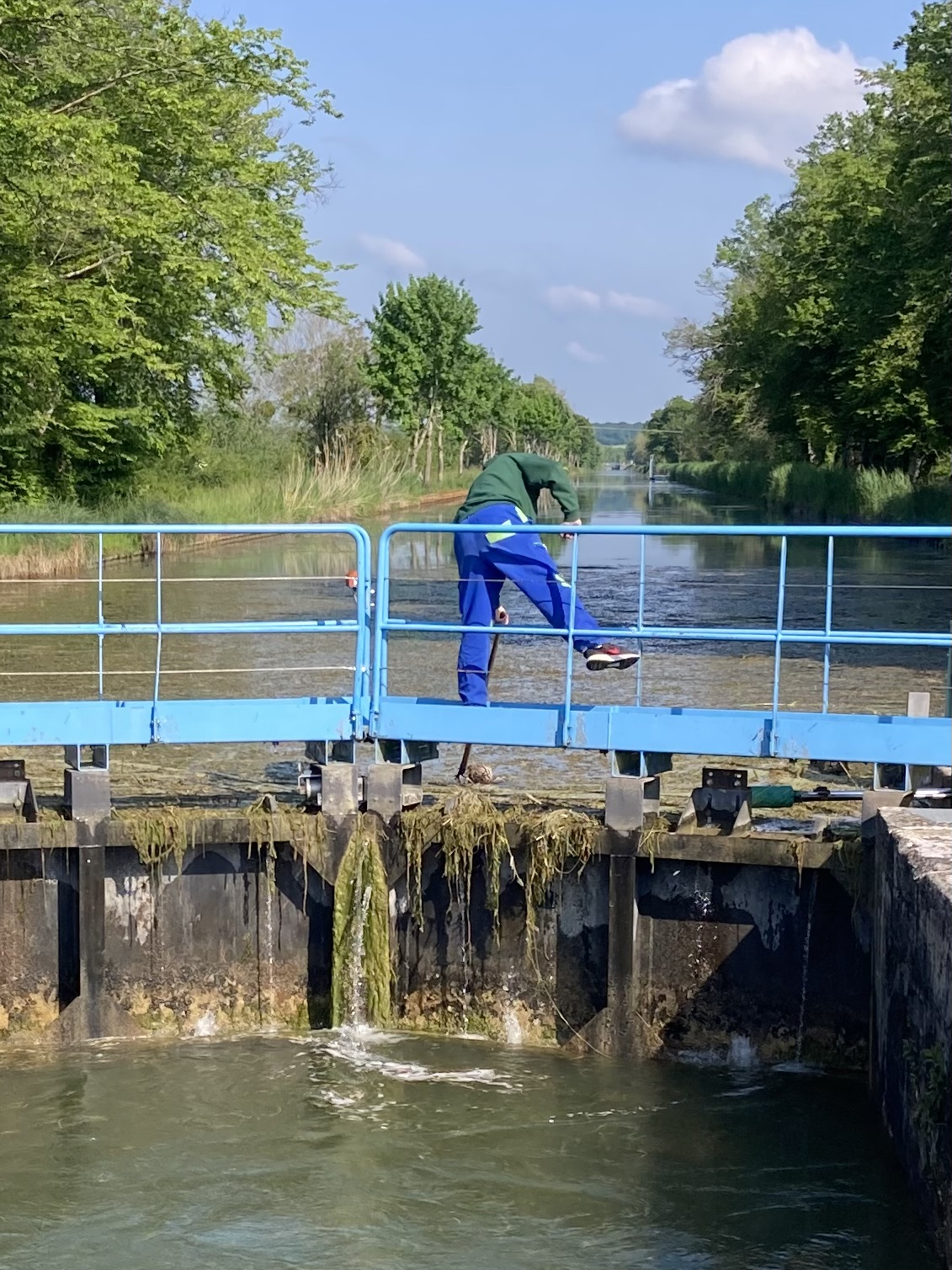

He then went back to work clearing the weed – a never ending and quite strenuous occupation. Without it the lock doors get jammed and boats get stuck with weed round their propellors or in their cooling systems.
We are lucky with our Piper boat as she has a keel cooling system that means she does not take in water from the canal. And on the rare occasions that weed round the propellor cannot be loosened with a burst of reverse, we have a weed hatch to easily remove anything that has collected. (Hope I don’t speak too soon!)
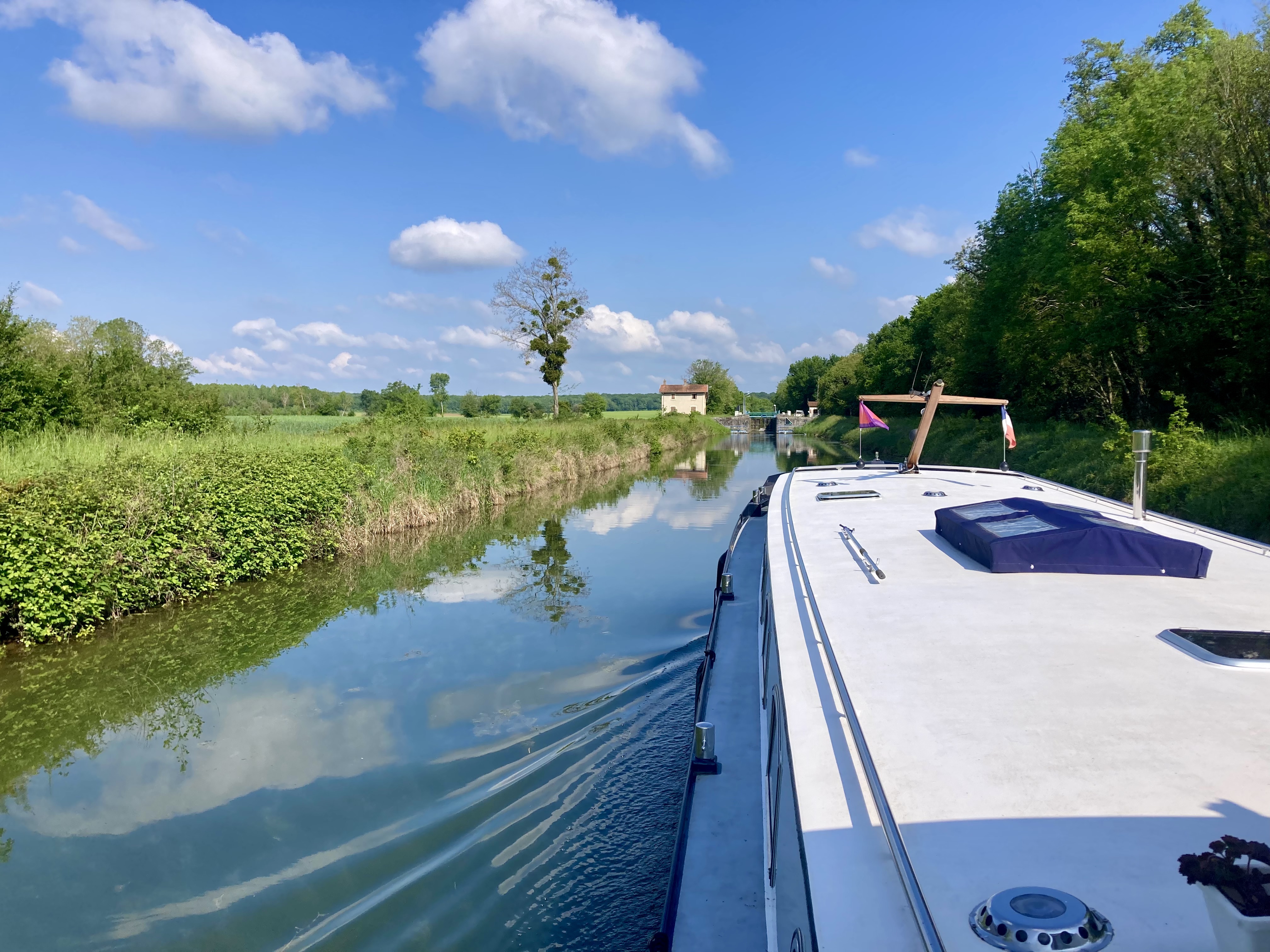
Soon we were on our way through the countryside to the next écluse (lock). The blend of sunshine and no wind meant lovely reflections on the calm waters.

Then the next lock, Cheuge.Every lock has a name and usually this is displayed on the lock house, whether occupied or deserted.
This one was empty – a sad desolate sight.
This time, with no éclusier, we were the ones to operate the system.
Pushing the blue pole upwards gets things moving – doors closing behind us, water coming in to lift us up, and then doors opening in front so that we can leave.

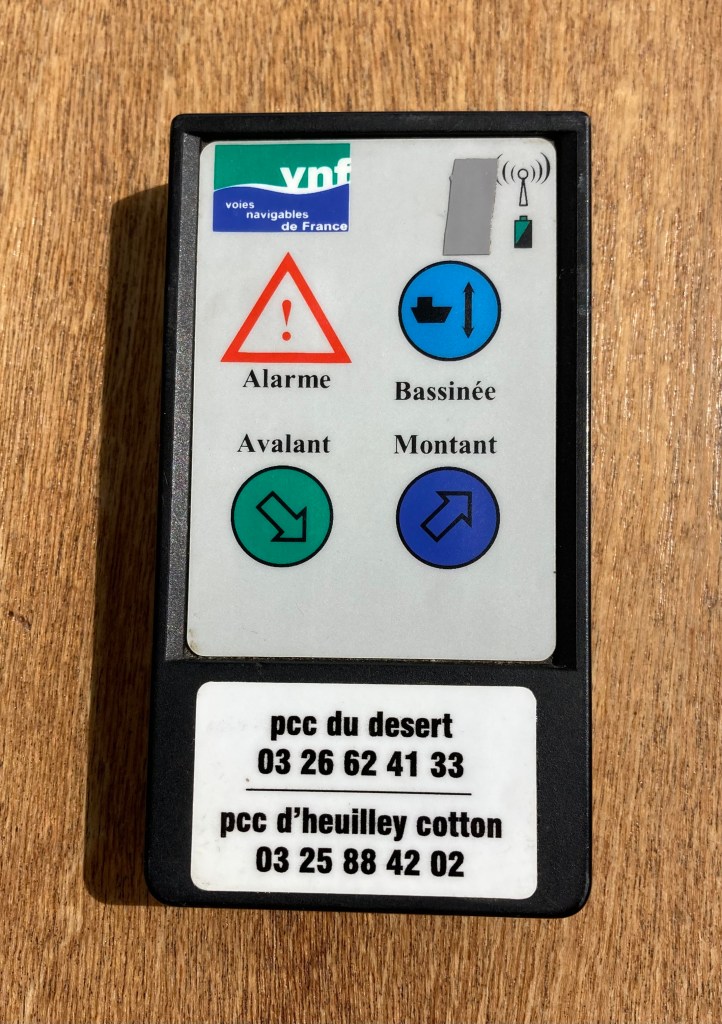
And then we discovered that pressing the new button marked ‘Bassinée’ on the remote does the same thing – at least in these locks.
That’s a whole lot easier!
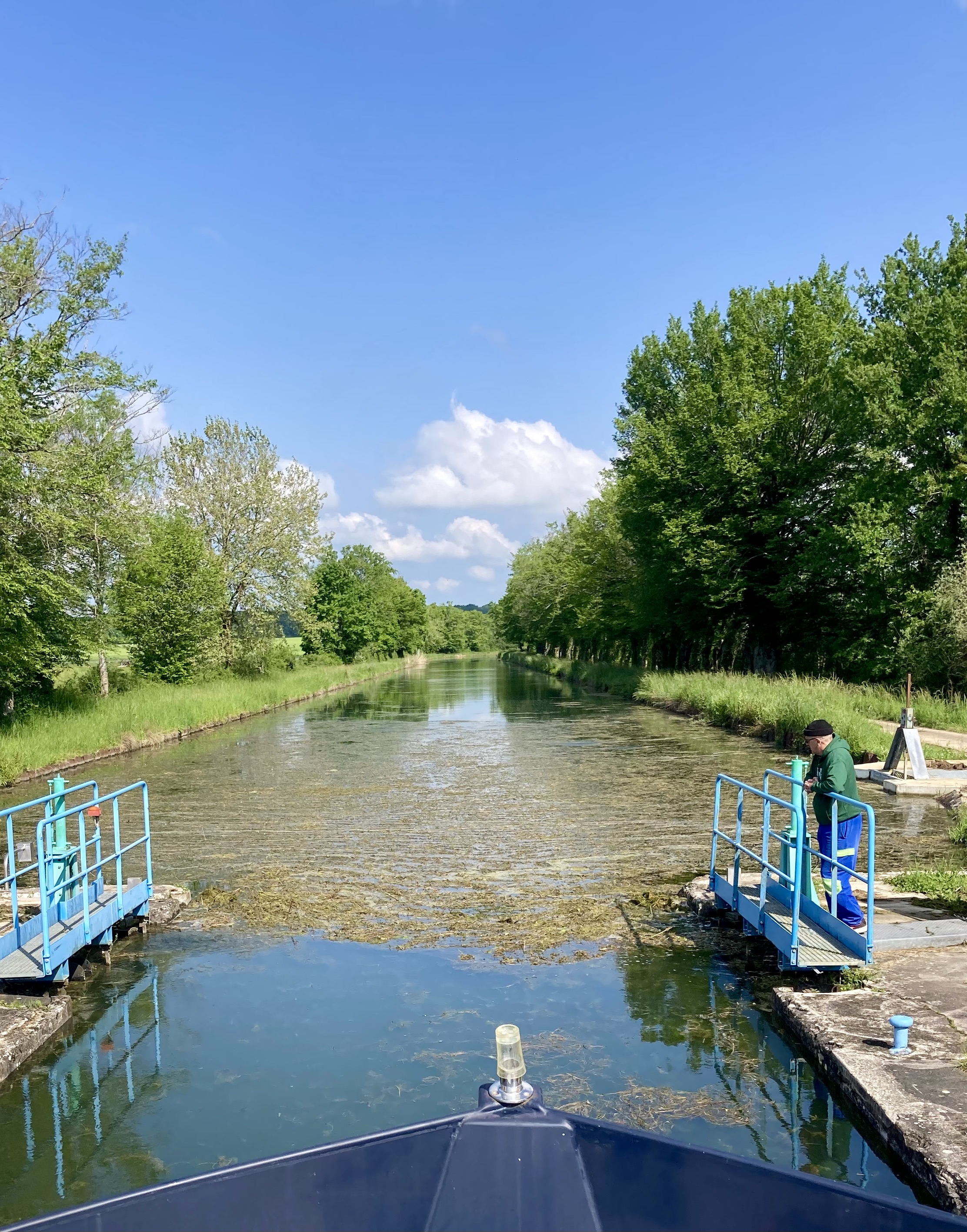
As we left the lock we were faced with quite a mat of loose floating weed, but it parted around Calliope’s bow and we were soon back into clear waters.
The countryside was truly lush. All the rain of recent months has resulted in very verdant pastures – everywhere that they are no under water. I felt so happy out there in the fields, on the water, and hearing nothing but birds and the swoosh of the bow wave. Eeeh it’s a tough life being retired! 😅
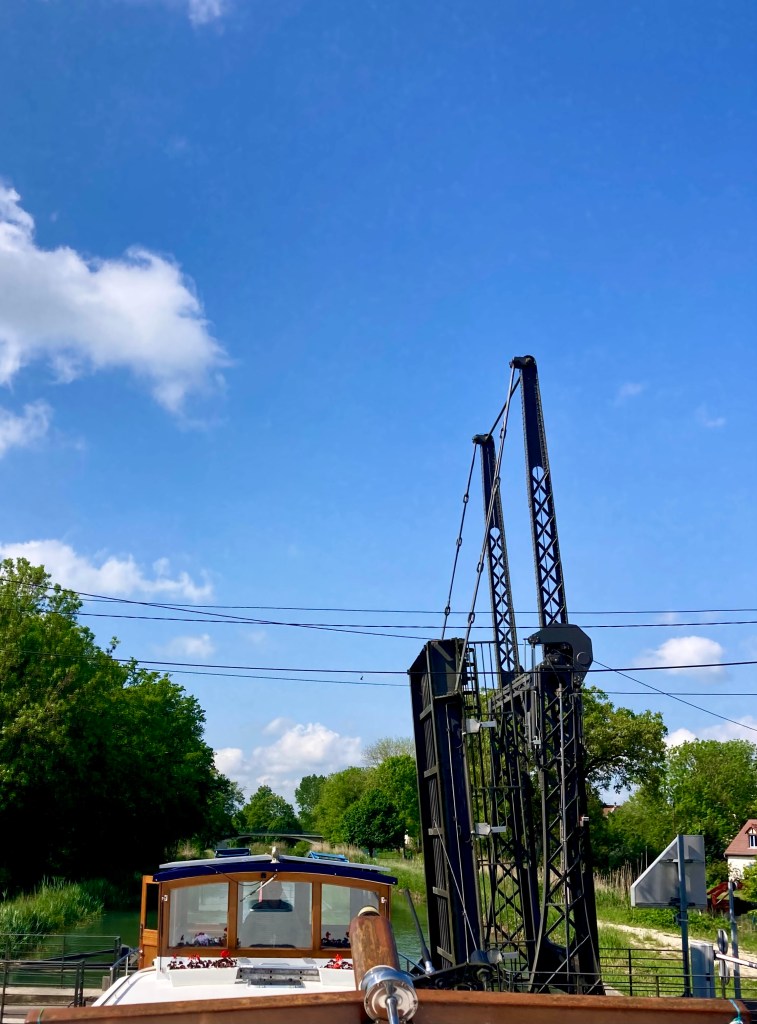
The next ‘obstacle’ was a pont levèe, or lift bridge.
This was also operated with our telecommand (remote) and had lifted ready for us to let through by the time we reached it.
The sunny Spring weather inspired me to do some Spring cleaning. Some of the dirt that had been washed off the roof was now making the cabin sides grimy so I set to work with a bucket.

Looks a lot shinier after half an hours work.
I must get to work on the other side later, but stopped for a while for the next architectural glory.
The viaduct d’Oisilly is a Victorian masterpiece, crossing the wide valley of the Vingeanne river and the canal.

It was built around the same time as the canal and for almost a century it carried the railway from Troyes to Gray.
There was just 3 more kilometres to the night’s mooring place, and one more unexpected sight to see – a pack of Anglo-Francais hounds. Only six countries in the world allow hunting with hounds, and France is one of them. , usually with the hunters on foot.


This pack seemed to be out for exercise. Later one old lone female came for wander along the bank, looking at us with little interest, and keener on the picnic a young family was having nearby.
There are not a lot of mooring places in this part of the canal so we decided to aim for something novel to us. We would moor at a dolphin.
In this case a dolphin refers to an upright metal structure in the water with bollards for mooring. Depending on the spacing of the dolphins and the length of your boat it may be necessary to also attach to the bank. If this is the case there may be usefully spaced bollards on the land – and there may not!
The name comes from a corruption of the Duc D’Albe’s title; he was the first person to use this type of structure as a mooring in Spanish Holland some time ago.
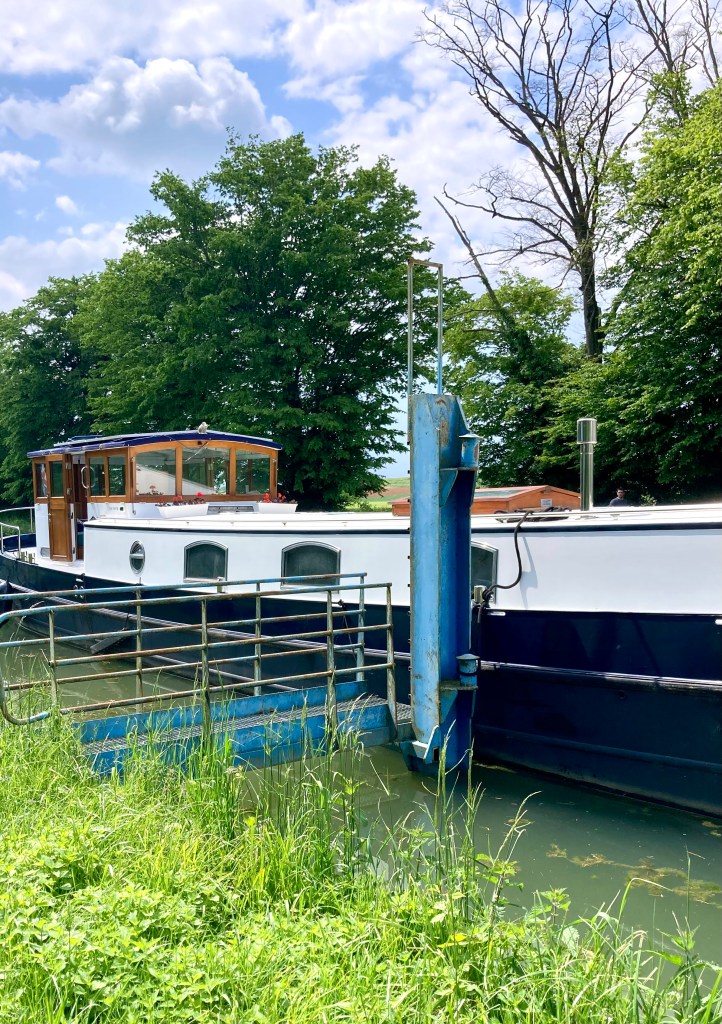
The single dolphins are usually perfect for Calliope with a centre rope to the dolphin itself and bow and stern lines to sturdy bollards on the bank.
The spacing of the shore bollards on this one though was a little too long for us so we hammered a pin in for the bow rope.
[Where dolphins are in pairs they tend to be 20m apart, fine for the old commercial 38 metre Freycinet barges that used them in the past, but just too far apart for us.]
We were moored about a kilometres from the village of Champagne-sur-Saône. That was a nice distance for a stroll before settling down for the evening.


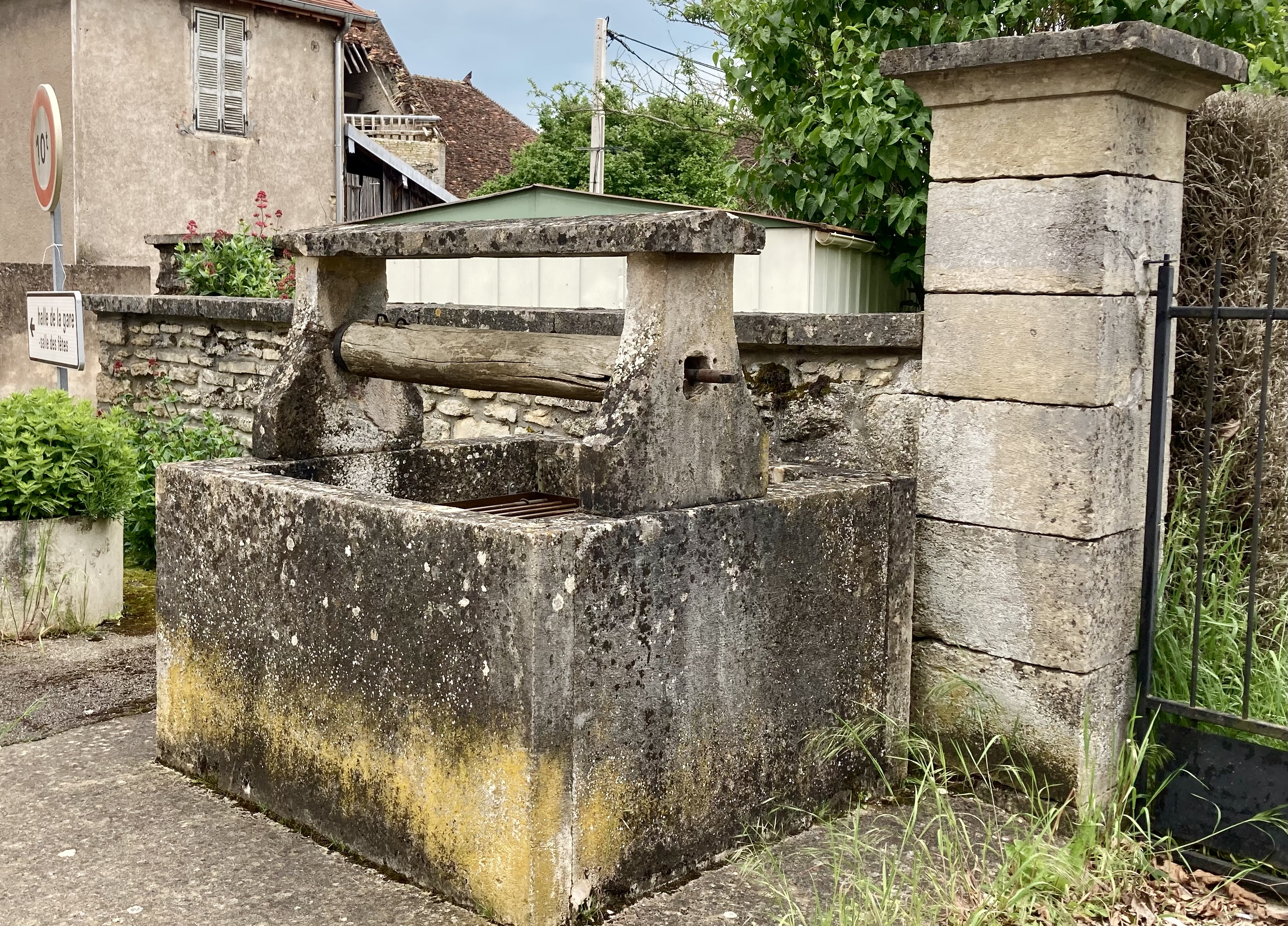
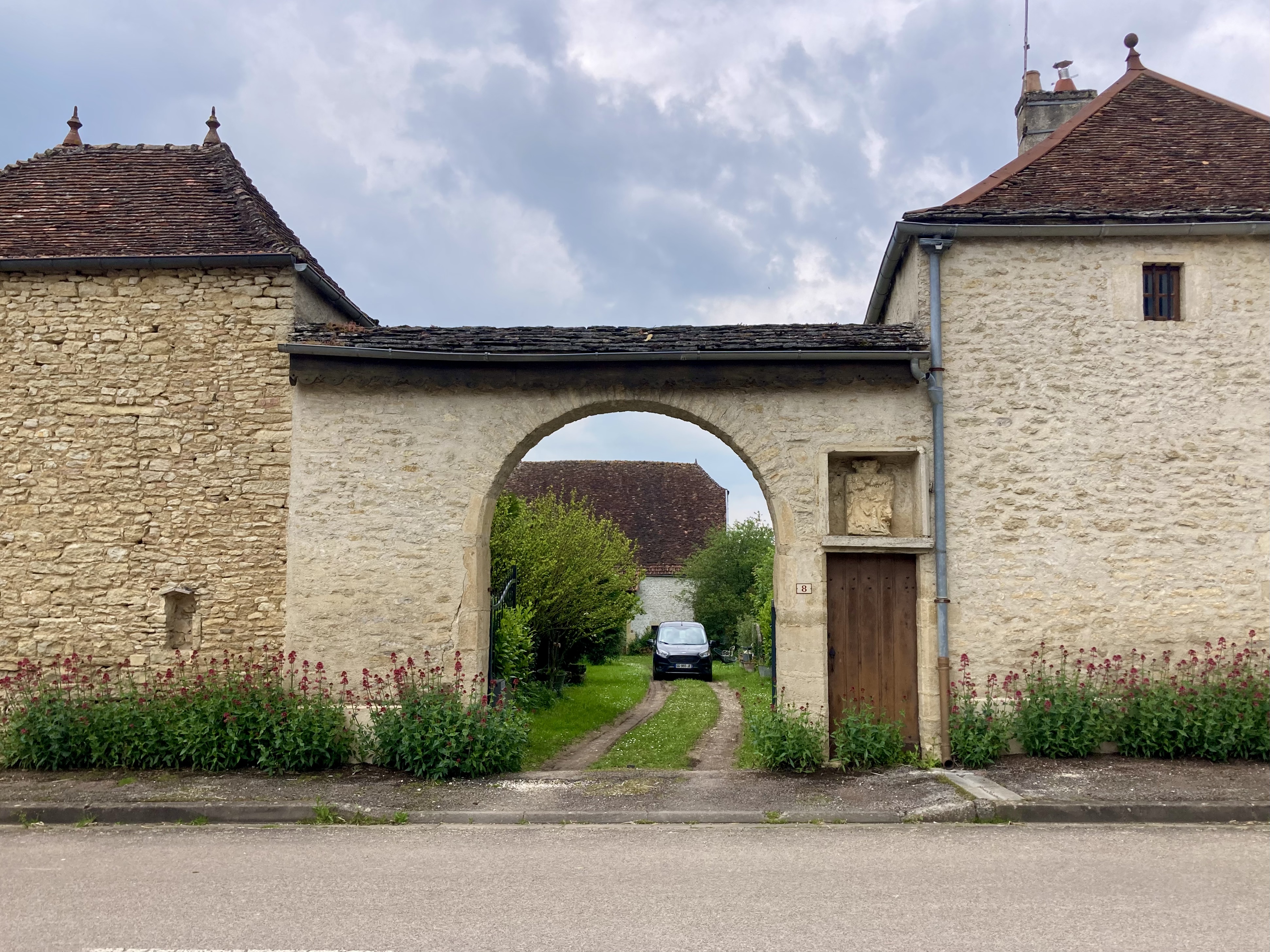
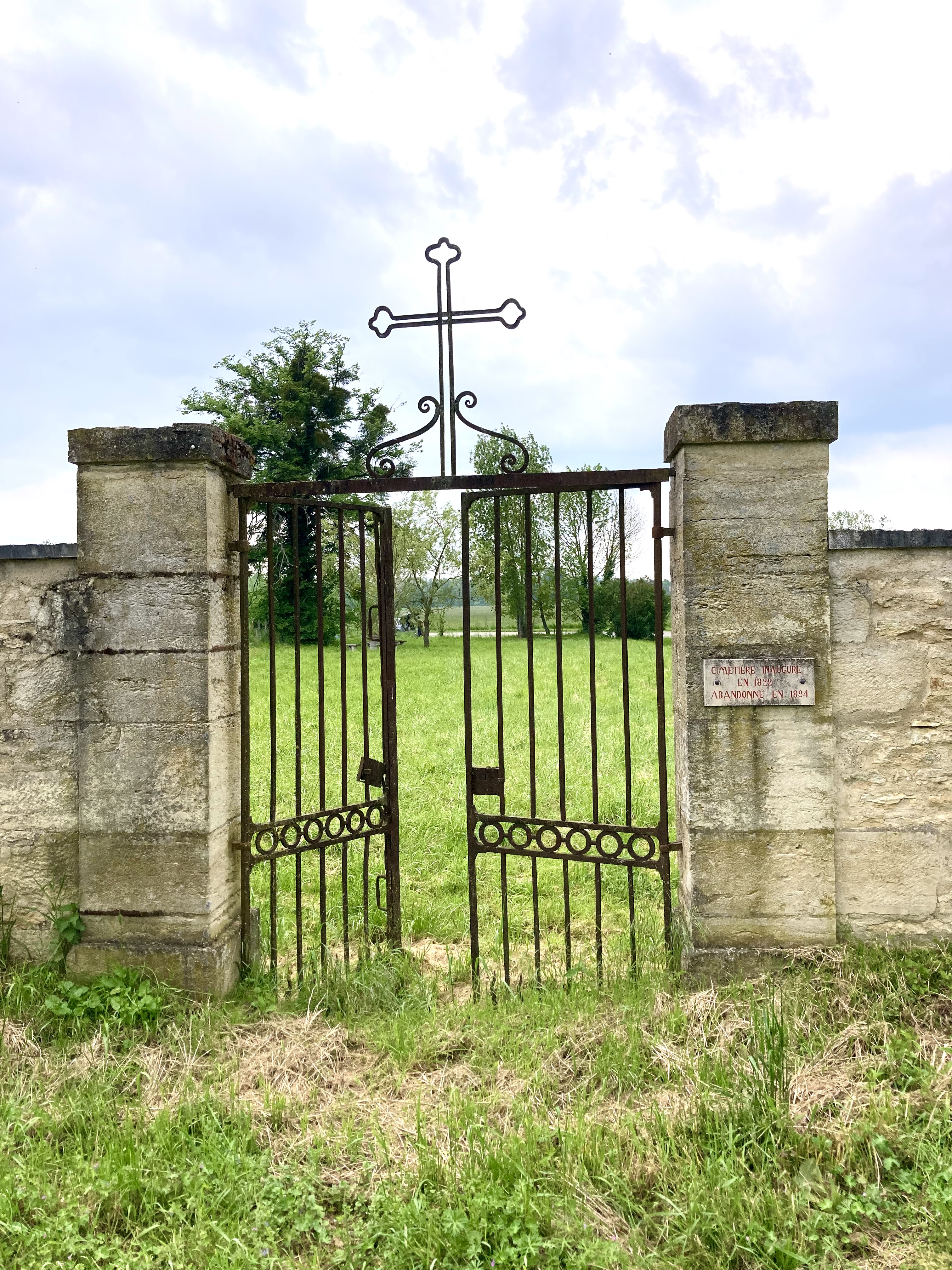
It has been quite a busy and well off village in the past, but very quiet now. It is probably now a dormitory village for Dijon, not too far away. There is still a small auberge with a little shop and depot de pain – but only open a few hours on 4 days a week, and not the day we were there.

We were happy to go back to our boat and enjoy a peaceful rural evening.
Saint-Maurice-sur-Vingeanne

Next morning we were off at 0900 – early for us – leaving our dolphin in our wake.
0900 is the time the locks officially open, thought we had seen the lights come back on to the traffic light system earlier than this.
Anyway 9am is certainly early enough for us. Time for a cup of tea (in bed for me), breakfast and a catch up on the news – and, these days, social media!
The Captain prefers his coffee, fruit juice and a couple of crosswords. 😊


I started collecting the metal work styles own the bridges as we went. I find it interesting to see as we pass from area top area, or time period to time period, that different metalworkers must have been used, each with their own style.

We knew we were heading for another dolphin mooring and were pleased to see it empty as we came to the top of the lock just before it.
This pair of dolphins had not bollards shore and was therefore a little trickier. Calliope is not quite long enough to tie up bow and stern across the two dolphins so it required some new thinking about how to best moor up to just one of the pair.
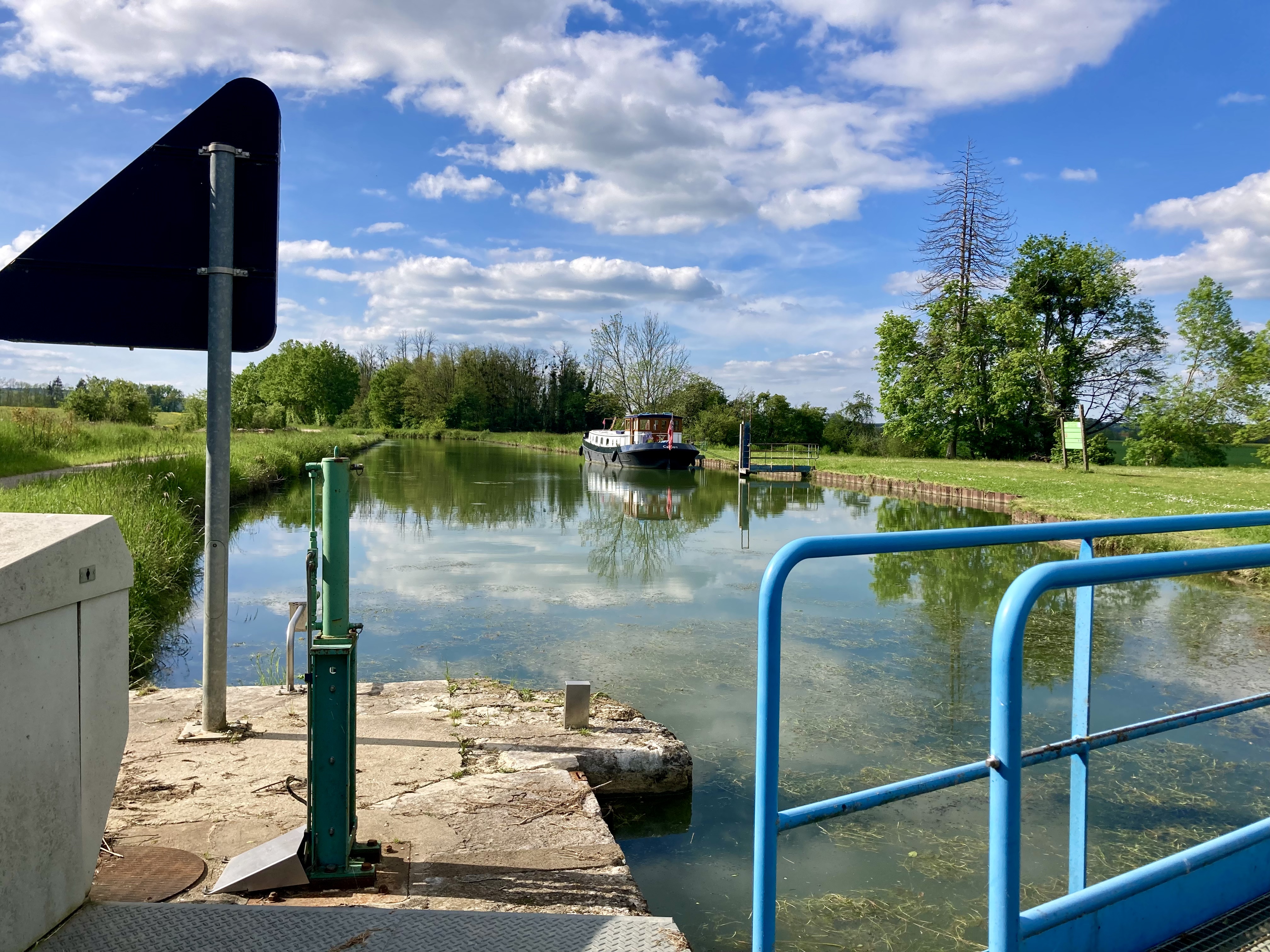
Stakes and the hammer were brought out and once we secure at the middle of the boat we could go ashore, put in stakes and throw ropes for mooring; soon done!
That meant I had time for a walk into the village – again about a kilometre away.
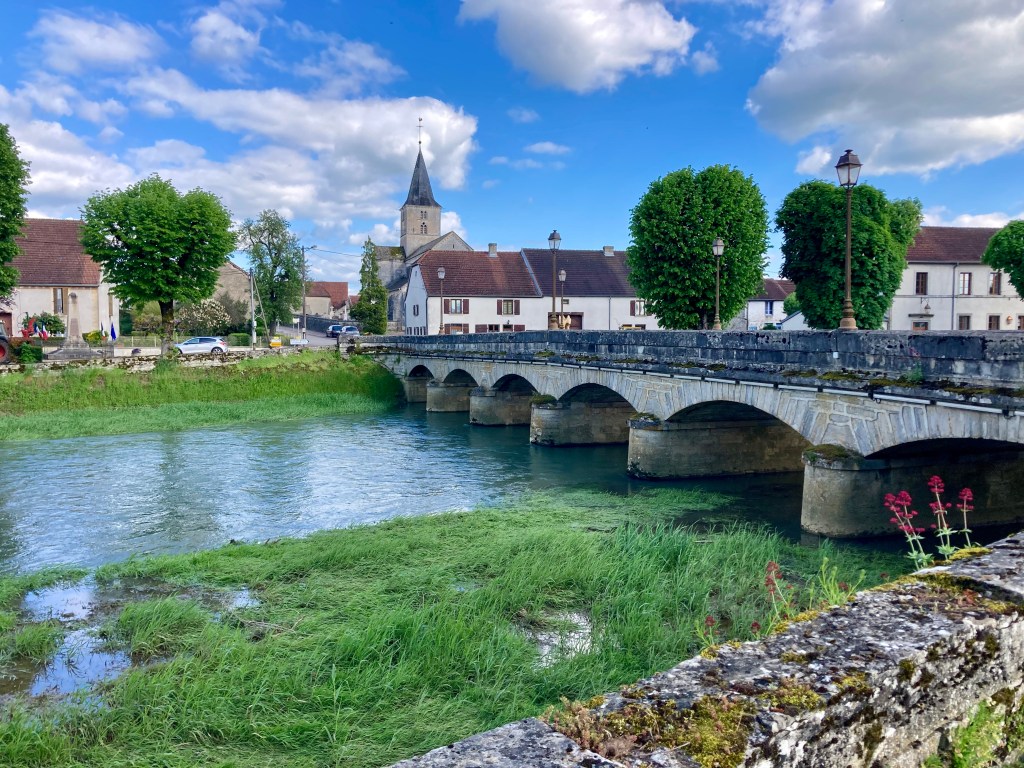
Saint Maurice is certainly on the Vingeanne and has a lovely bridge over the river.
There was also a lavoir! If you have read this blog before you will be used to me enthusing about these historic communal wash houses where people came to do their laundry in days gone by.


It was quite an impressive building – tall for a lavoir, and in sight off the bridge. It seems that a channel from the river fed the lavoir, ensuring a constant supply of clean water running though.
The village history was evident on many of the old buildings, and also had some modern touches.
For example this owl was carved from the trunk of a now dead tree standing by the bridge.
Rather beautiful.

Back to the boat for supper and a quiet evening in the sun, followed by a colourful sundown to relax us for a good nights sleep, and readiness for the next day’s cruise.

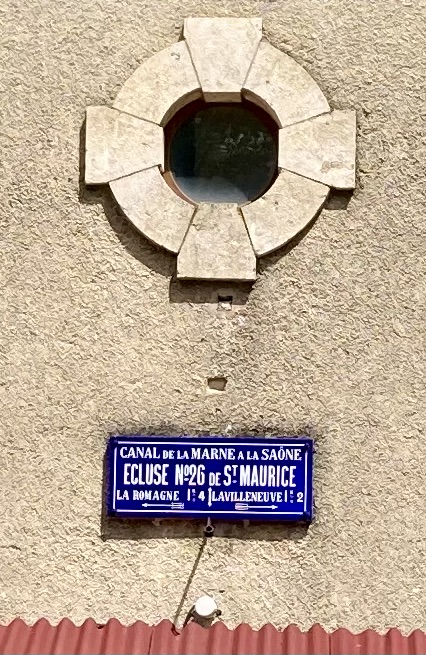
Before we leave Saint Maurice I will use its lock as an example of the old name of the canal continuing on.
If you look at the blue sign on each lock house you will see at the top ‘Canal de la Marne à la Saône’
Then the lock number and name, and finally the distance to and name of the locks on each direction.
Before the days of Google maps this must have been invaluable information for the bargees!
Piépape
Our choice of the next night’s mooring was quite easy as we have moored at, and loved, Piépape before.
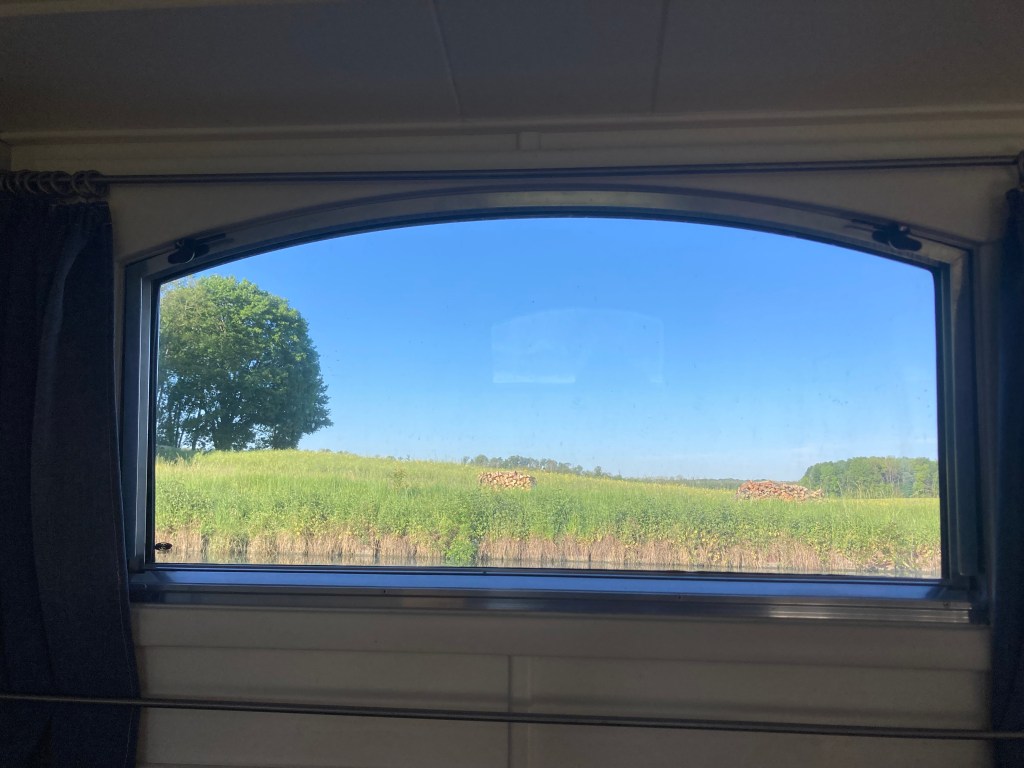
The view through the galley window as I got breakfast was very promising.
Another blue blue day on the canal.
The journey was in many ways uneventful, but absolutely crammed full of photo opportunities. The blue of the sky and the various greens and yellows of the fields were far too tempting to this lover of the countryside, so my apologies for this collection of scenes along the canal.

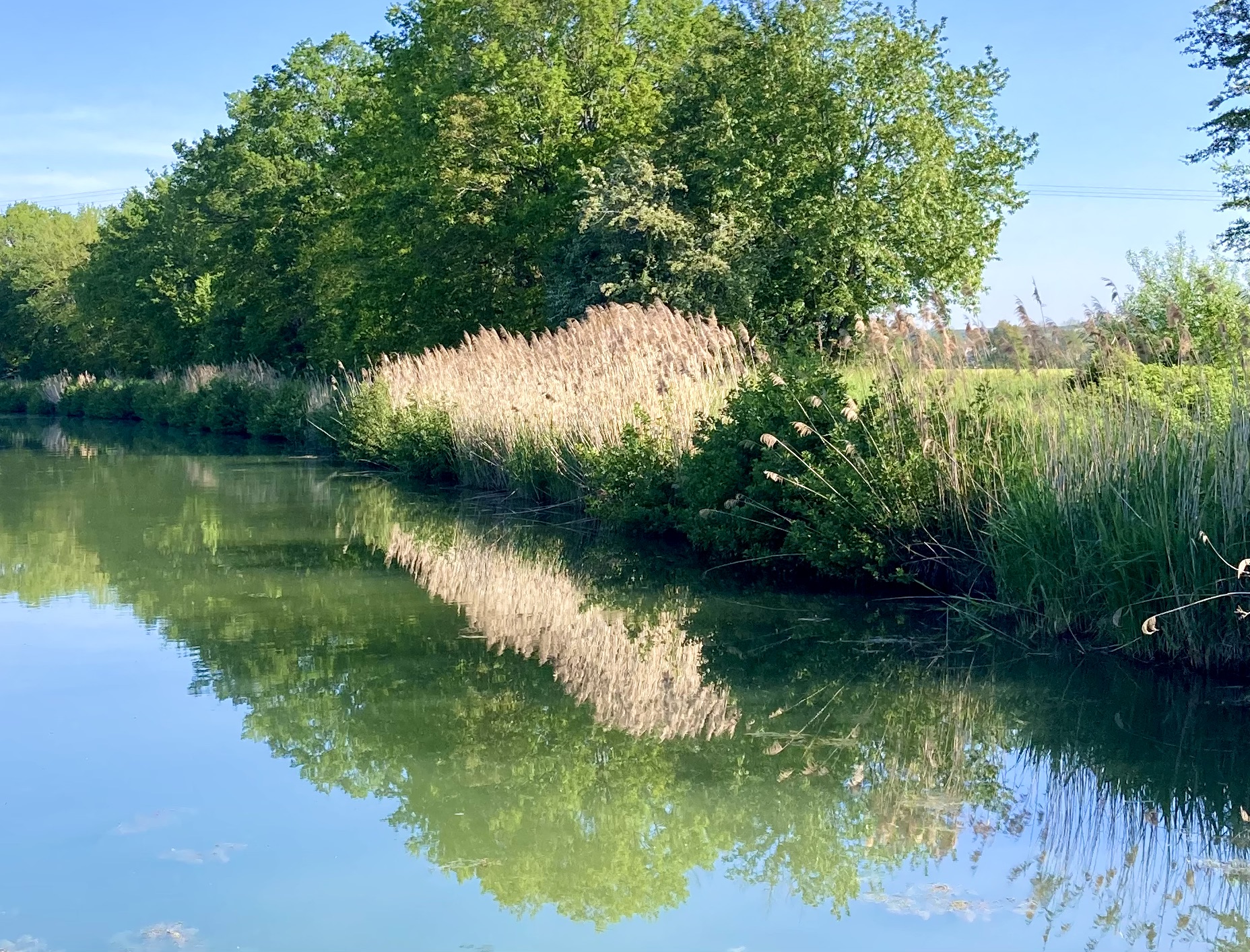

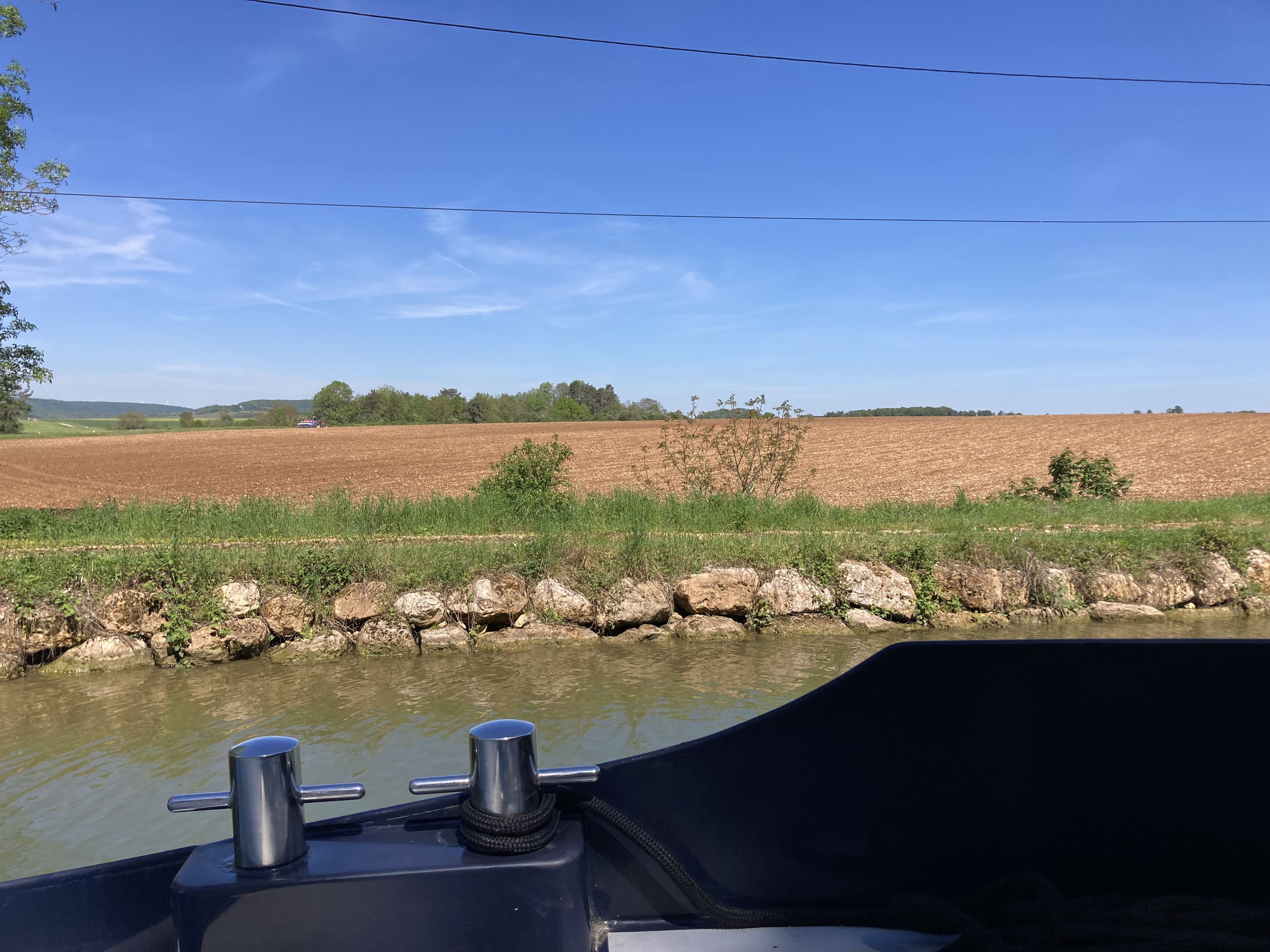

In the words of the 1960’s Small Faces song Itchycoo Park, “It’s all too beautiful”.
Just mile after glorious mile of tranquil pastoral splendour.

Other green things did come our way as well.
This shiny green beetle scurried out from the grass at a lock, ran up my rope a way, then turned back and disappeared from whence he (or she) came.
In this generally quiet and uneventful journey small things can gain significance.
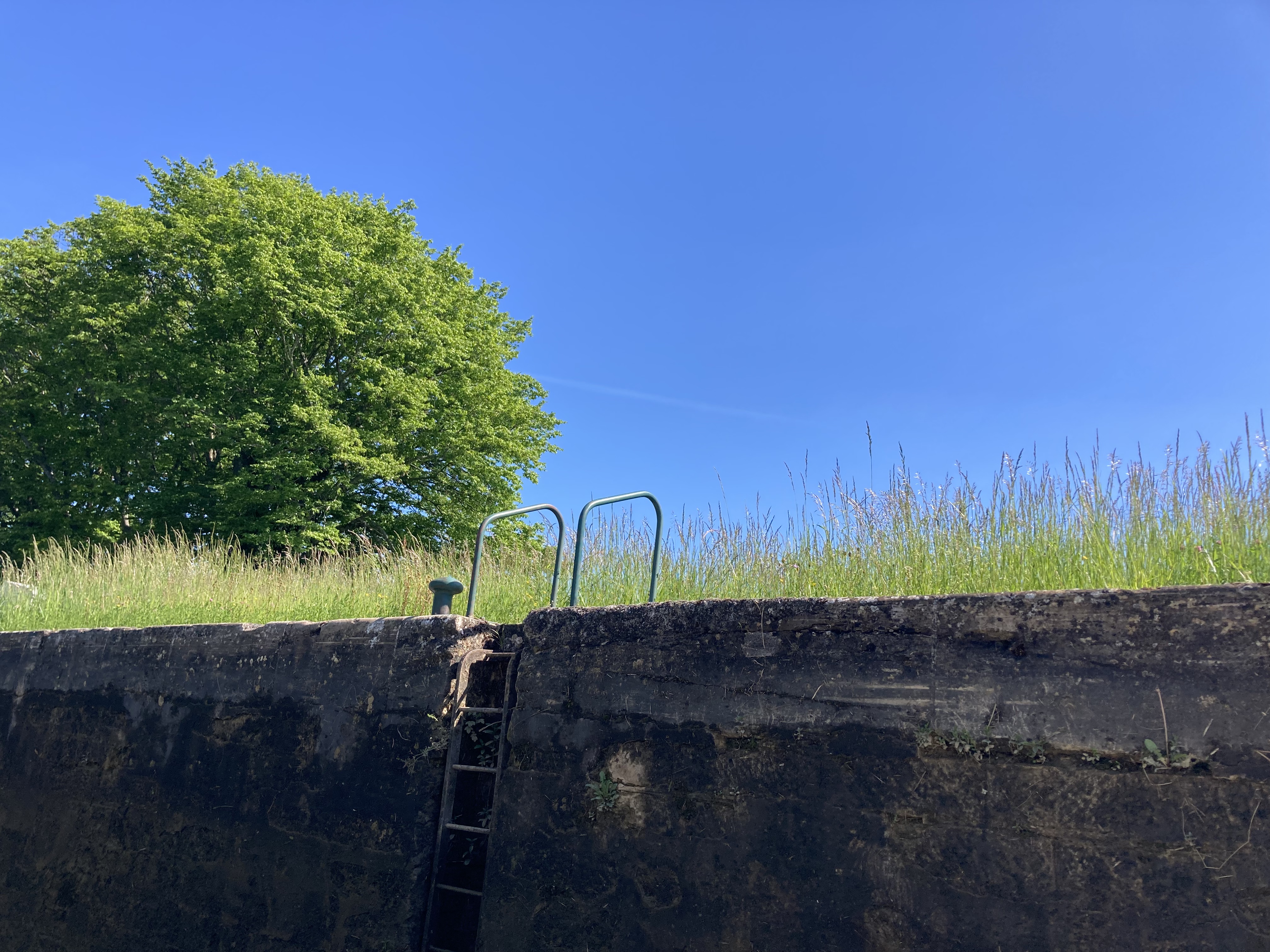
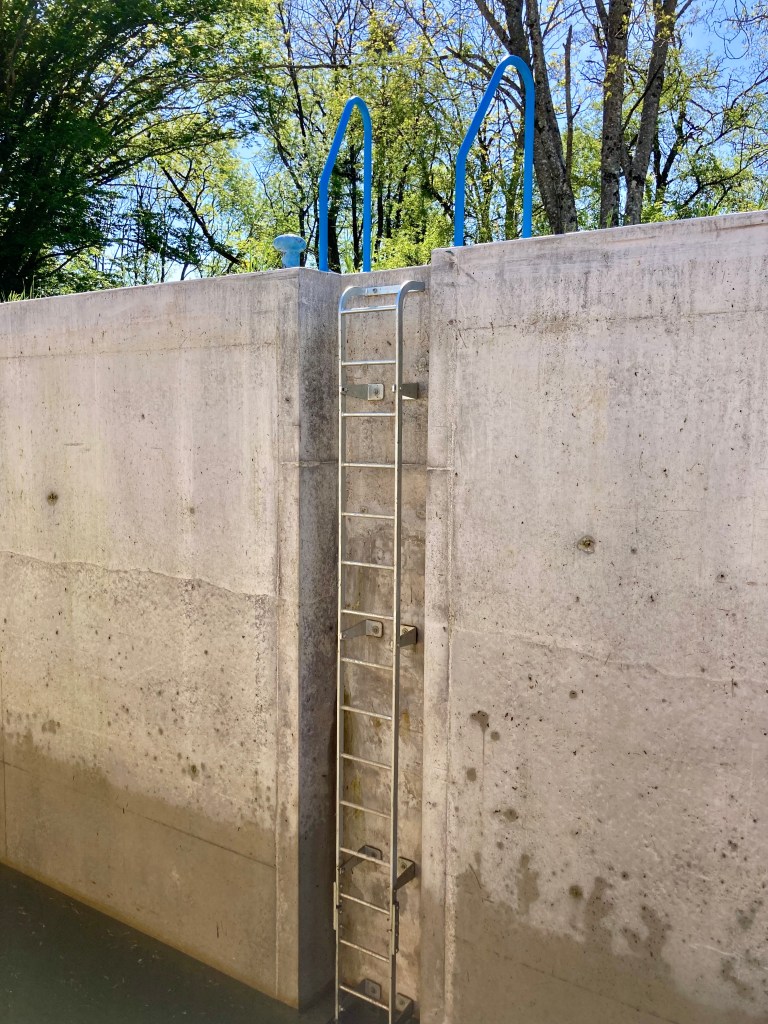
For example we came to one lock that had been completely relined. It had the shiniest steel ladder up the side I have ever seen!

They are usually more like this!

And as we drove into another lock, empty of water. we could see a heron on the sill at the far end scooping up the fish that were stranded there.
By the time I was camera ready the heron had flown up onto the lock bridge.
You can see form the photos what a quiet empty canal we were cruising, so it was with some surprise that we suddenly found ourselves face to face with two boats going in the opposite direction.

The most frequent style of the boats we passed during this part of the Canal Entre Champagne et Bourgogne were yachts with masts down. It is a popular route through to the Mediterranean, with the canal leading to the Saône, then the Rhône, and out into the sea.
There were some notable ‘bridges’ to mention too.

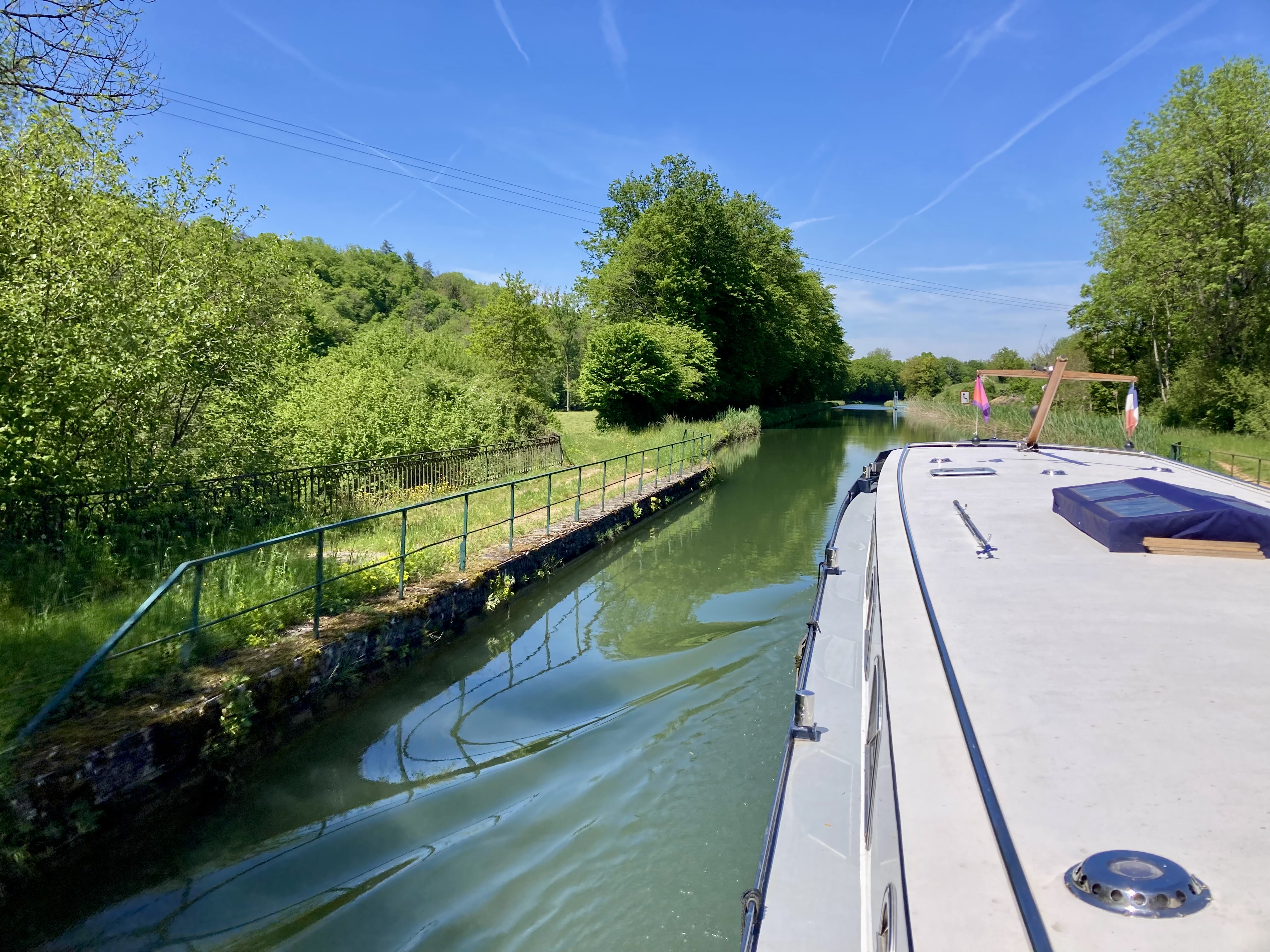
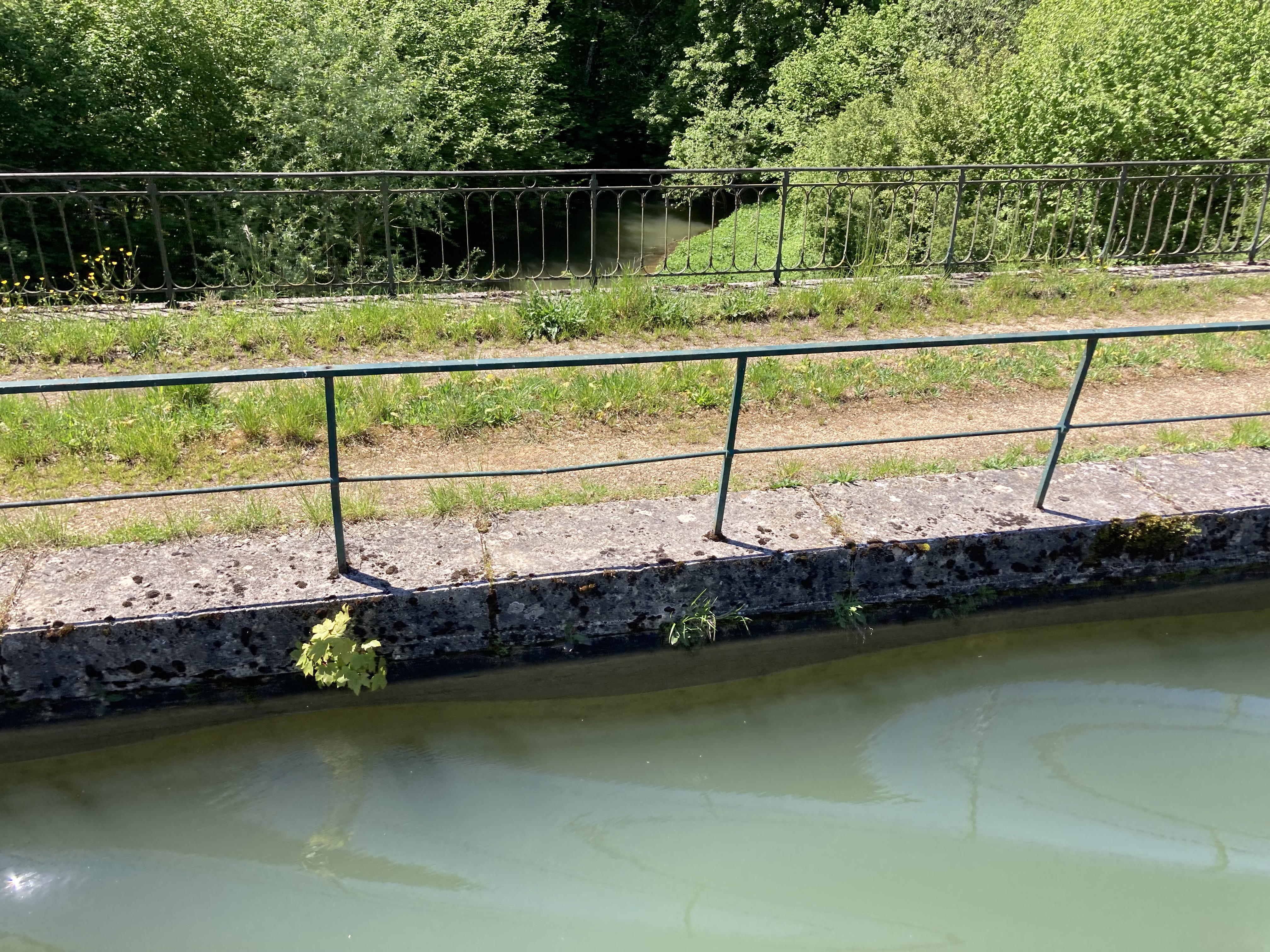
The first is just a little step detail I liked at the edge of a bridge. Then two smaller photos showing Calliope passing over a pond canal, or bridge that takes the canal over a river – in this case the Vingeanne which can be glimpsed in the second small photo.
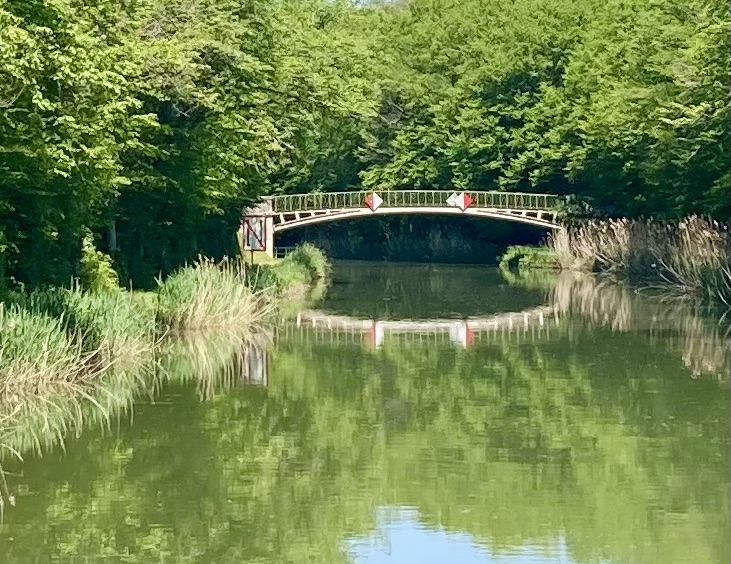
And the final bridge had a lovely reflection (that I did not catch right) and also shows the red/white diamond signs that indicate which part of the bridge to go under. Go between the whites, and don’t stray into the red areas.
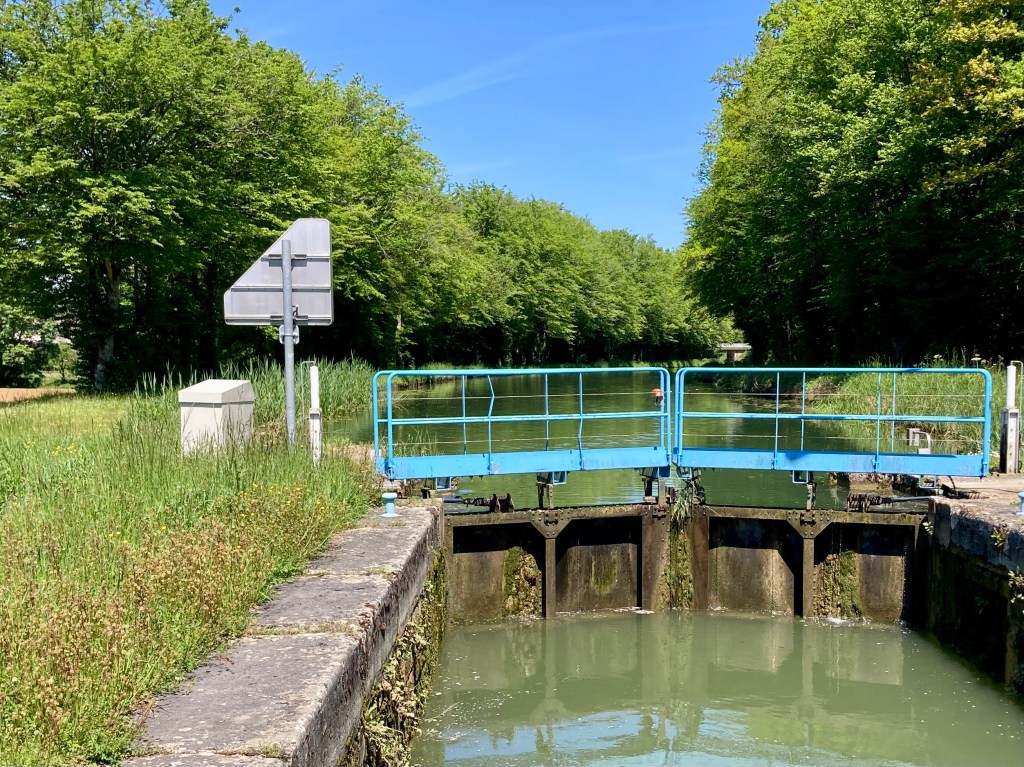
When we came to the final lock of the day we could see just beyond it on the left our intended mooring – pleasantly empty.

This is it -the mooring at Piépape.


A bit later I realised that this was the perfect place to do a little gardening. I needed to repot the geraniums and now had both the compost and the larger pots to accomplish it.
Grassy steps ran down from the canal bank to the field below and made a comfy perch in the shade to do it. The geraniums looked much happier with room for their roots to spread out.


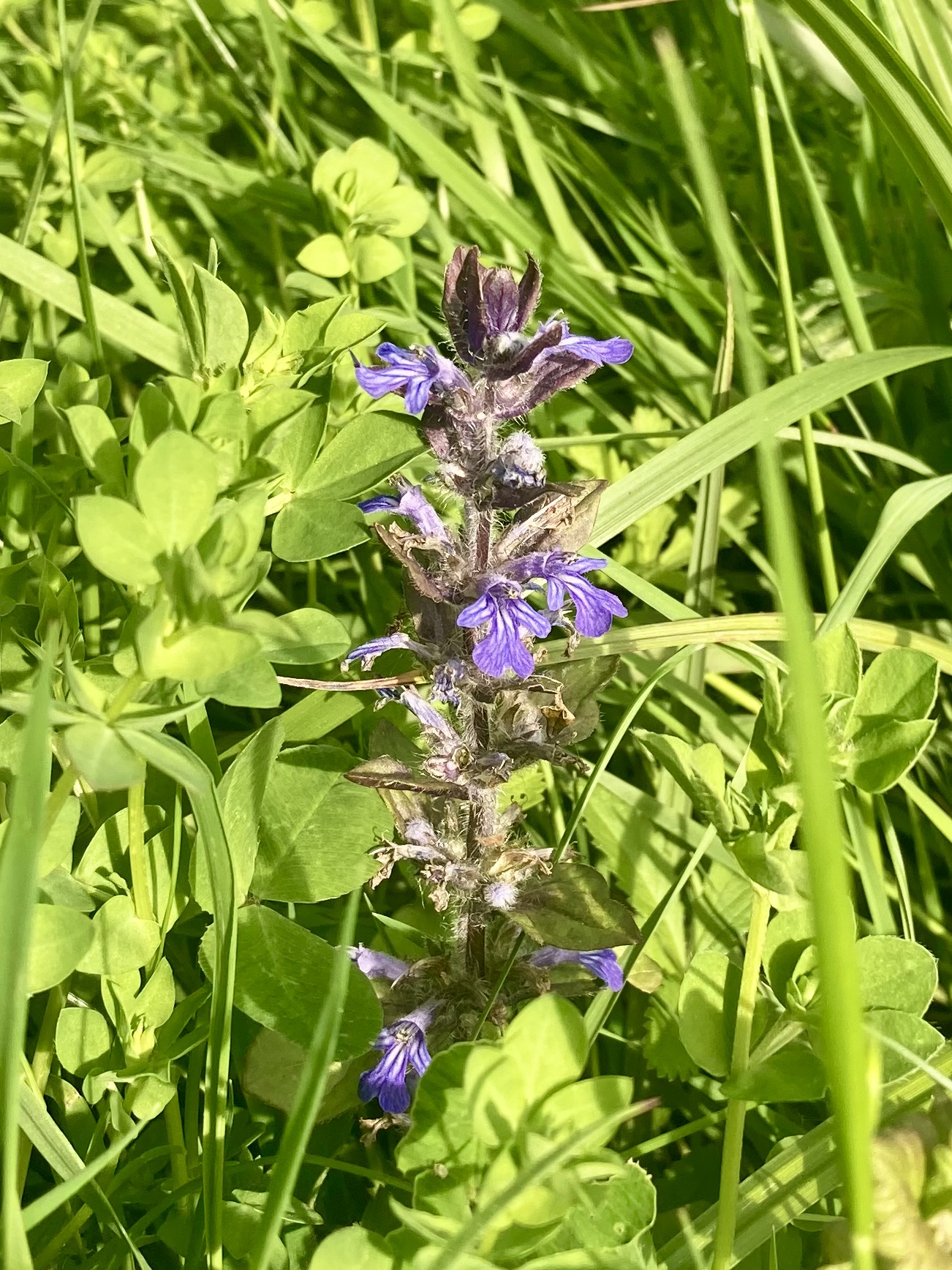
I had a short wander in the early evening and was pleased to see that the yellow irises that line the banks in early summer were budding and just beginning to come out.
There were also lovely blue flowers and one more mini-beast to keep me amused.

At the end off my stroll I came up the ‘gardening steps’ to be greeted by a cheerful Captain.
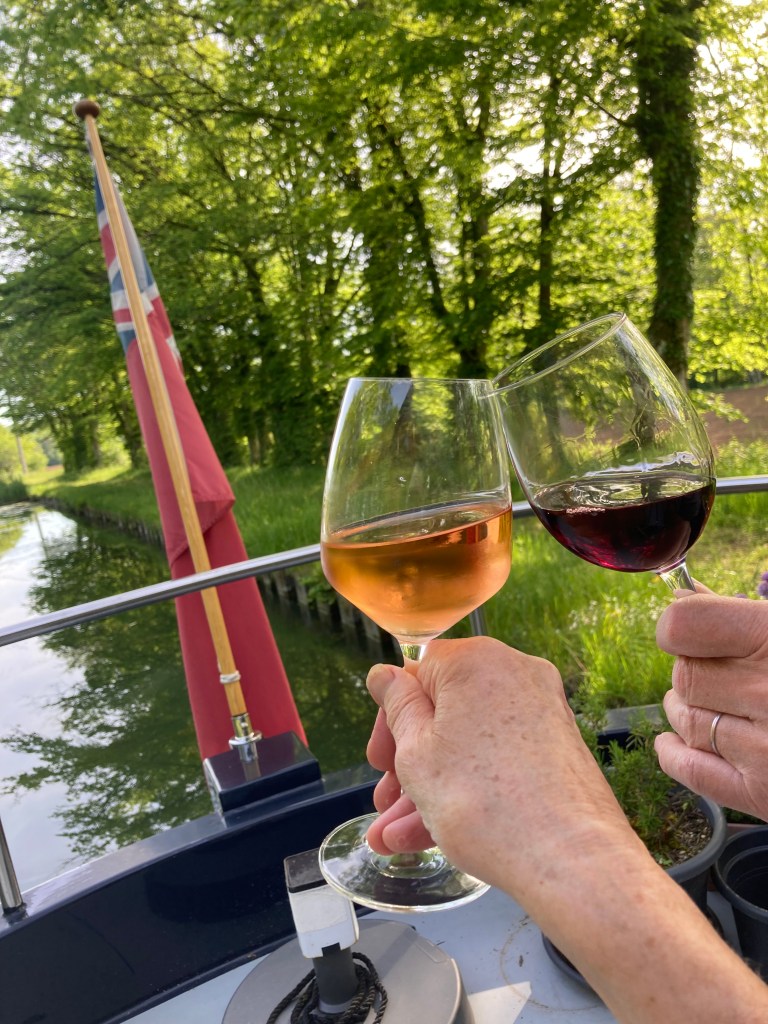
As so often, our day ended with a glass of wine win the back deck.
We are so lucky to have this life.
Heuilley-Cotton
Only one more day’s travel to the top.

There were 11 locks to go and we were ready for it. The weather was absolutely perfect. I wonder sometimes how I can be so lucky as to meander through this beautiful scenery on a boat, at a relaxed pace and with the best Captain I could possible have in my life.


The first lock went well; the second had a pigeon rescue included. Sorry I cut the rescuer’s head off, aka Captain Stu.
The sun was so bright that it was sometimes hard to see the bollards at the top.
Peak cap and sunglasses were a must!
But no complaints about this superb May weather; enjoy it while you can.
As the locks became deeper (from an average 3.5m to 5.2m) the method of ‘locking’ changed. Locks 8-1 are in a chain, meaning that as we left a lock the next one knew we were coming and opened its doors.
The tele-command (remote control) was no longer operational and we had to elevate the blue lever in each lock to get it going.

Also with this depth of lock it was close to impossible to throw a rope to the top from the bottom, so the system of ‘bollards in the wall’ was deployed.
Stu and I each threw a rope onto a bollard about mid way up the lock wall, one foe and one aft. Then as the water took Calliope higher in the lock we could loosen from these bollards and throw our ropes around bollards on the lock quay. It is a system that works well especially when the bollards are spaced nicely for the length of your boat and the water rises gently.
These locks are amazingly tranquil. They have been improved over the years and this is the best we have found them. And the countryside around them is tranquil too.

I cannot help but wonder about the lives of the eclusiers who lived own these now empty lock houses. Before all the automation, and with many commercial freycinets passing by, they would have been out grafting in all weathers for long hours.
That was lock 7, leaving just 6 to the top, all within about 2 kms, and raising us the final 31m to the summit level.
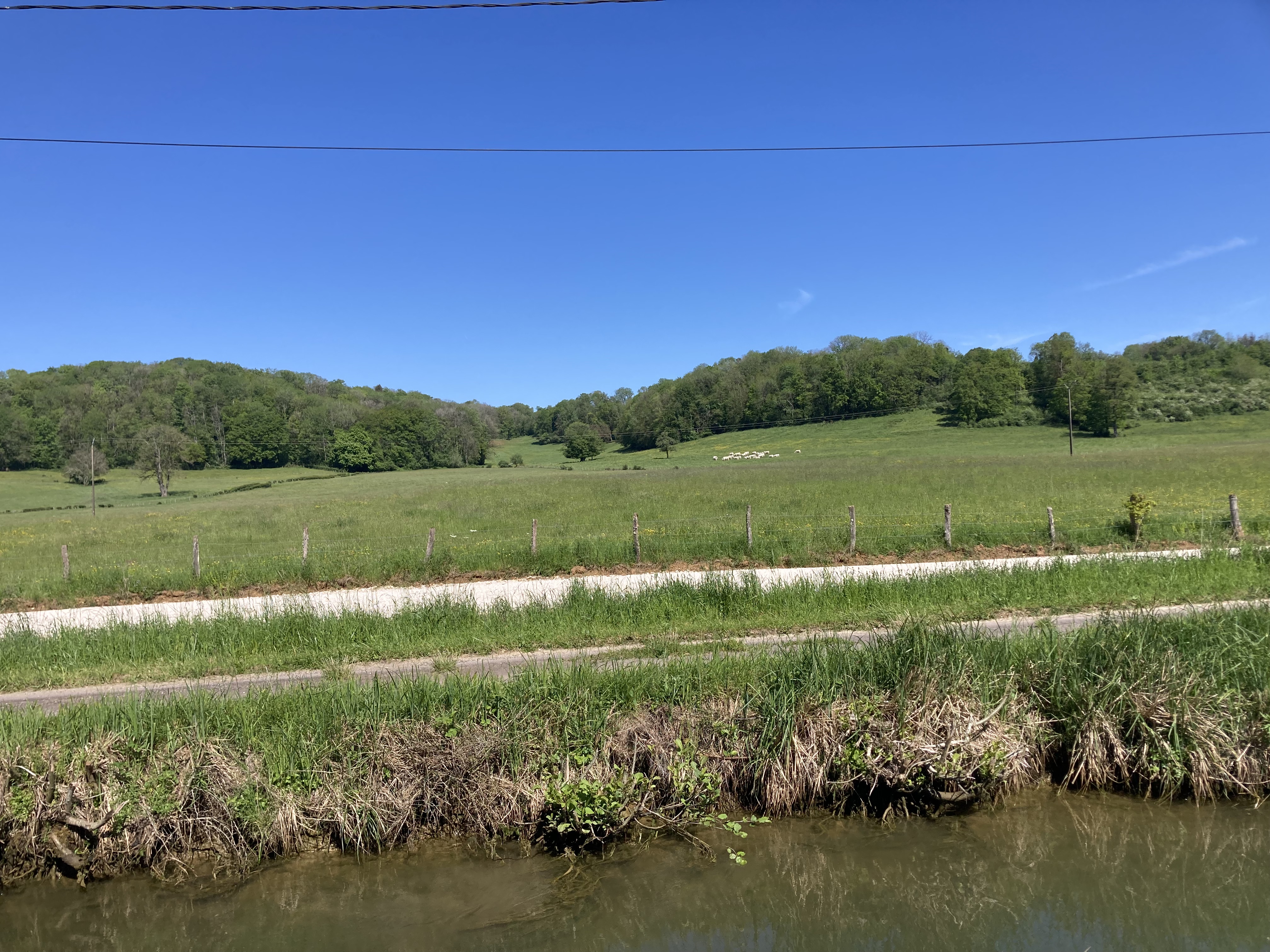
The scenery was changing again. Vast green fields were mostly waiting for cattle to graze them, and the white dots of Charolais cows with their calves could be seen in the distance. The wooded tops of the hills were much closer too.

An hour later we were at Ecluse No 1 at Heuilley-Cotton.
This is now a major control centre for much of the canal, full of screens, computers and phones!
We had a conversation with the VNF* man in our ‘just-ok’ French and it was agreed that we could continue round the bend of the canal towards the tunnel and moor up to one of the dolphins there.
*VNF is Voies Navigables de France, and in English it means the Navigable Water ways of France .

Following Captain’s orders we soon had Calliope’s midships moored up to the last dolphin, with stakes in the ground fore and aft to hold her in place.
I needed a walk so went round the village, across the canal, and back. Yes, it was quite hot and sunny!


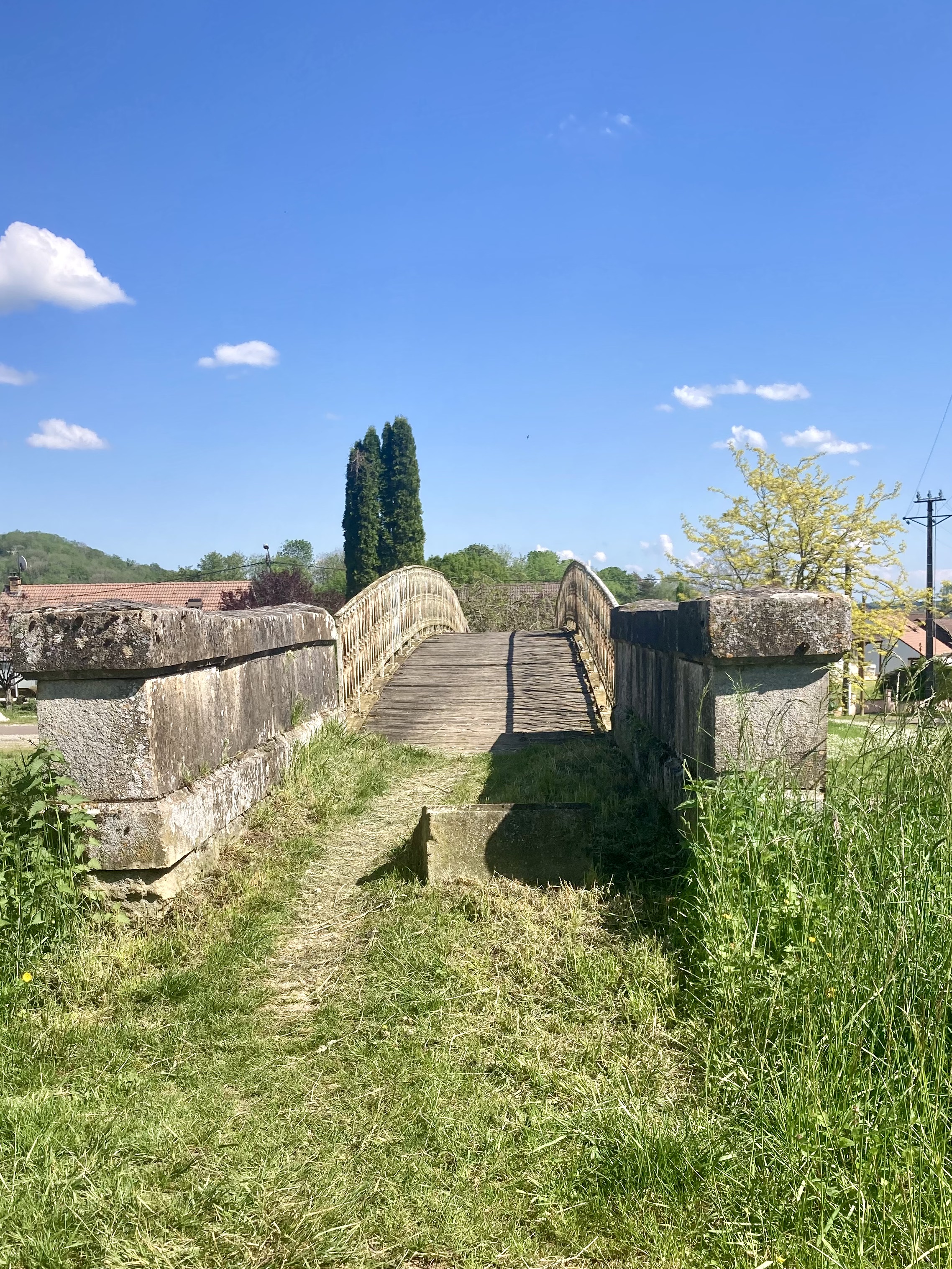
I knew from Google maps that there was not much to see in the village of Heuilly-Cotton apart from some old stone buildings. In the past it had been a fairly busy staging point for barges, but with the decline of commercial boats on this canal the village seems to have lost its focus.
The whole canal is built to Freycinet size – the Freycinet gauge is a standard governing the dimensions of the locks of some canals, put in place as a result of a law passed during the tenure of Charles de Freycinet, minister of public works of France, in 1879.
Although some Freycinet barges still work on French waterways there have been overtaken by the much bigger barges, some longer than 100m with a width to match. Obviously they cannot fit through a canal built the width of the Champagne et Bourgogne so it is largely used by leisure boats now.
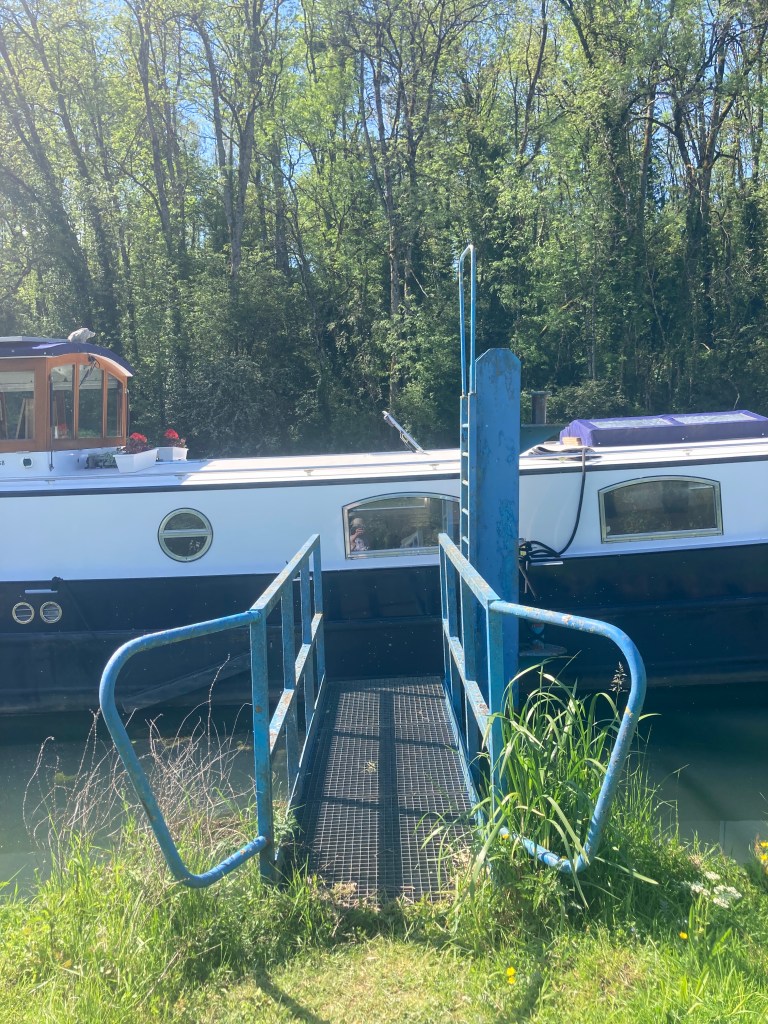
Back on board we had a relaxing evening, knowing that all 43 ‘montant’ locks were behind us, and that got would be all downhill after the tunnel.
Tunnel Time
On Sunday 12th May it was time to leave the Saône side of the ‘mountain’, top through the tunnel and put onto the Marne side.
Breakfast done we called up the éclusier at Heuilley-Cotton to say we would like to depart. All was clear and a last ‘montant’ press on the telecommand gave us the green light to proceed.
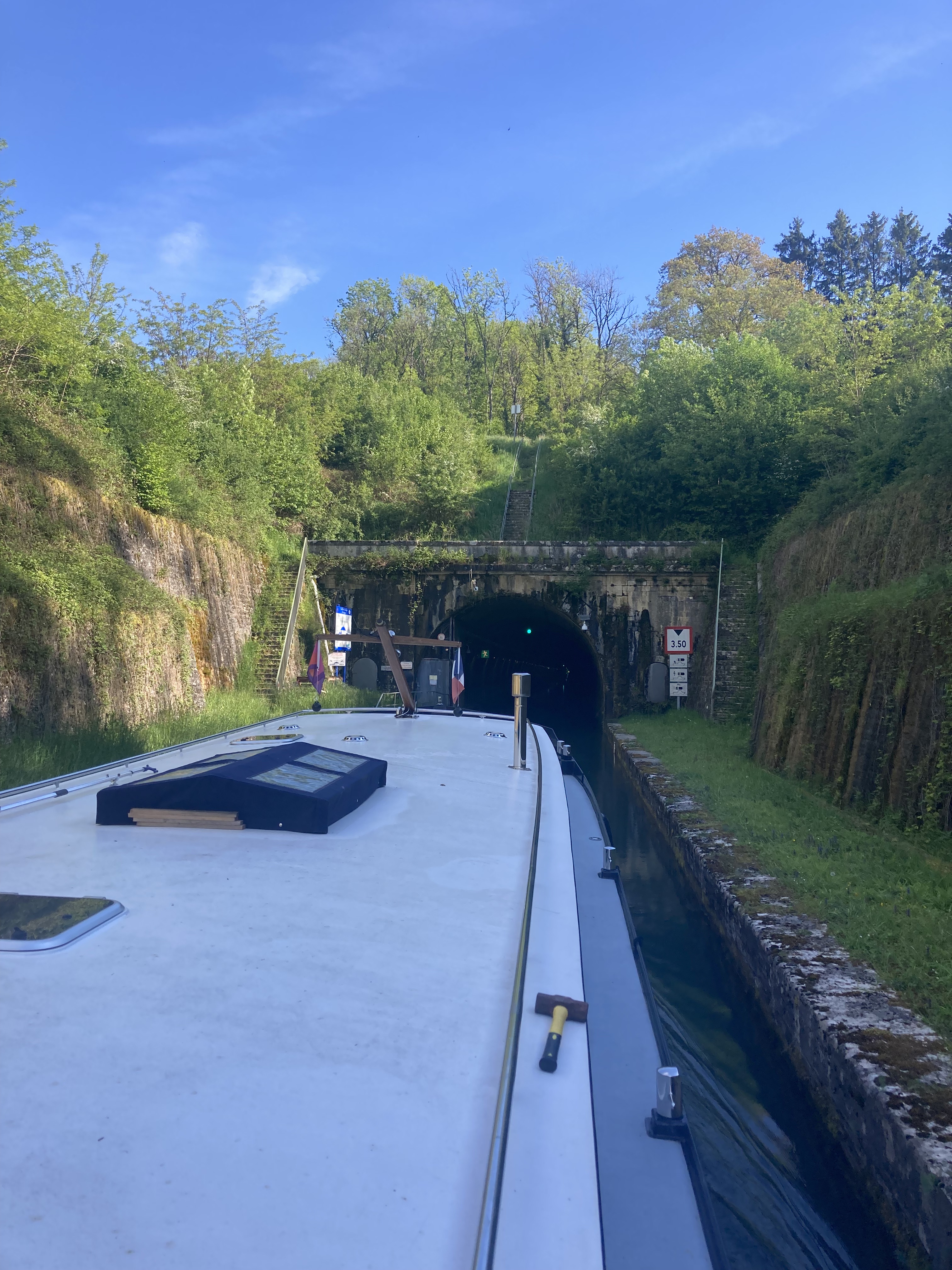
The sun was shining and sky was blue, but we were about to enter the 5 kms of darkness that is the Tunnel de Balesmes.
This is quite a pleasant tunnel as tunnels go. It is more than 5m wide, well;l lit and has a rubbing strip along the side next to the pathway.

It’s ok for me – I am not driving. But I was given the task of using a torch to watch out for an area of the rubbing strip that was missing – we had been warned by a fellow bargee.
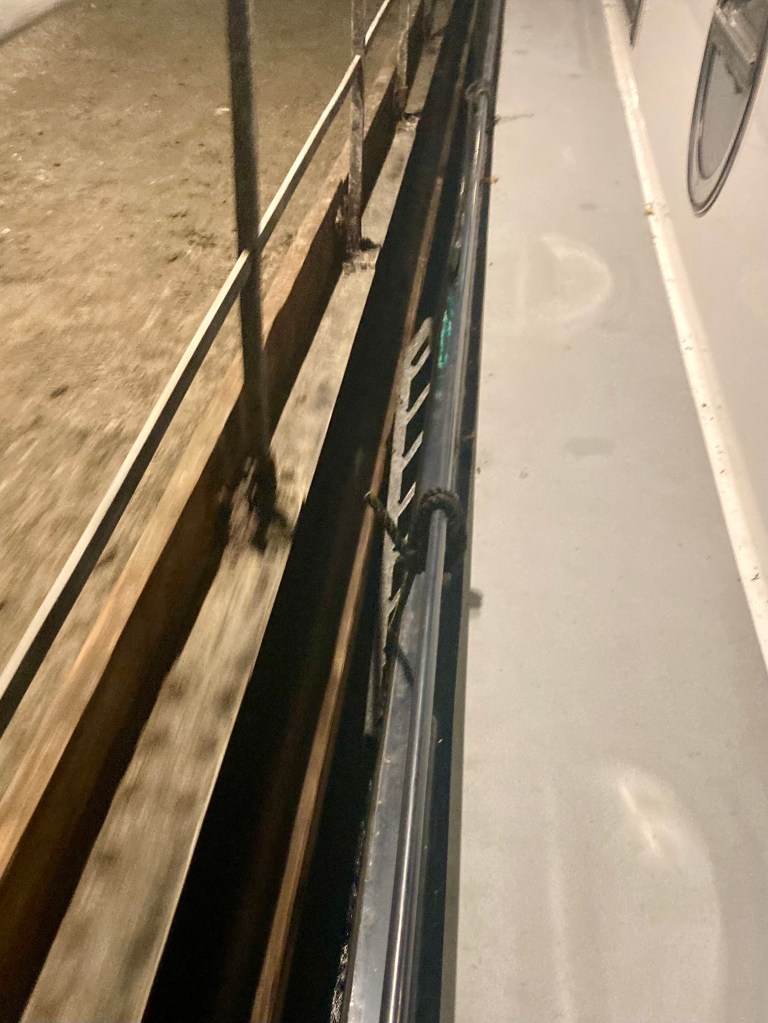
You can see here, just about, that our zig-zag fender is ‘rubbing’ along the wooden rubbing strip.
It turned out that thorough recent repairs inside the tunnel had replaced all worn parts of the strip with new wood; before long it was decided that my task was redundant.
That gave me time to notice a few ‘features’ during the 45 minute passage through.

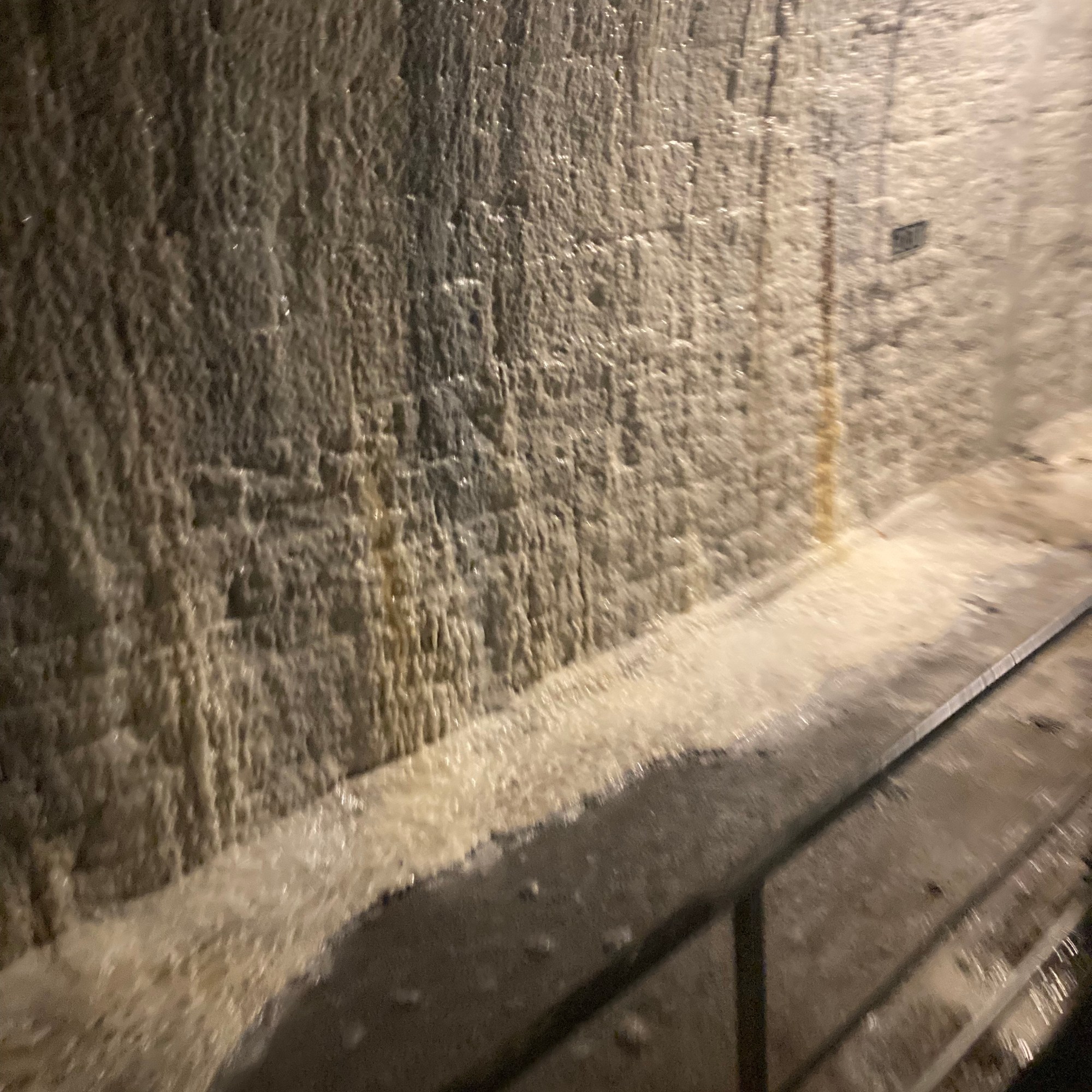

I could see the big fans that presumably keep air circulating through the entire length; the calcium gathering on the walls and path from the water dripping through the limestone above; and the numbers every ten metres to mark our progress.
And then the light at the end of the tunnel grew large and bright ….
… showing the dirty sploshes of water we had gathered on the way.
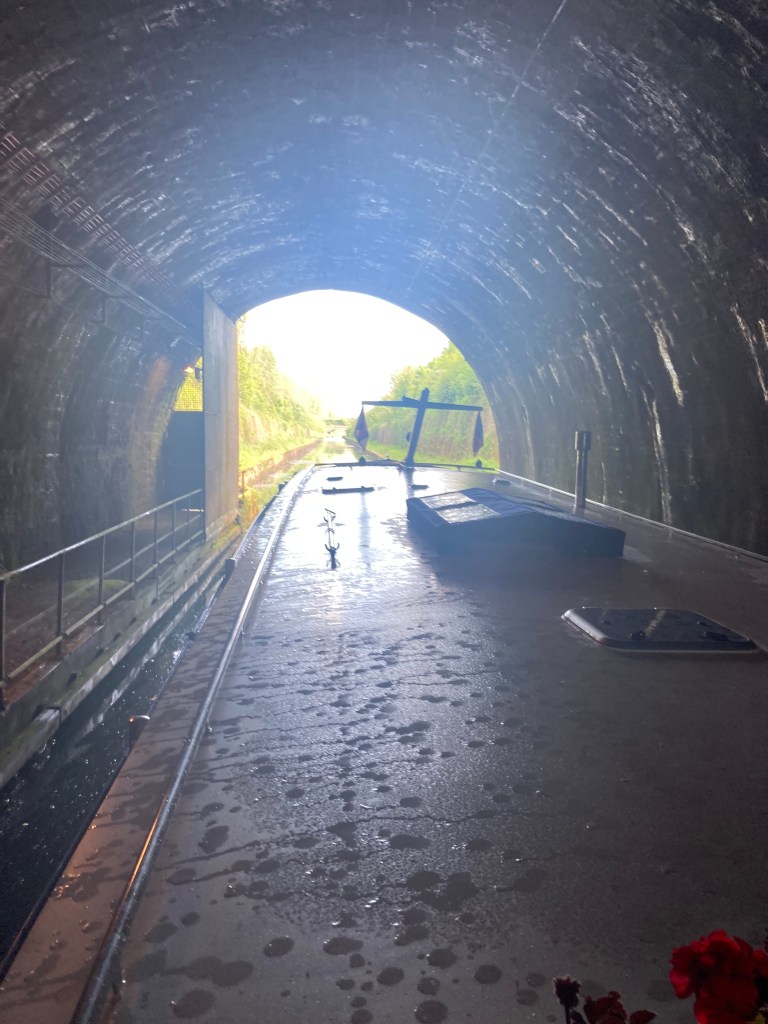
And we emerged to the Marne side of the Canal Entre Champagne et Bourgogne where our downward journey begins – in the next episode.

 goodshipcalliope
Im loving reading your blogs and following your journey. I wonder if you managed to share my details with Martin and Sally on Pavot.. I’d really love to reconnect with them after they kindnapped me last year when walking to Rome!
LikeLike
Hi -yes I did give them your contact details when you first asked, They told me they would be in contact. If you give me an email address I will pass it on to them again.
LikeLike