
On the Escaut, & canals Sensée, du Nord, plus 3 linked to la Oise and l’Aisne
17th to 25th August 2024
BovenSchelde/Escaut
Planning for our return to Saint Usage and our winter mooring had begun sometime before, partly to fit with the end of our French 5 month visa, and partly to get through Reims before it closed for a week while a bridge was demolished. We were on Plan B already; Plan A had been to go up the Meuse and down the Vosges, but there were closures on both due to low water.
This meant putting in some long days for a while and we set off from Antoing in Belgium with great intent.

We went up the Bovenschelde, a river that changes its name to the Escaut at the border with France. The border is still marked canalside with the old douane (customs) office, out of use since the formation of the EU.
It was the first time we had gone along this section of the river, so an interesting time for us, soaking up some unfamiliar landscape.
(I shouldn’t really call it a river, as it is ‘canalised’ now, and behaves more like a managed canal than a free flowing river, but for the sake off ease I will continue to say we are on the Escaut.)

A couple of hours later we reached a particularly interesting place for us; the junction with the Canal de Pommerœul à Condé. This was opened in 1982 to link the busy commercial waterway networks of Northern France and Belgium, but had to be closed less than 10 years later, following heavy siltation. We had moored in the (closed) Belgian entrance to the canal at Pommeroeul several times, and now could view the other end!
And, even better, the canal re-opened to traffic again this year!
Prouvy
Our normal gentle cruising day is around 20kms, so you will understand that we felt rather proud to have managed 40kms this first day of our planned rush to Reims.

This mooring at Prouvy was far from glamorous, on a wharf quay next to an apparently unused warehouse, but it was safe, quiet, and appeared just as we wanted to stop.

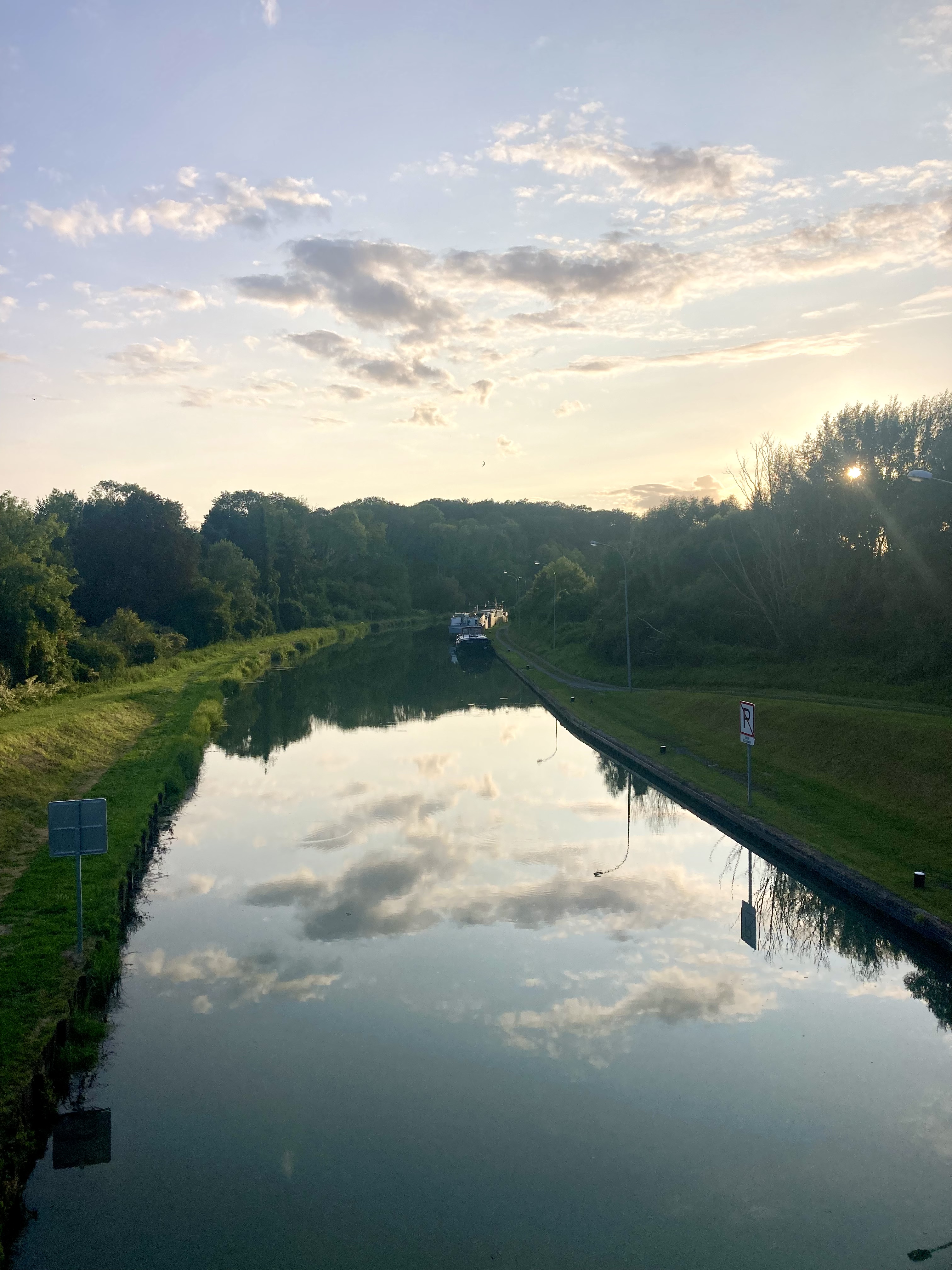
We enjoyed a relaxed evening, recharging our personal batteries and even industrial moorings can have beautiful sunsets.
Next morning, relatively as fresh as proverbial daisies. we were off again with another long day in mind.

We still had another 13 kilometres on the Escaut to cover, all shared with a surprising amount of commercial barges considering it was a Sunday. We passed through the crowded port of Denain, glad that we had not tried to moor there the night before.


I am constantly surprised by then length of some of these barges – often two 38m boats joined together – and full of admiration for their Captains who manage them into the smallest of spaces with such skill.
Calliope passed smoothly through one village after another, each with a church spire rising amongst the houses.
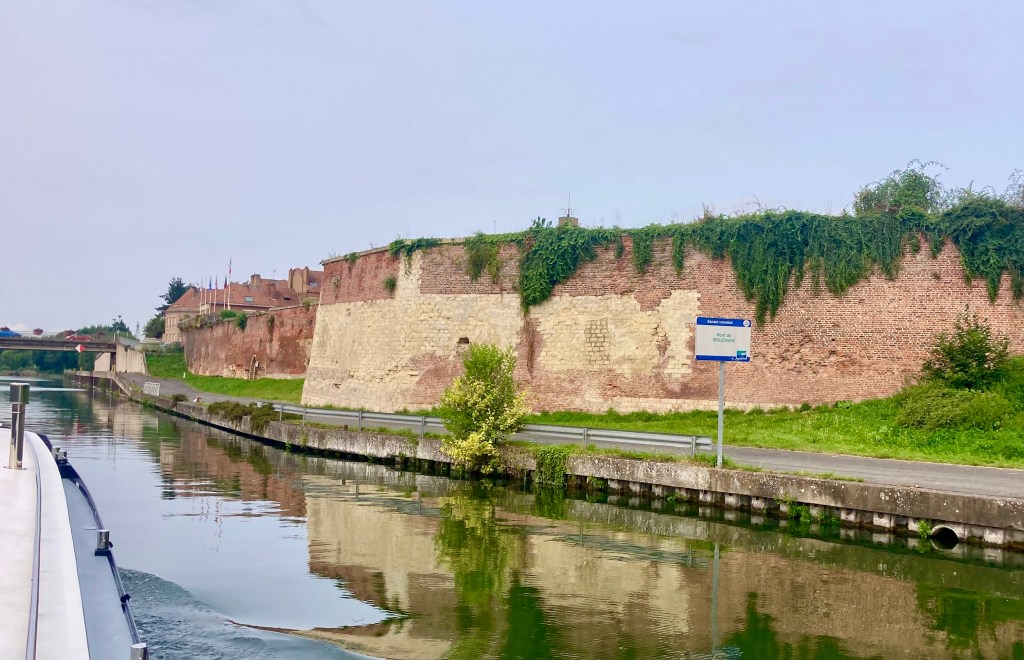
At Bouchain there is an old fort alongside the water, originating in C12, modified by Vauban, and with a magnificent history.
Twenty minutes further on we came to the last écluse (lock) on the Escaut for us – écluse 6 de Pont Malin. The lock walls in these locks were quite high, though the change in water depth was not great. You can see it here …


It was deep enough for its to be using the bollards in the wall of the lock, and therefore the two way radio thing between us, but the water line on the wall is well below the top.
I love locks! They all have similarities and all have differences.
Canal de Sensée
Just below écluse 6 is a big junction and where decisions for journey’s South must be taken. Continuing straight ahead onn the Escaut towards Cambrai takes you to the Canal Saint Quentin and its tunnel. Boats are towed through this tunnel, so the timing of your journey is partly dictated by the one time a day you can be towed through.
Turning right onto the Canal de Sensée takes you across to the Canal du Nord, another route south. This canal also has a tunnel – actually 2 tunnels – but you go under your own steam and schedule if you choose that way. Both have their advantages.

So we reached the junction, our decision had been made, and we turned to starboard to take the short Canal de Sensée westwards.


It was still a grey day at that point, and the canal is fairly featureless. It is wide, rural, and with quite far reaching views across the countryside.
Progress is marked by PK markers – counting the kilometres from one end to the other. There are 15 kms in all.

At the westerly end the skies started to clear, another big junction opened up, and we turned to port to join our next canal
Canal du Nord
This canal has been a main artery for commercial traffic since its opening in 1965. It is 95 km-long and was first planned to help French coal mining companies withstand foreign competition. It is the only French canal to be built intermediate dimensions between the 37m long Freycinet and the modern high-capacity boats.
Construction of the canal began in 1908 but halted in 1914, because of the First World War which caused widespread destruction. Construction did not recommence until 1960. Sadly, less than 70 years later, it is to be abandoned, and taken over by the future Seine-Nord Europe Canal, a huge and interesting project.
(I have added the link because the new canal is likely to be of interest to current and future boaters.)

Having turned to port Calliope was heading South again.
We passed plenty of working barges, tied up at the junction in Arleux for the weekend.


Within 5 minutes we were at our first Canal du Nord lock – a bit tall and forbidding with its guillotine style door! But all safe and manageable, especially when we have the two way communication radio thing between crew at the bow and Captain in the wheelhouse.

The way to contact the locks here, and on the Escaut, is by VHF radio; a little rudimentary lock French is usually required!
Calliope has an onboard radio, but this year we invested in a handheld one too. As I am the main communicator, and usually outside the wheelhouse when approaching and in a lock, this works perfectly.
On we went for another 8 kilometres, clocking up another 37 kms over the full day.
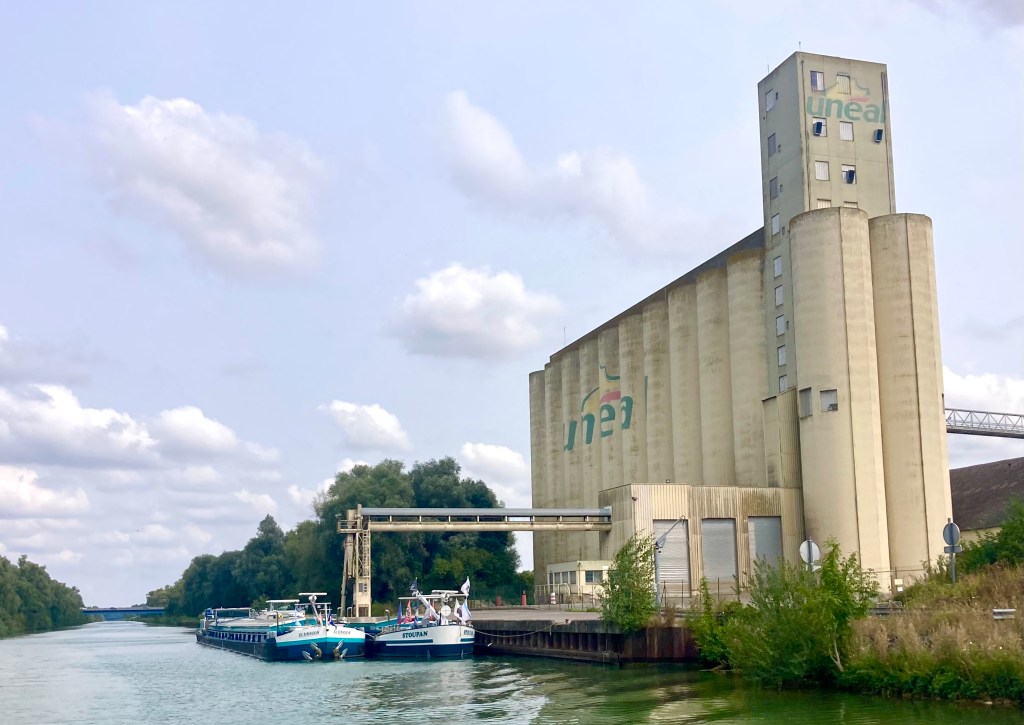
Just before last lock of the day we were reminded of the real and current purpose of the Canal du Nord – cargo transport.
But nowadays it is more grain and gravel than coal. These silos are full of grain from the recent harvest.
Sains-Les-Marqions
Back on a waterway we know reasonably well we had chosen our mooring in advance. Normally a tranquil place to stop we were slightly alarmed to see lots of cars, and on closer inspection balloons! A party was underway in the building and garden belonging to the local fishing club.
It turned out to be very much a gentle family affair and by 7.30pm they were all off home.

We were left with solitude and a full moon in a clear sky – just right after another long day. But by next morning the clouds had reappeared!
Allaines

The mooring at Sains-Les-Marqions is within sight of first lock of the day, and the start of our cruise to Allaines – although we didn’t know that would be our mooring when we set off.
By 0915 we were approaching it, and by 0940 we were up, through and on towards the next.

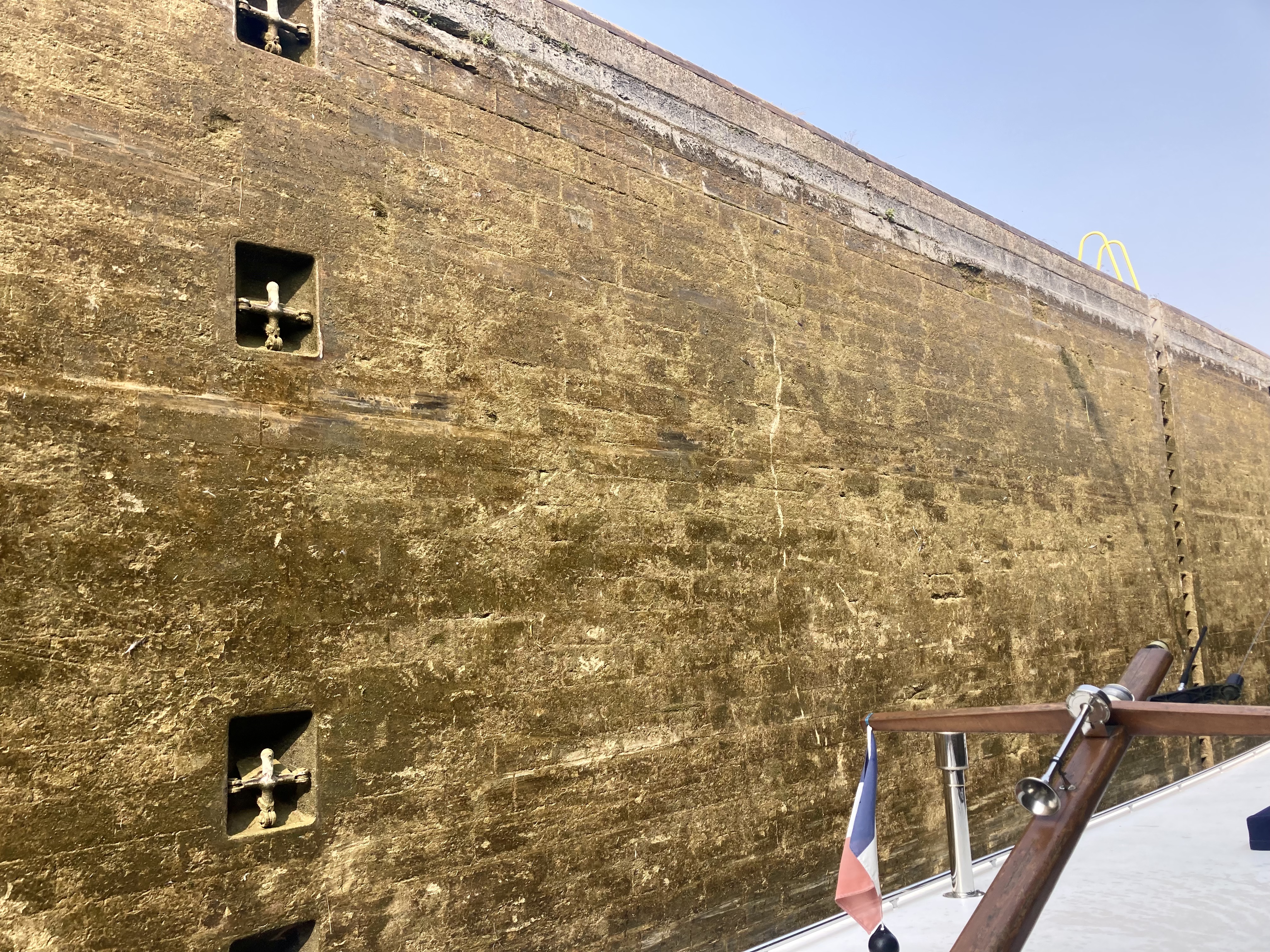

An hour later, with the sun making occasional appearance, we were at our fourth lock of the day, écluse 6, Graincourt-lès-Havrincourt. This is typical of the locks on the canal and I have included a few photos just as illustration.
You can see the guillotine door close behind us and the bollards going up the wall. As the water rises we move our ropes up a level, until near the top we can loop round a bollard on the quay – not visible from below.
The locks are well signed here, with the name, number and PK number all included, in case you have lost track of where you are!
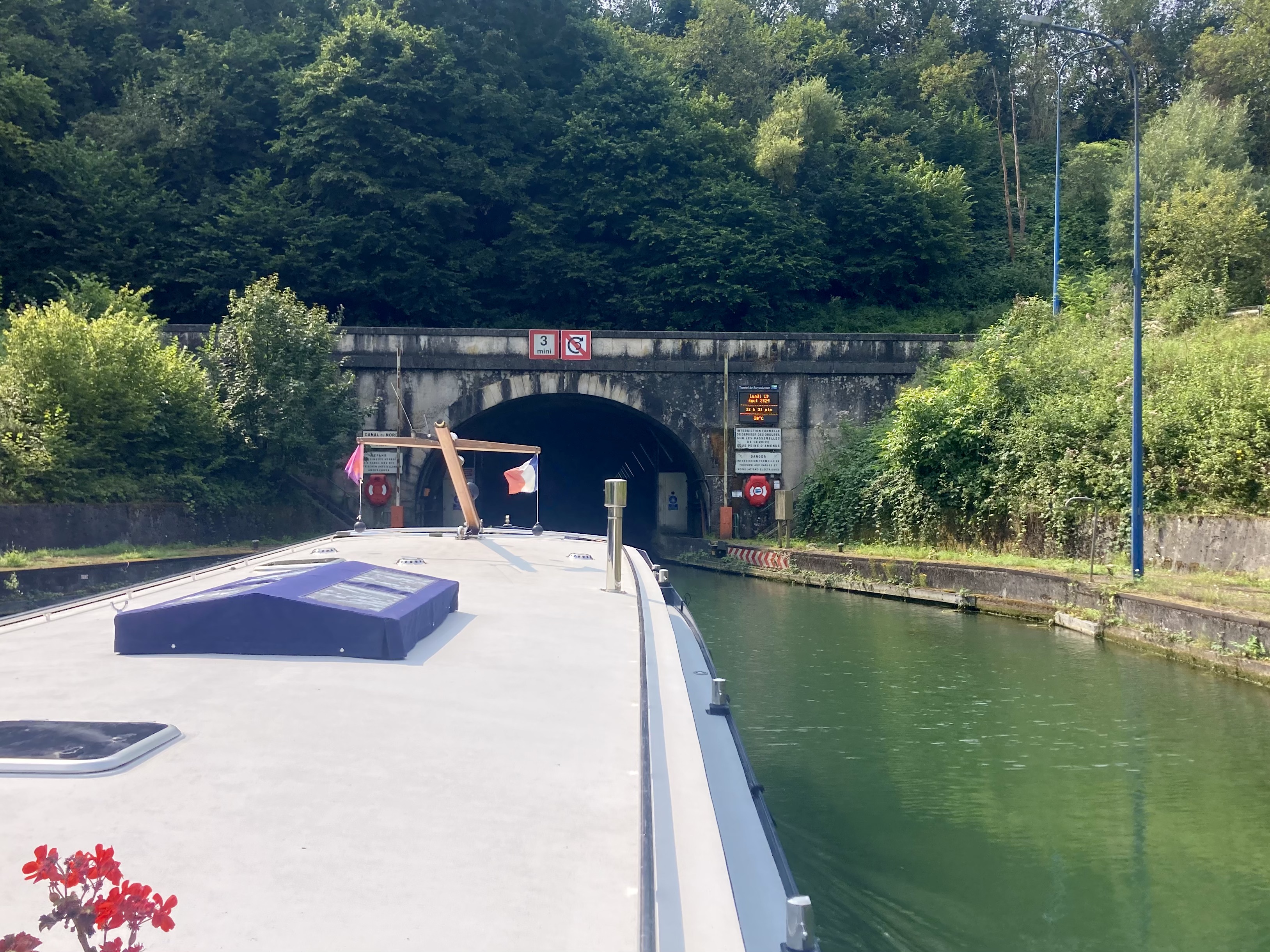
An hour and a quarter further on and we arrived at our first tunnel, expecting to moor up and wait for any barge coming towards us. As it was we were lucky and were given the go ahead.
Look carefully at the lighted information sign at their entrance and you will see that we arrived there on 15th August 2024. Canal du Nord, Tunnel Ruyaulcourt, Hauts-de-France, France. And above the tunnel entrance we were told to go at 3kph minimum, and not to turn round. Right, in we go.


It is an interesting and fairly unusual tunnel, having a widening in the middle to allow boats to pass each other. That means there is a set of traffic lights near the centre to let you know if you need to moor up and wait for another boat to go by.
On this occasion we were able to go straight through, a thirty minute trip; as we came out we saw another barge waiting its turn.
It is a well lit and well maintained tunnel, and the Captain found it easy to comply with the 3kph minimum speed – in fact he said it helped.

Tunnels usually pass through the tops of hills. It is always a surprise to see the different countryside lying on the other side. I guess that the weather is sufficiently different on the northern and southern slopes of the hill to make the agriculture and natural growth different.
We were obviously still on a high plateau – more long views in all directions.

Now we were going down hill, entering locks at the top, and descending to the bottom.
They were still big deep locks, with bollards in the wall.
Now that the clouds had cleared away the day was warming up. We had continued on for another 3 hours or so after the tunnel. That was ‘only’ 31 kms, but included 5 huge locks up, a 4km tunnel, and 3 huge locks down! No lunch break; just eaten as we went along.
No wonder the Captain was getting ready to have a siesta. We were looking out for a mooring.

There was half a plan to go somewhere else, but when we saw this out-of-the-way little quay, with shade from an old warehouse approaching, it seemed like the right place to stop.
The mooring was a typical one for us. We love the rural aspects, the nature and general calm, though we did have an hour of distant happy noise from children swimming and jumping from the bridge. That somehow added to the charm.
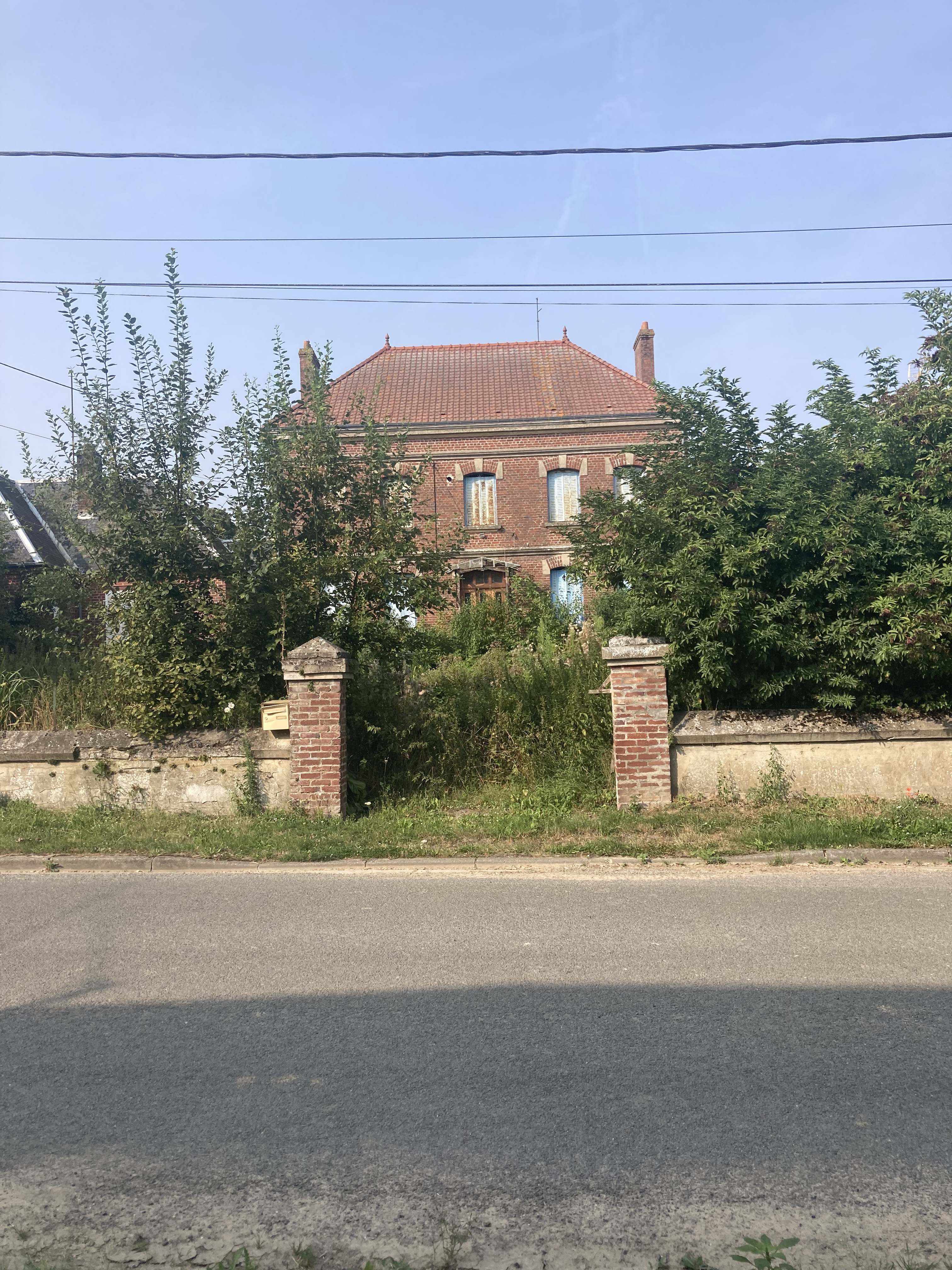


I decided that the village was worth exploring and went off across the bridge to have a look. There were corners of interest including a peacock stalking across the arched entrance to a farmyard.
Coming back over bridge, with the sun now veiled by high cloud, I could see how small our Calliope looks in a big landscape!


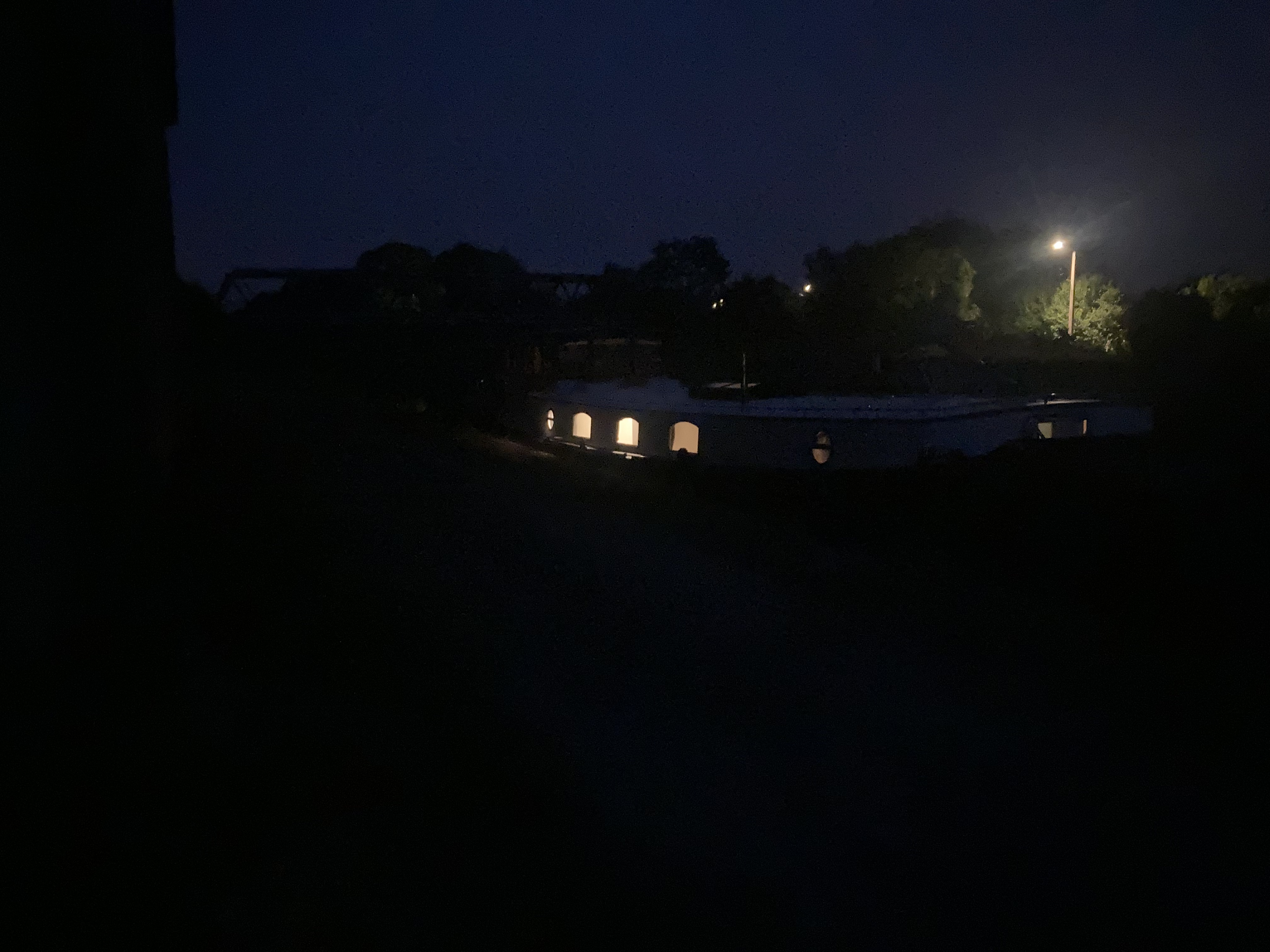
As darkness fell the big orange moon rose again. I went up on to the bridge to try and get a better photo of it, but I think I need a better camera. Through the binoculars it looked even more magnificent.
Going back to Calliope I had my first ever sitting of a glow worm! I was quite excited. Of course my photo of that little chap is awful as well, but included here as a memorable experience. Then back to the boat, which was looking cosy in the night.

On we went next day, passing the place where La Somme joins the canal – in fact some sections of the Canal du Nord are known as Canal de Somme as the river meanders along by the Canal du Nord.
This was a momentous junction for us back in 2016. We had arrived in France from UK, on Calliope, at the mouth of the Somme and this was where we came out onto our first big French canal! The junction is just below Pérrone, an interesting city but not a stop for us this time.


After Perone, there is still plenty of commercial activity, here with grain being loaded onto a barge, with a norther waiting its turn behind.
The difference in the level that full and empty barges sit in the water is huge! Both these barges are essentially the same – just one almost full and one empty.

Little things vary from canal to canal.
Here is a typical lock sign for the Canal du Nord, letting you know where you are; écluse/lock name and kilometre marker, plus how far north and south the next locks are.
Port d’Ercheu
The higher up we got the more the weather seemed to be closing in and by the time we got to our mooring at Port d’Ercheu the wind was blowing quite strongly. It must have been a port at some time in the past; the quay is substantial and there is a nearby village called Ercheu, but no port activity here any more.
We had put in another 34 kms, and were feeling pleased with our progress …. and then I got man email notification that the work to demolish the bridge in Reims would now be done at night; no need for us too rush! We could go through Reims during the day as normal. Phew!

Back to our time in Port d’Ercheu; thank goodness we were securely tied up before the stormy weather blew in! It just goes to show that it is not always sunny on the French canals!
We rather like the wildness and the cosiness combined, sitting in a nice dry wheelhouse watching the rain lash down outside. We have moored here before, and once it was so hot and sunny that I was swimming in the canal; not so this time.
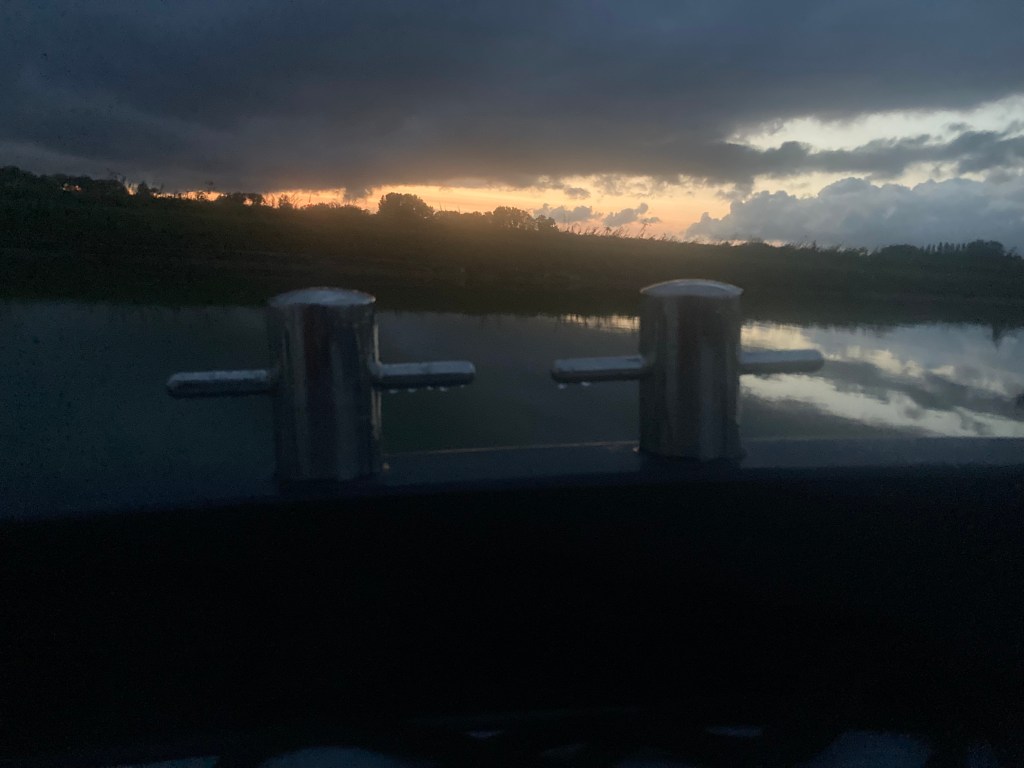
Three hours later, as it got close to sunset, the weather all changed again and we got an idea of what was in store for the morning.
So much better next day! We could enjoy being at the top of the Canal du Nord World!
Next event was a tunnel through the summit, and then we would be locking down towards Noyon.

Pont L’Eveque
It was our last stint on Canal du Nord for this cruise, starting with Libermont, this much shorter, tunnel.

Eight years ago it was the first tunnel we had been through on Calliope, and seemed quite a task.
With more experience under our belts it is far less daunting – in fact quite straightforward.
It is only just over 1 km long, and light can be seen at both ends of the tunnel.
And after the tunnel, as mentioned above, we started going down in the locks – an easier move on the whole.
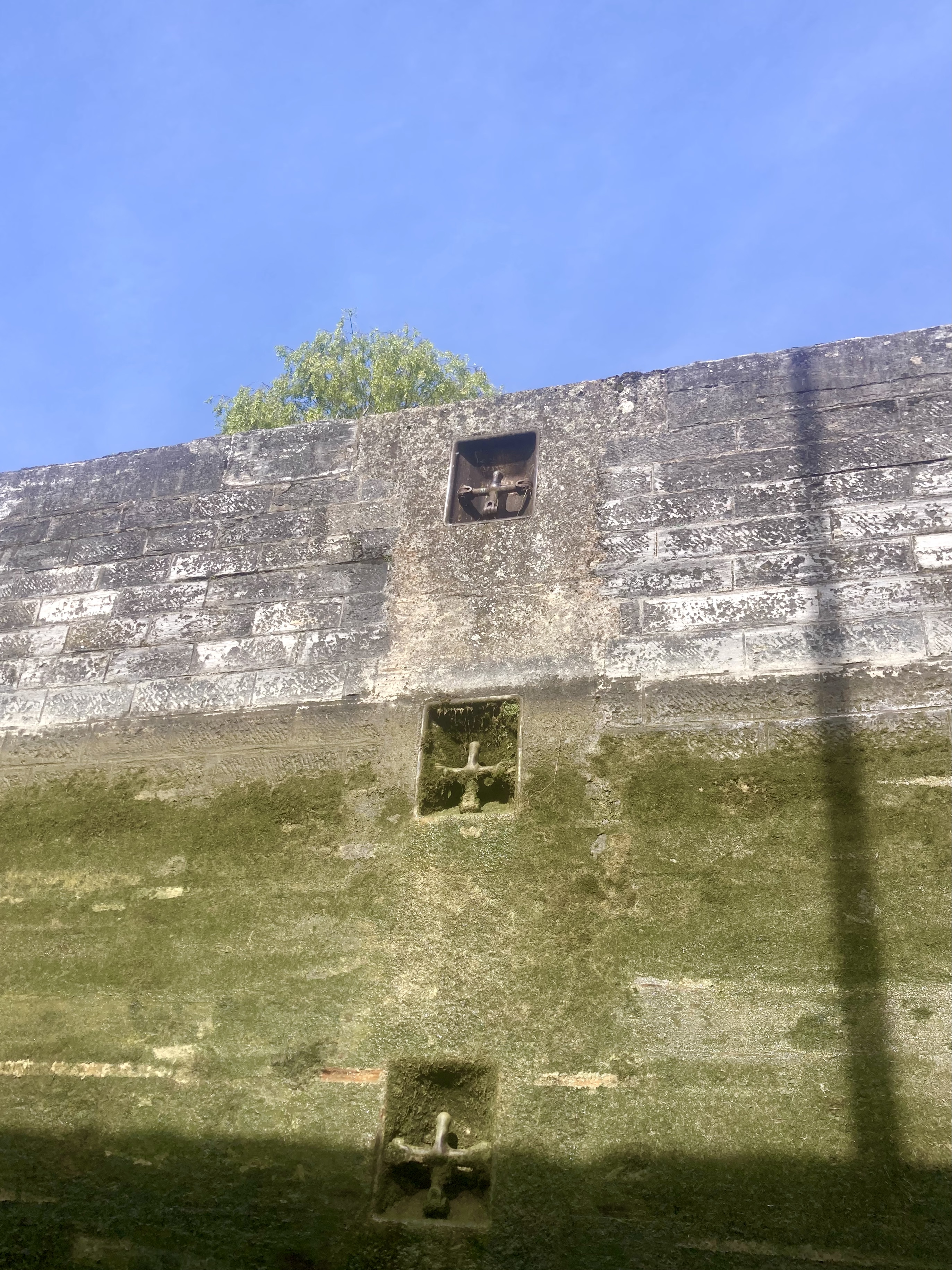
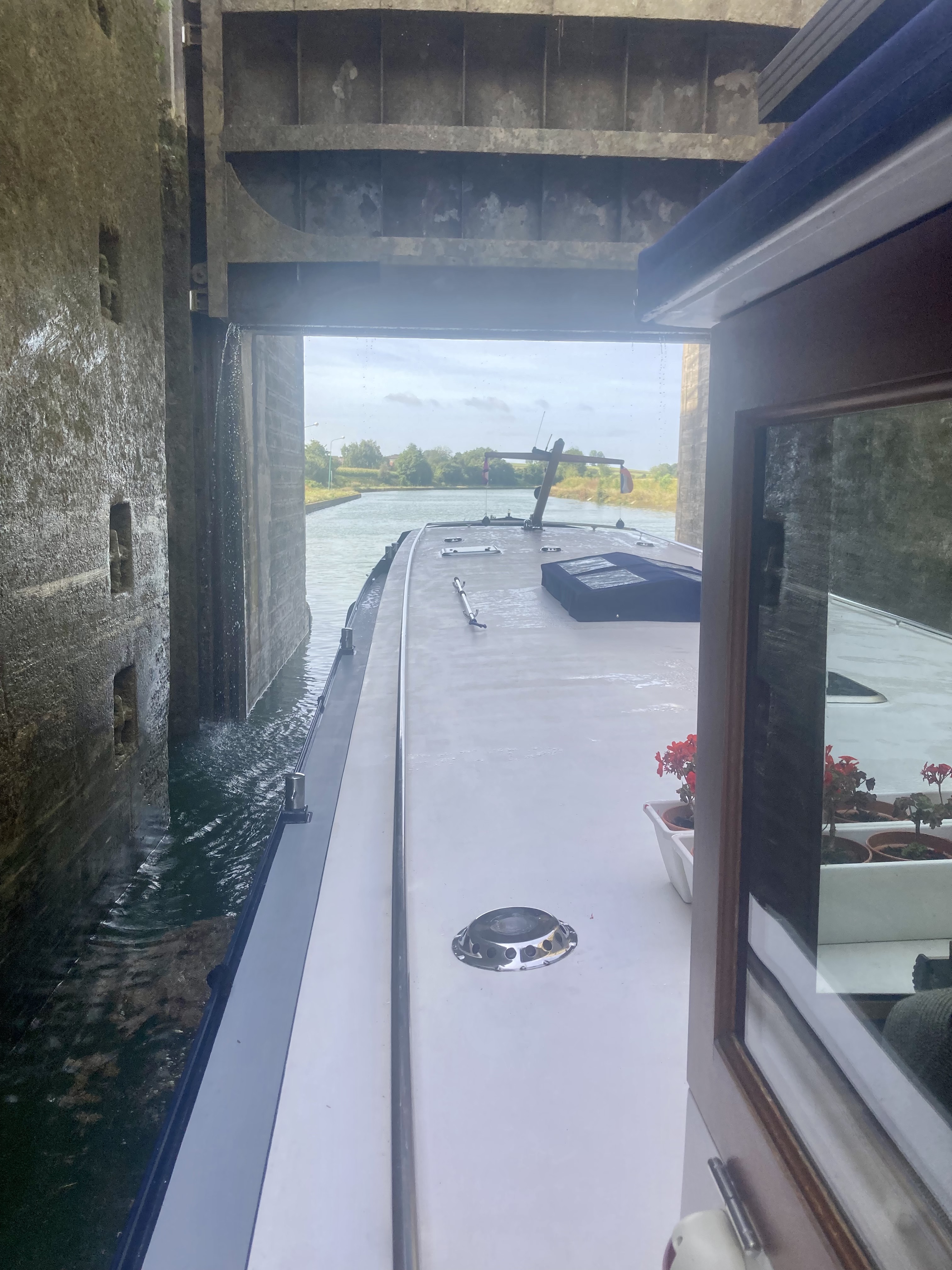
They are still big deep locks, and it is still necessary to make sure there is good communication between foredeck and helm, especially as we move our ropes down the bollards on the wall. It feels like good teamwork.
Now we had the guillotine doors one the way out of each lock. The guillotines are mostly at the lower end of each lock, with more traditional doors at the top.

This photo has just been added in as the name amuses me.
We were waiting above a lock at Haudival for ‘My Boat’ to come up and out; such a great name!
As we neared Noyon we were hoping to stop at the big quay there, which we had read was no longer in use. But when we arrived we found it busy with barges emptying their loads of dredged mud so we carried on to Pont L’Eveque.

There is a mooring at Pont L’Eveque that is right at the bottom of Canal du Nord, between a road bridge and a rail bridge; it is much nicer than it sounds!
From there we could walk back into Noyon to do a bit of shopping, but ran out of energy for also having a beer at the Confluence bar. This bar is right on the intersection between the Canal Lateral à L’Oise and the Canal du Nord, looking out at all the waterway activity. If you are in the area, try it out.

Captain and I settled down for a relaxing evening.
Not so the commercial traffic which continues into the darkness. This photo was taken just before 10pm; three commercial barges arrived and moored opposite to wait for the first lock upwards of the next day.
Lateral à l’Oise
We just had a hop and a skip along the Lateral à l’Oise – just over two hours to go fairly peacefully along the water.
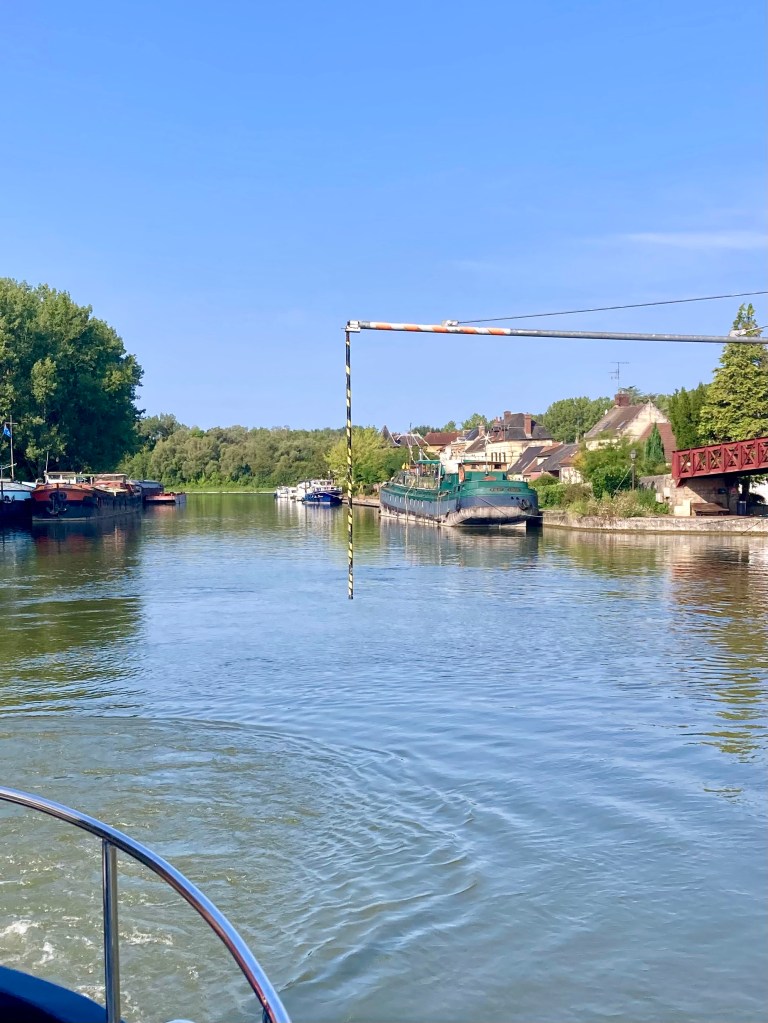
The day began with a turn to port. Basically the Canal du Nord ends at a squiffy T-junction with the Lateral à l’Oise, and we turned east to continue our journey.
It was now up to us to operate the locks and the first thing to do was turn the yellow striped pole to open the lock gates ahead – which we did.
We have been along this way before and were fairly sure that we would need to pick up a remote control for use along this canal, so full of expectation I walked to the grey box that appeared to be publicising remote controls.
But no matter what I tried I could not get one despatched. Also as there was a black line through a sign about remote controls we decided that they were no longer in use; we left the lock and carried on up the canal.

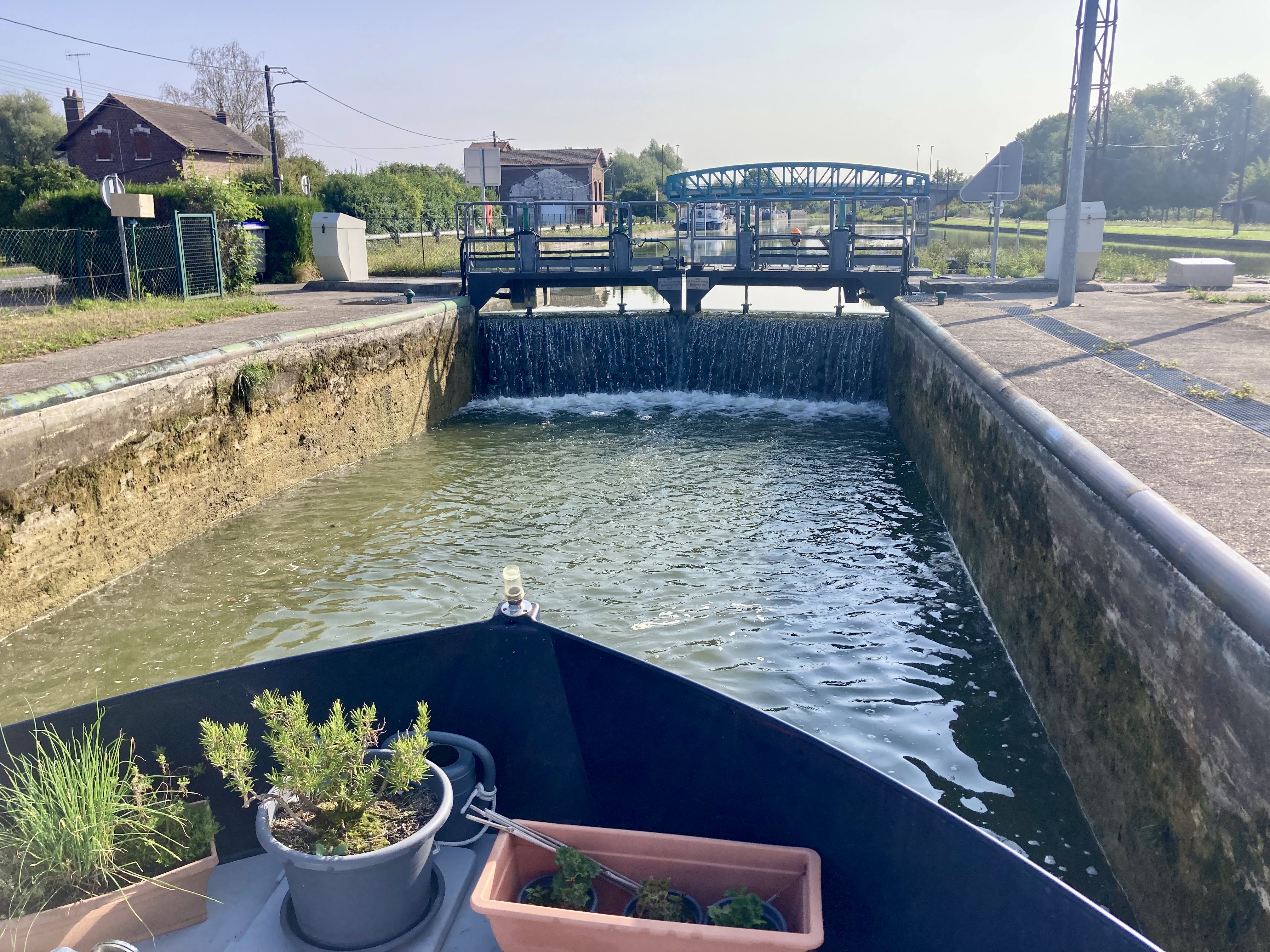
Here we go, eastward ho!
This is a very gentle section of canal, through plenty of countryside and farmland. Overall it is very calming on the soul after the commercially busy Canal du Nord.
We did encounter however one bit of a whoops. On arriving at the next lock we looked in vain for a pole to turn to open the lock gates. There was none. So plan B was put into action – get close enough to the bank forcer (me) to jump ashore, go up to the lock and look for clues.
Often there is an easy way to connect to the VNF office. Before I could find it, even better a VNF van arrived, with an amused man inside. He handed me the remote control that we should have found at the previous lock! I don’t know how we missed it, but he had chased down the canal to bring it to us.

With remote in hand we could carry on, knowing that it would see us along not only this canal, but the next two as well. Once more we could sit back and enjoy the green and blue of the scenery.
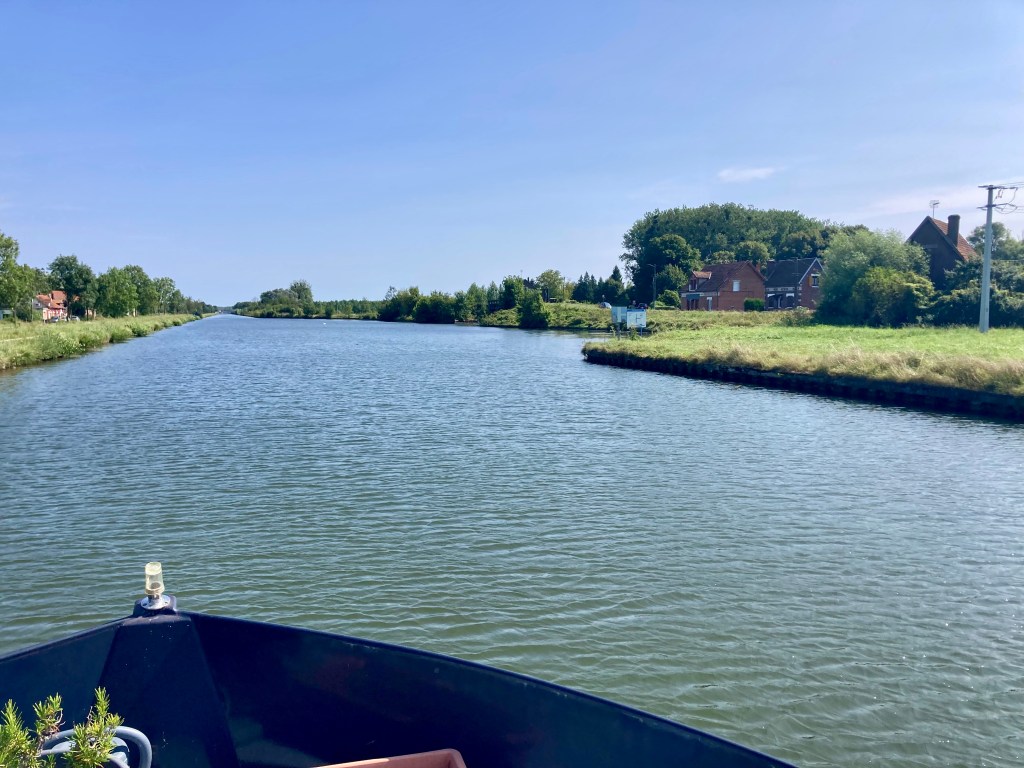
It seemed no timer at all before the canal broadened out and a turning to the right came into view.
This was our turning. We were going south on the canal that links the river Oise valley to the river Aisne valley.
Canal L’Oise à L’Aisne

The first thing to do was go under a bridge. And the second thing to do, within minutes, was to go over a bridge.

It was a bridge over the river l’Oise, which was running away on both directions at right angles to our new canal.
We were aiming for Guny, 11 kms along the canal. The description of the mooring sounded good in the DBA (Dutch Barge Association) Waterways Guide. This guide is almost our bible for finding places to stay, knowing where to find water, shops, electricity, trains etc etc.

This time the mooring information came with the phrase ‘immediately below conspicuous red bridge’ – and we did! It is a very agreeable place to spend one night when on one’s travels. There are no facilities here beyond rubbish bins, but we had no need to water or electricity and could enjoy a lovely late summer evening there.
Soon after we arrived another barge came in – Dilligaf. We had briefly met the Australian owners of this lovely boat at least twice before. This time we would have a chance to share some wine and nibbles at one of the shady picnic tables in the little canalside park. We really enjoy this ‘neighbourly’ aspect to barging. You may not see someone for years, and then. suddenly they are moored alongside you again and the friendship is rekindled.
Continuing on in the morning we began to understand the canal’s own lock building vernacular.
The canal opened in 1890, art nouveau times. This is definitely seen in the lock buildings, rounded on three sides and flat on the fourth, with distinctive white borders to windows, door and a decorative collar.


This canal is narrower than the last, or it seems so. It might just be that it has become so overgrown with lack of commercial use that it seems narrow.
At the same time it makes it very pretty, and popular with wildlife, especially birds.
More than one kingfisher was spotted along here – always a delightful sight.
We were taking it easier now that there was no mad dash to get through Reims; just a 15km day to our next stop at Pinon / Ainzy-le-Chateau. The mooring is on the Pinon side of the canal, with Ainzy up a small hill opposite.

It looks a very rural mooring in this photo, and it is definitely a tranquil place to stop.
In fact it is about a two minute walk from a good Carrefour supermarket, not far from main Aldi, and a 15 minute walk further into Pinon takes you to a big pharmacy and a rail station. The other side of the canal in Ainzy-le-chateau are two boulangeries, a post office and other retailers.
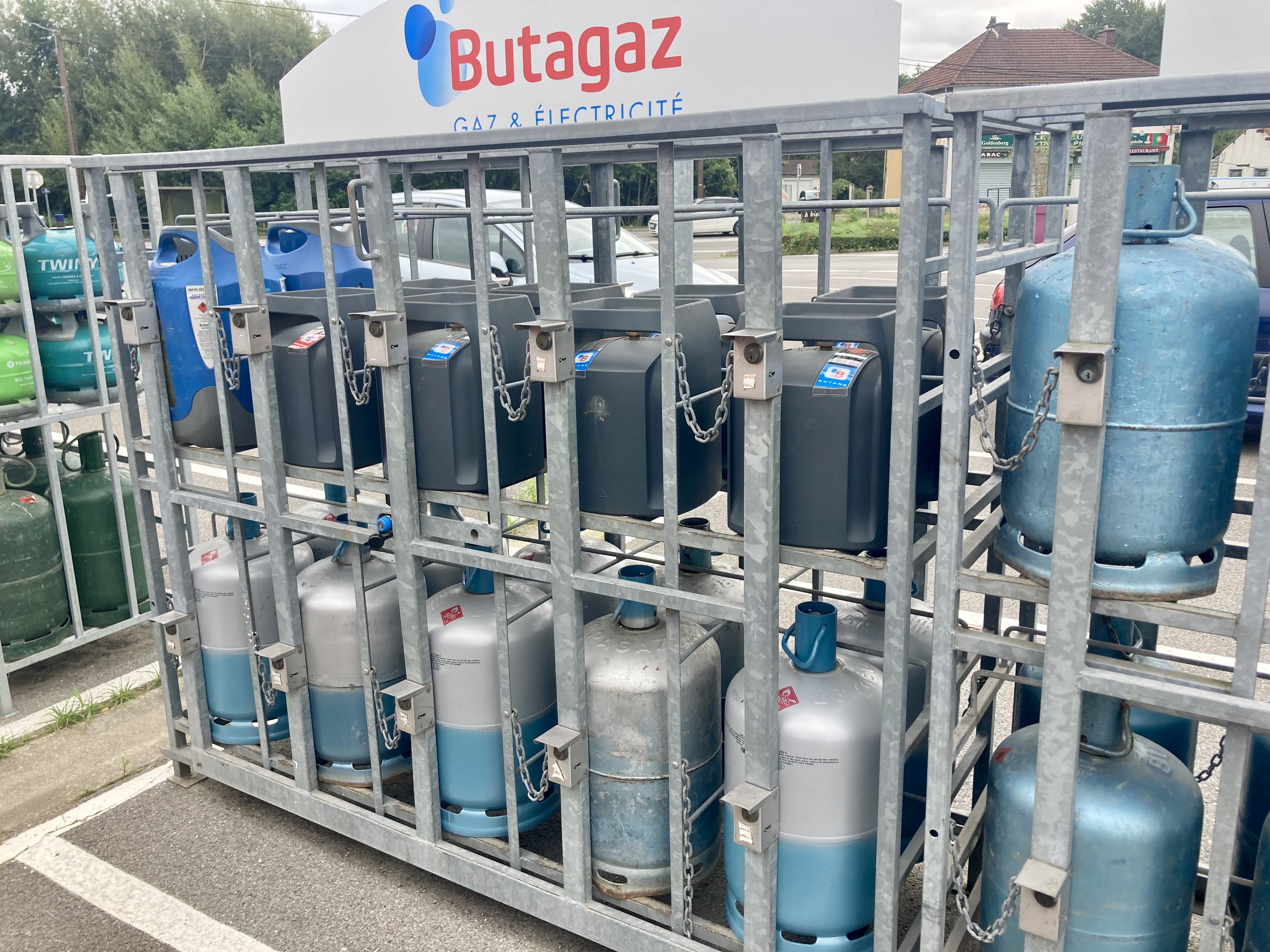
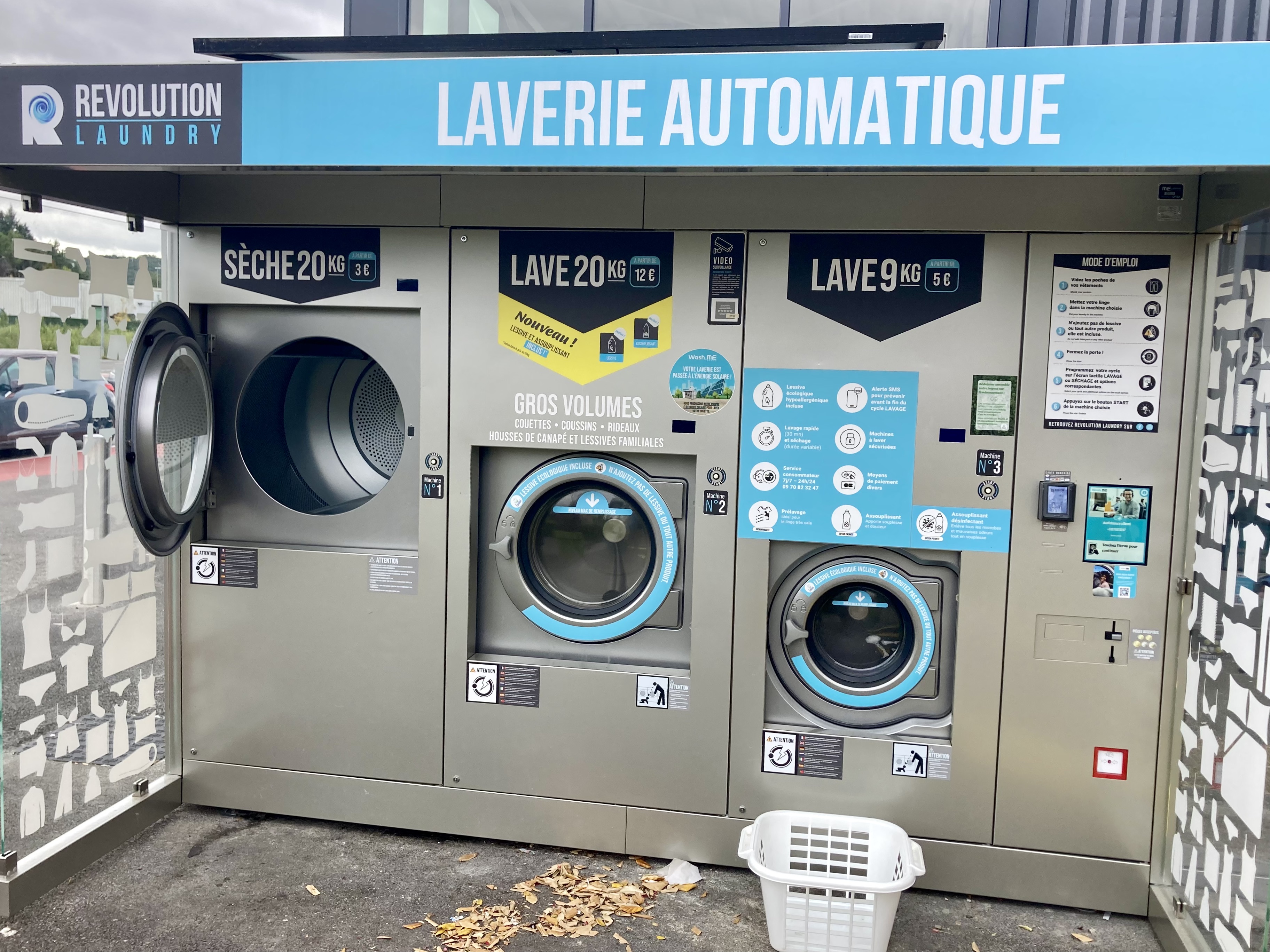
In addition to making several trips to the supermarket (I kept thinking of other things I could buy) we took advantage go the other Carrefour services. We needed a new spare bottle of gas; Stewart was in charge of that. And we decided to use the big washing machine and driers that were on hand, even though we have them on board; I was in charge of that.


It was now late August, and the bushes around the mooring had started to show signs of Autumn, generating a beauty that we all know so well.
But the slight change in seasons did not stop the warmth of the sun in the mornings and the enjoyment of breakfast on the back deck.
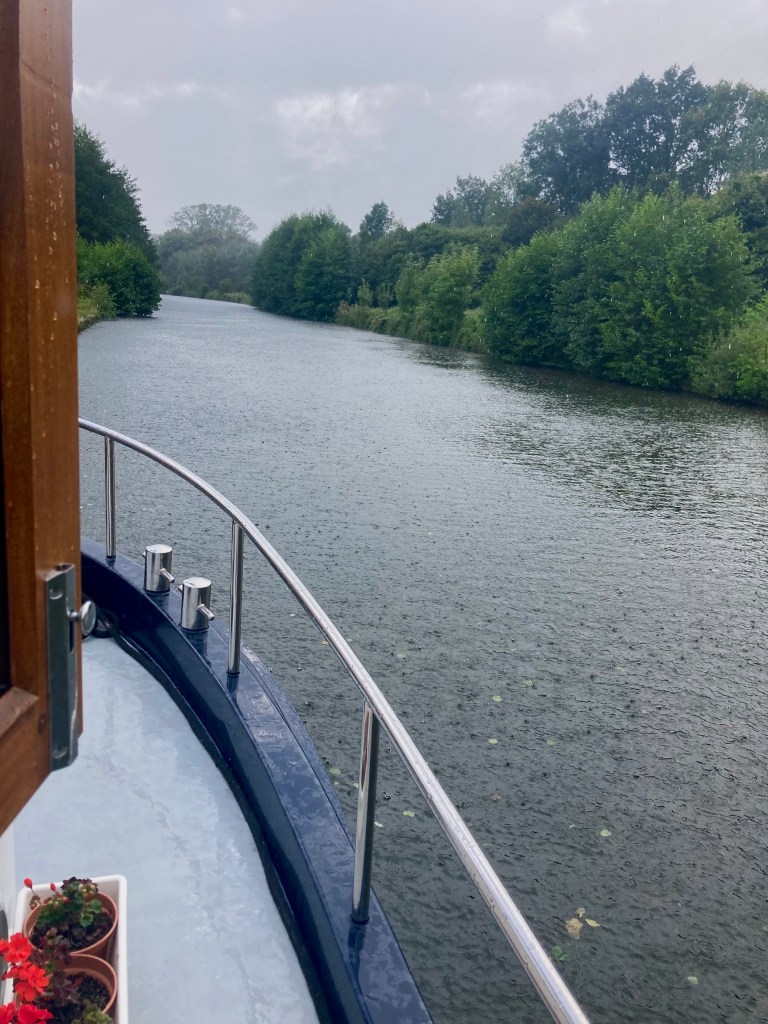
Although by that evening the skies had darkened, and later thunder arrived.
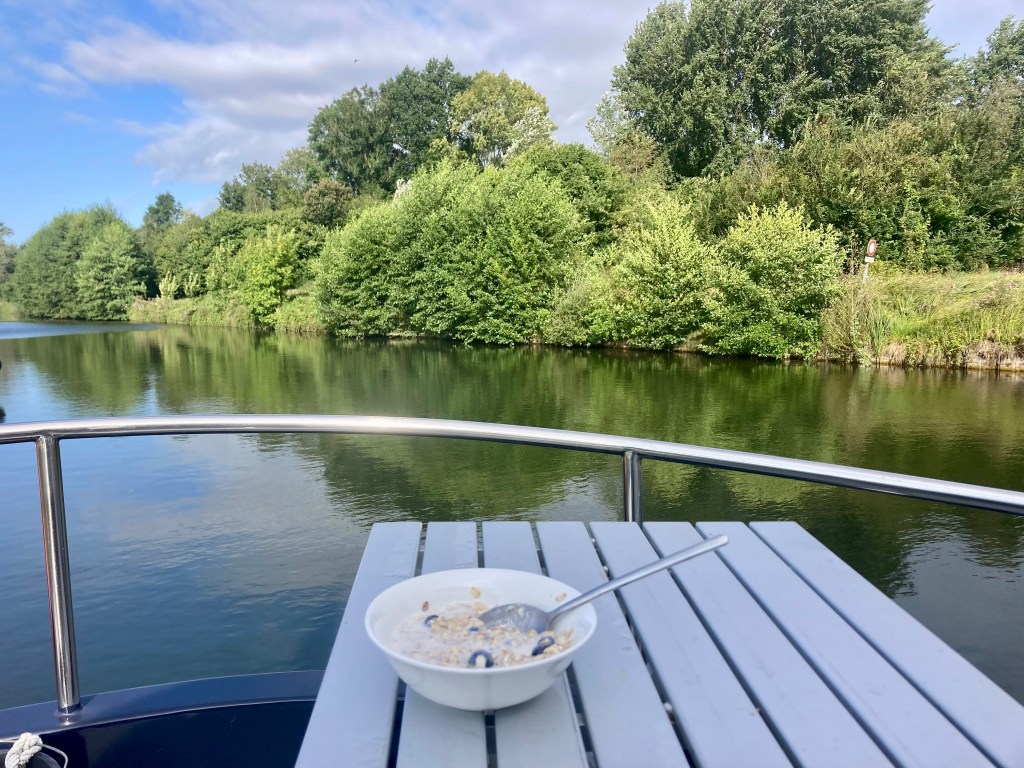
We liked the mooring so much that, now we don’t need to dash to Reims, we decided to take a day off and have a second day in the area – lots of R ‘n’ R. That is not Rock and Roll!!
Things were a little different at the locks in this canal; here is a collage of things that interested me.
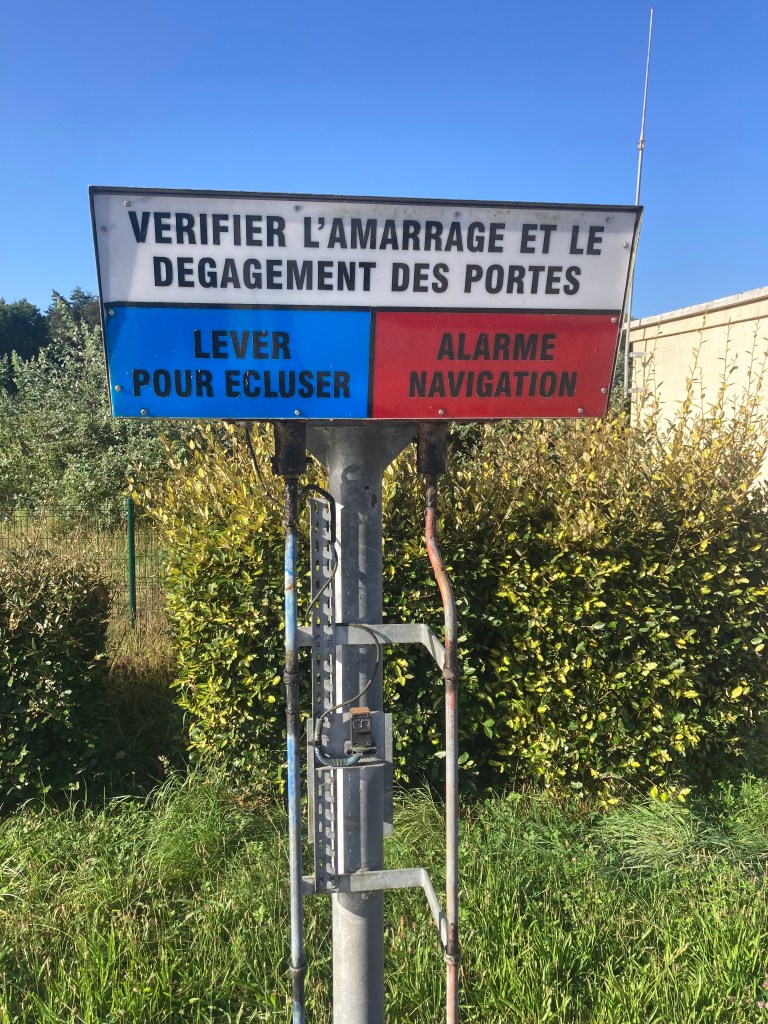
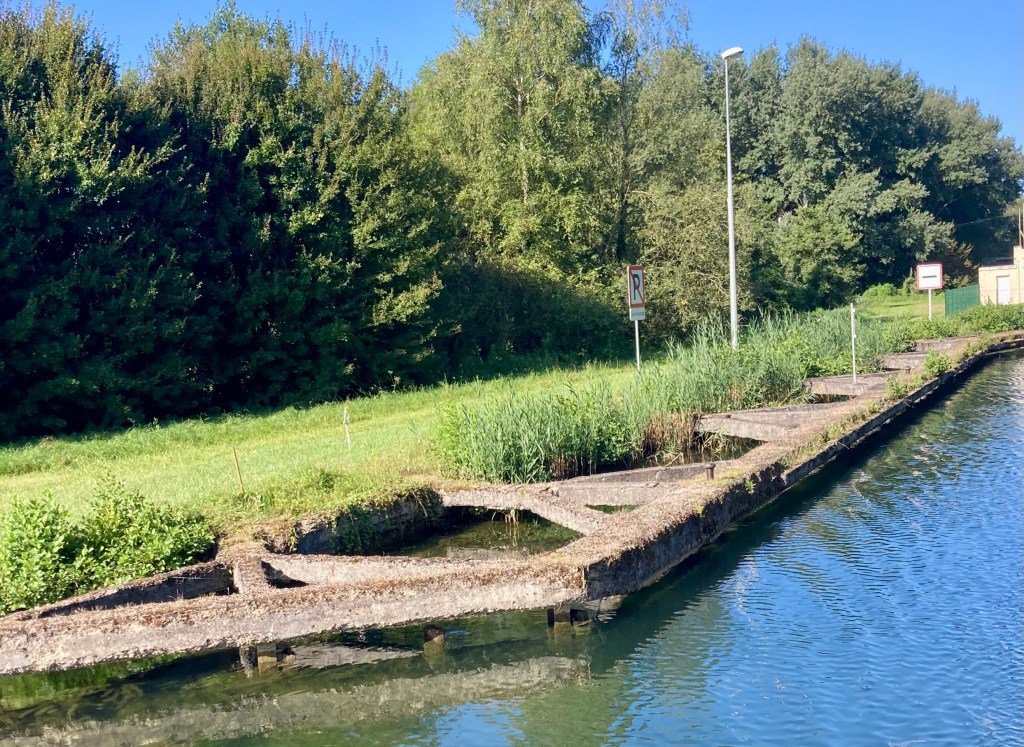

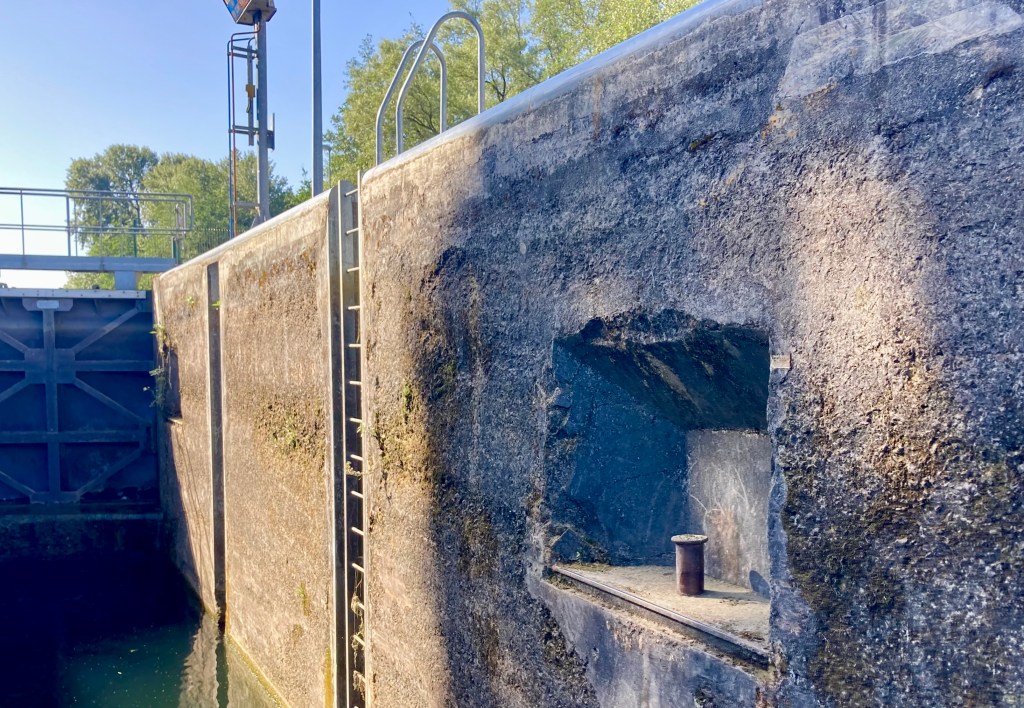
The positioning of the blue operating lever right at one end of each lock was very inconvenient for our 19.8m barge, but presumably works well for the freycinet size commercial barges that used to ply these waters. For us it meant – taking crew to the ladder; up the ladder with forward rope; reverse barge to get bollard for stern rope; walk along lock quay to push blue lever, then stay at the top managing the forward rope until Calliope floated to the top.
As soon as we had established a routine it was easy enough. It is these small challenges that keep us alert. 😁
We were on our way to the summit of the canal and a tunnel that would take us from the Oise to the Aisne side of the hill.

We were doing quite well with our new routine and the sunny weather, but then came to a lock where the gates did not open. Captain Stu tried bouncing on the gates to see if that would ‘un-trap’ whatever problem there might be.
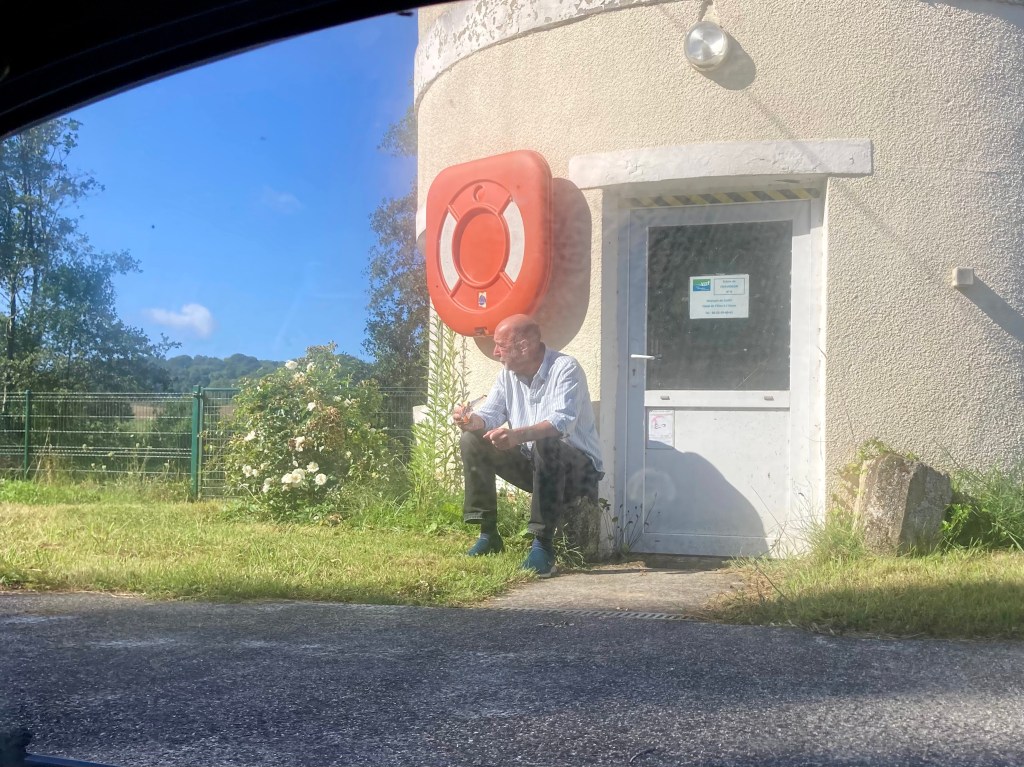
All to no avail, so we resorted to the tried and tested method of phoning the VNF and waiting for help to arrive.
Stewart found a handy seat in the sun on which to wait.
The wait was not too long. We only had one more lock to the summit pound. Coming out of that lock turned out to be spectacular.
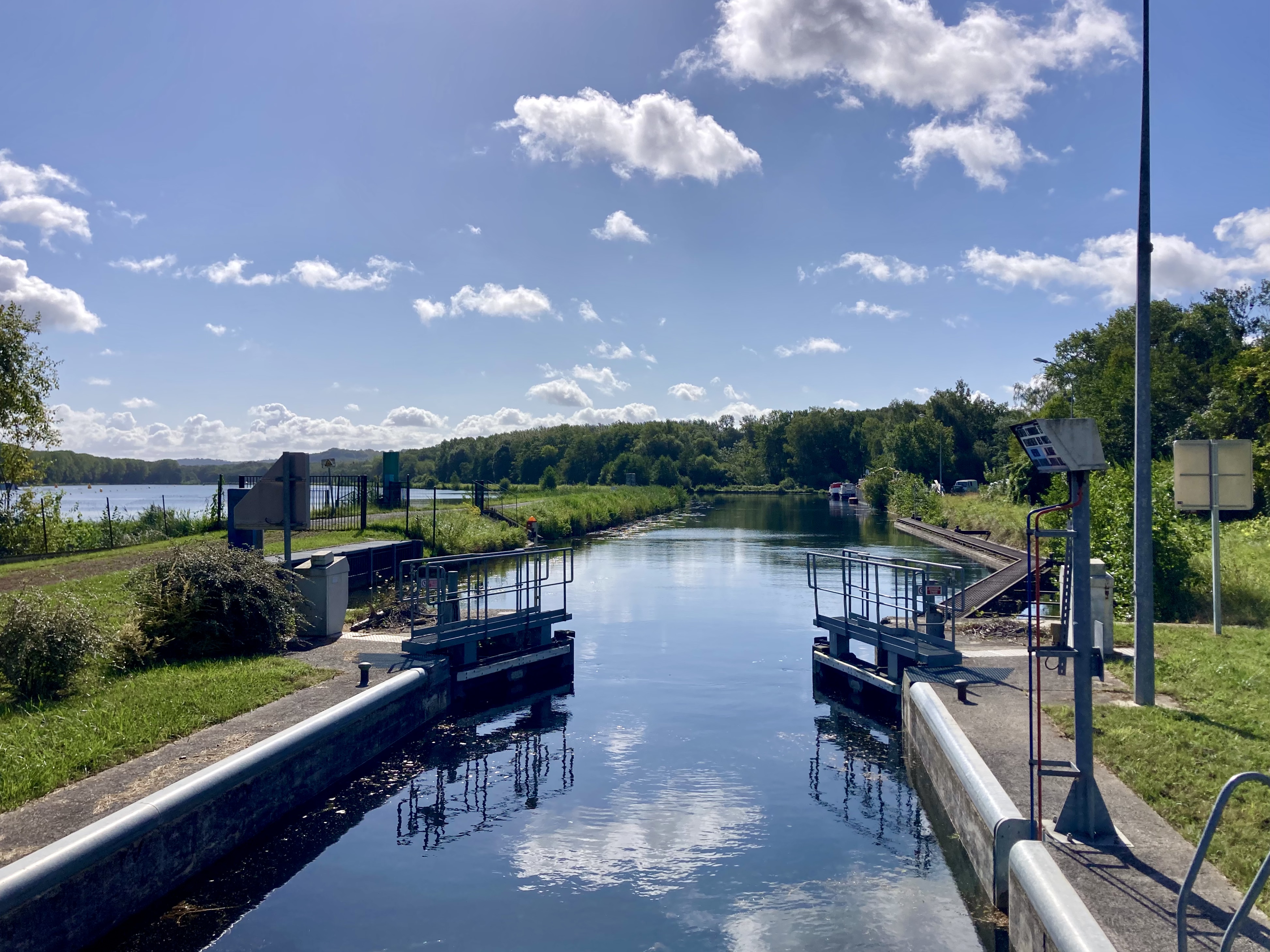
We had reached the top, and the top consisted of a big blue lake with the canal running alongside it. The lake is used for all kinds of nautical fun – sailing, paddle boarding, kayaking and more.

As we started our cruise around the edge of the lake we found a few boats moored up, including our Dilligaf friends who had moved on ahead of us.
A quick ‘over-the-water’ conversation established that we both hoped to moor at the bottom of the canal, Aisne side.
It was so beautiful up there I am including another photo of the lake. I am fairly sure that the lake, Basin de Monampteuil, is the head of the river Ailette, which flows down to join the Oise.

The Monampteuil basin was specifically designed to regulate the underground boat traffic, ensuring the level of water in the Braye-en-Laonnois tunnel, which we were about to reach.

We arrived to find a red light at the tunnel entrance; the waiting area is a lovely spot so it was no difficulty to wait 20 minutes.

After about 20 minutes a small cabin cruiser popped out of the tunnel.
Now it was our turn for the 2360m travel under the Chemin Des Dames, a sadly notorious area during WW1.

Every tunnel has its idiosyncrasies; it could be wide or narrow, have no path alongside, or one, or two; be lit or unlit; be straight or curved.


In the scheme of things this was a straightforward tunnel and only took 20 minutes to go through. From the start we could see ‘the light at the end’ so Captain Stu had something to aim for.
We came out into more sunshine, and a different terrain.
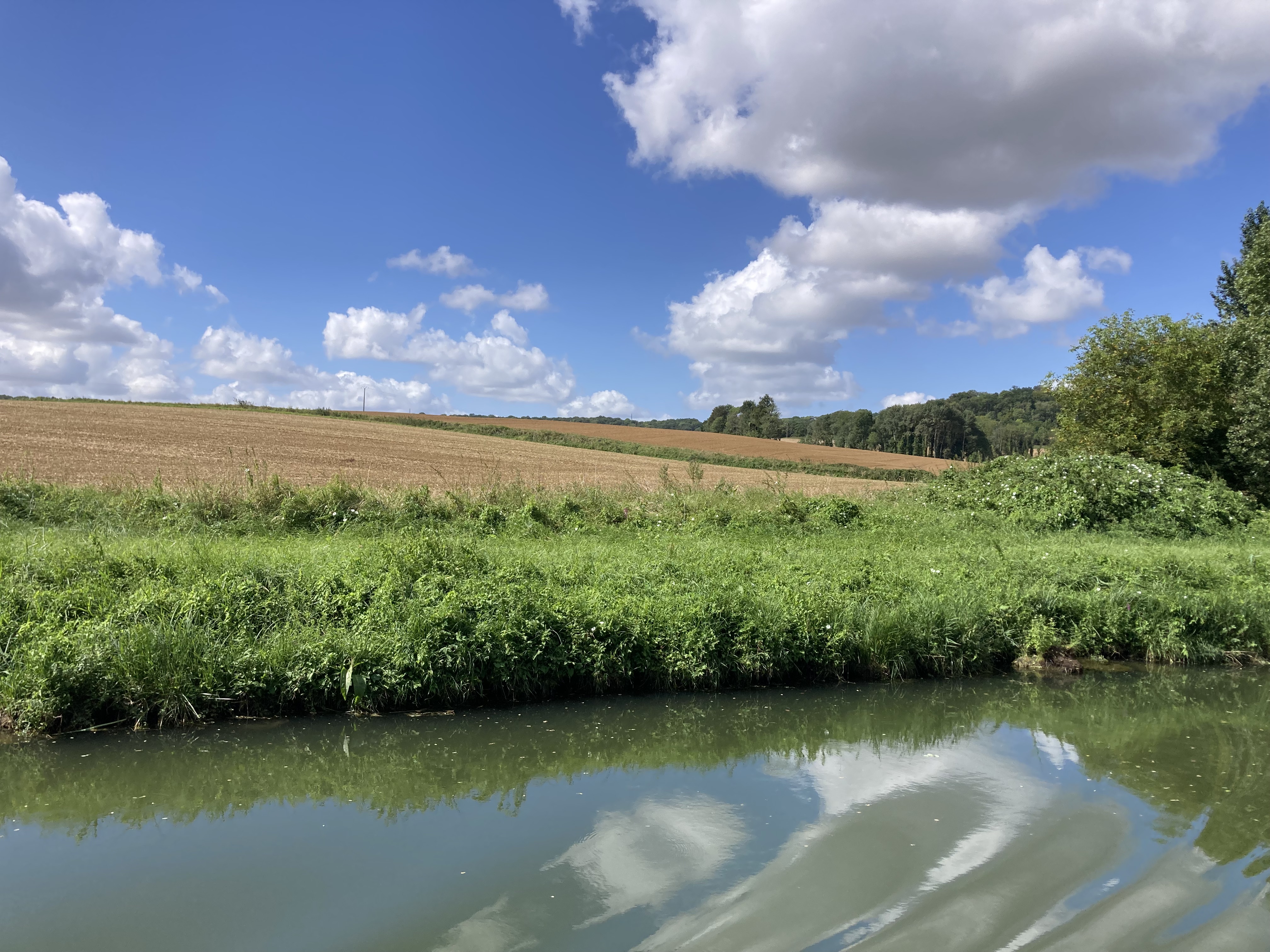
After the narrow feeling of the overgrown canal the other side of the hill, this side was open and joyous in its views .
There were 4 locks to take us down to the level of the river Aisne and the canal that runs ‘laterally’ beside it.
Three were between 3.5m and 3.75m deep, but the first one, according to the map, is ‘3.19 à 3.39’.
That somehow led me to think there would be two locks, one of 3.19 and one of 3.39, leading into each other.
But of course that’s not what it means. It means that the lock depth can vary between 3.19m and 3.39m, presumably dependent on the flow from the lake at the top!

And here it is, as we leave it.

It looks like we came through at the lower depth level as there is plenty of room above the waterline.
It’s also another good view of the positioning of the lock control levers, each end of the lock again. And of those lovely big alcoves for the bollards in the wall, making them much easier to use than those on the Canal du Nord.
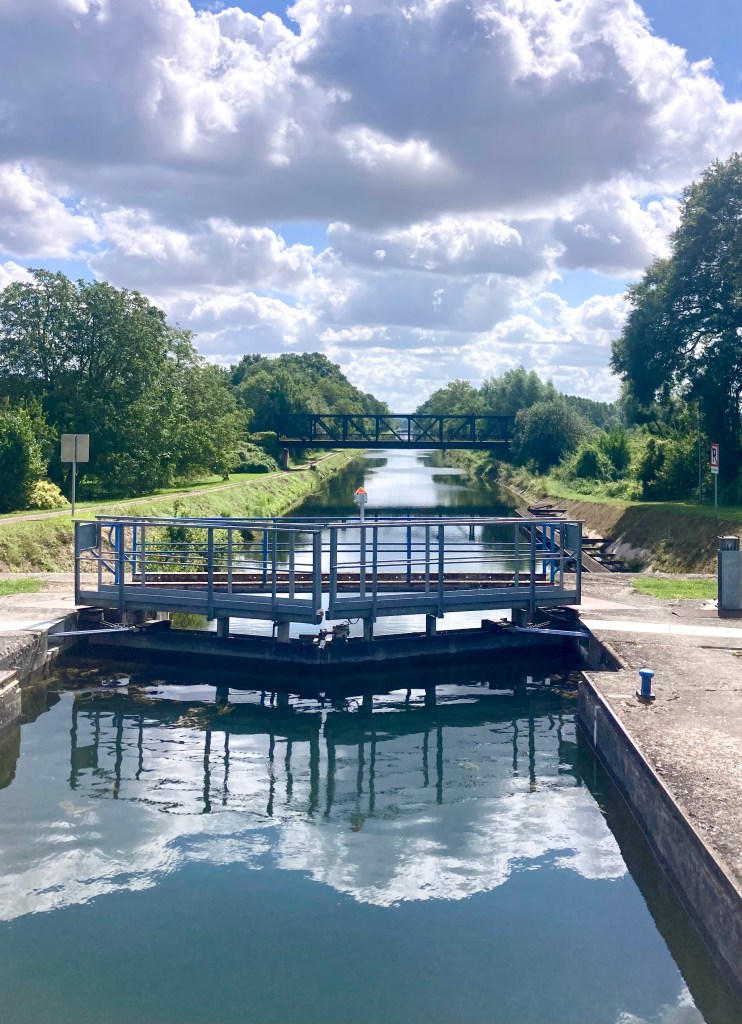
By the time we got to the third lock, Soupir, we were on a straight line down to the bottom.
I love these views, skies reflected in the water and green countryside all around.
Not much more than an hour after coming through the tunnel we were nearing the end of this canal.
Although not yet the end of August some plants saw Autumn coming and were putting on their golden colours, like this creeper, curtaining our way.
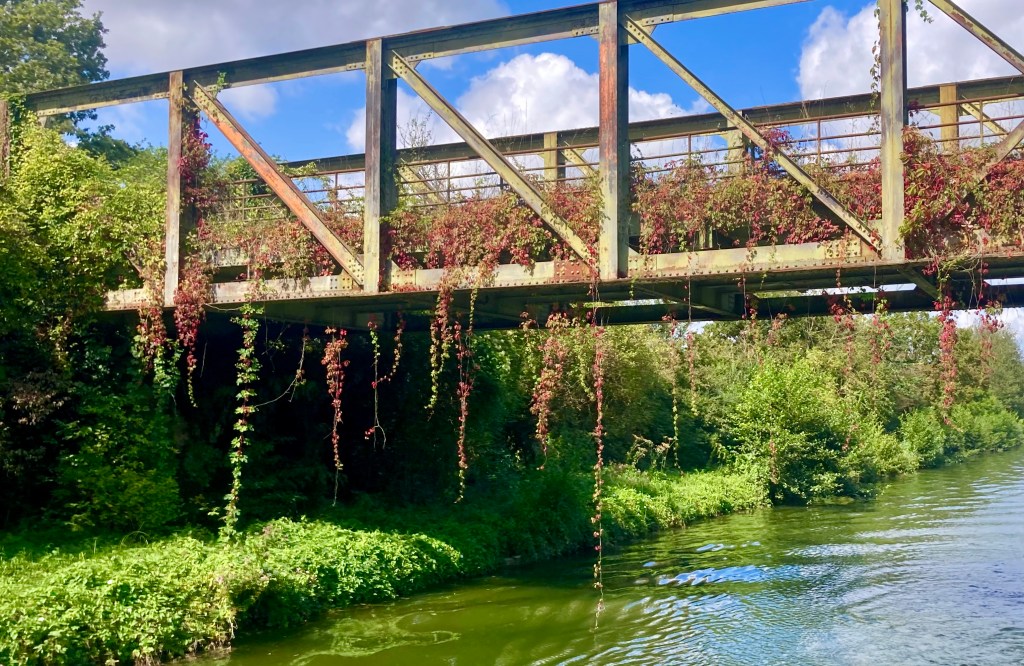
The canal ends at Bourg-et-Comin, a small commune built on the banks of the Aiosne and since C19 finding itself at the junction of two canals.
In 1925 an electricity power station was built, powered by 3 turbines using water from the canal system and still supplying electricity to 35 local towns.
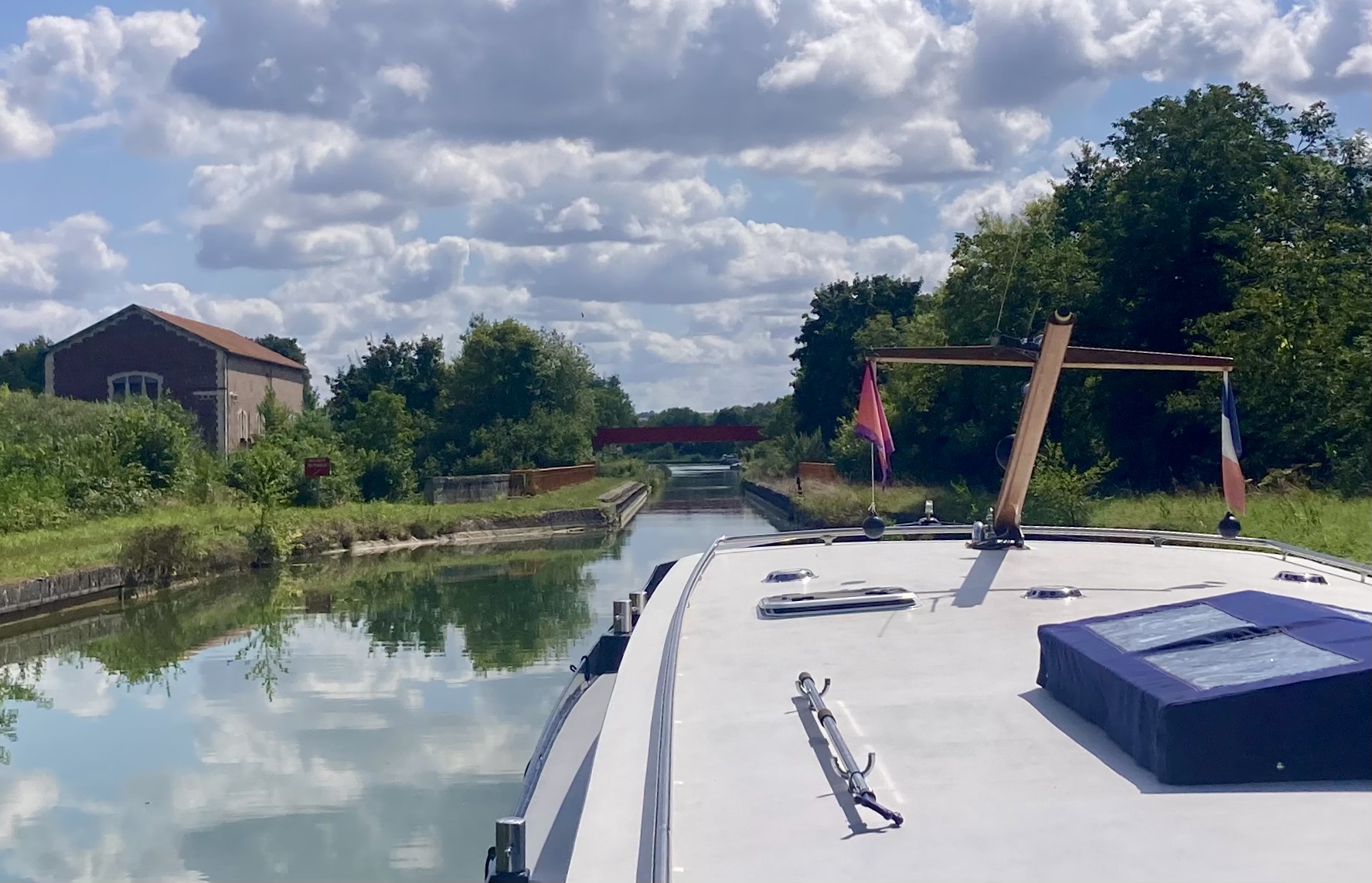
There is it on the left, as we pass through the last narrow section of the canal to where it joins the Lateral à L’Aisne.
We had hoped to stop here for the night, but it is only a short pontoon and was already full of other boats. Not a big problem; it was only 1330, so we turned to port and continued onto the new canal.
Canal Lateral à L’Aisne
I looked on the map for somewhere else we could stop for the night and it looked like we would have to continue for 20 kms to find somewhere we would like – in fact somewhere we had moored twice before – Berry-au-Bac.

It’s a straightforward 20km cruise, with no locks or other ‘obstacles’. We metaphorically sat back and enjoyed the journey and the scenery. There is just one small village, Maizey, to pass; the rest is woods, fields and hills.
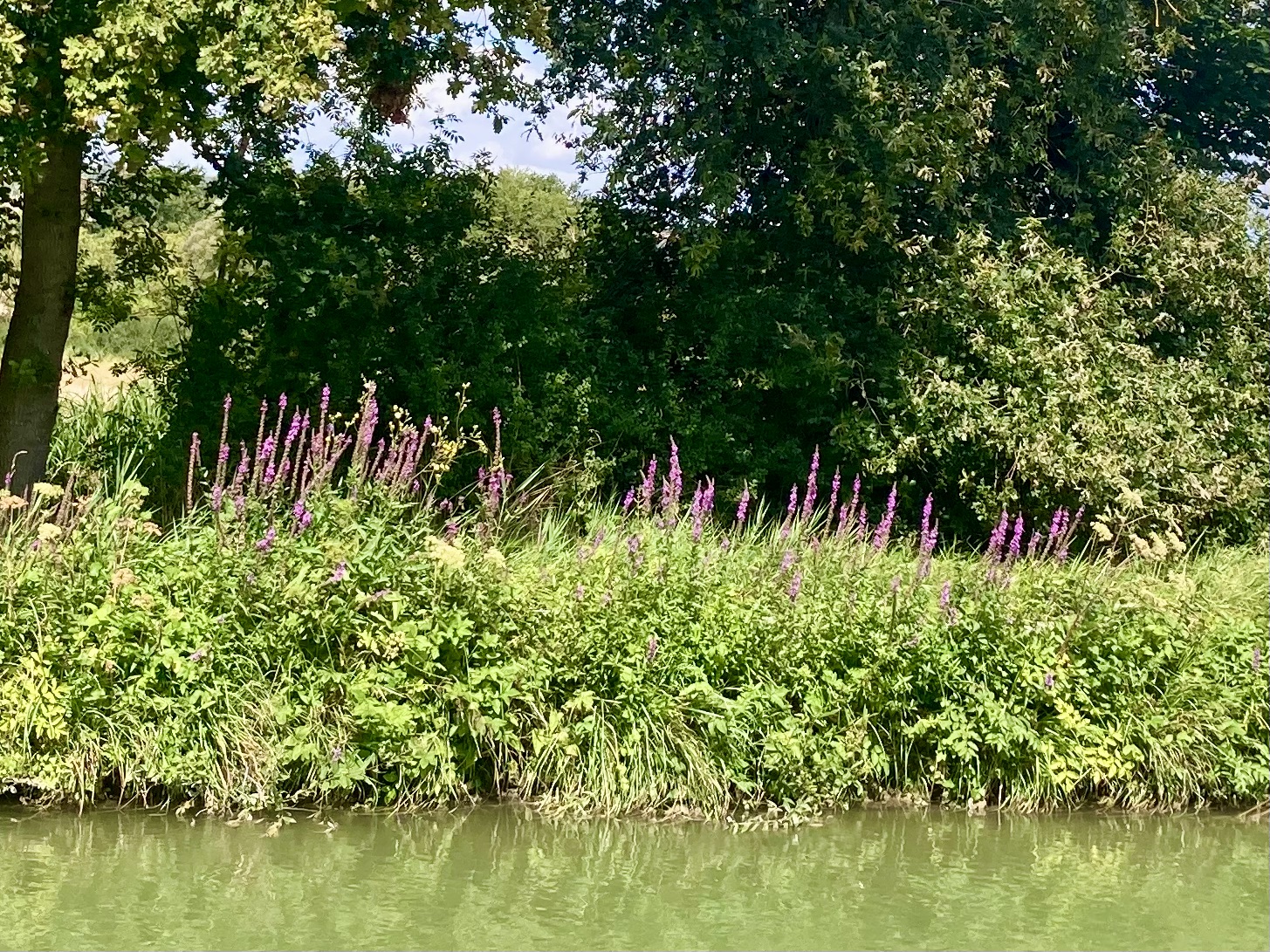

There was late summer colour along side the water, including the end of the sunflower crops, still yellow but soon to hang their heads and turn brown. At that point the seeds would all be harvested.

By 4pm we were tied up at Berry-au-Bac, below the lock.
It is a busy area for commercial barges, both behind our mooring and the other aside of the lock, and we were pleased to find this peaceful spot.
Everything was looking good – another 42 kms achieved, even though we no longer needed to make such speedy progress.
It wasn’t too long before we were relaxing on the back deck again, enjoying the later afternoon sun and watching what was going on with the commercial barges moored astern.
Both of us were there! I think the Captain must have had his beer in his hand.
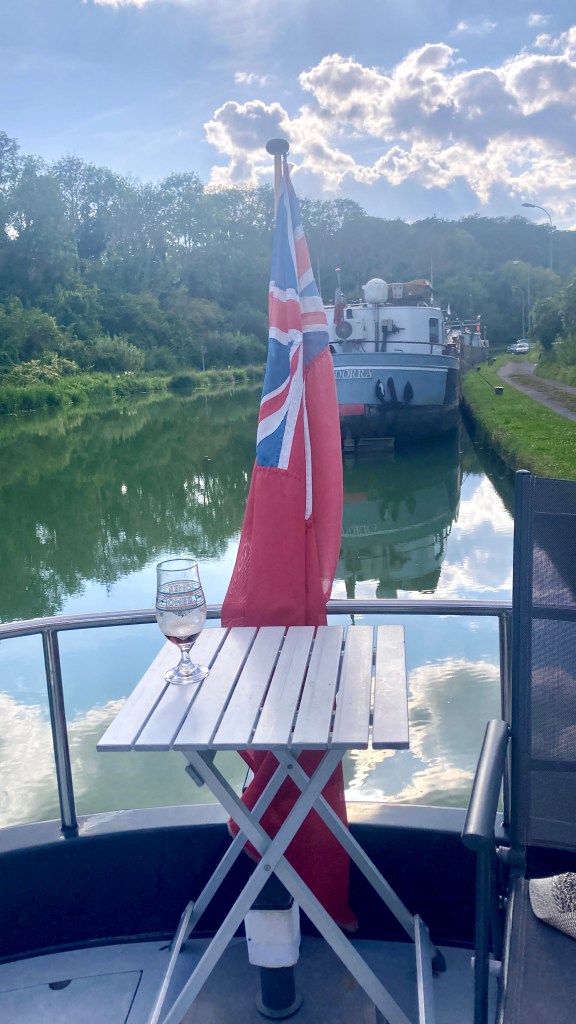

Well apart from going through the lock just ahead that was us complete with our short time on the Canal lateral à l’Aisne for now – time to change the map book.
We went to bed peacefully and confident about the next stage of our journey.
The next blog post, Hivernage Bound – Part 2, will tell how our plans were disrupted!
 goodshipcalliope